
BuddhistCatholicContemplativeEvangelicalGeneral ChristianHinduJewishLatter-day SaintMuslimNew VisionsProgressive Christian
Beliefs
- Buddhist
- Catholic
- Contemplative
- Evangelical
- General Christian
- Hindu
- Jewish
- Latter-day Saint
- More Voices
- Muslim
- New Visions
- Pagan
- Progressive Christian
Topics
- Religion News
- Food and Religion
- Sports and Religion
- Religious Art
- Religious Music and Entertainment
- Religious Events
- History and Religion
- Style and Religion
- Politics and Religion
- Women in Religion
- Recreation Outdoors and Religion
- Business Finance and Religion
- Careers Workplace and Religion
- Education and Religion
- Family Parenting and Religion
- Health Fitness and Religion
- Home and Religion
- Relationships and Religion
- Technology and Religion
- Travel and Religion
Columnists
- Buddhist Columnists
- Business Finance and Religion Columnists
- Careers Workplace and Religion Columnists
- Catholic Columnists
- Contemplative Columnists
- Education and Religion Columnists
- Evangelists Columnists
- Family Parenting and Religion Columnists
- General Christian Columnists
- Health Fitness and Religion Columnists
- Hindu Columnists
- History and Religion Columnists
- Home and Religion Columnists
- Jewish Columnists
- More Voices Columnists
- Latter Day Columnists
- Muslim Columnists
- New Visions Columnists
- Nonreligious Columnists
- Pagan Columnists
- Politics and Religion Columnists
- Progressive Columnists
- Recreation Outdoors and Religion Columnists
- Relationships and Religion Columnists
- Religion News Columnists
- Religious Art Columnists
- Religious Events Columnists
- Religious Music and Entertainment Columnists
- Sports and Religion Columnists
- Style and Religion Columnists
- Technology and Religion Columnists
- Travel and Religion Columnists
- Women in Religion Columnists
Resource Library
- 2026 Calendar
- Library of World Religions
- The 100 Most Holy Places on Earth
- Patheos Answers
- Podcasts
- Videos
- Faith Leaders Database
- Anglican Episcopalian
- Bahai
- Baptist
- Buddhism
- Christianity
- Confucianism
- Eastern Orthodoxy
- Hinduism
- Holiness and Pentecostal
- ISKCON
- Islam
- Judaism
- Lutheran
- Methodist
- The Church of Jesus Christ of Latter-day Saints
- New Age
- Paganism
- Presbytarian and Reformed
- Protestantism
- Religion Behind the Scenes
- Roman Catholic
- Scientology
- Shia Islam
- Sikhism
- Sufism
- Sunni Islam
- Taoism
- Zen
- See all religions
Research Tools
 Ad-Free & Subscriber Log-In Subscription Support
Ad-Free & Subscriber Log-In Subscription Support
Follow Patheos 

- Trending:
- Forgiveness
- |
- Marriage
- |
- Consciousness
- |
- Death Penalty
- |
- Election
- |
- Halloween

- Home
- Evangelical
- Shaped by God’s Heart by Milfred Minatrea
Shaped by God’s Heart by Milfred Minatrea
Last updated on: February 18, 2014 at 4:01 am by Jim Erwin
Shaped by God’s Heart by Milfred Minatrea 2014-02-18T04:01:57-05:00 Jim Erwin
Patheos Explore the world's faith through different perspectives on religion and spirituality! Patheos has the views of the prevalent religions and spiritualities of the world.
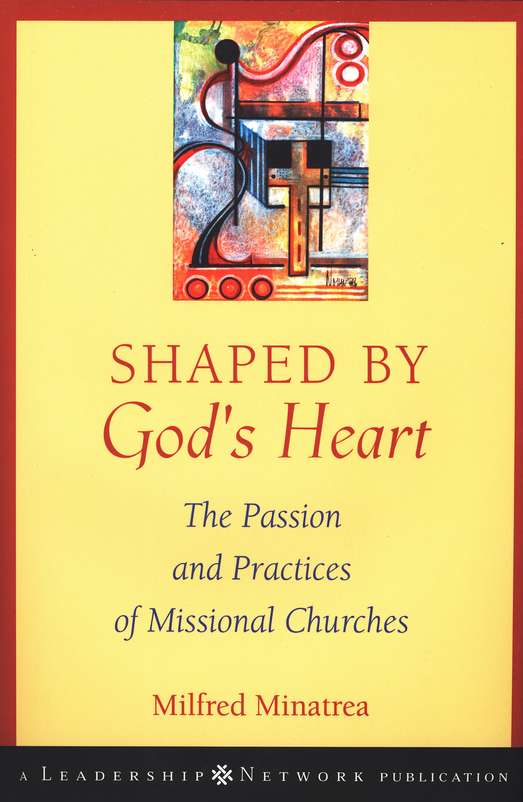
The book Shaped by God’s Heart, written by Milfred Minatrea is a book which reveals an approach to church planting called the missional approach. The subtitle of the book reveals the true summary of the book – the passion and practices of missional churches.
Unlike many other books about church planting, this book defines a new paradigm entitled “the missional church.” In the mind of Minatrea, a multiplying church is by definition a missional church (xvi), or in his words: “a reproducing community of authentic disciples.” At first glance, this seems to be a completely new approach to church planting and multiplying churches. This reviewer will share insights learned throughout the book. However, one caveat is in order. The paradigm is not entirely new. Minatrea may state that the missional church is a new way at planting churches. Yet, when one looks closely, one can clearly see the influence of the church growth movement – more specifically the Purpose Driven Church model repackaged for the postmodern generation. The four reasons for membership (32), evaluating ministries against the purposes or core values (104-106), the concentric circles by Oscar Cullman (127-128), and celebrating releasing capacity versus building capacity (145) all reflect the Purpose Driven Church model. However, the comparisons with Rick Warren’s model end there.
Minatrea makes a clear case for the missional church. He states that when a church focuses inward, the church exchanges mission for maintenance. Mission comes from the nature of God and as such, the church serves the mission and not the other way around. Minatrea emphasizes that to be missional, the formula must be spirituality, then strategy, then structure (xviii).
Minatrea defines missional churches as founded in the imago dei (Image of God), the missio dei (Mission of God), and the gloria dei (Glory of God). He provides an excellent review of the relevant Scriptures for further study (12-14). Minatrea explains that there is a difference between mission-minded churches and missional churches. One can infer than the primary difference is that mission-minded churches have their minds set on having other people fulfill the mission. Missional churches have their hearts set to do the mission (11).
Missional churches believe that there are four dimensions: (1) love God, (2) live His mission, (3) love people, (4) lead them to follow. This reviewer sees the balanced approach, but also notices a shift from “believing” in Christ to “following” Christ. A Christian no longer shares the gospel so that a person believes in Christ. A Christian as well as the church loves the people so that they can be lead to follow Christ. While Mineatrea illustrates these dimensions in a coordinate axis (17), this reviewer can also see it applied as a journey. A Christian loves God and lives His mission which will involve loving people. As a Christian continues to love people, the words and actions lead an unbeliever to follow Christ.
These dimensions followed by eight passion actions which put the four dimensions into a cycle (20). These eight passion actions help the Christian live in these four dimensions. Worship and obedience help a Christian love God. Service and sharing Christ help a Christian to live Christ’s misson. When a Christian embraces and invites people, they show that they love them. Finally, when a Christian empowers and equips others, the new unbeliever is led to follow Christ. Minetrea states that in missional communities, “a response to an invitation is the beginning, not the end.” He also states that the church has the assignment of equipping disciples as authentic “followers of Christ.” Again, he shifts to a Christian as being a follower and not just a believer (24). Minatrea even rejects the use of “plans of salvation” (83) and states that leading persons to faith is a process, not a single event (85). The author advocates a more natural approach to sharing Christ. The church should do more than share information. The church should “incarnate” into the culture. Therefore, the most significant insight in this book is the shift from leading people to believe in Christ to helping them follow Christ.
Related to this “following” Christ model is the idea that the process in which unbelievers enter into the church has changed. Taking his cue from Mosaic pastor Erwin McManus, the author states that young adults will first belong, become, and then believe (40). On the surface, this seems like a reversal of what the church has been taught. However, since the postmodern generations value community above all else, the fact they want to belong first makes sense. Belonging gives them a place and thus an identity. This identity allows them to become (which is the process of discipleship) and as they have learned the consequences of the Christian life, they finally choose to believe in Christ. While this looks dangerous and backwards, the process is more effective than previous way of “forcing” someone to make an on-the-spot decision to follow Christ at an event. An unbeliever has now taken time to see the consequences of such an importance decision. The experience of this reviewer has shown that this process was effective in Europe.
While this was a difficult book to follow, the final chapters revealed some practical applications to this missional approach. Minatrea addresses such issues as multiplication versus addition (Chapter 10), simple structures (Chapter 12), leadership (Chapter 13), and becoming missional churches (Chapter 14).
This reviewer found this book to be intriguing because there were very few other churches that dealt with this subject in depth. Some books dealt with the desires of the postmodern generations the church is trying to reach (Post-Modern Pilgrims by Leonard Sweet and Planting New Churches in a Post-Modern Age by Ed Stetzer). However, no other book showed in better detail the major difference between missional churches as opposed to other churches. One similar book would be Breaking the Missional Code by Ed Stetzer and David Putman where the belonging-becoming-believing idea is set to a diagram (page 129). Therefore, if one wants to know more about how a church can infiltrate the culture, Breaking the Missional Code would compliment Shaped by God’s Heart. Stetzer and Putnum address the need for missonal churches. Minatrea shares how this can be done.
The case for missional churches is biblical and thus the hermeneutical foundation is strong. This reviewer may find no major disagreements. This book should be given to any church planter who wishes to apply a new model to a church that wants to reach the postmodern generation.
Previous Post

February 15, 2014
Churches That Multiply by Elmer Towns and Douglas Porter
Next Post
February 21, 2014 Evaluating the Church Growth Movement - Five Views by Paul Engle
Browse Our Archives
Select a Category 1 Chronicles 1 Corinthians 1 John 1 Kings 1 Peter 1 Samuel 1 Thessalonians 1 Timothy 2 Chronicles 2 Corinthians 2 John 2 Kings 2 Peter 2 Samuel 2 Thessalonians 2 Timothy 3 John Acts Advent Amos Book Review Colossians Comics Culture Watch Daniel Deuteronomy Ecclesiastes Ephesians Esther Exodus Ezekiel Ezra Galatians Genesis Guest Post Habakkuk Haggai Hebrews Hosea Humor Inspiritational Isaiah James Jeremiah Job Joel John Jonah Joshua Jude Judges Lamentations Lectionary Lent Leviticus Link Love Luke Malachi Mark Matthew Micah Movie Review Nahum Nehemiah Numbers Philippians Political Watch Prophecy Watch Proverbs Psalm Revelation Reviews Romans Ruth Science Watch Sermon Series Sermons Simple Thoughts Song of Solomon Titus Top Ten Uncategorized Video Review Zechariah Zephaniah
Select a Month May 2026 October 2025 September 2025 June 2025 February 2025 January 2025 November 2024 October 2024 September 2024 July 2024 June 2024 April 2024 March 2024 January 2024 November 2023 October 2023 September 2023 June 2023 May 2023 March 2023 February 2023 January 2023 December 2022 October 2022 September 2022 August 2022 July 2022 June 2022 May 2022 January 2022 June 2021 January 2021 October 2020 July 2020 May 2020 April 2020 March 2020 February 2020 January 2020 December 2019 November 2019 October 2019 September 2019 August 2019 July 2019 June 2019 May 2019 April 2019 March 2019 February 2019 January 2019 December 2018 November 2018 October 2018 September 2018 August 2018 July 2018 June 2018 May 2018 April 2018 March 2018 February 2018 January 2018 December 2017 November 2017 October 2017 September 2017 August 2017 July 2017 June 2017 May 2017 April 2017 March 2017 February 2017 January 2017 December 2016 November 2016 October 2016 September 2016 August 2016 July 2016 June 2016 May 2016 April 2016 March 2016 February 2016 January 2016 December 2015 November 2015 October 2015 September 2015 August 2015 July 2015 June 2015 May 2015 April 2015 March 2015 February 2015 January 2015 December 2014 November 2014 October 2014 September 2014 August 2014 July 2014 June 2014 May 2014 April 2014 March 2014 February 2014 January 2014 December 2013 November 2013 October 2013 September 2013 August 2013 July 2013 June 2013 May 2013 April 2013 February 2013 January 2013 December 2012 November 2012 October 2012 September 2012 August 2012 July 2012 June 2012 May 2012 April 2009 June 2008 October 2007 September 2007 August 2007 July 2007 June 2007 May 2007 April 2007 March 2007 February 2007 January 2007 December 2006 October 2006 September 2006 May 2006 April 2006 March 2006 February 2006 January 2006 December 2005 September 2005
Follow Us!
TAKE THE
Religious Wisdom Quiz
What happened when the Philistines captured the Ark of the Covenant?
Select your answer to see how you score.
Fire rained from heaven Dagon's idol fell The sun stood still The Jordan parted
Related posts from Jim Erwin


Using ChatGPT in Sermon Preparation


Can I Ask You a Question by Preston...
TRENDING AT PATHEOS Evangelical

'Super Scam Me' Exposes AI Jon Bon Jovi...
Leslie Pickett believed she was in a relationship with Jon Bon Jovi....

The Brazilian Remake of Kendricks' 'Flywheel' Opens in...
“Flywheel,” the story that launched the Kendrick Brothers’ filmmaking career is getting...

The Dangers of Gradual Accommodation (Winking at Sin)
Recently, the “law of gradualness” resurfaced during the opening of a weeklong,...

The Iron Gates and the Lion of the...
Yesterday, I didn't finish my report about, well, yesterday. So I'll...

The Image: On the Horror of Capitalism and...
The Image Then went the Pharisees, and took counsel how they might...

We are approaching the date of our new American national holiday: October...
view all Evangelical blogs
Ad-Free & Subscriber Log-In Subscription Support
- About Us
- 2026 Calendar
- Videos
- Podcasts
- Library of World Religions
- Faith In Media Tracker
- Advertise With Us
- Write for Us
- Privacy Policy
- Terms of Service
- Do Not Sell My Data
- Contact Us
- Radiant Digital
- Manage Newsletter Subscriptions
- Unsubscribe From Notifications
- Sitemap
Copyright 2008-2026, Patheos. All rights reserved.
Subscription Support Ad-Free & Subscriber Log-In
Follow Patheos