
BuddhistCatholicContemplativeEvangelicalGeneral ChristianHinduJewishLatter-day SaintMuslimNew VisionsProgressive Christian
Beliefs
- Buddhist
- Catholic
- Contemplative
- Evangelical
- General Christian
- Hindu
- Jewish
- Latter-day Saint
- More Voices
- Muslim
- New Visions
- Pagan
- Progressive Christian
Topics
- Religion News
- Food and Religion
- Sports and Religion
- Religious Art
- Religious Music and Entertainment
- Religious Events
- History and Religion
- Style and Religion
- Politics and Religion
- Women in Religion
- Recreation Outdoors and Religion
- Business Finance and Religion
- Careers Workplace and Religion
- Education and Religion
- Family Parenting and Religion
- Health Fitness and Religion
- Home and Religion
- Relationships and Religion
- Technology and Religion
- Travel and Religion
Columnists
- Buddhist Columnists
- Business Finance and Religion Columnists
- Careers Workplace and Religion Columnists
- Catholic Columnists
- Contemplative Columnists
- Education and Religion Columnists
- Evangelists Columnists
- Family Parenting and Religion Columnists
- General Christian Columnists
- Health Fitness and Religion Columnists
- Hindu Columnists
- History and Religion Columnists
- Home and Religion Columnists
- Jewish Columnists
- More Voices Columnists
- Latter Day Columnists
- Muslim Columnists
- New Visions Columnists
- Nonreligious Columnists
- Pagan Columnists
- Politics and Religion Columnists
- Progressive Columnists
- Recreation Outdoors and Religion Columnists
- Relationships and Religion Columnists
- Religion News Columnists
- Religious Art Columnists
- Religious Events Columnists
- Religious Music and Entertainment Columnists
- Sports and Religion Columnists
- Style and Religion Columnists
- Technology and Religion Columnists
- Travel and Religion Columnists
- Women in Religion Columnists
Resource Library
- 2026 Calendar
- Library of World Religions
- The 100 Most Holy Places on Earth
- Patheos Answers
- Podcasts
- Videos
- Faith Leaders Database
- Anglican Episcopalian
- Bahai
- Baptist
- Buddhism
- Christianity
- Confucianism
- Eastern Orthodoxy
- Hinduism
- Holiness and Pentecostal
- ISKCON
- Islam
- Judaism
- Lutheran
- Methodist
- The Church of Jesus Christ of Latter-day Saints
- New Age
- Paganism
- Presbytarian and Reformed
- Protestantism
- Religion Behind the Scenes
- Roman Catholic
- Scientology
- Shia Islam
- Sikhism
- Sufism
- Sunni Islam
- Taoism
- Zen
- See all religions
Research Tools
 Ad-Free & Subscriber Log-In Subscription Support
Ad-Free & Subscriber Log-In Subscription Support
Follow Patheos 

- Trending:
- Forgiveness
- |
- Marriage
- |
- Consciousness
- |
- Death Penalty
- |
- Election
- |
- Halloween

- Home
- Evangelical
- Luke 8:1-15 The Right Conditions for Balanced Christian Growth
Luke 8:1-15 The Right Conditions for Balanced Christian Growth
Last updated on: June 2, 2018 at 10:18 pm by Jim Erwin
Luke 8:1-15 The Right Conditions for Balanced Christian Growth 2018-06-02T22:18:31-05:00 Jim Erwin
Patheos Explore the world's faith through different perspectives on religion and spirituality! Patheos has the views of the prevalent religions and spiritualities of the world.
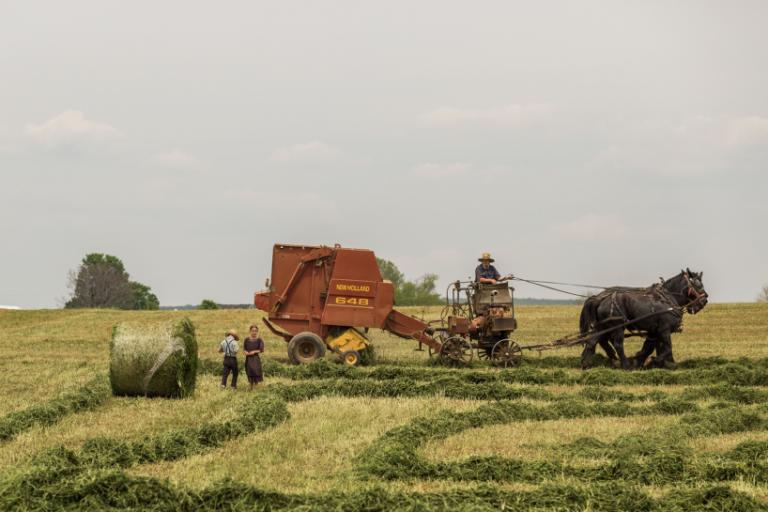
Luke 8:1-15 The Right Conditions for Balanced Christian Growth
Last year, I planted a garden. I thought I had a green thumb. My grandmother Louis had a business growing and selling cactus. My grandmother Loraine planted a garden every year here on the farm. My dad used to plant a garden every year while we were in Texas. So I thought it was in my blood. I was wrong. Here is what happened.
There is a plot of land just south of my house behind the green storage building. It wasn’t too big. It was just the right size to plant a couple of rows of vegetables. However, it was full of rocks. So I spent a couple of days with my kids and we went out there and we pulled up these huge rocks out of the ground. After that, I mowed the lawn and then we spent some more time picking up smaller rocks still in the ground. After I thought we had all the rocks, and after I mowed the lawn and pulled out all of the weeds, I had someone come in and till the ground. Well, we found more rocks and we had to pull them out. We found more weeds and we had to pull them out.
After all this, I thought we were ready. So I went out and bought all kinds of vegetable seeds I wanted to grow. My kids and I got out there and we planted. The kids were excited. They had just planted their first garden. I was quite proud of myself. I had accomplished something with hard work, which I knew would benefit the family. Most importantly, I established myself in our family history as another capable green thumb. Days went by and we checked on the garden and we watered it faithfully. A few weeks later, we continued this routine. All was great, and I could see the progress that was being made by my plants in the garden. However, I forgot to consider one other barrier to growth: cows.
One morning I got up, and a bunch of cows had jumped the fence and entered my precious garden. They were chewing on whatever was left of my plants. It had rained the night before and so when they walked across, they stomped all over other plants in my garden which as of yet did not have enough time to grow. If that wasn’t enough, the cows left something behind, which ruined the rest of the plants. What they left behind would have been good fertilizer before I started this garden. However, at this point, it just created a huge stinking mess.
Fences. Boundaries. Borders. This is the last condition for growth in a garden. Had I put up a protective fence, at least the cows might not have entered into the garden. As it was, they walked on in uninvited. Protecting the precious seeds in its early stages is the most important part to growing a garden.
It is also true when it comes to the church. Let me explain what I mean.
First, you need to understand a pre-supposition about this parable. In other words, you need to accept a reality that is true about this parable before you explore it.
Context: Everyone will get to hear the Gospel, but not everyone will understand and accept it.
To put it another way, just planted and watered in the soil, it doesn’t mean that the plant is going to take root and grow. You still may not get a crop.
Warren Wiersbe notes: “The word hear is used nine times in this section. It means much more than simply listening to words. “Hearing” means listening with spiritual understanding and receptivity.”
So how one hears the Gospel is very important.
Understanding the kingdom of God is a free gift of God for those whom Jesus has chosen as his disciples.
John Piper says that there are two kinds of hearing when it comes to understanding the Kingdom of God, which Jesus shares through parables:
But then he says (in verse 10b) that for the others the reason for his parables is “so that seeing they may not see and hearing they may not understand.” The issue is hearing again. “Hearing they may not understand.” That means there are two kinds of hearing: one with the physical ears of the head and one with the spiritual ears of the heart. “Hearing (with the physical ears), they do not understand (with the spiritual ears).” And this he says, is one of the reasons he uses parables—”so that” hearing, they may not understand. In other words, the parables are part of Jesus’ concealing and hardening ministry as well as part of his revealing and saving ministry.
In other words, reaching people with the Gospel has to do with God reaching their hearts. There are some hearts, which we won’t be able to reach.
You may look at this parable and go: Well, if Jesus is correct, then we have a one in four chance of reaching people. In other words, we have at best a twenty-five percent chance (25%) of making new disciples to grow the church. Which is one way to look at it. Yet, if we have done our job right by creating the right environment for people to grow, then the crop produces 30, 60, 100 times more. If we do our job right as a church with the ones who accept the Gospel, growth will be our problem.
Remember, Jesus interpreted the parable for us. We don’t have to guess about it.
Initially, the Sower is Jesus Christ, but the sower represents any of God’s people who share the Word of God (John 4:35–38). The seed is the Word of God, for, like the seed, the Word has life and power (Heb. 4:12) and can produce spiritual fruit (Gal. 5:22–23). But the seed can do nothing until it is planted (John 12:24). When a person hears and understands the Word, then the seed is planted in the heart. What happens after that depends on the nature of the soil.
You see Jesus identifies four different environments (types of soil) where the seed is planted. He talks about the road, the rocks, the weeds, and the good soil.
CHALLENGES TO BALANCED CHURCH GROWTH
So let’s dig into the characteristics of the type of people whom we encounter with the Gospel.
The first group of people we try to reach will be DECEIVED (DIVERTED).
“The seed along the path are those who have heard and then the Devil comes and takes away the word from their hearts, so that they may not believe and be saved.” (Luke 8:12, HCSB)
The devil, Satan, will come and take away the word from their heart. It means that we will encounter spiritual warfare when we start to really engage in reaching out to other people.
Satan prevents them from being saved. We know this because he is described this way:
“Be serious! Be alert! Your adversary the Devil is prowling around like a roaring lion, looking for anyone he can devour. Resist him and be firm in the faith, knowing that the same sufferings are being experienced by your fellow believers throughout the world.” (1 Peter 5:8–9, HCSB)
We have to resist him first in prayer. If we don’t spend time in prayer preparing for the work of reaching the lost, Satan is going to easily take the gospel out of their hearts. He can do that and he will. So we should not be surprised when we see that Satan is busy diverting people. Just as the cows and the birds come and eat the seeds, taking it away from the farmer, Satan takes people away before the Gospel can make an effort.
Jesus emphasized about this, quoting Isaiah 6:9-10
“And He replied: Go! Say to these people: Keep listening, but do not understand; keep looking, but do not perceive. Dull the minds of these people; deafen their ears and blind their eyes; otherwise they might see with their eyes and hear with their ears, understand with their minds, turn back, and be healed.” (Isaiah 6:9–10, HCSB)
The second group of people will be the DISAPPOINTED.
“And the seed on the rock are those who, when they hear, welcome the word with joy. Having no root, these believe for a while and depart in a time of testing.” (Luke 8:13, HCSB)
The third group of people will be the DISTRACTED.
“As for the seed that fell among thorns, these are the ones who, when they have heard, go on their way and are choked with worries, riches, and pleasures of life, and produce no mature fruit.” (Luke 8:14, HCSB)
The fourth group of people will be the DEVOTED.
“Still other seed fell on good ground; when it sprang up, it produced a crop: 100 times what was sown.” As He said this, He called out, “Anyone who has ears to hear should listen!”” (Luke 8:8, HCSB)
“But the seed in the good ground—these are the ones who, having heard the word with an honest and good heart, hold on to it and by enduring, bear fruit.” (Luke 8:15, HCSB)
PURPOSE DRIVEN PROCESS IN THE PARABLE OF THE SOILS
One could look at this parable as a set of fields which are the hearts where the seed of the Word of God are planted. However, for application purposes, one could see this parable which shows the different levels of commitment. In this case, the parable can speak of the seed being planted at various levels of commitment to the hearer. So as an application for the church, one could say that the soils represent the various levels of commitment of the people who come to the church. You can read this parable as ways to describe a process whereby people in their own lives go from no commitment to Christ (the road), to the good field (a fully balanced commitment to Christ and His church). One could also view these soils as adjoining fields on a farm. They have boundaries with gates to cross over to the next field. In each of these case, crossing the gate moves you through the field.
Verse Location Problem Goal Leaving Gate 8:12 Road “Devil comes” Fellowship Connection 8:13 Field of Rocks “having no root” Discipleship Growth 8:14 Field of Thorns “no mature fruit” Ministry Service 8:15 Field of Harvest “bear fruit” Evangelism/Church Planting Missions
No gate to enter the road
For example, the first field is a road. To enter the road, there is no gate, no boundary. The road is open to anyone who wants to hear the Gospel. However, there is a danger by staying on this road. Satan can come and take you out of the road.
Gate of Connection
The only way to continue into God’s field is to enter through the gate that separates you from the first field is called CONNECTION. One who does not have fellowship or a connection with Christ and His church is truly not a Christian. So it is important that one crosses the gate into the first field, through the CONNECTION gate.
This leads you to the first field which has no roots. This is a Christian who has not grown or matured. In order to overcome this problem, one has to be discipled. The problem here is that there are “no roots.” So a Christian first learns to establish roots to cross the gate of GROWTH.
Gate of Growth
The gate of GROWTH leads you to the second field. This second field is the thorny field. In this field you have grown, but you have not yet produced “mature fruit.” So a Christian second learns to produce “mature fruit” in order to cross the gate of SERVICE (or MINISTRY).
Gate of Service
This gate leads you to the third field, which is the field of good fruit. Once you cross the service gate, you can enter the field to produce. The work you do here is to produce a fruit of harvest of souls. Here, you learn to share your faith and see people come to Christ.
Gate of Missions
You pick the harvest and go out the last gate, the gate of MISSIONS. When I pick up this fruit and take it with me, I have the fruit of MISSIONS – new believers. This is the field which produces enduring, lasting fruit. This fruit is not just new believers, but also new churches. This is part of the reason why the abundant crop is 30, 60, 100 times what was sown. That can only happen when the people of this group of people share their faith with many people and when this church produces new disciples by planting new churches. In this case, I don’t just plant new believers, I am also planting new churches. This is also the field which produces an abundance of crop 30, 60, 100 times what was sown.
So the process is for the individual who comes to this church. The process is for each seed (heart) to go from being deceived by Satan to being fully devoted to Christ and His church.
The process is for each person to go from being FULLY DECEIVED by Satan to being FULLY DEVOTED to Christ and His church.
Photo by Vladimir Kudinov on Unsplash
Previous Post
January 25, 2013
Mark 4:1-20 The FarmVille of Your Soul
Next Post

January 30, 2013 The Power of Delegation in Leadership
Browse Our Archives
Select a Category 1 Chronicles 1 Corinthians 1 John 1 Kings 1 Peter 1 Samuel 1 Thessalonians 1 Timothy 2 Chronicles 2 Corinthians 2 John 2 Kings 2 Peter 2 Samuel 2 Thessalonians 2 Timothy 3 John Acts Advent Amos Book Review Colossians Comics Culture Watch Daniel Deuteronomy Ecclesiastes Ephesians Esther Exodus Ezekiel Ezra Galatians Genesis Guest Post Habakkuk Haggai Hebrews Hosea Humor Inspiritational Isaiah James Jeremiah Job Joel John Jonah Joshua Jude Judges Lamentations Lectionary Lent Leviticus Link Love Luke Malachi Mark Matthew Micah Movie Review Nahum Nehemiah Numbers Philippians Political Watch Prophecy Watch Proverbs Psalm Revelation Reviews Romans Ruth Science Watch Sermon Series Sermons Simple Thoughts Song of Solomon Titus Top Ten Uncategorized Video Review Zechariah Zephaniah
Select a Month May 2026 October 2025 September 2025 June 2025 February 2025 January 2025 November 2024 October 2024 September 2024 July 2024 June 2024 April 2024 March 2024 January 2024 November 2023 October 2023 September 2023 June 2023 May 2023 March 2023 February 2023 January 2023 December 2022 October 2022 September 2022 August 2022 July 2022 June 2022 May 2022 January 2022 June 2021 January 2021 October 2020 July 2020 May 2020 April 2020 March 2020 February 2020 January 2020 December 2019 November 2019 October 2019 September 2019 August 2019 July 2019 June 2019 May 2019 April 2019 March 2019 February 2019 January 2019 December 2018 November 2018 October 2018 September 2018 August 2018 July 2018 June 2018 May 2018 April 2018 March 2018 February 2018 January 2018 December 2017 November 2017 October 2017 September 2017 August 2017 July 2017 June 2017 May 2017 April 2017 March 2017 February 2017 January 2017 December 2016 November 2016 October 2016 September 2016 August 2016 July 2016 June 2016 May 2016 April 2016 March 2016 February 2016 January 2016 December 2015 November 2015 October 2015 September 2015 August 2015 July 2015 June 2015 May 2015 April 2015 March 2015 February 2015 January 2015 December 2014 November 2014 October 2014 September 2014 August 2014 July 2014 June 2014 May 2014 April 2014 March 2014 February 2014 January 2014 December 2013 November 2013 October 2013 September 2013 August 2013 July 2013 June 2013 May 2013 April 2013 February 2013 January 2013 December 2012 November 2012 October 2012 September 2012 August 2012 July 2012 June 2012 May 2012 April 2009 June 2008 October 2007 September 2007 August 2007 July 2007 June 2007 May 2007 April 2007 March 2007 February 2007 January 2007 December 2006 October 2006 September 2006 May 2006 April 2006 March 2006 February 2006 January 2006 December 2005 September 2005
Follow Us!
TAKE THE
Religious Wisdom Quiz
What does "Jehovah Nissi" mean?
Select your answer to see how you score.
The Lord Saves The Lord is My Banner The Lord is Holy The Lord is My Provider
Related posts from Jim Erwin


The Obedient Servant in Suffering


The Global Mission of the Servant
TRENDING AT PATHEOS Evangelical

The Problem with False Prophets
Miller’s Station UMC| 10/18/26| Anchor Verse: Jeremiah 23: 1, 9-23 I...

Emotion in Early Christianity by Andrew Crislip
Andrew Crislip’s Emotion in Early Christianity examines an often overlooked dimension of...

16 Spiritual Touchstones for a More Grounded Life
After decades of spiritual study, here are 16 principles I try...

Catholic Evangelization: Sharing Your Faith Every Day
Welcome back to the Graceful Awakening mini-series called, “From Faith to Mission.” ...

The Pillar of the Boatmen: the Ancient Monument...
The Pillar of the Boatmen is a Romano-Gaulish sculpture that dates from...

In one sense walking into Westminster Abbey is like walking down the...
view all Evangelical blogs
Ad-Free & Subscriber Log-In Subscription Support
- About Us
- 2026 Calendar
- Videos
- Podcasts
- Library of World Religions
- Faith In Media Tracker
- Advertise With Us
- Write for Us
- Privacy Policy
- Terms of Service
- Do Not Sell My Data
- Contact Us
- Radiant Digital
- Manage Newsletter Subscriptions
- Unsubscribe From Notifications
- Sitemap
Copyright 2008-2026, Patheos. All rights reserved.
Subscription Support Ad-Free & Subscriber Log-In
Follow Patheos