
BuddhistCatholicContemplativeEvangelicalGeneral ChristianHinduJewishLatter-day SaintMuslimNew VisionsProgressive Christian
Beliefs
- Buddhist
- Catholic
- Contemplative
- Evangelical
- General Christian
- Hindu
- Jewish
- Latter-day Saint
- More Voices
- Muslim
- New Visions
- Pagan
- Progressive Christian
Topics
- Religion News
- Food and Religion
- Sports and Religion
- Religious Art
- Religious Music and Entertainment
- Religious Events
- History and Religion
- Style and Religion
- Politics and Religion
- Women in Religion
- Recreation Outdoors and Religion
- Business Finance and Religion
- Careers Workplace and Religion
- Education and Religion
- Family Parenting and Religion
- Health Fitness and Religion
- Home and Religion
- Relationships and Religion
- Technology and Religion
- Travel and Religion
Columnists
- Buddhist Columnists
- Business Finance and Religion Columnists
- Careers Workplace and Religion Columnists
- Catholic Columnists
- Contemplative Columnists
- Education and Religion Columnists
- Evangelists Columnists
- Family Parenting and Religion Columnists
- General Christian Columnists
- Health Fitness and Religion Columnists
- Hindu Columnists
- History and Religion Columnists
- Home and Religion Columnists
- Jewish Columnists
- More Voices Columnists
- Latter Day Columnists
- Muslim Columnists
- New Visions Columnists
- Nonreligious Columnists
- Pagan Columnists
- Politics and Religion Columnists
- Progressive Columnists
- Recreation Outdoors and Religion Columnists
- Relationships and Religion Columnists
- Religion News Columnists
- Religious Art Columnists
- Religious Events Columnists
- Religious Music and Entertainment Columnists
- Sports and Religion Columnists
- Style and Religion Columnists
- Technology and Religion Columnists
- Travel and Religion Columnists
- Women in Religion Columnists
Resource Library
- 2026 Calendar
- Library of World Religions
- The 100 Most Holy Places on Earth
- Patheos Answers
- Podcasts
- Videos
- Faith Leaders Database
- Anglican Episcopalian
- Bahai
- Baptist
- Buddhism
- Christianity
- Confucianism
- Eastern Orthodoxy
- Hinduism
- Holiness and Pentecostal
- ISKCON
- Islam
- Judaism
- Lutheran
- Methodist
- The Church of Jesus Christ of Latter-day Saints
- New Age
- Paganism
- Presbytarian and Reformed
- Protestantism
- Religion Behind the Scenes
- Roman Catholic
- Scientology
- Shia Islam
- Sikhism
- Sufism
- Sunni Islam
- Taoism
- Zen
- See all religions
Research Tools
 Ad-Free & Subscriber Log-In Subscription Support
Ad-Free & Subscriber Log-In Subscription Support
Follow Patheos 

- Trending:
- Forgiveness
- |
- Marriage
- |
- Consciousness
- |
- Death Penalty
- |
- Election
- |
- Halloween

- Home
- Jewish
- Life in the “World House”: Cultivating Leaders for a Pluralistic Age
Life in the “World House”: Cultivating Leaders for a Pluralistic Age
Last updated on: February 19, 2020 at 10:06 pm by Guest Contributor
Life in the “World House”: Cultivating Leaders for a Pluralistic Age 2020-02-19T22:06:36+00:00 Guest Contributor
Patheos Explore the world's faith through different perspectives on religion and spirituality! Patheos has the views of the prevalent religions and spiritualities of the world.
In December 1964, the Reverend Dr. Martin Luther Ling, Jr. was awarded the Nobel Peace Prize. In his laureate lecture, Dr. King spoke of a “world house,” calling on his listeners to embrace a vision of humankind as interconnected and interdependent. The great Civil Rights leader argued that people had become “unduly separated in ideas, culture and interest,” and that because “we can never again live apart, [we] must learn somehow to live with each other in peace.”
Dr. King’s words are just as resonant (or more so) today as when he first uttered them over fifty years ago. Advances in high-speed travel and digital communication provide us with unprecedented opportunities to interact with people from different walks of life. In order to foster a healthy democratic society and enrich our communities, we need spiritual and ethical leaders that can move their constituents to actively engage this diversity in constructive and meaningful ways. This is particularly important in an age of increased polarization and resurgent intolerance and bigotry in the United States and elsewhere in the world.
To help meet this urgent challenge, in the days following MLK Day, Hebrew College piloted a new week long seminar for future Jewish leaders—rabbis, cantors, and educators—entitled “Leadership for a Pluralistic Age.” The name was inspired by Dr. Diana Eck’s insight that while “diversity” is a fact of life, “pluralism” is an ethos we must consciously cultivate. The program involved intensive courses in Christianity, Islam, and intra-Jewish and interreligious engagement, meetings with spiritual and civic leaders involved in bridge-building efforts, outings to local religious and cultural institutions, and a communal exploration of a related photographic exhibit.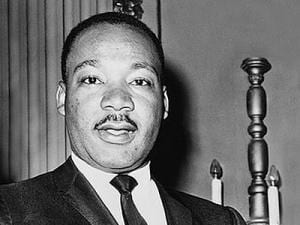
The goal of this educational undertaking was not to erase or even minimize our differences, but to help students hold the tension of our universality and particularity with greater cognizance and confidence. This is rooted in the foundational notion that all human beings are created in the “Divine image” (Genesis 1:26-27) and that each person is a unique creation. As Dr. King’s close friend and colleague, Rabbi Abraham Joshua Heschel, once asked rhetorically, “When engaged in a conversation with a person of different religious commitment, if I discover that we disagree in matters sacred to us, does the image of God I face disappear?”
As Rabbi Heschel understood well, this does not mean that we need to accept all ideas or opinions as equally valid, but that we must treat people humanely. It also suggests that before we rush to debate or protest—both of which are vital in a healthy democracy (as Dr. King modeled for us so powerfully)—we must to learn enough about the “other” to know if and why we disagree with them. This recognition should also be accompanied by a healthy dose of humility, knowing that no one possesses ultimate truth. In fact, in a world in which there is so much that we don’t know, we would be wise to learn from as many people as possible (even those registered with the “wrong” political party). While we may all be created in the Divine image, none of us is God.
Heschel made his statement about the sanctity of the human face as part of an address he gave in 1965 at Union Theological School (a Protestant institution), where he was serving as a visiting professor. The title of his speech was “No Religion is an Island.” Like MLK, he understood that we live in one, inescapable, “world house.” The great challenge is to learn how to move between the separate and shared spaces in this expansive home with dignity, integrity, and compassion. The recent pluralism initiative at Hebrew College was but one modest attempt at living into this grand vision.
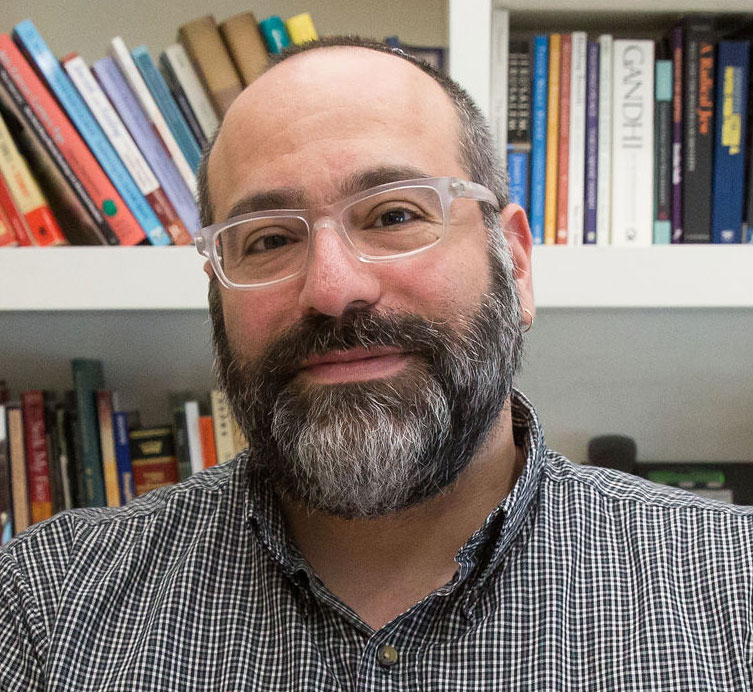
About Rabbi Or Rose
Rabbi Or Rose is the founding director of the Betty Ann Greenbaum Miller Center for Interreligious Learning & Leadership of Hebrew College. He can be reached at [email protected] You can read more about the author here.
Previous Post

December 20, 2019
Hanukah Faith in a Time of Oppression
Next Post

April 7, 2020 Building Bridges of Compassion: Preparing for Passover & Easter Virtually
Browse Our Archives
Select a Category answers Uncategorized
Select a Month February 2025 August 2022 April 2022 March 2022 October 2021 January 2021 May 2020 April 2020 February 2020 December 2019 November 2019 August 2019 May 2019 April 2019 March 2019 December 2018 November 2018 October 2018 June 2018 March 2018 February 2018
TAKE THE
Religious Wisdom Quiz
What was the primary water source in Jerusalem?
Select your answer to see how you score.
Well Spring Rain collection River
Related posts from Jewish Voices
Unitarian Universalism and the B’nei Anusim Jews
Ukraine in Prophecy: The Jeremiah Factor

Devout Jews in Ukraine stay to pray and...
TRENDING AT PATHEOS Jewish

Yom Kippur : Is There Always Room for...
Making Room for Forgiveness Every year as Yom Kippur approaches, I find...

This Rosh Hashanah: Can I Find New Meaning?
A Sunrise, a New Year, and a Question On our way to...

Killing Amalek: The Torah’s Most Misunderstood Commandment
Few passages of the Torah have provoked more confusion, polemic, and misuse...

I have never trusted a first draft. I don’t mean that...

Back to School, Back to Reality—and a New...
A New School Year Begins… Back to Reality A new school year...

Out-Crowleying Crowley: The Emptiness of the O9A
O9A Neo-Crowley Racial Cosplay and Edgelord Atrocitism Aleister Crowley did not create...
view all Jewish blogs
Ad-Free & Subscriber Log-In Subscription Support
- About Us
- 2026 Calendar
- Videos
- Podcasts
- Library of World Religions
- Faith In Media Tracker
- Advertise With Us
- Write for Us
- Privacy Policy
- Terms of Service
- Do Not Sell My Data
- Contact Us
- Radiant Digital
- Manage Newsletter Subscriptions
- Unsubscribe From Notifications
- Sitemap
Copyright 2008-2026, Patheos. All rights reserved.
Subscription Support Ad-Free & Subscriber Log-In
Follow Patheos