
BuddhistCatholicContemplativeEvangelicalGeneral ChristianHinduJewishLatter-day SaintMuslimNew VisionsProgressive Christian
Beliefs
- Buddhist
- Catholic
- Contemplative
- Evangelical
- General Christian
- Hindu
- Jewish
- Latter-day Saint
- More Voices
- Muslim
- New Visions
- Pagan
- Progressive Christian
Topics
- Religion News
- Food and Religion
- Sports and Religion
- Religious Art
- Religious Music and Entertainment
- Religious Events
- History and Religion
- Style and Religion
- Politics and Religion
- Women in Religion
- Recreation Outdoors and Religion
- Business Finance and Religion
- Careers Workplace and Religion
- Education and Religion
- Family Parenting and Religion
- Health Fitness and Religion
- Home and Religion
- Relationships and Religion
- Technology and Religion
- Travel and Religion
Columnists
- Buddhist Columnists
- Business Finance and Religion Columnists
- Careers Workplace and Religion Columnists
- Catholic Columnists
- Contemplative Columnists
- Education and Religion Columnists
- Evangelists Columnists
- Family Parenting and Religion Columnists
- General Christian Columnists
- Health Fitness and Religion Columnists
- Hindu Columnists
- History and Religion Columnists
- Home and Religion Columnists
- Jewish Columnists
- More Voices Columnists
- Latter Day Columnists
- Muslim Columnists
- New Visions Columnists
- Nonreligious Columnists
- Pagan Columnists
- Politics and Religion Columnists
- Progressive Columnists
- Recreation Outdoors and Religion Columnists
- Relationships and Religion Columnists
- Religion News Columnists
- Religious Art Columnists
- Religious Events Columnists
- Religious Music and Entertainment Columnists
- Sports and Religion Columnists
- Style and Religion Columnists
- Technology and Religion Columnists
- Travel and Religion Columnists
- Women in Religion Columnists
Resource Library
- 2026 Calendar
- Library of World Religions
- The 100 Most Holy Places on Earth
- Patheos Answers
- Podcasts
- Videos
- Faith Leaders Database
- Anglican Episcopalian
- Bahai
- Baptist
- Buddhism
- Christianity
- Confucianism
- Eastern Orthodoxy
- Hinduism
- Holiness and Pentecostal
- ISKCON
- Islam
- Judaism
- Lutheran
- Methodist
- The Church of Jesus Christ of Latter-day Saints
- New Age
- Paganism
- Presbytarian and Reformed
- Protestantism
- Religion Behind the Scenes
- Roman Catholic
- Scientology
- Shia Islam
- Sikhism
- Sufism
- Sunni Islam
- Taoism
- Zen
- See all religions
Research Tools
 Ad-Free & Subscriber Log-In Subscription Support
Ad-Free & Subscriber Log-In Subscription Support
Follow Patheos 

- Trending:
- Forgiveness
- |
- Marriage
- |
- Consciousness
- |
- Death Penalty
- |
- Election
- |
- Halloween
 Jesus Creed
- Home
- Evangelical
- He Will Wipe Away All Tears (RJS)
He Will Wipe Away All Tears (RJS)
Last updated on: January 9, 2020 at 4:55 am by RJS
He Will Wipe Away All Tears (RJS) 2020-01-08T21:44:36-06:00 RJS
Patheos Explore the world's faith through different perspectives on religion and spirituality! Patheos has the views of the prevalent religions and spiritualities of the world.
He will swallow up death in victory; and the Lord God will wipe away tears from off all faces (Is 25:8)
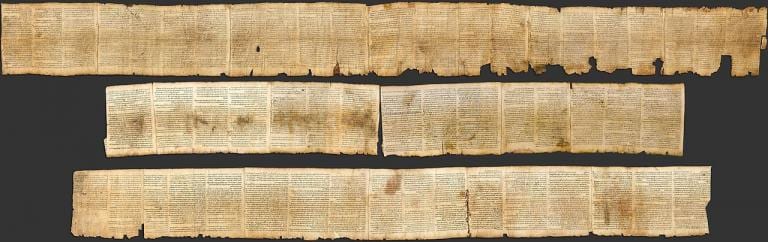 Ben Witherington III, Isaiah Old and New, sees later Isaiah 14-39 coming from the time of the historical Isaiah, the prophet in Judah through the time of Hezekiah, before the fall to Babylon. This section opens with oracles of woe and judgment against the nations and Judah, continues with such oracles interspersed with oracles of redemption and victory, and finishes up with a historical narrative recounting the miraculous deliverance of Jerusalem from Sennacherib, King Hezekiah’s illness and healing, and his rather foolish display of all his wealth to the envoys from Babylon.
Many (perhaps most) scholars will argue that this section dates from a later time, after the fall of Jerusalem and exile, at least the material in chapters 24-27. Witherington argues that this is primarily because they see the hope of resurrection in Isaiah 25 and 26 as reflecting ideas from a much later era. Isaiah, the argument goes, would not have spoken of resurrection. Witherington counters that it is hard to pinpoint the emergence of an idea with any accuracy – especially in a time and place with relatively little written record and that the history of ideas shows that they wax and wane. Although later editors may have made some insertions leading to the text we have, there is no strong reason to doubt that these oracles date to the historical Isaiah.
It is to these oracles of hope that we turn. Specifically to Isaiah 25-26, 29, and 35. Quotes, allusions, and other references to these sections are quite important in the New Testament. Following Isaiah 25:8 quoted at the top of this post, Isaiah 26:19 is quite specific about resurrection:
Your dead will live;
Their corpses will rise.
You who lie in the dust, awake and shout for joy,
For your dew is as the dew of the dawn,
And the earth will give birth to the departed spirits. (26:19)
There is some ambiguity in the translation here, the NIV has “their bodies” and the NASB quoted above has “their corpses” but Witherington in a footnote says it should be “my corpses.” In fact, the Complete Jewish Bible (see Bible Gateway) has “Your dead will live, my corpses will rise.“
About these sections, Witherington writes:
Indeed, the reason phrases and ideas from Isaiah 26 show up on the lips of Jesus in Luke 7 and Isaiah 25 on the lips of Paul in 1 Corinthians 15 is precisely because they are taken to enunciate the notion of resurrection from dead even more clearly that what is said in Isaiah 40-66. (p. 127-128)
Here from the mouth of Isaiah we see the seeds of the ultimate victory through resurrection. Witherington goes on to argue:
Here then we find the notion of death being swallowed up by the Author of Life, God, and in addition we find out that the form this will take is bodily resurrection of “my corpses,” those which belong to God. (p. 128)
The reference to “my corpses” signifies the resurrection of God’s people. The ideas contained in these passages play an important role in the New Testament portrayal of the gospel.
Isaiah 34 and 35 turn to God’s wrath against the nations (34) and to the liberation of God’s people (35). We have here “the themes of judgment on Israel’s foes and redemption for God’s people.” (p. 132) Although chapter 35 starts with the parched land bursting into bloom, the emphasis is on the people and the return of the redeemed.
Strengthen the feeble hands,
steady the knees that give way;
say to those with fearful hearts,
“Be strong, do not fear;
your God will come,
he will come with vengeance;
with divine retribution
he will come to save you.”
Then will the eyes of the blind be opened
and the ears of the deaf unstopped.
Then will the lame leap like a deer,
and the mute tongue shout for joy.
…
And a highway will be there;
it will be called the Way of Holiness;
it will be for those who walk on that Way.
The unclean will not journey on it;
wicked fools will not go about on it.
No lion will be there,
nor any ravenous beast;
they will not be found there.
But only the redeemed will walk there,
and those the Lord has rescued will return.
They will enter Zion with singing;
everlasting joy will crown their heads.
Gladness and joy will overtake them,
and sorrow and sighing will flee away. (vv. 3-6, 8-10)
Witherington emphasizes that God is the redeemer here. There are at least two important aspects to this. First – nowhere in Isaiah is there a call to arms. Rather there is a call to turn to God and to rely on God.
Notice that we do not have a promise here that God will arm his people and teach them to fight. To the contrary, they are being told, “‘vengeance is mine; I will repay’ says the Lord” (cf. Isaiah 24:21-25:5; 34:8; 43:4; 48:20; 49:24, 25; 62:11). This theme is present throughout the book of Isaiah, however many hands may have contributed to it. (p. 133)
The theme is picked up in Revelation. According to Witherington:
Rather than a call to arms, Revelation is a call to say farewell to arms, and to leave justice in the hands of God, and to be prepared to die for one’s faith. This is called conquering. (p. 134)
Second, the healing of the people (blind, deaf, lame) has a spiritual aspect – but it is also a physical healing. There is a complete regeneration of the land and of the people.
Salvation must be seen in its holistic sense involving body and human spirit, involving the individual and the society, involving creation and creatures. … Here we should remember the promise of the shoot that comes out of the root in the dead stump of Jesse. God wants a whole new leadership for God’s people going forward. (p. 134)
Looking ahead to the topic of our next post – on the use of Isaiah 13-39 in the New Testament – it is worth pointing out with Witherington that when Jesus raised the dead, healed the deaf, blind, and lame, this is a sign that “Isaiah’s new creation is breaking into the midst of the old one, and that the road back from living in the land of disease, decay, and death, a sort of an exile form the land of life, the land oozing with milk and honey, is being paved by Jesus.” (p. 137)
If you wish to contact me directly you may do so at rjs4mail[at]att.net
If interested you can subscribe to a full text feed of my posts at Musings on Science and Theology.
The links to books above above are paid links. Go with this one if you prefer: Isaiah Old and New: Exegesis, Intertexutality, and Hermeneutics.
Previous Post

January 9, 2020
Frozen 2 and the Divine Feminine
Next Post
January 10, 2020 Singles Myth: The Intimacy Challenge
Browse Our Archives
Select a Category Acts of the Apostles Adam Advent Anabaptism Angels Anglican Apologetics Atonement Baptism BCP Prayers Bible Biblical Studies Birds Blogging Bloglossary Bonhoeffer Books Calvinism Christianity Church Church History Coffee Colossians Commentary Recs Conversion Creation Creeds Culture Death Ecclesiastes Economics Education Embracing Grace Emergent Emerging Movement Eschatology Essays Ethics Eucharist Evangelicalism Family Fasting Fathers Fellowship of Differents Footsteps Tour Fun and Whimsical Gospel Grace Happiness Heaven Hell Holy Spirit Irenaeus James Jesus Jesus Creed Job Justification Kingdom of God Law Lectures Lent Liberalism Love and Marriage Mabanteneni Manhood Mary Miracles Missio Alliance MissioLife Missional Missional Jesus Movies and Film New Perspective Northern Seminary OneLife Origins Project Orthodox Parables Pastor's Spouse Pastoring and Leading Pastoring and Preaching Patristics Paul Paul-John Tour Pharisees Pietism Political Theology Prayer and Formation Preaching Problems for Faith Psalm 119 Psalms Public Issues Purgatory Religions Resurrection Revelation Romans Rule of JCreed Science and Faith Sermon on the Mount Sports Ten Commandments Theology Third Way Top Ten Lists Translations Uncategorized Universalism University Ministry Way Out Weekly Meanderings Wisdom Women and Ministry Work Worship Writing & Blogging Youth Ministry
Select a Month July 2021 January 2020 December 2019 November 2019 October 2019 September 2019 August 2019 July 2019 June 2019 May 2019 April 2019 March 2019 February 2019 January 2019 December 2018 November 2018 October 2018 September 2018 August 2018 July 2018 June 2018 May 2018 April 2018 March 2018 February 2018 January 2018 December 2017 November 2017 October 2017 September 2017 August 2017 July 2017 June 2017 May 2017 April 2017 March 2017 February 2017 January 2017 December 2016 November 2016 October 2016 September 2016 August 2016 July 2016 June 2016 May 2016 April 2016 March 2016 February 2016 January 2016 December 2015 November 2015 October 2015 September 2015 August 2015 July 2015 June 2015 May 2015 April 2015 March 2015 February 2015 January 2015 December 2014 November 2014 October 2014 September 2014 August 2014 July 2014 June 2014 May 2014 April 2014 March 2014 February 2014 January 2014 December 2013 November 2013 October 2013 September 2013 August 2013 July 2013 June 2013 May 2013 April 2013 March 2013 February 2013 January 2013 December 2012 November 2012 October 2012 September 2012 August 2012 July 2012 June 2012 May 2012 April 2012 March 2012 February 2012 January 2012 December 2011 November 2011 October 2011 September 2011 August 2011 July 2011 June 2011 May 2011 April 2011 March 2011 February 2011 January 2011 December 2010 November 2010 October 2010 September 2010 August 2010 July 2010 June 2010 May 2010 April 2010 March 2010 February 2010 January 2010 December 2009 November 2009 October 2009 September 2009 August 2009 July 2009 June 2009 May 2009 April 2009 March 2009 February 2009 January 2009 December 2008 November 2008 October 2008 September 2008 August 2008 July 2008 June 2008 May 2008 April 2008 March 2008 February 2008 January 2008 December 2007 November 2007 October 2007 September 2007 August 2007 July 2007 June 2007 May 2007 April 2007 March 2007 February 2007 January 2007 December 2006 November 2006 October 2006 September 2006 August 2006 July 2006 June 2006 May 2006 April 2006 March 2006 February 2006 January 2006 December 2005 November 2005 October 2005 September 2005 August 2005 July 2005 June 2005 May 2005 April 2005 0000
Follow Us!
TAKE THE
Religious Wisdom Quiz
Who opened the first seal to release the White Horse in Revelation?
Select your answer to see how you score.
John The 24 Elders An angel The Lamb (Jesus)
Related posts from Jesus Creed


The Gospel of With Us and Through Us

Northern Seminary Announces: Nijay Gupta Joins Faculty

The Gundrys and Me: Ruth Tucker
TRENDING AT PATHEOS Evangelical

How the author of the world's best hymn...
I've been working with John Newton for a while now. This makes...

Long before this Lectio Divina, Psalm 130 - the song - started...

What About the Trees? Another Living Parable
After I finished writing the last article about falling leaves as a...

Why Classical Education Is a Conversation, Not a...
Come and Read: Joy in Classical Education When I was a little...

Falling Leaves: A Living Parable on Letting Go
I’ve spent the vast majority of my life in the southeast corner...

Cornell University has received a great deal of negative publicity and intense...
view all Evangelical blogs
Ad-Free & Subscriber Log-In Subscription Support
- About Us
- 2026 Calendar
- Videos
- Podcasts
- Library of World Religions
- Faith In Media Tracker
- Advertise With Us
- Write for Us
- Privacy Policy
- Terms of Service
- Do Not Sell My Data
- Contact Us
- Radiant Digital
- Manage Newsletter Subscriptions
- Unsubscribe From Notifications
- Sitemap
Copyright 2008-2026, Patheos. All rights reserved.
Subscription Support Ad-Free & Subscriber Log-In
Follow Patheos