
BuddhistCatholicContemplativeEvangelicalGeneral ChristianHinduJewishLatter-day SaintMuslimNew VisionsProgressive Christian
Beliefs
- Buddhist
- Catholic
- Contemplative
- Evangelical
- General Christian
- Hindu
- Jewish
- Latter-day Saint
- More Voices
- Muslim
- New Visions
- Pagan
- Progressive Christian
Topics
- Religion News
- Food and Religion
- Sports and Religion
- Religious Art
- Religious Music and Entertainment
- Religious Events
- History and Religion
- Style and Religion
- Politics and Religion
- Women in Religion
- Recreation Outdoors and Religion
- Business Finance and Religion
- Careers Workplace and Religion
- Education and Religion
- Family Parenting and Religion
- Health Fitness and Religion
- Home and Religion
- Relationships and Religion
- Technology and Religion
- Travel and Religion
Columnists
- Buddhist Columnists
- Business Finance and Religion Columnists
- Careers Workplace and Religion Columnists
- Catholic Columnists
- Contemplative Columnists
- Education and Religion Columnists
- Evangelists Columnists
- Family Parenting and Religion Columnists
- General Christian Columnists
- Health Fitness and Religion Columnists
- Hindu Columnists
- History and Religion Columnists
- Home and Religion Columnists
- Jewish Columnists
- More Voices Columnists
- Latter Day Columnists
- Muslim Columnists
- New Visions Columnists
- Nonreligious Columnists
- Pagan Columnists
- Politics and Religion Columnists
- Progressive Columnists
- Recreation Outdoors and Religion Columnists
- Relationships and Religion Columnists
- Religion News Columnists
- Religious Art Columnists
- Religious Events Columnists
- Religious Music and Entertainment Columnists
- Sports and Religion Columnists
- Style and Religion Columnists
- Technology and Religion Columnists
- Travel and Religion Columnists
- Women in Religion Columnists
Resource Library
- 2026 Calendar
- Library of World Religions
- The 100 Most Holy Places on Earth
- Patheos Answers
- Podcasts
- Videos
- Faith Leaders Database
- Anglican Episcopalian
- Bahai
- Baptist
- Buddhism
- Christianity
- Confucianism
- Eastern Orthodoxy
- Hinduism
- Holiness and Pentecostal
- ISKCON
- Islam
- Judaism
- Lutheran
- Methodist
- The Church of Jesus Christ of Latter-day Saints
- New Age
- Paganism
- Presbytarian and Reformed
- Protestantism
- Religion Behind the Scenes
- Roman Catholic
- Scientology
- Shia Islam
- Sikhism
- Sufism
- Sunni Islam
- Taoism
- Zen
- See all religions
Research Tools
 Ad-Free & Subscriber Log-In Subscription Support
Ad-Free & Subscriber Log-In Subscription Support
Follow Patheos 

- Trending:
- Forgiveness
- |
- Marriage
- |
- Consciousness
- |
- Death Penalty
- |
- Election
- |
- Halloween
 Jesus Creed
- Home
- Evangelical
- By the Power of the Holy Spirit (RJS)
By the Power of the Holy Spirit (RJS)
Last updated on: December 19, 2019 at 5:01 am by RJS
By the Power of the Holy Spirit (RJS) 2019-12-18T20:50:51-06:00 RJS
Patheos Explore the world's faith through different perspectives on religion and spirituality! Patheos has the views of the prevalent religions and spiritualities of the world.
 Therefore the Lord himself will give you a sign: The virgin will conceive and give birth to a son, and will call him Immanuel. Isaiah 7:14
Taken up again in the Gospel of Matthew
All this took place to fulfill what the Lord had said through the prophet: “The virgin will conceive and give birth to a son, and they will call him Immanuel” (which means “God with us”). (1:22-23)
Most Christians have a deep appreciation for the scriptures, both the Old Testament and the New Testament. For those who were not raised in the church however, or who have for any one of a number of reasons become distrustful of the reliability of the scriptures, the questions are quite different. Scripture relates some pretty incredible events and stories – the virgin birth is high on the list. Why should intelligent educated person in secular, modern or postmodern, enlightened, Western society take this seriously?
Dr. John Polkinghorne’s book Testing Scripture: A Scientist Explores the Bible can provide some useful insights here – whether one agrees with him across the board or disagrees with some of his conclusions. Dr. Polkinghorne was a very successful scientist, an expert and creative theoretical physicist involved in the discovery of quarks. He was Professor of Mathematical Physics at Cambridge University before he resigned to study for the Anglican priesthood. He has since been a parish priest, Dean of the Chapel at Trinity Hall Cambridge and President of Queen’s College, Cambridge. After retirement he continues to write, think, and lecture about the interface between science and faith. In Testing Scripture Polkinghorne isn’t dogmatic or defensive about about scripture, rather he is explaining why he, as a scientist, scholar, and Christian, takes scripture seriously. Both faith and reason play a role in his approach to scripture.
The Gospels record a reliable history. Within the historical conventions of their time they tell the gospel; the story of the birth, life, death, and resurrection of Jesus as the good news of God’s work in the world. Dr. Polkinghorne works through a number of different episodes and events as he describes his reasons for taking the Gospels seriously. One of the most interesting, though, is the one he leaves for last.
I have left till last what are among the best-known and best-loved narratives in the Gospels: the stories of the birth of Jesus. We find them only in Matthew 1.18-2.12 and Luke 2.1-20. John, after his timeless Prologue, and Mark, without any preliminaries, both start with the encounters between John the Baptist and Jesus at the beginning of the public ministry. We are so used to conflating the two gospel accounts that it is only when we read them carefully and separately that we become aware of how different they are. Luke seems to tell the story very much from the point of view of Mary, and the visitors to the newborn Jesus are the humble shepherds. Matthew seems to see things much more from Joseph’s perspective, and his visitors are the magi. … Luke gives us a very specific dating of the birth in relation to a Roman census, but there are severe scholarly difficulties in reconciling this with Matthew’s (plausible) statement that it took place during the reign of Herod the Great. A principle concern of both narratives is to explain why, if Mary’s home was at Nazareth, Jesus was born in Bethlehem, as Messianic prophecy required. I do not doubt that there is historical truth preserved in the birth stories, but establishing its exact content is not an easy task. (p. 67-68)
As with some of the other stories in the gospels and in other parts of scripture there are discrepancies that can be difficult to reconcile and harmonize. There is no strong reason, however, to doubt a historical root, down to and including the birth of Jesus in Bethlehem.
A Virgin Conceived. The conception of Jesus is a different issue. Matthew 1:18 relates the claim:
This is how the birth of Jesus the Messiah came about: His mother Mary was pledged to be married to Joseph, but before they came together, she was found to be pregnant through the Holy Spirit.
Joseph responds to Mary’s pregnancy by planning to divorce her and an angel in a dream reiterates the claim “what is conceived in her is from the Holy Spirit.” Luke 1:34-35 records Mary’s response when told she would conceive and give birth to a son, the Messiah.
“How will this be,” Mary asked the angel, “since I am a virgin?” The angel answered, “The Holy Spirit will come on you, and the power of the Most High will overshadow you. So the holy one to be born will be called the Son of God.
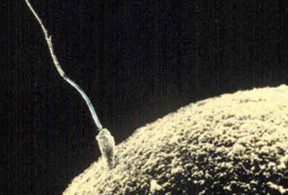 The very idea that a virgin conceived and bore a son raises an eyebrow or two in our secular Western society – both modern and postmodern. At the risk of being a little too earthy – conception in humans requires input from two sources. After all, we all know that an egg from the woman requires the DNA from the sperm provided by a man to make it whole, capable of producing a new individual. One might, perhaps conceive of a clone of some sort using only Mary’s DNA – but this could only make a female, not a male. No Y Chromosome in Mary. If a virgin gave birth to a son it was a truly miraculous conception. The DNA had to come from somewhere. Did God just produce a a unique set of chromosomes to join with Mary’s? Was it Joseph’s DNA? Some other descendant of David? Was this a divine artificial insemination?
How and can an intelligent, educated, experienced person believe in a virgin birth?
Dr. Polkinghorne gives his reasoning:
Luke, very explicitly in his story of the Annunciation (1.34-35), and Matthew, more obliquely (1.18), both assert the virginal conception of Jesus. Christian tradition has attached great significance to this, often rather inaccurately calling it the ‘virgin birth’. Yet in the New Testament it seems nowhere as widely significant as the Resurrection. Paul is content to simply lay stress on Jesus’ solidarity with humanity: ‘God sent his Son, born of woman, born under the law’ (Galatians 4.4). The theological importance of the virginal conception lies in its lending emphasis to the presence of a total divine initiative in the coming of Jesus, even if this truth is much more frequently expressed by the New Testament writers simply in the language of his having been sent. Jesus was not opportunistically co-opted for God’s purpose when he was found to be suitable, but he was part of that purpose from the start. The virginal conception is a powerful myth, and I believe that in the religion of the Incarnation the power of story fuses with the power of a true story, so that the great Christian myths are enacted myths. On this basis, I find myself able to believe in the virgin birth, even if the motivating evidence is less extensive than for the belief in the Resurrection. (p. 68-69, emphasis added)
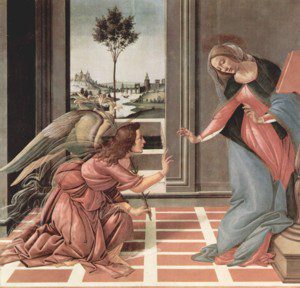 Interaction not Intervention. One of the most important criteria for thinking through the incredible claims in scripture is God’s interaction with his creatures rather than his intervention in his creation. The miracles ring true when they enhance our understanding of the interaction of God with his people in divine self-revelation. The virginal conception is part of the Incarnation, “The Word became flesh and made his dwelling among us”. The magnificent early Christian hymns quoted by Paul in Col 1.15-20 and Phil 2.6-11 catch the essence of this enacted myth as well.
It makes no sense to try to defend the virginal conception, the resurrection, or any of the other signs or miracles related in the New Testament, separate from the story of the Gospel, the life, death, and resurrection of Jesus as God’s Messiah. In the context of God’s mission within his creation the miracles make sense and are truly miracles. Separate from this they will never make sense.
This is also a place where it is wise to avoid asking too many questions. Especially as there is no way these questions will ever find answers. I rather expect that the conception (insemination) was miraculous – but that a modern DNA test would have confirmed descent from the house and lineage of David in some manner. But this is really beside the point and unimportant. The point is the one that Dr. Polkinghorne emphasizes … Jesus was not opportunistically co-opted for God’s purpose but he was part of that purpose from the start. This was God’s plan and God’s doing.
What do you think? Do Dr. Polkinghorne’s reasons for believing in the virgin birth make sense?
What arguments are persuasive on this, or any other “difficult to believe” event?
If you wish to contact me directly you may do so at rjs4mail[at]att.net.
If interested you can subscribe to a full text feed of my posts at Musings on Science and Theology.
(This is an edited repost, always appropriate this time of year. The links above are paid referrals – try this one if you prefer: Testing Scripture.)
Previous Post

December 19, 2019
Christmas Gift Guide for Women in Ministry
Next Post
December 19, 2019 Generosity in Church Culture
Browse Our Archives
Select a Category Acts of the Apostles Adam Advent Anabaptism Angels Anglican Apologetics Atonement Baptism BCP Prayers Bible Biblical Studies Birds Blogging Bloglossary Bonhoeffer Books Calvinism Christianity Church Church History Coffee Colossians Commentary Recs Conversion Creation Creeds Culture Death Ecclesiastes Economics Education Embracing Grace Emergent Emerging Movement Eschatology Essays Ethics Eucharist Evangelicalism Family Fasting Fathers Fellowship of Differents Footsteps Tour Fun and Whimsical Gospel Grace Happiness Heaven Hell Holy Spirit Irenaeus James Jesus Jesus Creed Job Justification Kingdom of God Law Lectures Lent Liberalism Love and Marriage Mabanteneni Manhood Mary Miracles Missio Alliance MissioLife Missional Missional Jesus Movies and Film New Perspective Northern Seminary OneLife Origins Project Orthodox Parables Pastor's Spouse Pastoring and Leading Pastoring and Preaching Patristics Paul Paul-John Tour Pharisees Pietism Political Theology Prayer and Formation Preaching Problems for Faith Psalm 119 Psalms Public Issues Purgatory Religions Resurrection Revelation Romans Rule of JCreed Science and Faith Sermon on the Mount Sports Ten Commandments Theology Third Way Top Ten Lists Translations Uncategorized Universalism University Ministry Way Out Weekly Meanderings Wisdom Women and Ministry Work Worship Writing & Blogging Youth Ministry
Select a Month July 2021 January 2020 December 2019 November 2019 October 2019 September 2019 August 2019 July 2019 June 2019 May 2019 April 2019 March 2019 February 2019 January 2019 December 2018 November 2018 October 2018 September 2018 August 2018 July 2018 June 2018 May 2018 April 2018 March 2018 February 2018 January 2018 December 2017 November 2017 October 2017 September 2017 August 2017 July 2017 June 2017 May 2017 April 2017 March 2017 February 2017 January 2017 December 2016 November 2016 October 2016 September 2016 August 2016 July 2016 June 2016 May 2016 April 2016 March 2016 February 2016 January 2016 December 2015 November 2015 October 2015 September 2015 August 2015 July 2015 June 2015 May 2015 April 2015 March 2015 February 2015 January 2015 December 2014 November 2014 October 2014 September 2014 August 2014 July 2014 June 2014 May 2014 April 2014 March 2014 February 2014 January 2014 December 2013 November 2013 October 2013 September 2013 August 2013 July 2013 June 2013 May 2013 April 2013 March 2013 February 2013 January 2013 December 2012 November 2012 October 2012 September 2012 August 2012 July 2012 June 2012 May 2012 April 2012 March 2012 February 2012 January 2012 December 2011 November 2011 October 2011 September 2011 August 2011 July 2011 June 2011 May 2011 April 2011 March 2011 February 2011 January 2011 December 2010 November 2010 October 2010 September 2010 August 2010 July 2010 June 2010 May 2010 April 2010 March 2010 February 2010 January 2010 December 2009 November 2009 October 2009 September 2009 August 2009 July 2009 June 2009 May 2009 April 2009 March 2009 February 2009 January 2009 December 2008 November 2008 October 2008 September 2008 August 2008 July 2008 June 2008 May 2008 April 2008 March 2008 February 2008 January 2008 December 2007 November 2007 October 2007 September 2007 August 2007 July 2007 June 2007 May 2007 April 2007 March 2007 February 2007 January 2007 December 2006 November 2006 October 2006 September 2006 August 2006 July 2006 June 2006 May 2006 April 2006 March 2006 February 2006 January 2006 December 2005 November 2005 October 2005 September 2005 August 2005 July 2005 June 2005 May 2005 April 2005 0000
Follow Us!
TAKE THE
Religious Wisdom Quiz
What did Jesus say to the storm on the Sea of Galilee?
Select your answer to see how you score.
"Depart from me!" "Let there be light!" "Peace, be still!" "Be gone!"
Related posts from Jesus Creed


The Gospel of With Us and Through Us

Northern Seminary Announces: Nijay Gupta Joins Faculty

The Gundrys and Me: Ruth Tucker
TRENDING AT PATHEOS Evangelical

How the author of the world's best hymn...
I've been working with John Newton for a while now. This makes...

Long before this Lectio Divina, Psalm 130 - the song - started...

What About the Trees? Another Living Parable
After I finished writing the last article about falling leaves as a...

Why Classical Education Is a Conversation, Not a...
Come and Read: Joy in Classical Education When I was a little...

Falling Leaves: A Living Parable on Letting Go
I’ve spent the vast majority of my life in the southeast corner...

Cornell University has received a great deal of negative publicity and intense...
view all Evangelical blogs
Ad-Free & Subscriber Log-In Subscription Support
- About Us
- 2026 Calendar
- Videos
- Podcasts
- Library of World Religions
- Faith In Media Tracker
- Advertise With Us
- Write for Us
- Privacy Policy
- Terms of Service
- Do Not Sell My Data
- Contact Us
- Radiant Digital
- Manage Newsletter Subscriptions
- Unsubscribe From Notifications
- Sitemap
Copyright 2008-2026, Patheos. All rights reserved.
Subscription Support Ad-Free & Subscriber Log-In
Follow Patheos