
BuddhistCatholicContemplativeEvangelicalGeneral ChristianHinduJewishLatter-day SaintMuslimNew VisionsProgressive Christian
Beliefs
- Buddhist
- Catholic
- Contemplative
- Evangelical
- General Christian
- Hindu
- Jewish
- Latter-day Saint
- More Voices
- Muslim
- New Visions
- Pagan
- Progressive Christian
Topics
- Religion News
- Food and Religion
- Sports and Religion
- Religious Art
- Religious Music and Entertainment
- Religious Events
- History and Religion
- Style and Religion
- Politics and Religion
- Women in Religion
- Recreation Outdoors and Religion
- Business Finance and Religion
- Careers Workplace and Religion
- Education and Religion
- Family Parenting and Religion
- Health Fitness and Religion
- Home and Religion
- Relationships and Religion
- Technology and Religion
- Travel and Religion
Columnists
- Buddhist Columnists
- Business Finance and Religion Columnists
- Careers Workplace and Religion Columnists
- Catholic Columnists
- Contemplative Columnists
- Education and Religion Columnists
- Evangelists Columnists
- Family Parenting and Religion Columnists
- General Christian Columnists
- Health Fitness and Religion Columnists
- Hindu Columnists
- History and Religion Columnists
- Home and Religion Columnists
- Jewish Columnists
- More Voices Columnists
- Latter Day Columnists
- Muslim Columnists
- New Visions Columnists
- Nonreligious Columnists
- Pagan Columnists
- Politics and Religion Columnists
- Progressive Columnists
- Recreation Outdoors and Religion Columnists
- Relationships and Religion Columnists
- Religion News Columnists
- Religious Art Columnists
- Religious Events Columnists
- Religious Music and Entertainment Columnists
- Sports and Religion Columnists
- Style and Religion Columnists
- Technology and Religion Columnists
- Travel and Religion Columnists
- Women in Religion Columnists
Resource Library
- 2026 Calendar
- Library of World Religions
- The 100 Most Holy Places on Earth
- Patheos Answers
- Podcasts
- Videos
- Faith Leaders Database
- Anglican Episcopalian
- Bahai
- Baptist
- Buddhism
- Christianity
- Confucianism
- Eastern Orthodoxy
- Hinduism
- Holiness and Pentecostal
- ISKCON
- Islam
- Judaism
- Lutheran
- Methodist
- The Church of Jesus Christ of Latter-day Saints
- New Age
- Paganism
- Presbytarian and Reformed
- Protestantism
- Religion Behind the Scenes
- Roman Catholic
- Scientology
- Shia Islam
- Sikhism
- Sufism
- Sunni Islam
- Taoism
- Zen
- See all religions
Research Tools
 Ad-Free & Subscriber Log-In Subscription Support
Ad-Free & Subscriber Log-In Subscription Support
Follow Patheos 

- Trending:
- Forgiveness
- |
- Marriage
- |
- Consciousness
- |
- Death Penalty
- |
- Election
- |
- Halloween
 Jesus Creed
- Home
- Evangelical
- Context, Context, Context
Context, Context, Context
Last updated on: December 12, 2019 at 12:33 am by Scot McKnight
Context, Context, Context 2019-12-09T18:38:52-06:00 Scot McKnight
Patheos Explore the world's faith through different perspectives on religion and spirituality! Patheos has the views of the prevalent religions and spiritualities of the world.
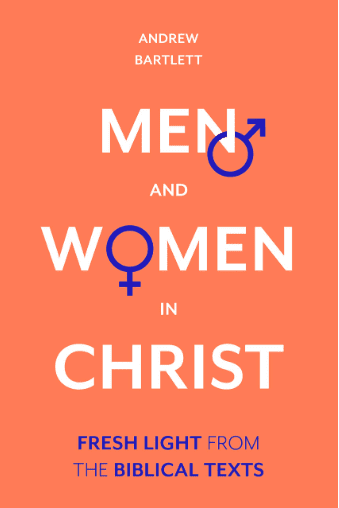 By Andrew Bartlett
CONTEXT, CONTEXT, CONTEXT
Scot has been blogging the conclusions of the different chapters of my book Men and Women in Christ.. In response to Scot’s summary of my conclusions on women elders (1 Timothy 3), Tom Harmon commented:
The Greek over English? How about the full texts in context? Paul addressed the specific question and answered it directly! Woman not to usurp.
I agree with Tom that our understanding should depend upon the full texts in context. Here are some questions for exploring the context which leads into the qualifications for elders in 1 Timothy 3:
1 TIMOTHY QUIZ
- In 1 Timothy 1:3-6, is Paul’s concern
(a) the gender of teachers who give sound teaching, or
(b) wrong teaching and those who do it?
- In 1:7, is Paul concerned that the people who desire to be recognized as teachers
(a) do not have a good understanding of God’s truth, or
(b) are the wrong gender?
- In 1:8-11, is Paul’s concern
(a) bad behaviour, or
(b) the appropriate authority structure for teaching in the church?
- In 1:12-17 is Paul’s own experience relevant
(a) because he is a man, or
(b) because Christ turned his life around?
- In 1:18-20, did Paul formally exclude Hymenaeus and Alexander from the Ephesian church
(a) because they had some wrong ideas, or
(b) because they were elders or recognized teachers who were leading others astray by wrong teaching?
- In 2:1 does Paul’s reasoning commence with ‘therefore’ (Greek ‘oun’)
(a) because he is giving instructions on how to deal with the problem identified in Q1-3, or
(b) because he is moving to a different topic?
- In 2:1-4 does Paul urge prayer for those in authority
(a) because prayer is generally a good thing to do, or
(b) because dealing with wrong teaching is a spiritual battle (1:18), and the remaining false teachers (1:3) are elite persons who may cause trouble when Timothy tries to deal with them?
- In 2:5-7 does Paul say he is not lying
(a) because he thinks Timothy and others may think that he is lying, or
(b) because his almost unbelievable journey from persecutor of the church to teacher of the Gentiles is relevant and encouraging for those whom Timothy needs to deal with (see Q2-4 above)?
- In 2:8 does Paul’s further reasoning commence with ‘therefore’ (Greek ‘oun’)
(a) because he is moving to a different topic, or
(b) because he is continuing to give instructions on how to deal with the problem that he has been addressing so far?
- In 2:8, who have ‘the men’ been arguing with? Is it
(a) each other generally, or
(b) the false teachers, because the men have not accepted what the false teachers are teaching (6:4-5)?
- In 2:9, why does Paul urge that women should dress modestly etc and not with gold braids, pearls or expensive clothes? Is this
(a) because there is no harm in issuing a general reminder about plain dress, or
(b) because some elite women in the Ephesian church are dressing immodestly and flaunting their wealth?
- In 2:9, why is ‘women’ (in the Greek text) not preceded by the definite article? Is it
(a) an accidental omission, so that the contrast with ‘the men’ in 2:8 is of no significance, or
(b) a deliberate omission, because only certain women are dressing immodestly, and Paul does not want to imply that all the women in the Ephesian church are doing so?
- In 2:10, is Paul urging that the women do good works
(a) only when the church assembly meets for worship, or
(b) generally?
- In 2:11, why does Paul switch from the plural (women) to the singular (a woman)? Is it
(a) because, while he still has in mind the misbehaving women of v 9, he is about to use an illustration from the story of Adam and Eve, or
(b) because he is aiming his remarks at every Christian woman in the world?
- In 2:11, to whom should ‘a woman’ be in submission while learning in quietness? Is it
(a) to someone who has not been mentioned, perhaps male elders of the church, or
(b) to God (v 10 – ‘theosebeia’ – reverence for God)?
- In 2:12 Paul says ‘I do not permit/I am not permitting’. Is this expression
(a) a suitable choice of words for laying down a general rule applicable to all churches in all times and places, or
(b) an expression which is unprecedented anywhere in the Bible for laying down an enduring rule?
- If the expression ‘do not permit’, in a context that does not involve physical force, implies a range of jurisdiction, over whom is Paul exercising jurisdiction in 2:12? Is it
(a) over women in the church at Ephesus, as the apostle who built up their Christian community, or
(b) over all Christian women in the world?
- In 2:12 Paul uses the rare word ‘authenteō’. Is this
(a) for no particular reason, or
(b) because it is a significant word in the astrological lore peddled by false teachers in Ephesus, and because it means ‘overpower’, and Paul does not want a woman to overpower a man with her wrong teaching?
19.Does Paul use this rare word
(a) because he means exactly what he would have meant if he had used the ordinary word for authority (noun: ‘exousia’; verb: ‘exousiazō’), or
(b) because he means something different and does not want to be misunderstood as referring to regular authority?
- In 2:13-14, is Paul
(a) relying on general creation principles that men should be in charge and that women are gullible, or
(b) using an illustration which fits the situation in Ephesus, where the men remaining in the church have not been deceived by wrong teaching, but some of the women have been deceived by it and may yet overpower some men with it, as Eve overpowered Adam?
- In 2:15, is ‘the childbearing’
(a) something that Paul envisages taking place when the church meets for worship, or
(b) not?
- In 2:15, what does Paul mean concerning salvation? Does he mean
(a) that the Saviour came into the world by being born of a woman (Gen 3:15; Matt 1:21; Gal 4:4-5; 1 Tim 2:5), or
(b) that women will be saved through bearing children.
- In 2:15, does Paul emphasize ‘the childbearing’
(a) because he thinks this is every woman’s main role in life, or
(b) because, in contrast to the Artemis cult’s belief that the goddess would keep women safe in childbearing, he believes that there is a more important kind of safety, which is found in following the one born to be the Saviour, with faith, love, holiness and self-control?
- In 2:15, why does Paul jump from ‘she’ (singular) to ‘they’ (plural) in the middle of his sentence, without an intervening identification of the plural subject? Is it
(a) because he is signalling to the reader that the singular and the plural refer to the same people, that is, the plural instruction at the end of v15 is for the misbehaving women of vv 9-10 (plural), who should also comply with his instruction in vv 11-12 (singular) and heed his illustration in vv 13-14 (singular), or
(b) because his writing is of poor quality and he gets his pronouns muddled?
- In 2:9-15 why does Paul restrict teaching by women? Is it
(a) because he thinks this would be contrary to the regular authority structure when the church meets for worship, or
(b) because, after the exclusion of Hymenaeus and Alexander, there remain some women in the church who hold to wrong teaching (1:3; 2:9; 5:13 ‘talkers of nonsense and magicians, saying things they should not’)?
- In 2:9-15, why does Paul restrict women from teaching men? Is it
(a) because women can teach other women but should never teach men, or
(b) because the women he has in view hold to wrong teaching and have men in their sights (2:9; 5:11)?
- In 3:1, why does Paul refer to the situation where someone aspires to become an elder/overseer? Is it
(a) because Paul is moving to a new topic, or
(b) because he is continuing to provide Timothy with guidance for a situation where unsuitable people want to become elders and teachers (1:3, 7)?
- In 3:1, why does Paul use the gender-neutral term ‘tis’ (‘someone’/‘anyone’)? Is it
(a) because his remarks about aspiring to eldership apply to anyone, whether male or female, or
(b) for no particular reason.
- Is Paul’s discussion of the appointments of elders and deacons in 3:1-15
(a) a move to a new topic, or
(b) for the purpose of strengthening the church to be a bulwark against wrong teaching (1:3; 3:14-15)?
- Does the surrounding context of 2:11-14 show that Paul’s concern is
(a) that a woman might teach a man wrongly, or
(b) that a woman might authoritatively teach men true doctrine?
Previous Post

December 11, 2019
Women Preachers and News Anchors
Next Post
December 12, 2019 Tenant Farmers (RJS)
Browse Our Archives
Select a Category Acts of the Apostles Adam Advent Anabaptism Angels Anglican Apologetics Atonement Baptism BCP Prayers Bible Biblical Studies Birds Blogging Bloglossary Bonhoeffer Books Calvinism Christianity Church Church History Coffee Colossians Commentary Recs Conversion Creation Creeds Culture Death Ecclesiastes Economics Education Embracing Grace Emergent Emerging Movement Eschatology Essays Ethics Eucharist Evangelicalism Family Fasting Fathers Fellowship of Differents Footsteps Tour Fun and Whimsical Gospel Grace Happiness Heaven Hell Holy Spirit Irenaeus James Jesus Jesus Creed Job Justification Kingdom of God Law Lectures Lent Liberalism Love and Marriage Mabanteneni Manhood Mary Miracles Missio Alliance MissioLife Missional Missional Jesus Movies and Film New Perspective Northern Seminary OneLife Origins Project Orthodox Parables Pastor's Spouse Pastoring and Leading Pastoring and Preaching Patristics Paul Paul-John Tour Pharisees Pietism Political Theology Prayer and Formation Preaching Problems for Faith Psalm 119 Psalms Public Issues Purgatory Religions Resurrection Revelation Romans Rule of JCreed Science and Faith Sermon on the Mount Sports Ten Commandments Theology Third Way Top Ten Lists Translations Uncategorized Universalism University Ministry Way Out Weekly Meanderings Wisdom Women and Ministry Work Worship Writing & Blogging Youth Ministry
Select a Month July 2021 January 2020 December 2019 November 2019 October 2019 September 2019 August 2019 July 2019 June 2019 May 2019 April 2019 March 2019 February 2019 January 2019 December 2018 November 2018 October 2018 September 2018 August 2018 July 2018 June 2018 May 2018 April 2018 March 2018 February 2018 January 2018 December 2017 November 2017 October 2017 September 2017 August 2017 July 2017 June 2017 May 2017 April 2017 March 2017 February 2017 January 2017 December 2016 November 2016 October 2016 September 2016 August 2016 July 2016 June 2016 May 2016 April 2016 March 2016 February 2016 January 2016 December 2015 November 2015 October 2015 September 2015 August 2015 July 2015 June 2015 May 2015 April 2015 March 2015 February 2015 January 2015 December 2014 November 2014 October 2014 September 2014 August 2014 July 2014 June 2014 May 2014 April 2014 March 2014 February 2014 January 2014 December 2013 November 2013 October 2013 September 2013 August 2013 July 2013 June 2013 May 2013 April 2013 March 2013 February 2013 January 2013 December 2012 November 2012 October 2012 September 2012 August 2012 July 2012 June 2012 May 2012 April 2012 March 2012 February 2012 January 2012 December 2011 November 2011 October 2011 September 2011 August 2011 July 2011 June 2011 May 2011 April 2011 March 2011 February 2011 January 2011 December 2010 November 2010 October 2010 September 2010 August 2010 July 2010 June 2010 May 2010 April 2010 March 2010 February 2010 January 2010 December 2009 November 2009 October 2009 September 2009 August 2009 July 2009 June 2009 May 2009 April 2009 March 2009 February 2009 January 2009 December 2008 November 2008 October 2008 September 2008 August 2008 July 2008 June 2008 May 2008 April 2008 March 2008 February 2008 January 2008 December 2007 November 2007 October 2007 September 2007 August 2007 July 2007 June 2007 May 2007 April 2007 March 2007 February 2007 January 2007 December 2006 November 2006 October 2006 September 2006 August 2006 July 2006 June 2006 May 2006 April 2006 March 2006 February 2006 January 2006 December 2005 November 2005 October 2005 September 2005 August 2005 July 2005 June 2005 May 2005 April 2005 0000
Follow Us!
TAKE THE
Religious Wisdom Quiz
What does the Greek word 'Christos' mean?
Select your answer to see how you score.
Redeemer Savior Lord Anointed One
Related posts from Jesus Creed


The Gospel of With Us and Through Us

Northern Seminary Announces: Nijay Gupta Joins Faculty

The Gundrys and Me: Ruth Tucker
TRENDING AT PATHEOS Evangelical

How the author of the world's best hymn...
I've been working with John Newton for a while now. This makes...

Long before this Lectio Divina, Psalm 130 - the song - started...

What About the Trees? Another Living Parable
After I finished writing the last article about falling leaves as a...

Why Classical Education Is a Conversation, Not a...
Come and Read: Joy in Classical Education When I was a little...

Falling Leaves: A Living Parable on Letting Go
I’ve spent the vast majority of my life in the southeast corner...

Cornell University has received a great deal of negative publicity and intense...
view all Evangelical blogs
Ad-Free & Subscriber Log-In Subscription Support
- About Us
- 2026 Calendar
- Videos
- Podcasts
- Library of World Religions
- Faith In Media Tracker
- Advertise With Us
- Write for Us
- Privacy Policy
- Terms of Service
- Do Not Sell My Data
- Contact Us
- Radiant Digital
- Manage Newsletter Subscriptions
- Unsubscribe From Notifications
- Sitemap
Copyright 2008-2026, Patheos. All rights reserved.
Subscription Support Ad-Free & Subscriber Log-In
Follow Patheos