
BuddhistCatholicContemplativeEvangelicalGeneral ChristianHinduJewishLatter-day SaintMuslimNew VisionsProgressive Christian
Beliefs
- Buddhist
- Catholic
- Contemplative
- Evangelical
- General Christian
- Hindu
- Jewish
- Latter-day Saint
- More Voices
- Muslim
- New Visions
- Pagan
- Progressive Christian
Topics
- Religion News
- Food and Religion
- Sports and Religion
- Religious Art
- Religious Music and Entertainment
- Religious Events
- History and Religion
- Style and Religion
- Politics and Religion
- Women in Religion
- Recreation Outdoors and Religion
- Business Finance and Religion
- Careers Workplace and Religion
- Education and Religion
- Family Parenting and Religion
- Health Fitness and Religion
- Home and Religion
- Relationships and Religion
- Technology and Religion
- Travel and Religion
Columnists
- Buddhist Columnists
- Business Finance and Religion Columnists
- Careers Workplace and Religion Columnists
- Catholic Columnists
- Contemplative Columnists
- Education and Religion Columnists
- Evangelists Columnists
- Family Parenting and Religion Columnists
- General Christian Columnists
- Health Fitness and Religion Columnists
- Hindu Columnists
- History and Religion Columnists
- Home and Religion Columnists
- Jewish Columnists
- More Voices Columnists
- Latter Day Columnists
- Muslim Columnists
- New Visions Columnists
- Nonreligious Columnists
- Pagan Columnists
- Politics and Religion Columnists
- Progressive Columnists
- Recreation Outdoors and Religion Columnists
- Relationships and Religion Columnists
- Religion News Columnists
- Religious Art Columnists
- Religious Events Columnists
- Religious Music and Entertainment Columnists
- Sports and Religion Columnists
- Style and Religion Columnists
- Technology and Religion Columnists
- Travel and Religion Columnists
- Women in Religion Columnists
Resource Library
- 2026 Calendar
- Library of World Religions
- The 100 Most Holy Places on Earth
- Patheos Answers
- Podcasts
- Videos
- Faith Leaders Database
- Anglican Episcopalian
- Bahai
- Baptist
- Buddhism
- Christianity
- Confucianism
- Eastern Orthodoxy
- Hinduism
- Holiness and Pentecostal
- ISKCON
- Islam
- Judaism
- Lutheran
- Methodist
- The Church of Jesus Christ of Latter-day Saints
- New Age
- Paganism
- Presbytarian and Reformed
- Protestantism
- Religion Behind the Scenes
- Roman Catholic
- Scientology
- Shia Islam
- Sikhism
- Sufism
- Sunni Islam
- Taoism
- Zen
- See all religions
Research Tools
 Ad-Free & Subscriber Log-In Subscription Support
Ad-Free & Subscriber Log-In Subscription Support
Follow Patheos 

- Trending:
- Forgiveness
- |
- Marriage
- |
- Consciousness
- |
- Death Penalty
- |
- Election
- |
- Halloween
 Jesus Creed
- Home
- Evangelical
- Isaac Watts: Hymns, Hypocrites, and Self-Murder
Isaac Watts: Hymns, Hypocrites, and Self-Murder
Last updated on: December 9, 2019 at 12:05 am by Scot McKnight
Isaac Watts: Hymns, Hypocrites, and Self-Murder 2019-12-06T06:45:32-06:00 Scot McKnight
Patheos Explore the world's faith through different perspectives on religion and spirituality! Patheos has the views of the prevalent religions and spiritualities of the world.
By Ruth Tucker
Hymns, Hypocrites and Self-Murder
Those who have imagined he was just a hymn writer—albeit a very excellent one—are often surprised by his breadth of knowledge and wide-ranging writings. The Works of Isaac Watts (1674-1748) come in 9 volumes, the first comprised of his sermons in 773 pages. He is often called the “Father of English Hymnody,” but he was also a self-educated Renaissance man (denied an Oxford or Cambridge education due to his nonconformity).
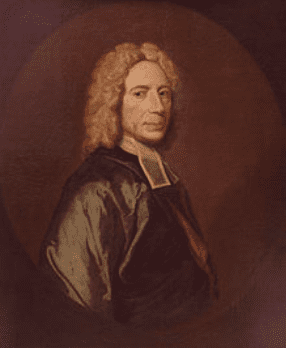 His greatest hymn text, “O God Our Help in Ages Past” (St. Anne tune), is often sung at royal funerals and celebrations. Winston Churchill’s funeral was “magnificently choreographed,” writes Mark Tooley, with his clear specifications: “Certainly there will be lively hymns.” The first listed, “O God Our Help,” was also his hymn of choice for joint worship at a summit with FDR in 1941. Far more significant, however, are the millions of Christians worldwide who for most of three centuries have been singing Watts’ hymns in English and their native tongues. He couldn’t have known how one of those great hymns has helped tell the story:
Jesus shall reign where’er the sun
Doth his successive journeys run;
His Kingdom stretch from shore to shore,
Till moons shall wax and wane no more.
Wondering on one occasion after an extended illness if it might be time for him to call it quits, he answered: “Shall I repine then, while I survey whole nations and millions and millions of mankind that have not a thousand’s part of my blessings?”
The oldest of seven children, he was born at a time when his father was imprisoned for nonconformity. In fact, the story is told that his mother nursed him while sitting on a rock near the prison steps. When he was nine, with several siblings, his father was hauled off to prison again—enough to prompt a boy to reject nonconformity. But he was never even tempted. A precocious child, he quickly picked up languages, including Latin, Greek and Hebrew. But writing verse was his first love, a life-long activity that began well before his teen years. He complained to his father about the uninspiring church hymns and singing—”the dull indifference, the negligent and thoughtless air that sits upon the faces of a whole assembly.” His father challenged him to write a hymn the congregation could sing with enthusiasm. He did, and almost immediately people were asking for more.
But Watts’ hymns from the beginning were controversial. Indeed, the worship wars of eighteenth-century England centered around him. Proper congregational singing had been set forth by the Calvinists of Geneva—that of singing the Psalms with a limited number of tunes. Then Watts comes along with new renditions of the psalms: “Jesus shall reign,” “When I survey the wondrous cross” and many more. What! King David didn’t write those words. Heresy! Fellow minister Thomas Bradbury hissed that Watts was “profane, conceited, impudent, and . . . mangling, garbling. . . Songs of Zion” fit “for one who pays no regard to inspiration.” But within a generation many congregations were singing Watts, while essentially leaving David and the Psalms in the Hebrew Bible where they belonged.
In his early twenties, after private tutoring and studies at a small nonconformist school and after serving as an assistant pastor, Watts was called to become the full-time minister at the Mark Lane Chapel in London, using the site to train young pastors. But he struggled with health issues, sometimes bedridden with high fevers and neuralgia so serious that he lost consciousness. The congregation did not want to lose him, so another minister was called to work alongside him. Then in his early thirties, his life changed, as he later wrote: “This day thirty years I came hither to the house of my good friend Sir Thomas Abney, intending to spend but one single week under his friendly roof, and I have extended my visit to the length of exactly thirty years.” It was a beautiful rural retreat with “generosity unbounded.” Indeed, Watts had found a wealthy patron without even looking.
During these decades, Watts kept a close eye on what was going on in New England and the other colonies. He carried on years of correspondence with Cotton Mather, and was ever grateful that Ben Franklin had published his book of hymn texts. He praised the work of Edwards and Whitefield that sparked the “Great Awakening,” and back home he corresponded regularly with John Wesley and insisted that “Wrestling Jacob,” Charles Wesley’s text was better than all his own hymns combined. (Google Charles Wesley Wrestling Jacob youtube, listen to a fantastic black choir.)
Correspondence, however, filled only a small portion of Watts’ days. He spent long hours in study as well as writing essays and books that would earn him high praise as a brilliant scholar. No surprise that he was awarded honorary doctorates from both the universities of Aberdeen and Edinburgh. His expertise ranged from theology, philosophy, logic, ethics and psychology to astronomy and other fields of hard science.
Known for his quick temper and seething anger, Watts’ essays occasionally offered him opportunity to vent. In one such essay we see his exasperation with the established church. If an Anglican is guilty of lewd behavior or worse, no big deal, he sarcastically insisted. But just the opposite if the individual is a nonconformist. “What a loud clamour is raised in the town,” everyone railing “These are your nonconformists; these are your saints; These are men that pretend godliness, who do not think our church pure enough for them; See what hypocrites they are!” While skewering the established church, he did use the essay to challenge fellow nonconformists to live righteous lives. He failed , however, to adequately acknowledge the valid charge of hypocrisy.
Another instance of his venting related to those guilty of “self-murder.” He wrote a lengthy essay on the subject, with no apparent understanding of those who are tempted by, or actually commit, suicide—that, despite his study of psychology. He was certain that such was the ultimate unforgivable sin. Not only should the individual be denied Christian burial, but the civil government should revive its practice of having the individual “put into the earth with the utmost contempt.” Not in a space set aside in a cemetery, rather “in some publick cross-way, that the shame and infamy might be made known to every [passerby].” Further indignity should also be revived: “that this infamy might be lasting, they were ordained to have a stake driven through their dead bodies which was not to be removed.” Those were the good old days.
But no longer, he lamented, “‘Tis pity this practice has been omitted of late years by the too favourable sentence of their neighbours on the jury, who generally pronounce them distracted: And thus they are excused from this publick mark of abhorrence.” The neighbors on the jury, of course, were ordinary folks who had complained to officials that ones who take their own life are “distracted”—or very seriously depressed. So here is a great Christian hymn-writer penning a dreadful essay that no doubt brought even further anguish to families—to mothers—already bowed down with grief.
Fortunately, this essay did not have a long shelf-life—as did his hymn texts, including my favorite Christmas carol, “Joy to the World.” But years ago, back when I was writing Women in the Maze, I did tweak the words of the third verse: “No more let sins and sorrows grow.” Then instead of “Nor thorns infest the ground,” I inserted, “Nor rule of men abound” (picking up on another aspect of the curse). Had I expected to see this improvement indicated in new hymnbooks, I would have been sorely disappointed, though I do sing the revised words myself.
Previous Post

December 8, 2019
Second Candle of Advent
Next Post
December 9, 2019 Jesus Creed Books of the Year 2019
Browse Our Archives
Select a Category Acts of the Apostles Adam Advent Anabaptism Angels Anglican Apologetics Atonement Baptism BCP Prayers Bible Biblical Studies Birds Blogging Bloglossary Bonhoeffer Books Calvinism Christianity Church Church History Coffee Colossians Commentary Recs Conversion Creation Creeds Culture Death Ecclesiastes Economics Education Embracing Grace Emergent Emerging Movement Eschatology Essays Ethics Eucharist Evangelicalism Family Fasting Fathers Fellowship of Differents Footsteps Tour Fun and Whimsical Gospel Grace Happiness Heaven Hell Holy Spirit Irenaeus James Jesus Jesus Creed Job Justification Kingdom of God Law Lectures Lent Liberalism Love and Marriage Mabanteneni Manhood Mary Miracles Missio Alliance MissioLife Missional Missional Jesus Movies and Film New Perspective Northern Seminary OneLife Origins Project Orthodox Parables Pastor's Spouse Pastoring and Leading Pastoring and Preaching Patristics Paul Paul-John Tour Pharisees Pietism Political Theology Prayer and Formation Preaching Problems for Faith Psalm 119 Psalms Public Issues Purgatory Religions Resurrection Revelation Romans Rule of JCreed Science and Faith Sermon on the Mount Sports Ten Commandments Theology Third Way Top Ten Lists Translations Uncategorized Universalism University Ministry Way Out Weekly Meanderings Wisdom Women and Ministry Work Worship Writing & Blogging Youth Ministry
Select a Month July 2021 January 2020 December 2019 November 2019 October 2019 September 2019 August 2019 July 2019 June 2019 May 2019 April 2019 March 2019 February 2019 January 2019 December 2018 November 2018 October 2018 September 2018 August 2018 July 2018 June 2018 May 2018 April 2018 March 2018 February 2018 January 2018 December 2017 November 2017 October 2017 September 2017 August 2017 July 2017 June 2017 May 2017 April 2017 March 2017 February 2017 January 2017 December 2016 November 2016 October 2016 September 2016 August 2016 July 2016 June 2016 May 2016 April 2016 March 2016 February 2016 January 2016 December 2015 November 2015 October 2015 September 2015 August 2015 July 2015 June 2015 May 2015 April 2015 March 2015 February 2015 January 2015 December 2014 November 2014 October 2014 September 2014 August 2014 July 2014 June 2014 May 2014 April 2014 March 2014 February 2014 January 2014 December 2013 November 2013 October 2013 September 2013 August 2013 July 2013 June 2013 May 2013 April 2013 March 2013 February 2013 January 2013 December 2012 November 2012 October 2012 September 2012 August 2012 July 2012 June 2012 May 2012 April 2012 March 2012 February 2012 January 2012 December 2011 November 2011 October 2011 September 2011 August 2011 July 2011 June 2011 May 2011 April 2011 March 2011 February 2011 January 2011 December 2010 November 2010 October 2010 September 2010 August 2010 July 2010 June 2010 May 2010 April 2010 March 2010 February 2010 January 2010 December 2009 November 2009 October 2009 September 2009 August 2009 July 2009 June 2009 May 2009 April 2009 March 2009 February 2009 January 2009 December 2008 November 2008 October 2008 September 2008 August 2008 July 2008 June 2008 May 2008 April 2008 March 2008 February 2008 January 2008 December 2007 November 2007 October 2007 September 2007 August 2007 July 2007 June 2007 May 2007 April 2007 March 2007 February 2007 January 2007 December 2006 November 2006 October 2006 September 2006 August 2006 July 2006 June 2006 May 2006 April 2006 March 2006 February 2006 January 2006 December 2005 November 2005 October 2005 September 2005 August 2005 July 2005 June 2005 May 2005 April 2005 0000
Follow Us!
TAKE THE
Religious Wisdom Quiz
If you show me, you will show your faith. Without me, faith is dead. What am I?
Select your answer to see how you score.
Prayer Works Love Obedience
Related posts from Jesus Creed


The Gospel of With Us and Through Us

Northern Seminary Announces: Nijay Gupta Joins Faculty

The Gundrys and Me: Ruth Tucker
TRENDING AT PATHEOS Evangelical

The REST of Your Life: A Creative Wrestles...
This week I had a conversation with a good friend from church....

How the author of the world's best hymn...
I've been working with John Newton for a while now. This makes...

Long before this Lectio Divina, Psalm 130 - the song - started...

What About the Trees? Another Living Parable
After I finished writing the last article about falling leaves as a...

Why Classical Education Is a Conversation, Not a...
Come and Read: Joy in Classical Education When I was a little...

Cornell University has received a great deal of negative publicity and intense...
view all Evangelical blogs
Ad-Free & Subscriber Log-In Subscription Support
- About Us
- 2026 Calendar
- Videos
- Podcasts
- Library of World Religions
- Faith In Media Tracker
- Advertise With Us
- Write for Us
- Privacy Policy
- Terms of Service
- Do Not Sell My Data
- Contact Us
- Radiant Digital
- Manage Newsletter Subscriptions
- Unsubscribe From Notifications
- Sitemap
Copyright 2008-2026, Patheos. All rights reserved.
Subscription Support Ad-Free & Subscriber Log-In
Follow Patheos