
BuddhistCatholicContemplativeEvangelicalGeneral ChristianHinduJewishLatter-day SaintMuslimNew VisionsProgressive Christian
Beliefs
- Buddhist
- Catholic
- Contemplative
- Evangelical
- General Christian
- Hindu
- Jewish
- Latter-day Saint
- More Voices
- Muslim
- New Visions
- Pagan
- Progressive Christian
Topics
- Religion News
- Food and Religion
- Sports and Religion
- Religious Art
- Religious Music and Entertainment
- Religious Events
- History and Religion
- Style and Religion
- Politics and Religion
- Women in Religion
- Recreation Outdoors and Religion
- Business Finance and Religion
- Careers Workplace and Religion
- Education and Religion
- Family Parenting and Religion
- Health Fitness and Religion
- Home and Religion
- Relationships and Religion
- Technology and Religion
- Travel and Religion
Columnists
- Buddhist Columnists
- Business Finance and Religion Columnists
- Careers Workplace and Religion Columnists
- Catholic Columnists
- Contemplative Columnists
- Education and Religion Columnists
- Evangelists Columnists
- Family Parenting and Religion Columnists
- General Christian Columnists
- Health Fitness and Religion Columnists
- Hindu Columnists
- History and Religion Columnists
- Home and Religion Columnists
- Jewish Columnists
- More Voices Columnists
- Latter Day Columnists
- Muslim Columnists
- New Visions Columnists
- Nonreligious Columnists
- Pagan Columnists
- Politics and Religion Columnists
- Progressive Columnists
- Recreation Outdoors and Religion Columnists
- Relationships and Religion Columnists
- Religion News Columnists
- Religious Art Columnists
- Religious Events Columnists
- Religious Music and Entertainment Columnists
- Sports and Religion Columnists
- Style and Religion Columnists
- Technology and Religion Columnists
- Travel and Religion Columnists
- Women in Religion Columnists
Resource Library
- 2026 Calendar
- Library of World Religions
- The 100 Most Holy Places on Earth
- Patheos Answers
- Podcasts
- Videos
- Faith Leaders Database
- Anglican Episcopalian
- Bahai
- Baptist
- Buddhism
- Christianity
- Confucianism
- Eastern Orthodoxy
- Hinduism
- Holiness and Pentecostal
- ISKCON
- Islam
- Judaism
- Lutheran
- Methodist
- The Church of Jesus Christ of Latter-day Saints
- New Age
- Paganism
- Presbytarian and Reformed
- Protestantism
- Religion Behind the Scenes
- Roman Catholic
- Scientology
- Shia Islam
- Sikhism
- Sufism
- Sunni Islam
- Taoism
- Zen
- See all religions
Research Tools
 Ad-Free & Subscriber Log-In Subscription Support
Ad-Free & Subscriber Log-In Subscription Support
Follow Patheos 

- Trending:
- Forgiveness
- |
- Marriage
- |
- Consciousness
- |
- Death Penalty
- |
- Election
- |
- Halloween
 Jesus Creed
- Home
- Evangelical
- Wesley’s Muddled Love Life
Wesley’s Muddled Love Life
Last updated on: November 25, 2019 at 4:00 pm by Scot McKnight
Wesley’s Muddled Love Life 2019-11-25T16:00:40-06:00 Scot McKnight
Patheos Explore the world's faith through different perspectives on religion and spirituality! Patheos has the views of the prevalent religions and spiritualities of the world.
 By Ruth Tucker
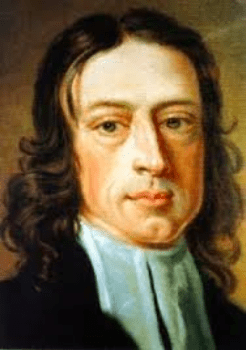
Years ago when I was a member of Fifth Reformed Church in Grand Rapids, our minister on several occasions read from a volume of John Wesley’s 8-volume set of journals—always having found a good sermon illustration. He had inherited the set from his father, also a Reformed minister, the pages having become worn with his father’s re-reading and hand-written markings. You certainly don’t have to be a Methodist to recognize Wesley as a fascinating individual who devoted his life to gospel ministry. But anyone who has studied him knows that his ministry was too-often clouded by his muddled romantic inclinations.
Google results for “Joseph Smith” Mormon are nearly double those for “John Wesley” Methodist. That seems to make sense. Wesley didn’t start a new religion; he didn’t encounter Heavenly Father and Jesus Christ in a grove of trees; he didn’t dig up a gold bible out of Hill Cumorah; and he didn’t have more than 40 wives (including two 14-year-olds). But, not to be completely outdone, John Wesley did have girlfriends—and one wife.
By the time of his death in 1791, John Wesley was widely recognized for his contributions not only to the Christian faith but also to the social and economic milieu of England as well. The Gentleman’s Magazine eulogized him for “infinite good to the lower classes of the people.” Social involvement, for Wesley, was intrinsically tied to evangelism, thus his involvement in prison reform, employment assistance, poverty relief, and anti-slavery.
Born in 1703, the story is often told of 6-year-old John being the last child rescued during a house fire. His preacher father interrupted first responders: “Let us kneel down. Let us give thanks to God! He has given me all my eight children. Let the house go, I am rich enough.” Hardly a landmark prayer and vision in a grove of trees, but good enough for Wesley to later identify himself as “a brand plucked out of the burning”—God’s signal of his future ministry.
The “Holy Club” at Oxford is another well-known aspect of John’s preparation for ministry, as well as his later decision to become a missionary in Georgia. Responding to his father’s objections, he wrote: “My chief motive, to which all the rest are subordinate, is the hope of saving my own soul.” Anticipating a follow-up question, why not “save your own soul in England,” he answered. that he could not attain “the same degree of holiness here which I may there.” That may have been altogether true were it not for natives put off by his pretentious demeanor and uninterested in words they couldn’t understand and colonists who understood him all too well, letting him know in no uncertain terms, “we won’t hear ourselves abused.” In fact, his self-righteousness was so irritating that he was physically assaulted by an angry woman.
But if that were not enough to incinerate the holiness of this plucked brand, his “unholy desire” was: Sophy Hopkey, 18, comely and the wealthy niece of a colonial official. But, of course, such things were of no import. Her “soul appeared to be wholly made up of mildness, gentleness, longsuffering.” He had apparently made some sort a feeble marriage proposal, but like the natives she apparently didn’t understand him—at least well enough to say no. And besides he feared he was “not strong enough to bear the complicated temptations of a married state.” There is no evidence that Sophy actually desired marriage with a thirty-something opinionated Anglican priest. Nor is there evidence she told him there was someone else in the picture to whom she shortly became engaged.
Upon learning John was beside himself, convinced she belonged to him. Amid the muddle, the lovers eloped. When they returned, John denied her communion; she sued for defamation; he insisted he’s in the right but then decided to high-tail-it out of town. “The hour has come for me to fly for my life . . . and as soon as evening prayers were over, about eight o’clock, the tide then serving, I shook off the dust of my feet, and left Georgia [in December 1737], after having preached the Gospel there . . . not as I ought, but as I was able, one year and nearly nine months.”
Then in 1749 (years after his May 24, 1738 Aldersgate Street “conversion”) and more than a decade after his curious relationship with Sophy, he was again seriously contemplating marriage—this time to Grace Murray. A Methodist class leader with a good reputation, she was a catch. But John Bennett was also interested in her. Charles—fearing his brother would be distracted from the ministry if he married—met privately with the couple and convinced them to tie the knot quickly while John was away. When John learned of his brother’s treachery, he was furious. He rushed on horseback to the scene, getting lost along the way, only to find the couple already married. (Inept at making marriage proposals, John assumed Grace had agreed to be his wife.) His relationship with Charles might have been permanently severed but for the intervention of George Whitefield, who brought them together and wept in great distress, pleading with them to not let the matter ruin the ministry.
Just a year after this wrenching ordeal, John was again determined to marry—this time without his brother’s knowledge. So he hastily married widow Molly Vazeille. It was a marriage doomed from the start.
Enter Sarah (Sally) Ryan. She had been active in the ministry even before—at age 19—she married a man she quickly learned had no livelihood and already had a wife. After he abandoned her, she married a sailor who sailed off to America. Next she pledged her troth to an Italian who likewise abandoned her. “That she was married three times was considered bad enough,” I write in Extraordinary Women of Christian History, “but that she had married twice without ever having been divorced was no less than scandalous—though apparently not regarded as such by Wesley.”
After receiving a letter from the sailor asking her to join him in America, Sally determined “it was the will of God, that I should go to him.” However, after seeking John’s counsel she informed him: “At the peril of my soul I dare not come.” John had previously appointed Sarah to a managerial position at the Kingswood School in Bristol.
Molly was outraged. In fact, so furious, according to Mary Fletcher (a noted preacher) that she confronted Sally during a conference at the school when dozens of preachers were having dinner. Molly interrupted the meal: “See that whore who is serving you! She hath three husbands now alive!” And it didn’t end there, as Mary related: “With all the depreciating things she could say, as she was going on, Sister Ryan set down in a chair which stood near her, with her eyes shut.”
Molly had good reason to be upset. Husband John was enamored with “that whore.” She had rifled through his coat pocket and found the incriminating evidence—a note to Sally: “The conversing with you, either by speaking or writing, is an unspeakable blessing to me,” he penned. “I cannot think of you without thinking of God. Others often lead me to Him; but it is, as it were, going round about: you bring me straight into His presence. Therefore, whoever warns me against trusting you, I cannot refrain, as I am clearly convinced He calls me to it.
“In the jargon of entire sanctification,” I write, “this was no less than a love letter.” Shortly after the Kingswood episode, John wrote again to Sally: “Last Friday, after many severe words, my wife left me, vowing she would see me no more.” Then an explanation of her public outburst. “In the evening, while I was preaching at the chapel, she came into the chamber where I had left my clothes, searched my pockets, and found the letter. The letter. Yes. The purloined letter.
John was clearly smitten by Sally, as his words convey: “I am eager to receive your next letter with excitement as always.” At one point, she had apparently apologized for being too familiar with him. He wrote back: “I not only excuse but love your simplicity; and whatever freedom you use it will be welcome. You have refreshed my bowels in the Lord. . . . Surely God will never suffer me to be ashamed of my confidence in you. I have been censured for it by some of your nearest friends; but I cannot repent of it.”
Molly campaigned against John, telling people that he had traveled alone with Sally. But despite the rumors, Sally carried on for several years in her position at Kingswood. At the same time she served as a class leader, meeting with dozens of people each week, also travelling widely overseeing Methodist societies. Some years later she moved to London and, with the help of two other prominent women in the movement, established an orphanage. But her health was declining. She died in 1768 at age forty-three.
Meanwhile, despite all her accusations, Molly returned home time and again until 1774, when she moved away to live with her daughter “never to return.” Wesley was indifferent: “I did not desert her; I did not send her away; I will never recall her.” She died in 1781, which John only grudgingly acknowledged: “I came to London, and was informed that my wife died on Monday. This evening she was buried, though I was not informed of it till a day or two after.”
In 1782, a year after his wife had died, John published some of his correspondence with Sally, stating that her letters “breathe deep, strong sense and piety. I know few like them in the English tongue.”
On his 85th birthday in 1788, John wrote in his journal that he felt no “such thing as weariness, either in traveling or preaching. I am not conscious of any decay in writing sermons which I do as readily, and I believe as correctly, as ever.” The day after his birthday he carried out his regular Sunday preaching schedule of three sermons at three locations, rising early to make it to his 8 am service, then traveling to Newby to preach at 1 pm, and winding it up at “about four at my old stand in Epworth market place, to the great congregation.” Two years later due to health problems he quit preaching and died some months later.
Previous Post

November 24, 2019
Christ the King Sunday
Next Post
November 26, 2019 A Preacher's Goldmine for Advent
Browse Our Archives
Select a Category Acts of the Apostles Adam Advent Anabaptism Angels Anglican Apologetics Atonement Baptism BCP Prayers Bible Biblical Studies Birds Blogging Bloglossary Bonhoeffer Books Calvinism Christianity Church Church History Coffee Colossians Commentary Recs Conversion Creation Creeds Culture Death Ecclesiastes Economics Education Embracing Grace Emergent Emerging Movement Eschatology Essays Ethics Eucharist Evangelicalism Family Fasting Fathers Fellowship of Differents Footsteps Tour Fun and Whimsical Gospel Grace Happiness Heaven Hell Holy Spirit Irenaeus James Jesus Jesus Creed Job Justification Kingdom of God Law Lectures Lent Liberalism Love and Marriage Mabanteneni Manhood Mary Miracles Missio Alliance MissioLife Missional Missional Jesus Movies and Film New Perspective Northern Seminary OneLife Origins Project Orthodox Parables Pastor's Spouse Pastoring and Leading Pastoring and Preaching Patristics Paul Paul-John Tour Pharisees Pietism Political Theology Prayer and Formation Preaching Problems for Faith Psalm 119 Psalms Public Issues Purgatory Religions Resurrection Revelation Romans Rule of JCreed Science and Faith Sermon on the Mount Sports Ten Commandments Theology Third Way Top Ten Lists Translations Uncategorized Universalism University Ministry Way Out Weekly Meanderings Wisdom Women and Ministry Work Worship Writing & Blogging Youth Ministry
Select a Month July 2021 January 2020 December 2019 November 2019 October 2019 September 2019 August 2019 July 2019 June 2019 May 2019 April 2019 March 2019 February 2019 January 2019 December 2018 November 2018 October 2018 September 2018 August 2018 July 2018 June 2018 May 2018 April 2018 March 2018 February 2018 January 2018 December 2017 November 2017 October 2017 September 2017 August 2017 July 2017 June 2017 May 2017 April 2017 March 2017 February 2017 January 2017 December 2016 November 2016 October 2016 September 2016 August 2016 July 2016 June 2016 May 2016 April 2016 March 2016 February 2016 January 2016 December 2015 November 2015 October 2015 September 2015 August 2015 July 2015 June 2015 May 2015 April 2015 March 2015 February 2015 January 2015 December 2014 November 2014 October 2014 September 2014 August 2014 July 2014 June 2014 May 2014 April 2014 March 2014 February 2014 January 2014 December 2013 November 2013 October 2013 September 2013 August 2013 July 2013 June 2013 May 2013 April 2013 March 2013 February 2013 January 2013 December 2012 November 2012 October 2012 September 2012 August 2012 July 2012 June 2012 May 2012 April 2012 March 2012 February 2012 January 2012 December 2011 November 2011 October 2011 September 2011 August 2011 July 2011 June 2011 May 2011 April 2011 March 2011 February 2011 January 2011 December 2010 November 2010 October 2010 September 2010 August 2010 July 2010 June 2010 May 2010 April 2010 March 2010 February 2010 January 2010 December 2009 November 2009 October 2009 September 2009 August 2009 July 2009 June 2009 May 2009 April 2009 March 2009 February 2009 January 2009 December 2008 November 2008 October 2008 September 2008 August 2008 July 2008 June 2008 May 2008 April 2008 March 2008 February 2008 January 2008 December 2007 November 2007 October 2007 September 2007 August 2007 July 2007 June 2007 May 2007 April 2007 March 2007 February 2007 January 2007 December 2006 November 2006 October 2006 September 2006 August 2006 July 2006 June 2006 May 2006 April 2006 March 2006 February 2006 January 2006 December 2005 November 2005 October 2005 September 2005 August 2005 July 2005 June 2005 May 2005 April 2005 0000
Follow Us!
TAKE THE
Religious Wisdom Quiz
True or False: According to 1 John, God is love, and whoever abides in love abides in God.
Select your answer to see how you score.
FALSE TRUE
Related posts from Jesus Creed


The Gospel of With Us and Through Us

Northern Seminary Announces: Nijay Gupta Joins Faculty

The Gundrys and Me: Ruth Tucker
TRENDING AT PATHEOS Evangelical

The REST of Your Life: A Creative Wrestles...
This week I had a conversation with a good friend from church....

How the author of the world's best hymn...
I've been working with John Newton for a while now. This makes...

Long before this Lectio Divina, Psalm 130 - the song - started...

What About the Trees? Another Living Parable
After I finished writing the last article about falling leaves as a...

Why Classical Education Is a Conversation, Not a...
Come and Read: Joy in Classical Education When I was a little...

Cornell University has received a great deal of negative publicity and intense...
view all Evangelical blogs
Ad-Free & Subscriber Log-In Subscription Support
- About Us
- 2026 Calendar
- Videos
- Podcasts
- Library of World Religions
- Faith In Media Tracker
- Advertise With Us
- Write for Us
- Privacy Policy
- Terms of Service
- Do Not Sell My Data
- Contact Us
- Radiant Digital
- Manage Newsletter Subscriptions
- Unsubscribe From Notifications
- Sitemap
Copyright 2008-2026, Patheos. All rights reserved.
Subscription Support Ad-Free & Subscriber Log-In
Follow Patheos