
BuddhistCatholicContemplativeEvangelicalGeneral ChristianHinduJewishLatter-day SaintMuslimNew VisionsProgressive Christian
Beliefs
- Buddhist
- Catholic
- Contemplative
- Evangelical
- General Christian
- Hindu
- Jewish
- Latter-day Saint
- More Voices
- Muslim
- New Visions
- Pagan
- Progressive Christian
Topics
- Religion News
- Food and Religion
- Sports and Religion
- Religious Art
- Religious Music and Entertainment
- Religious Events
- History and Religion
- Style and Religion
- Politics and Religion
- Women in Religion
- Recreation Outdoors and Religion
- Business Finance and Religion
- Careers Workplace and Religion
- Education and Religion
- Family Parenting and Religion
- Health Fitness and Religion
- Home and Religion
- Relationships and Religion
- Technology and Religion
- Travel and Religion
Columnists
- Buddhist Columnists
- Business Finance and Religion Columnists
- Careers Workplace and Religion Columnists
- Catholic Columnists
- Contemplative Columnists
- Education and Religion Columnists
- Evangelists Columnists
- Family Parenting and Religion Columnists
- General Christian Columnists
- Health Fitness and Religion Columnists
- Hindu Columnists
- History and Religion Columnists
- Home and Religion Columnists
- Jewish Columnists
- More Voices Columnists
- Latter Day Columnists
- Muslim Columnists
- New Visions Columnists
- Nonreligious Columnists
- Pagan Columnists
- Politics and Religion Columnists
- Progressive Columnists
- Recreation Outdoors and Religion Columnists
- Relationships and Religion Columnists
- Religion News Columnists
- Religious Art Columnists
- Religious Events Columnists
- Religious Music and Entertainment Columnists
- Sports and Religion Columnists
- Style and Religion Columnists
- Technology and Religion Columnists
- Travel and Religion Columnists
- Women in Religion Columnists
Resource Library
- 2026 Calendar
- Library of World Religions
- The 100 Most Holy Places on Earth
- Patheos Answers
- Podcasts
- Videos
- Faith Leaders Database
- Anglican Episcopalian
- Bahai
- Baptist
- Buddhism
- Christianity
- Confucianism
- Eastern Orthodoxy
- Hinduism
- Holiness and Pentecostal
- ISKCON
- Islam
- Judaism
- Lutheran
- Methodist
- The Church of Jesus Christ of Latter-day Saints
- New Age
- Paganism
- Presbytarian and Reformed
- Protestantism
- Religion Behind the Scenes
- Roman Catholic
- Scientology
- Shia Islam
- Sikhism
- Sufism
- Sunni Islam
- Taoism
- Zen
- See all religions
Research Tools
 Ad-Free & Subscriber Log-In Subscription Support
Ad-Free & Subscriber Log-In Subscription Support
Follow Patheos 

- Trending:
- Forgiveness
- |
- Marriage
- |
- Consciousness
- |
- Death Penalty
- |
- Election
- |
- Halloween
 Jesus Creed
- Home
- Evangelical
- Pastoring with Paul
Pastoring with Paul
Last updated on: October 1, 2019 at 12:02 am by Scot McKnight
Pastoring with Paul 2019-09-29T13:29:20-05:00 Scot McKnight
Patheos Explore the world's faith through different perspectives on religion and spirituality! Patheos has the views of the prevalent religions and spiritualities of the world.
 Pastors are straddled with expectations. Some come from their past, some from their education and seminary ideals, some from books they read about pastoring, some from pastors conferences they attend, some from ideal pastors they want to be like, and others — perhaps most demanding — from the congregation they serve.
Pastoring, I’ve come to observe, is a complicated calling, complicated because it is the congruence and incongruence of the pastor’s gifting and the congregation’s needs as well as the needs and expectations of individuals in one’s parish. John Ames, that wonderful pastor in Gilead, liked to go to church when no one was there — and if you make that observation to many pastors they’ll at least break into some head nods.
I teach seminary students. Many are pastors, others want to become pastors, and others have no plans to pastor but are doing some kind of pastoring role even when they don’t call it that.
In the first year at Northern Seminary, when we came to the Corinthian correspondence, I decided to compose a lecture, some notes, and some discussion questions about Paul’s pastoral strategy and theology … and I didn’t get past 1 Corinthians 1-4 … and, quite honestly, I wondered what in the world Paul thought he was doing.
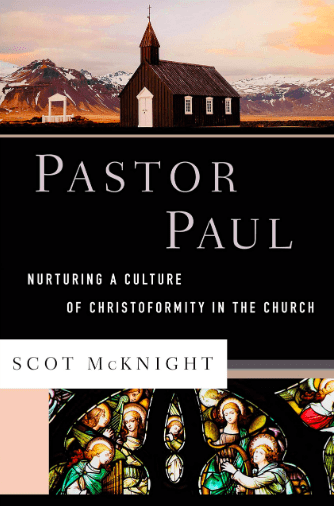
So I started studying Paul’s pastoral theology to work out for my students what that theology looked like, and then I was invited to give lectures in Kansas City (by Andy Johnson) at the Nazarene seminary, I asked if I could lecture on Pastor Paul … and Andy kindly agreed. Which led to a my new book Pastor Paul . (I’ll also begin doing a series on this book on the Kingdom Roots podcast soon.)
Today, I give Four P’s in Paul’s Pastoral Theology.
First, pastoring for Paul was about people. I mention here just two supporting observations. Read the end of Paul’s letters, where he mentions names of friends and associates, and you will discover a long list of names — people he knew, people he loved, people he worked with. Then pause every now and then to observe Paul’s pronouns: he weaves between “you” and “we” (hymeis, hemeis) in Greek. The “we” is noticeable as Pauline inclusion of others, of including himself, into his points. Paul was a people person. To pastor in a Pauline manner is to pastor people. I define a pastor at times as “a person who pastors people.”
Second, pastoring for Paul was about presence. The one who can say “imitate me” (2 Cor 11:1) is making a claim that he follows Jesus and that he is imitate-able. He saw himself, at some level, as a living embodiment of following Christ, which meant he knew his presence was to embody Christ. Think about this and then think about how many people see the pastor: as the one who ought to be a good example of what it means to follow Jesus.
Margaret Whipp, in her insightful study of pastoral theology, knows that pastoring is caring and caring is first about being present. She writes, “Pastoral care requires availability. Being there, for and with the other, in the steadfast immanence of covenant love is itself a presencing of the gospel, a tangible expression of the immediacy of God’s love and the nearness of his grace, through the extended ministry of incarnation which Christ has entrusted to his Church.” I hope that verb “presencing” stood out as much to you as it did to me because that’s my point: pastors are to “presence” the grace of God through the Spirit. To “presence” God is to recognize that pastors, though this is true of each Christian, are to embody Christ in their tangible presence.
Third, pastoring for Paul was about priesting. To say one of the pastoral responsibilities – even delights – is priestly is to raise the hackles of an old debate between what Flannery O’Connor calls the “Catlicks” and the Protestants. Hence, four typical observations have been raised against calling the pastor a priest: (1) no church leader is called a priest in the New Testament; rather, (2) Christ alone is the Great High Priest and Mediator for Christians (1 Tim 2:5; Heb 5:6; 7:11, 15–17, 20–23; 8:6; 9:15; 10:21; 12:24) but (3) within three centuries Christian pastors were being called “priests;” therefore (4), this was a departure that jumped the rails of consistent apostolic teaching. Ironically, those most suspicious of this term are often the most insistent on their own mediating roles between God and the church, that is, in knowledge, in piety, in example, and in structural location. They may not use the terms priest or mediator but such they are in identity and function. The criticism of pastors-as-priests belongs on the Shelf of Former Ideas. Why? The apostle Paul explicitly depicts himself in priestly terms: “because of the grace given me by God to be a minister (leiturgon) of Christ Jesus to the Gentiles in the priestly service (hierourgounta) of the gospel of God, so that the offering (prosphora) of the Gentiles may be acceptable (euprosdektos), sanctified (hagiosmene) by the Holy Spirit” (Rom 15:15b–16). One can hardly imagine a more priest-drenched sentence than this. If one attends to 1 Corinthians 9:13–14’s words (ta hiera, thusiasterion) as they form the analogy to ministry, one has yet another instance of the pastoral role as priestly. There’s another reason why this argument against priestly pastoring fails the Bible: we are all priests, as Peter for one tells us (1 Pet 2:9), and that means the pastor as a priest represents each of us in her priestly ministry. Because we are all priests means that the pastor must see herself especially in priestly terms or she will fail to represent us well.
The pastor, whether she wants to or not, whether he is conscious of it or not, has a priestly relation with congregants. I want to say this another way: the pastor is gifted with privilege to be priestly.
Fourth, pastoring for Paul is about the prophetic. In nurturing Christoformity in a congregation sometimes the pastor teaches and sometimes preaches, and sometimes the pastor’s communications are prompted by the Spirit in such a manner that we must say the words are prophetic. When that prophetic word is embodied it becomes prophetic action, which means the pastor or congregation or congregants become an embodied message that speaks from God to a community and often enough against the ways of the community.
For many today a prophet is someone who criticizes social injustices and systemic sins, and who often enough becomes a social activist. I hear this understanding all the time. This reduces the prophetic calling. To be prophetic in a biblical sense requires a claim of inspiration from God for a particular vision and message. There is a Spirit-promptedness to the gift of prophecy that must be respected and present before it can be called prophetic. Which is not the same as being passionate about something. The pastor at times, as a result of communion with God, of Scripture study, of theological vision, and of Spirit-promptedness has something prophetic to proclaim to her congregation and the pastor must have the courage to speak forth. I have never worshiped with a congregation for any length of time that didn’t at times show the presence of this gift though in some of those cases I know the pastor-preacher-expositor would have been wary of making the claim.
Briefly, neither Jesus nor the apostle Paul spent much of their time dropping comments on websites or lighting up the TwitterWorld with outlandish claims. Yet, they were prophetic to the core: Jesus in his summons to follow him, his offering of grace to the marginalized, his embodiment of the kingdom at the table, and his stunning words about moral corruption. Paul, even less, made direct comments to the authorities in the empire but everything about Paul’s mission, message and embodied living was an alternative to the way of Rome. Both Jesus and Paul, then, were prophetic in hearing from God and speaking to the people of God’s way.
I could add a fifth: preaching. That’s for another time.
Previous Post

September 30, 2019
Shame on John Calvin
Next Post

October 1, 2019 Do Christians Hate Us? (RJS)
Browse Our Archives
Select a Category Acts of the Apostles Adam Advent Anabaptism Angels Anglican Apologetics Atonement Baptism BCP Prayers Bible Biblical Studies Birds Blogging Bloglossary Bonhoeffer Books Calvinism Christianity Church Church History Coffee Colossians Commentary Recs Conversion Creation Creeds Culture Death Ecclesiastes Economics Education Embracing Grace Emergent Emerging Movement Eschatology Essays Ethics Eucharist Evangelicalism Family Fasting Fathers Fellowship of Differents Footsteps Tour Fun and Whimsical Gospel Grace Happiness Heaven Hell Holy Spirit Irenaeus James Jesus Jesus Creed Job Justification Kingdom of God Law Lectures Lent Liberalism Love and Marriage Mabanteneni Manhood Mary Miracles Missio Alliance MissioLife Missional Missional Jesus Movies and Film New Perspective Northern Seminary OneLife Origins Project Orthodox Parables Pastor's Spouse Pastoring and Leading Pastoring and Preaching Patristics Paul Paul-John Tour Pharisees Pietism Political Theology Prayer and Formation Preaching Problems for Faith Psalm 119 Psalms Public Issues Purgatory Religions Resurrection Revelation Romans Rule of JCreed Science and Faith Sermon on the Mount Sports Ten Commandments Theology Third Way Top Ten Lists Translations Uncategorized Universalism University Ministry Way Out Weekly Meanderings Wisdom Women and Ministry Work Worship Writing & Blogging Youth Ministry
Select a Month July 2021 January 2020 December 2019 November 2019 October 2019 September 2019 August 2019 July 2019 June 2019 May 2019 April 2019 March 2019 February 2019 January 2019 December 2018 November 2018 October 2018 September 2018 August 2018 July 2018 June 2018 May 2018 April 2018 March 2018 February 2018 January 2018 December 2017 November 2017 October 2017 September 2017 August 2017 July 2017 June 2017 May 2017 April 2017 March 2017 February 2017 January 2017 December 2016 November 2016 October 2016 September 2016 August 2016 July 2016 June 2016 May 2016 April 2016 March 2016 February 2016 January 2016 December 2015 November 2015 October 2015 September 2015 August 2015 July 2015 June 2015 May 2015 April 2015 March 2015 February 2015 January 2015 December 2014 November 2014 October 2014 September 2014 August 2014 July 2014 June 2014 May 2014 April 2014 March 2014 February 2014 January 2014 December 2013 November 2013 October 2013 September 2013 August 2013 July 2013 June 2013 May 2013 April 2013 March 2013 February 2013 January 2013 December 2012 November 2012 October 2012 September 2012 August 2012 July 2012 June 2012 May 2012 April 2012 March 2012 February 2012 January 2012 December 2011 November 2011 October 2011 September 2011 August 2011 July 2011 June 2011 May 2011 April 2011 March 2011 February 2011 January 2011 December 2010 November 2010 October 2010 September 2010 August 2010 July 2010 June 2010 May 2010 April 2010 March 2010 February 2010 January 2010 December 2009 November 2009 October 2009 September 2009 August 2009 July 2009 June 2009 May 2009 April 2009 March 2009 February 2009 January 2009 December 2008 November 2008 October 2008 September 2008 August 2008 July 2008 June 2008 May 2008 April 2008 March 2008 February 2008 January 2008 December 2007 November 2007 October 2007 September 2007 August 2007 July 2007 June 2007 May 2007 April 2007 March 2007 February 2007 January 2007 December 2006 November 2006 October 2006 September 2006 August 2006 July 2006 June 2006 May 2006 April 2006 March 2006 February 2006 January 2006 December 2005 November 2005 October 2005 September 2005 August 2005 July 2005 June 2005 May 2005 April 2005 0000
Follow Us!
TAKE THE
Religious Wisdom Quiz
Which country has the largest number of Christians?
Select your answer to see how you score.
Brazil United States Russia Germany
Related posts from Jesus Creed


The Gospel of With Us and Through Us

Northern Seminary Announces: Nijay Gupta Joins Faculty

The Gundrys and Me: Ruth Tucker
TRENDING AT PATHEOS Evangelical

The REST of Your Life: A Creative Wrestles...
This week I had a conversation with a good friend from church....

How the author of the world's best hymn...
I've been working with John Newton for a while now. This makes...

Long before this Lectio Divina, Psalm 130 - the song - started...

What About the Trees? Another Living Parable
After I finished writing the last article about falling leaves as a...

Why Classical Education Is a Conversation, Not a...
Come and Read: Joy in Classical Education When I was a little...

Cornell University has received a great deal of negative publicity and intense...
view all Evangelical blogs
Ad-Free & Subscriber Log-In Subscription Support
- About Us
- 2026 Calendar
- Videos
- Podcasts
- Library of World Religions
- Faith In Media Tracker
- Advertise With Us
- Write for Us
- Privacy Policy
- Terms of Service
- Do Not Sell My Data
- Contact Us
- Radiant Digital
- Manage Newsletter Subscriptions
- Unsubscribe From Notifications
- Sitemap
Copyright 2008-2026, Patheos. All rights reserved.
Subscription Support Ad-Free & Subscriber Log-In
Follow Patheos