
BuddhistCatholicContemplativeEvangelicalGeneral ChristianHinduJewishLatter-day SaintMuslimNew VisionsProgressive Christian
Beliefs
- Buddhist
- Catholic
- Contemplative
- Evangelical
- General Christian
- Hindu
- Jewish
- Latter-day Saint
- More Voices
- Muslim
- New Visions
- Pagan
- Progressive Christian
Topics
- Religion News
- Food and Religion
- Sports and Religion
- Religious Art
- Religious Music and Entertainment
- Religious Events
- History and Religion
- Style and Religion
- Politics and Religion
- Women in Religion
- Recreation Outdoors and Religion
- Business Finance and Religion
- Careers Workplace and Religion
- Education and Religion
- Family Parenting and Religion
- Health Fitness and Religion
- Home and Religion
- Relationships and Religion
- Technology and Religion
- Travel and Religion
Columnists
- Buddhist Columnists
- Business Finance and Religion Columnists
- Careers Workplace and Religion Columnists
- Catholic Columnists
- Contemplative Columnists
- Education and Religion Columnists
- Evangelists Columnists
- Family Parenting and Religion Columnists
- General Christian Columnists
- Health Fitness and Religion Columnists
- Hindu Columnists
- History and Religion Columnists
- Home and Religion Columnists
- Jewish Columnists
- More Voices Columnists
- Latter Day Columnists
- Muslim Columnists
- New Visions Columnists
- Nonreligious Columnists
- Pagan Columnists
- Politics and Religion Columnists
- Progressive Columnists
- Recreation Outdoors and Religion Columnists
- Relationships and Religion Columnists
- Religion News Columnists
- Religious Art Columnists
- Religious Events Columnists
- Religious Music and Entertainment Columnists
- Sports and Religion Columnists
- Style and Religion Columnists
- Technology and Religion Columnists
- Travel and Religion Columnists
- Women in Religion Columnists
Resource Library
- 2026 Calendar
- Library of World Religions
- The 100 Most Holy Places on Earth
- Patheos Answers
- Podcasts
- Videos
- Faith Leaders Database
- Anglican Episcopalian
- Bahai
- Baptist
- Buddhism
- Christianity
- Confucianism
- Eastern Orthodoxy
- Hinduism
- Holiness and Pentecostal
- ISKCON
- Islam
- Judaism
- Lutheran
- Methodist
- The Church of Jesus Christ of Latter-day Saints
- New Age
- Paganism
- Presbytarian and Reformed
- Protestantism
- Religion Behind the Scenes
- Roman Catholic
- Scientology
- Shia Islam
- Sikhism
- Sufism
- Sunni Islam
- Taoism
- Zen
- See all religions
Research Tools
 Ad-Free & Subscriber Log-In Subscription Support
Ad-Free & Subscriber Log-In Subscription Support
Follow Patheos 

- Trending:
- Forgiveness
- |
- Marriage
- |
- Consciousness
- |
- Death Penalty
- |
- Election
- |
- Halloween
 Jesus Creed
- Home
- Evangelical
- Inerrant or Trustworthy? (RJS)
Inerrant or Trustworthy? (RJS)
Last updated on: August 6, 2019 at 5:07 am by RJS
Inerrant or Trustworthy? (RJS) 2019-08-05T21:12:16-05:00 RJS
Patheos Explore the world's faith through different perspectives on religion and spirituality! Patheos has the views of the prevalent religions and spiritualities of the world.
 In the final chapter (actually an epilogue) of The Bible in a Disenchanted Age: The Enduring Possibility of Christian Faith, Walter Moberly digs biblical literacy and a Christian privileging of the bible. In his discussion he uses the example of camels, harking back to news reports several years ago (2014) that camels provide a serious sticking point for Christians. Moberly refers specifically to a blog at the Guardian: The Old Testament’s made-up camels are a problem for Zionism. Camels are mentioned in Genesis although there is no evidence for domesticated camels in the region until a much later date (ca. 930BC). In fact, I was asked about the controversy and posted some thoughts back when it was hot. You can see the original post here if interested: The Mighty Mysterious Camel.
Moberly suggests that the controversy, and the claim that camels are a serious problem, demonstrates an unfortunate level of biblical illiteracy. First, the absence of camels was not a new discovery – he notes a reference in a book ca. 1949 commenting that the absence of evidence for domesticated camels may indicate that the references in Genesis are anachronistic. It made the news in 2014, but has been a subject of discussion and investigation for many decades. But more than this the whole tenor of the discussion is on the wrong foundation. Moberly suggests three possible approaches to camels in Genesis. The intent isn’t to resolve the issue, but “to give some sense of the ways it can be responsibly tackled without resorting to sensational claims about “error in the Bible.” (p. 185)
1. Perhaps the mention of camels is not anachronistic – but camels may have been a rarity with a wealthy man having a few as a prestige symbol. This is the solution suggested by Nahum M. Sarna in his JPS Torah Commentary: Genesis originally published in 1989.
A solution to the problem may perhaps be sought along other lines. Certain bilingual Sumerian-Akkadian lexical texts from Mesopotamia equate a domesticated animal called “a donkey-of-the-sealand” with a dromedary, thus proving a knowledge of the latter in southern Mesopotamia in Old Babylonian times (ca. 2000-1700 B.C.E.). Moreover, the scribes knew to differentiate between the dromedary and the Bactrian camel, and a Sumerian text from that period mentions the drinking of camel’s milk. The original habitat of the camel seems to have been Arabia. It is likely that the domesticated camel at first spread very slowly and long remained a rarity. A wealthy man might aquire a few as a prestige symbol for ornamental rather than utilitarian purposes. This would explain their presence in Abraham’s entourage, their nonuse as beasts of burden, and their special mention in situations where wealth and honor need to be displayed, as for instance, in Genesis 24. (p. 96)
This provides a potential solution, camels were rare but not unknown and used only for special occasions. Moberly notes that “although conjectural it is a plausible conjecture.” (p. 184)
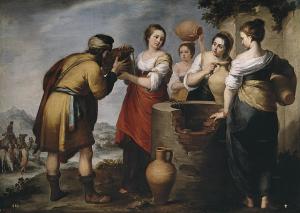 2. Anachronism is commonplace in storytelling. Adding some local color from the day and time of the audience is not something that would have caused any significant concern as stories were passed down from generation to generation. It doesn’t falsify the underlying biblical story any more than the placing of biblical characters in anachronistic clothing in European art falsifies the story. The intended audience understands the story and its meaning. The image to the right is Rebecca and Eliezer by Bartolomé Esteban Murillo ca. 1660. (Note the camel in the background.)
3. The story may be intentionally set in an earlier time and contain anachronistic elements arising from a lack of knowledge of the earlier time. The story of Job contains such elements – it is set in an earlier time to explore issues contemporary to the audience. While this is reasonable for Job (wisdom literature, a thought experiment rather than a history) it is more troubling for the patriarchal narrative in Genesis.
Error and Trust. The sensational claims about error in the Bible … we see them cropping up with some regularity … miss the point. The important concept is not that the bible is inerrant, but that it is trustworthy.
Put briefly: “trustworthy” is a richer, deeper, and more appropriate term for (would-be) believers to apply to the Bible than “inerrant.” It expresses the self-identifying stance of the Christian churches that both their thought and their practice are appropriately rooted in the content of the Bible. Trustworthiness has to to with the existential openness that is necessary for finding God, or being found by God, in and through the pages of the Bible. The notion of trustworthiness is also robust, as it is not a matter of all or nothing or of slippery slopes. … Importantly, the real problem for trust is not error but deception. It is deception, rather than error, that entails substantive moral and spiritual failure such as makes trust inappropriate. (pp. 186-187)
Frankly, the question of camels in Genesis has nothing to do with the trustworthiness of the message of the Bible. One of the fallacies of our modern approach to the biblical text is the concept that what really matters more than anything else is historical reliability, not in the general overarching story, but in the myriad of details in the text. If it reads to us like history (as we understand it), it must be history (and our kind of history at that). Moberly also suggests that we are comfortable with literary conventions of our day, but tend to be unnecessarily rigid in our approach to scripture, perhaps because we are unfamiliar and uncomfortable with conventions of other times and places. One of the strengths of CS Lewis and his approach to Christian faith was his comfort with literary genres and conventions and their power to convey truth. An awareness of genre and convention allows us to recognize “which questions a text will and will not constructively sustain, and [determine] the uses to which a text is and is not best put.” (p. 194)
Genesis 24 is about the faithfulness of God providing a wife for Isaac from among Abraham’s relatives and the openness of the servant to God’s guidance. It is not about camels. There is nothing inherently problematic with the revelation of God being conveyed in forms and conventions of the original authors and audience. These forms and conventions may not always be self-evident from our 21st century perspective, but this is our problem rather than an intrinsic theological conundrum.
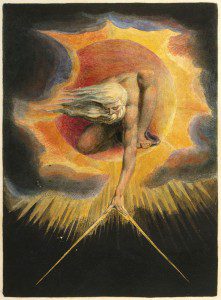 Returning to Daniel 7 and Matthew 28 (see the earlier posts on Moberly’s book), the most important questions are those such as “Is the deity depicted a construct of the human imagination, or is the deity in fact the living God? Does God ultimately vindicate his persecuted faithful? … Is it important for people to live now in ways that embody those qualities that will ultimately be vindicated?” (p. 196) As Christians we take the Bible seriously on the witness of the church and as a trustworthy revelation of God’s nature, his creation, the vocation and purpose of humans created as his image and likeness, the hope for future vindication and consummation.
Overall The Bible in a Disenchanted Age: The Enduring Possibility of Christian Faith is well worth reading. It is thought provoking with many interesting insights. Most of us probably won’t agree with Moberly in places – but that isn’t really the point. It will help the careful reader think more deeply about the nature of the Bible and its reception in the church. This can make it a valuable contribution for those wrestling with the nature and purpose of the Bible … and its relevance in a disenchanted age.
Is trustworthy a better adjective than inerrant?
What difference does it make?
If you would like to contact me directly you may do so at rjs4mail[at]att.net.
If interested you can subscribe to a full text feed of my posts at Musings on Science and Theology.
Previous Post
August 6, 2019
Reviewing Pete Enns: Is the Bible Just Humans Updating God as it Goes?
Next Post

August 6, 2019 Lucy Peppiatt's Rediscovering Scripture's Vision for Women
Browse Our Archives
Select a Category Acts of the Apostles Adam Advent Anabaptism Angels Anglican Apologetics Atonement Baptism BCP Prayers Bible Biblical Studies Birds Blogging Bloglossary Bonhoeffer Books Calvinism Christianity Church Church History Coffee Colossians Commentary Recs Conversion Creation Creeds Culture Death Ecclesiastes Economics Education Embracing Grace Emergent Emerging Movement Eschatology Essays Ethics Eucharist Evangelicalism Family Fasting Fathers Fellowship of Differents Footsteps Tour Fun and Whimsical Gospel Grace Happiness Heaven Hell Holy Spirit Irenaeus James Jesus Jesus Creed Job Justification Kingdom of God Law Lectures Lent Liberalism Love and Marriage Mabanteneni Manhood Mary Miracles Missio Alliance MissioLife Missional Missional Jesus Movies and Film New Perspective Northern Seminary OneLife Origins Project Orthodox Parables Pastor's Spouse Pastoring and Leading Pastoring and Preaching Patristics Paul Paul-John Tour Pharisees Pietism Political Theology Prayer and Formation Preaching Problems for Faith Psalm 119 Psalms Public Issues Purgatory Religions Resurrection Revelation Romans Rule of JCreed Science and Faith Sermon on the Mount Sports Ten Commandments Theology Third Way Top Ten Lists Translations Uncategorized Universalism University Ministry Way Out Weekly Meanderings Wisdom Women and Ministry Work Worship Writing & Blogging Youth Ministry
Select a Month July 2021 January 2020 December 2019 November 2019 October 2019 September 2019 August 2019 July 2019 June 2019 May 2019 April 2019 March 2019 February 2019 January 2019 December 2018 November 2018 October 2018 September 2018 August 2018 July 2018 June 2018 May 2018 April 2018 March 2018 February 2018 January 2018 December 2017 November 2017 October 2017 September 2017 August 2017 July 2017 June 2017 May 2017 April 2017 March 2017 February 2017 January 2017 December 2016 November 2016 October 2016 September 2016 August 2016 July 2016 June 2016 May 2016 April 2016 March 2016 February 2016 January 2016 December 2015 November 2015 October 2015 September 2015 August 2015 July 2015 June 2015 May 2015 April 2015 March 2015 February 2015 January 2015 December 2014 November 2014 October 2014 September 2014 August 2014 July 2014 June 2014 May 2014 April 2014 March 2014 February 2014 January 2014 December 2013 November 2013 October 2013 September 2013 August 2013 July 2013 June 2013 May 2013 April 2013 March 2013 February 2013 January 2013 December 2012 November 2012 October 2012 September 2012 August 2012 July 2012 June 2012 May 2012 April 2012 March 2012 February 2012 January 2012 December 2011 November 2011 October 2011 September 2011 August 2011 July 2011 June 2011 May 2011 April 2011 March 2011 February 2011 January 2011 December 2010 November 2010 October 2010 September 2010 August 2010 July 2010 June 2010 May 2010 April 2010 March 2010 February 2010 January 2010 December 2009 November 2009 October 2009 September 2009 August 2009 July 2009 June 2009 May 2009 April 2009 March 2009 February 2009 January 2009 December 2008 November 2008 October 2008 September 2008 August 2008 July 2008 June 2008 May 2008 April 2008 March 2008 February 2008 January 2008 December 2007 November 2007 October 2007 September 2007 August 2007 July 2007 June 2007 May 2007 April 2007 March 2007 February 2007 January 2007 December 2006 November 2006 October 2006 September 2006 August 2006 July 2006 June 2006 May 2006 April 2006 March 2006 February 2006 January 2006 December 2005 November 2005 October 2005 September 2005 August 2005 July 2005 June 2005 May 2005 April 2005 0000
Follow Us!
TAKE THE
Religious Wisdom Quiz
What destroyed Pharaoh's army as they pursued the Israelites?
Select your answer to see how you score.
Fire from heaven Earthquake The sea Plague of locusts
Related posts from Jesus Creed


The Gospel of With Us and Through Us

Northern Seminary Announces: Nijay Gupta Joins Faculty

The Gundrys and Me: Ruth Tucker
TRENDING AT PATHEOS Evangelical

The REST of Your Life: A Creative Wrestles...
This week I had a conversation with a good friend from church....

How the author of the world's best hymn...
I've been working with John Newton for a while now. This makes...

Long before this Lectio Divina, Psalm 130 - the song - started...

What About the Trees? Another Living Parable
After I finished writing the last article about falling leaves as a...

Why Classical Education Is a Conversation, Not a...
Come and Read: Joy in Classical Education When I was a little...

Cornell University has received a great deal of negative publicity and intense...
view all Evangelical blogs
Ad-Free & Subscriber Log-In Subscription Support
- About Us
- 2026 Calendar
- Videos
- Podcasts
- Library of World Religions
- Faith In Media Tracker
- Advertise With Us
- Write for Us
- Privacy Policy
- Terms of Service
- Do Not Sell My Data
- Contact Us
- Radiant Digital
- Manage Newsletter Subscriptions
- Unsubscribe From Notifications
- Sitemap
Copyright 2008-2026, Patheos. All rights reserved.
Subscription Support Ad-Free & Subscriber Log-In
Follow Patheos