
BuddhistCatholicContemplativeEvangelicalGeneral ChristianHinduJewishLatter-day SaintMuslimNew VisionsProgressive Christian
Beliefs
- Buddhist
- Catholic
- Contemplative
- Evangelical
- General Christian
- Hindu
- Jewish
- Latter-day Saint
- More Voices
- Muslim
- New Visions
- Pagan
- Progressive Christian
Topics
- Religion News
- Food and Religion
- Sports and Religion
- Religious Art
- Religious Music and Entertainment
- Religious Events
- History and Religion
- Style and Religion
- Politics and Religion
- Women in Religion
- Recreation Outdoors and Religion
- Business Finance and Religion
- Careers Workplace and Religion
- Education and Religion
- Family Parenting and Religion
- Health Fitness and Religion
- Home and Religion
- Relationships and Religion
- Technology and Religion
- Travel and Religion
Columnists
- Buddhist Columnists
- Business Finance and Religion Columnists
- Careers Workplace and Religion Columnists
- Catholic Columnists
- Contemplative Columnists
- Education and Religion Columnists
- Evangelists Columnists
- Family Parenting and Religion Columnists
- General Christian Columnists
- Health Fitness and Religion Columnists
- Hindu Columnists
- History and Religion Columnists
- Home and Religion Columnists
- Jewish Columnists
- More Voices Columnists
- Latter Day Columnists
- Muslim Columnists
- New Visions Columnists
- Nonreligious Columnists
- Pagan Columnists
- Politics and Religion Columnists
- Progressive Columnists
- Recreation Outdoors and Religion Columnists
- Relationships and Religion Columnists
- Religion News Columnists
- Religious Art Columnists
- Religious Events Columnists
- Religious Music and Entertainment Columnists
- Sports and Religion Columnists
- Style and Religion Columnists
- Technology and Religion Columnists
- Travel and Religion Columnists
- Women in Religion Columnists
Resource Library
- 2026 Calendar
- Library of World Religions
- The 100 Most Holy Places on Earth
- Patheos Answers
- Podcasts
- Videos
- Faith Leaders Database
- Anglican Episcopalian
- Bahai
- Baptist
- Buddhism
- Christianity
- Confucianism
- Eastern Orthodoxy
- Hinduism
- Holiness and Pentecostal
- ISKCON
- Islam
- Judaism
- Lutheran
- Methodist
- The Church of Jesus Christ of Latter-day Saints
- New Age
- Paganism
- Presbytarian and Reformed
- Protestantism
- Religion Behind the Scenes
- Roman Catholic
- Scientology
- Shia Islam
- Sikhism
- Sufism
- Sunni Islam
- Taoism
- Zen
- See all religions
Research Tools
 Ad-Free & Subscriber Log-In Subscription Support
Ad-Free & Subscriber Log-In Subscription Support
Follow Patheos 

- Trending:
- Forgiveness
- |
- Marriage
- |
- Consciousness
- |
- Death Penalty
- |
- Election
- |
- Halloween
 Jesus Creed
- Home
- Evangelical
- More on Reading the Bible (RJS)
More on Reading the Bible (RJS)
Last updated on: May 14, 2019 at 6:13 am by RJS
More on Reading the Bible (RJS) 2019-05-14T06:13:27-05:00 RJS
Patheos Explore the world's faith through different perspectives on religion and spirituality! Patheos has the views of the prevalent religions and spiritualities of the world.
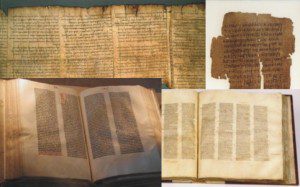 The Bible is the central document of the Christian faith. It is, we believe, more than just another ancient text. It is more than a human record of the past. It is also less than perfectly clear. This isn’t some kind of well written set of propositions to guide life. But it is centered on God’s revelation of his work in the world. Several years ago I read an interesting little book by John Polkinghorne, theoretical physicist turned priest, Testing Scripture: A Scientist Explores the Bible. In chapter 4 he explores the ambiguity he finds in the bible. It is worth looking at again.
The tapestry of life is not coloured in simple black and white, representing an unambiguous choice between the unequivocally bad and the unequivocally good. The ambiguity of human deeds and desires means that life includes many shades of grey. What is true of life in general is true also of the bible in particular. An honest reading of scripture will acknowledge the presence in its pages of various kinds of ambiguity. (p. 33)
In many ways ambiguity simply means real life, the incidents and characters in scripture are multidimensional. Even the best of humans are not all good and fail at times, sometimes quite spectacularly. Abraham, Isaac, Jacob, and David are good examples here. They lie, they steal, they swindle, they murder and they benefit from their deceit. The bible whitewashes none of this.
The violence and the outworking of justice in the Old Testament provide other examples of ambiguity. Achan died for his theft and deceit, and his family died with him despite the fact that he confessed when confronted (Joshua 7). David suffered no such fate for violating God’s commandments (2 Sam 11-12). Jesus, Matthew tells us, is descended from Solomon, son of David by Uriah’s wife. (Luke has the descent of Jesus run though Nathan to David, avoiding Solomon … another kind of ambiguity to consider).
Do you see ambiguity in scripture? If so, where?
There are other aspects to the ambiguity in scripture, aspects that deal with God and the character of God. Dr. Polkinghorne begins with Genesis 22 where God tested Abraham telling him to sacrifice Isaac on an altar at Mount Moriah. This story seems pointless and unnecessarily severe. Perhaps this story was intended to teach Israel that the child sacrifice practiced by neighboring nations was not God’s will. Perhaps we should read it Christologically. The story of Abraham and Isaac is a type (a symbolically anticipatory event) of the death of Christ on the cross. But there is ambiguity in the event and in its purpose.
Dr. Polkinghorne sees ambiguity as well in some of the NT stories of the life of Jesus.
The miracle at the wedding at Cana seems out of place. Is this a matter of fact report of a miracle at the beginning of the ministry of Jesus? The placement in John just before the cleansing of the Temple must have a symbolic purpose. Is the transformation of water to wine a real event? Or could it be a symbolic narrative incorporated as if enacted to make a point about Jesus? Of course it could be both – an enacted symbolic event.
The interaction between Jesus and the Canaanite woman in Matthew 15:21-28 is another incident Dr. Polkinghorne finds ambiguous. He suggests that Jesus in his humanity was unsure what to do in this instance. Jesus was persuaded to action by the woman’s bold stance.
Judas Iscariot is an ambiguous character. He was chosen by Jesus and yet he betrayed Jesus.
Much Christian thinking has seen Judas as wholly evil from the start, as if he were a kind of devil incarnate. I do not think this is credible in the light of his having been chosen by Jesus. I find helpful the interpretation of Judas offered by Dorothy Sayers in her play-cycle about Jesus, The Man Born to be King. She suggests that Judas, like Peter, found it difficult to accept that Jesus was not going to be a militant Messiah who would destroy the forces of the Roman occupying power, but that he was to be a crucified Messiah, accepting the way of the suffering (Mark 8:31-33). (p. 39)
Perhaps Judas tried to force the matter and when it led to crucifixion he was overcome by remorse and driven to suicide. (Mt 27:1-5)
The ambiguity doesn’t end with the gospels. Dr. Polkinghorne also sees ambiguity in the writings of Paul. Paul wrestles around many different issues, at times his deep humanity and his struggles show through, at other times he writes with deep theological insight.
The presence of ambiguity in the text of scripture should shape our approach to scripture. The bible is not an answer book for all of life’s problems and questions, but a window on God’s interactions with is people and their reaction, good bad, and indifferent with shades of grey.
Do you find any of the ambiguities in scripture troubling? If so, what and why?.
What attitude should we take as we study and meditate on scripture?
If you wish to contact me directly you may do so at rjs4mail[at]att.net.
If interested you can subscribe to a full text feed of my posts at Musings on Science and Theology.
This is a lightly edited repost.
Previous Post

May 13, 2019
Beth Moore Is Not Backing Down
Next Post
May 15, 2019 Who Are the Kingdom People? Wheaton Prof Speaks
Browse Our Archives
Select a Category Acts of the Apostles Adam Advent Anabaptism Angels Anglican Apologetics Atonement Baptism BCP Prayers Bible Biblical Studies Birds Blogging Bloglossary Bonhoeffer Books Calvinism Christianity Church Church History Coffee Colossians Commentary Recs Conversion Creation Creeds Culture Death Ecclesiastes Economics Education Embracing Grace Emergent Emerging Movement Eschatology Essays Ethics Eucharist Evangelicalism Family Fasting Fathers Fellowship of Differents Footsteps Tour Fun and Whimsical Gospel Grace Happiness Heaven Hell Holy Spirit Irenaeus James Jesus Jesus Creed Job Justification Kingdom of God Law Lectures Lent Liberalism Love and Marriage Mabanteneni Manhood Mary Miracles Missio Alliance MissioLife Missional Missional Jesus Movies and Film New Perspective Northern Seminary OneLife Origins Project Orthodox Parables Pastor's Spouse Pastoring and Leading Pastoring and Preaching Patristics Paul Paul-John Tour Pharisees Pietism Political Theology Prayer and Formation Preaching Problems for Faith Psalm 119 Psalms Public Issues Purgatory Religions Resurrection Revelation Romans Rule of JCreed Science and Faith Sermon on the Mount Sports Ten Commandments Theology Third Way Top Ten Lists Translations Uncategorized Universalism University Ministry Way Out Weekly Meanderings Wisdom Women and Ministry Work Worship Writing & Blogging Youth Ministry
Select a Month July 2021 January 2020 December 2019 November 2019 October 2019 September 2019 August 2019 July 2019 June 2019 May 2019 April 2019 March 2019 February 2019 January 2019 December 2018 November 2018 October 2018 September 2018 August 2018 July 2018 June 2018 May 2018 April 2018 March 2018 February 2018 January 2018 December 2017 November 2017 October 2017 September 2017 August 2017 July 2017 June 2017 May 2017 April 2017 March 2017 February 2017 January 2017 December 2016 November 2016 October 2016 September 2016 August 2016 July 2016 June 2016 May 2016 April 2016 March 2016 February 2016 January 2016 December 2015 November 2015 October 2015 September 2015 August 2015 July 2015 June 2015 May 2015 April 2015 March 2015 February 2015 January 2015 December 2014 November 2014 October 2014 September 2014 August 2014 July 2014 June 2014 May 2014 April 2014 March 2014 February 2014 January 2014 December 2013 November 2013 October 2013 September 2013 August 2013 July 2013 June 2013 May 2013 April 2013 March 2013 February 2013 January 2013 December 2012 November 2012 October 2012 September 2012 August 2012 July 2012 June 2012 May 2012 April 2012 March 2012 February 2012 January 2012 December 2011 November 2011 October 2011 September 2011 August 2011 July 2011 June 2011 May 2011 April 2011 March 2011 February 2011 January 2011 December 2010 November 2010 October 2010 September 2010 August 2010 July 2010 June 2010 May 2010 April 2010 March 2010 February 2010 January 2010 December 2009 November 2009 October 2009 September 2009 August 2009 July 2009 June 2009 May 2009 April 2009 March 2009 February 2009 January 2009 December 2008 November 2008 October 2008 September 2008 August 2008 July 2008 June 2008 May 2008 April 2008 March 2008 February 2008 January 2008 December 2007 November 2007 October 2007 September 2007 August 2007 July 2007 June 2007 May 2007 April 2007 March 2007 February 2007 January 2007 December 2006 November 2006 October 2006 September 2006 August 2006 July 2006 June 2006 May 2006 April 2006 March 2006 February 2006 January 2006 December 2005 November 2005 October 2005 September 2005 August 2005 July 2005 June 2005 May 2005 April 2005 0000
Follow Us!
TAKE THE
Religious Wisdom Quiz
What is the last book in the Old Testament?
Select your answer to see how you score.
Jonah Genesis Daniel Malachi
Related posts from Jesus Creed


The Gospel of With Us and Through Us

Northern Seminary Announces: Nijay Gupta Joins Faculty

The Gundrys and Me: Ruth Tucker
TRENDING AT PATHEOS Evangelical

How the author of the world's best hymn...
I've been working with John Newton for a while now. This makes...

Long before this Lectio Divina, Psalm 130 - the song - started...

What About the Trees? Another Living Parable
After I finished writing the last article about falling leaves as a...

Why Classical Education Is a Conversation, Not a...
Come and Read: Joy in Classical Education When I was a little...

Falling Leaves: A Living Parable on Letting Go
I’ve spent the vast majority of my life in the southeast corner...

Cornell University has received a great deal of negative publicity and intense...
view all Evangelical blogs
Ad-Free & Subscriber Log-In Subscription Support
- About Us
- 2026 Calendar
- Videos
- Podcasts
- Library of World Religions
- Faith In Media Tracker
- Advertise With Us
- Write for Us
- Privacy Policy
- Terms of Service
- Do Not Sell My Data
- Contact Us
- Radiant Digital
- Manage Newsletter Subscriptions
- Unsubscribe From Notifications
- Sitemap
Copyright 2008-2026, Patheos. All rights reserved.
Subscription Support Ad-Free & Subscriber Log-In
Follow Patheos