
BuddhistCatholicContemplativeEvangelicalGeneral ChristianHinduJewishLatter-day SaintMuslimNew VisionsProgressive Christian
Beliefs
- Buddhist
- Catholic
- Contemplative
- Evangelical
- General Christian
- Hindu
- Jewish
- Latter-day Saint
- More Voices
- Muslim
- New Visions
- Pagan
- Progressive Christian
Topics
- Religion News
- Food and Religion
- Sports and Religion
- Religious Art
- Religious Music and Entertainment
- Religious Events
- History and Religion
- Style and Religion
- Politics and Religion
- Women in Religion
- Recreation Outdoors and Religion
- Business Finance and Religion
- Careers Workplace and Religion
- Education and Religion
- Family Parenting and Religion
- Health Fitness and Religion
- Home and Religion
- Relationships and Religion
- Technology and Religion
- Travel and Religion
Columnists
- Buddhist Columnists
- Business Finance and Religion Columnists
- Careers Workplace and Religion Columnists
- Catholic Columnists
- Contemplative Columnists
- Education and Religion Columnists
- Evangelists Columnists
- Family Parenting and Religion Columnists
- General Christian Columnists
- Health Fitness and Religion Columnists
- Hindu Columnists
- History and Religion Columnists
- Home and Religion Columnists
- Jewish Columnists
- More Voices Columnists
- Latter Day Columnists
- Muslim Columnists
- New Visions Columnists
- Nonreligious Columnists
- Pagan Columnists
- Politics and Religion Columnists
- Progressive Columnists
- Recreation Outdoors and Religion Columnists
- Relationships and Religion Columnists
- Religion News Columnists
- Religious Art Columnists
- Religious Events Columnists
- Religious Music and Entertainment Columnists
- Sports and Religion Columnists
- Style and Religion Columnists
- Technology and Religion Columnists
- Travel and Religion Columnists
- Women in Religion Columnists
Resource Library
- 2026 Calendar
- Library of World Religions
- The 100 Most Holy Places on Earth
- Patheos Answers
- Podcasts
- Videos
- Faith Leaders Database
- Anglican Episcopalian
- Bahai
- Baptist
- Buddhism
- Christianity
- Confucianism
- Eastern Orthodoxy
- Hinduism
- Holiness and Pentecostal
- ISKCON
- Islam
- Judaism
- Lutheran
- Methodist
- The Church of Jesus Christ of Latter-day Saints
- New Age
- Paganism
- Presbytarian and Reformed
- Protestantism
- Religion Behind the Scenes
- Roman Catholic
- Scientology
- Shia Islam
- Sikhism
- Sufism
- Sunni Islam
- Taoism
- Zen
- See all religions
Research Tools
 Ad-Free & Subscriber Log-In Subscription Support
Ad-Free & Subscriber Log-In Subscription Support
Follow Patheos 

- Trending:
- Forgiveness
- |
- Marriage
- |
- Consciousness
- |
- Death Penalty
- |
- Election
- |
- Halloween
 Jesus Creed
- Home
- Evangelical
- From Revelation Backwards (RJS)
From Revelation Backwards (RJS)
Last updated on: April 30, 2019 at 4:53 am by RJS
From Revelation Backwards (RJS) 2019-04-29T22:02:15-05:00 RJS
Patheos Explore the world's faith through different perspectives on religion and spirituality! Patheos has the views of the prevalent religions and spiritualities of the world.
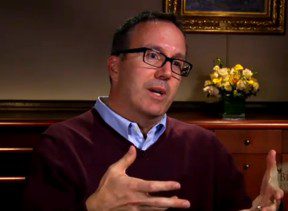 Daniel Harrell wraps up his book, Nature’s Witness: How Evolution Can Inspire Faith, with a reflection and a perspective that I don’t think we consider seriously enough.
Christians have always believed all truth to be God’s truth, implying that science and faith, despite differences when it comes to explaining why, nevertheless should agree in regard to what. … Science matters whether we care about it or not. And because science matters, it warrants theological reflection. (p. 137)
Because science matters, it warrants theological reflection.
The point isn’t that science is an objective truth, that theology must conform or be lost in the dust of time. Rather the point is (1) that all truth is God’s truth and thus “as reliable witnesses of nature, we can only become more reliable witnesses to God.” And (2) for Christians at least, theology is the queen of the sciences … that is, it is the lens through which we interpret everything else. Because science matters it warrants theological reflection. The biblical narrative is the source and ground of this theological reflection because it records God’s interaction and relationship with his creation.
The final two chapters of Nature’s Witness (Sunday Lunch and Peach Pie in the Sky) walk through some of these theological reflections which center on death (biological and human), new creation, and the nature of time. The biggest issue is death. Science tells us that death is a necessary and natural part of the world. We can wonder a bit about the fate of mankind, but so far as plants, animals, and insects are concerned it seems an intentional and necessary part of creation. It is not that God had to use death in creation – but that he did use death in creation. Somehow, then, it must be and have always been part of his plan. This is hard for us to take and to understand.
Free will, free process, and the relational nature of God. “A free-process creation results in a free-willed people.” (p. 105) This doesn’t tie God’s hands, he doesn’t just sit back an unfolding story. He interacts in relationship with his creation.
Frankly, there are too many places in the Bible where God defies creaturely freedom to suggest that his hands are ever tied. However, in most of those places, God’s defiance of creaturely freedom is in response to human abuses of freedom, such as when disease, weather, or earthquakes are employed as agents of divine judgment (e.g., Exod 9:3; 1 Kgs 17:1; Isa 29:6). (p. 106)
Ultimately God’s will will be done … he is a competent creator. It is not unreasonable to understand God as limiting his omnipotence for the good of his creation. The incarnation is but one such example – Jesus was not omniscient, omnipresent, or omnipotent between his birth and death. This was a voluntary self-limiting act.
The flourishing of creation requires renewal – and in our present world renewal requires death and the recycling of matter and genetic diversity.
Life on this planet was never eternal. Aging and progress are not the result of the fall. The creatures were told to be fruitful and multiply, Adam and Eve were told to be fruitful and multiply. I’ve quoted Calvin before on this issue – but even Calvin did not think life on earth would have been eternal, rather Calvin thought that Adam and Eve would have moved to the next stage without the pain of disease, decay, and death. Harrell sums up like this:
Even Jesus aged. If Adam’s life on earth had been a sin-free paradise, it still could not have been eternal. Physics as we understand it could not allow earth to go on indefinitely. If we understand physics rightly, then God never intended earth to go on indefinitely either (since God is the author of physics). Eternal life is not about living forever on this planet. It’s about a relationship with God that transcends this world into new creation. (p. 113)
What then is our hope? Harrell suggests that rather than viewing creation as something good that went bad with a recovery plan to follow we should look at the Christian story and God’s creative design from Revelation backwards. God is pulling creation toward the age to come in accord with his perfect plan.
It’s as if redemption was the purpose from the beginning. It’s as if creation is being pulled, called toward that day when all things will become radically new in Christ. If perfection never was and is “not-yet,” the appearance of evil and suffering (including the suffering and struggle depicted by Darwinian science) is no longer inconceivable. That the serpent got into the garden may suggest that everything was not yet right with the world, even before everything went wrong. (p. 118)
Harrell also considers the idea that God is outside of time and unbound by time. Time is intrinsic to God’s good creation – but it is a part of the creation, it does not transcend creation. Evolution is a part of God’s creation – but it is not the means by which the completion of God’s good creation will occur. The consummation in new creation will have continuity with creation as we know it, but will also step outside of and transcend the limitations of our present creation in ways we can not begin to see but dimly. New creation, no death, decay, or giving in marriage (i.e. procreation) points us to something outside of the physics we know in our creation.
Evolution has a forward-facing orientation, propelled by the bang of energy that blasts it into motion from the beginning. However, theology that pairs with evolution works better, not by likewise looking for its energy from the past but by fulfilling its promises with energy from a definite future. … The evil experienced does not mar perfection but rather is being swallowed up in the victory that God has already won since the foundation of the world (1 Cor 15:54; Rev 13:8). This is why hope in God cannot disappoint (Rom 5:5). (p. 126)
Once again relationship is the key. God is intrinsically relational and creation is an outpouring of that relationship. Harrell puts it like this:
In the end it is my relationship to God through Christ, sustained and applied by the Holy Spirit, that is the real guarantor of my continuity from this life into the next. The Trinity, which created as an outpouring of its self-giving generosity, draws all creation back into themselves as an ingathering of its generosity. The movement is one of relationship, freedom that leads to embrace to the ever-giving and ever-beckoning power of sacrificial love. God’s love gives and gives up for the sake of creation and redemption. (p. 126)
Redirected Focus. The way Harrell redirects the focus of creation, fall, redemption, and new creation is worth some serious consideration. Although it may force us to reshape some of our thinking – and the perspective we take on God’s creation, it is biblical. Being drawn toward the future rather than wandering along from the past, God’s plan takes shape. Teleology is, perhaps, only apparent with hindsight from our limited temporal view. The fall was real – there was a real breaking of relationship with the God of all creation. Jesus came to redeem mankind, but he did not come to correct a plan gone awry. He is “the Lamb who was slain from the creation of the world.” (Rev 13:8)
Does the idea of viewing creation from Revelation backwards make sense?
Does the Bible tell us that creation was perfect? Or was it just “good.” Is there a difference?
If you wish to contact me directly you may do so at rjs4mail[at]att.net
If interested you can subscribe to a full text feed of my posts at Musings on Science and Theology.
Previous Post

April 30, 2019
Julie Close: Why I'm at Northern Seminary
Next Post

May 1, 2019 Deficit Ideology in the Church
Browse Our Archives
Select a Category Acts of the Apostles Adam Advent Anabaptism Angels Anglican Apologetics Atonement Baptism BCP Prayers Bible Biblical Studies Birds Blogging Bloglossary Bonhoeffer Books Calvinism Christianity Church Church History Coffee Colossians Commentary Recs Conversion Creation Creeds Culture Death Ecclesiastes Economics Education Embracing Grace Emergent Emerging Movement Eschatology Essays Ethics Eucharist Evangelicalism Family Fasting Fathers Fellowship of Differents Footsteps Tour Fun and Whimsical Gospel Grace Happiness Heaven Hell Holy Spirit Irenaeus James Jesus Jesus Creed Job Justification Kingdom of God Law Lectures Lent Liberalism Love and Marriage Mabanteneni Manhood Mary Miracles Missio Alliance MissioLife Missional Missional Jesus Movies and Film New Perspective Northern Seminary OneLife Origins Project Orthodox Parables Pastor's Spouse Pastoring and Leading Pastoring and Preaching Patristics Paul Paul-John Tour Pharisees Pietism Political Theology Prayer and Formation Preaching Problems for Faith Psalm 119 Psalms Public Issues Purgatory Religions Resurrection Revelation Romans Rule of JCreed Science and Faith Sermon on the Mount Sports Ten Commandments Theology Third Way Top Ten Lists Translations Uncategorized Universalism University Ministry Way Out Weekly Meanderings Wisdom Women and Ministry Work Worship Writing & Blogging Youth Ministry
Select a Month July 2021 January 2020 December 2019 November 2019 October 2019 September 2019 August 2019 July 2019 June 2019 May 2019 April 2019 March 2019 February 2019 January 2019 December 2018 November 2018 October 2018 September 2018 August 2018 July 2018 June 2018 May 2018 April 2018 March 2018 February 2018 January 2018 December 2017 November 2017 October 2017 September 2017 August 2017 July 2017 June 2017 May 2017 April 2017 March 2017 February 2017 January 2017 December 2016 November 2016 October 2016 September 2016 August 2016 July 2016 June 2016 May 2016 April 2016 March 2016 February 2016 January 2016 December 2015 November 2015 October 2015 September 2015 August 2015 July 2015 June 2015 May 2015 April 2015 March 2015 February 2015 January 2015 December 2014 November 2014 October 2014 September 2014 August 2014 July 2014 June 2014 May 2014 April 2014 March 2014 February 2014 January 2014 December 2013 November 2013 October 2013 September 2013 August 2013 July 2013 June 2013 May 2013 April 2013 March 2013 February 2013 January 2013 December 2012 November 2012 October 2012 September 2012 August 2012 July 2012 June 2012 May 2012 April 2012 March 2012 February 2012 January 2012 December 2011 November 2011 October 2011 September 2011 August 2011 July 2011 June 2011 May 2011 April 2011 March 2011 February 2011 January 2011 December 2010 November 2010 October 2010 September 2010 August 2010 July 2010 June 2010 May 2010 April 2010 March 2010 February 2010 January 2010 December 2009 November 2009 October 2009 September 2009 August 2009 July 2009 June 2009 May 2009 April 2009 March 2009 February 2009 January 2009 December 2008 November 2008 October 2008 September 2008 August 2008 July 2008 June 2008 May 2008 April 2008 March 2008 February 2008 January 2008 December 2007 November 2007 October 2007 September 2007 August 2007 July 2007 June 2007 May 2007 April 2007 March 2007 February 2007 January 2007 December 2006 November 2006 October 2006 September 2006 August 2006 July 2006 June 2006 May 2006 April 2006 March 2006 February 2006 January 2006 December 2005 November 2005 October 2005 September 2005 August 2005 July 2005 June 2005 May 2005 April 2005 0000
Follow Us!
TAKE THE
Religious Wisdom Quiz
Who leaped for joy after being healed at the Temple gate (by Peter, in Jesus' name)?
Select your answer to see how you score.
A rich man A blind man A Pharisee A lame man
Related posts from Jesus Creed


The Gospel of With Us and Through Us

Northern Seminary Announces: Nijay Gupta Joins Faculty

The Gundrys and Me: Ruth Tucker
TRENDING AT PATHEOS Evangelical

How the author of the world's best hymn...
I've been working with John Newton for a while now. This makes...

Long before this Lectio Divina, Psalm 130 - the song - started...

What About the Trees? Another Living Parable
After I finished writing the last article about falling leaves as a...

Why Classical Education Is a Conversation, Not a...
Come and Read: Joy in Classical Education When I was a little...

Falling Leaves: A Living Parable on Letting Go
I’ve spent the vast majority of my life in the southeast corner...

Cornell University has received a great deal of negative publicity and intense...
view all Evangelical blogs
Ad-Free & Subscriber Log-In Subscription Support
- About Us
- 2026 Calendar
- Videos
- Podcasts
- Library of World Religions
- Faith In Media Tracker
- Advertise With Us
- Write for Us
- Privacy Policy
- Terms of Service
- Do Not Sell My Data
- Contact Us
- Radiant Digital
- Manage Newsletter Subscriptions
- Unsubscribe From Notifications
- Sitemap
Copyright 2008-2026, Patheos. All rights reserved.
Subscription Support Ad-Free & Subscriber Log-In
Follow Patheos