
BuddhistCatholicContemplativeEvangelicalGeneral ChristianHinduJewishLatter-day SaintMuslimNew VisionsProgressive Christian
Beliefs
- Buddhist
- Catholic
- Contemplative
- Evangelical
- General Christian
- Hindu
- Jewish
- Latter-day Saint
- More Voices
- Muslim
- New Visions
- Pagan
- Progressive Christian
Topics
- Religion News
- Food and Religion
- Sports and Religion
- Religious Art
- Religious Music and Entertainment
- Religious Events
- History and Religion
- Style and Religion
- Politics and Religion
- Women in Religion
- Recreation Outdoors and Religion
- Business Finance and Religion
- Careers Workplace and Religion
- Education and Religion
- Family Parenting and Religion
- Health Fitness and Religion
- Home and Religion
- Relationships and Religion
- Technology and Religion
- Travel and Religion
Columnists
- Buddhist Columnists
- Business Finance and Religion Columnists
- Careers Workplace and Religion Columnists
- Catholic Columnists
- Contemplative Columnists
- Education and Religion Columnists
- Evangelists Columnists
- Family Parenting and Religion Columnists
- General Christian Columnists
- Health Fitness and Religion Columnists
- Hindu Columnists
- History and Religion Columnists
- Home and Religion Columnists
- Jewish Columnists
- More Voices Columnists
- Latter Day Columnists
- Muslim Columnists
- New Visions Columnists
- Nonreligious Columnists
- Pagan Columnists
- Politics and Religion Columnists
- Progressive Columnists
- Recreation Outdoors and Religion Columnists
- Relationships and Religion Columnists
- Religion News Columnists
- Religious Art Columnists
- Religious Events Columnists
- Religious Music and Entertainment Columnists
- Sports and Religion Columnists
- Style and Religion Columnists
- Technology and Religion Columnists
- Travel and Religion Columnists
- Women in Religion Columnists
Resource Library
- 2026 Calendar
- Library of World Religions
- The 100 Most Holy Places on Earth
- Patheos Answers
- Podcasts
- Videos
- Faith Leaders Database
- Anglican Episcopalian
- Bahai
- Baptist
- Buddhism
- Christianity
- Confucianism
- Eastern Orthodoxy
- Hinduism
- Holiness and Pentecostal
- ISKCON
- Islam
- Judaism
- Lutheran
- Methodist
- The Church of Jesus Christ of Latter-day Saints
- New Age
- Paganism
- Presbytarian and Reformed
- Protestantism
- Religion Behind the Scenes
- Roman Catholic
- Scientology
- Shia Islam
- Sikhism
- Sufism
- Sunni Islam
- Taoism
- Zen
- See all religions
Research Tools
 Ad-Free & Subscriber Log-In Subscription Support
Ad-Free & Subscriber Log-In Subscription Support
Follow Patheos 

- Trending:
- Forgiveness
- |
- Marriage
- |
- Consciousness
- |
- Death Penalty
- |
- Election
- |
- Halloween
 Jesus Creed
- Home
- Evangelical
- Is Torah Relevant Today?
Is Torah Relevant Today?
Last updated on: March 6, 2019 at 4:29 am by Scot McKnight
Is Torah Relevant Today? 2019-03-05T09:07:30-06:00 Scot McKnight
Patheos Explore the world's faith through different perspectives on religion and spirituality! Patheos has the views of the prevalent religions and spiritualities of the world.
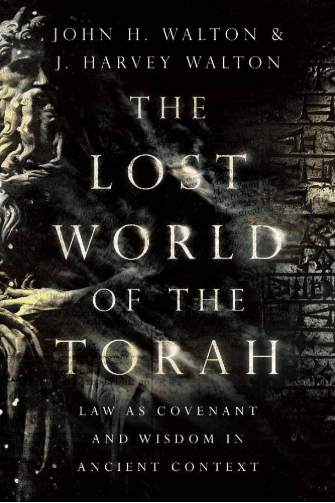 John Walton and his son J. Harvey Walton, The Lost World of the Torah, and the 5th part of their book will prove to be the most controversial.
Why?
W&W anchor the Torah in the Ancient Near East (ANE), in the covenant God made (exclusively) with Israel (not the church, and the covenant and its legislation stipulations are about God’s presence with Israel. We are not in that covenant so what is said to that covenant people is not “to” us …
The impact of this approach to Torah can stagger some for it locates the Torah back then and only for back then. W&W are church people, Christian people, and that means people ask them about the significance of the Torah for today. Is it relevant?
It seems their answer would be: No and Yes, and what is relevant is that we learn who God is and how we can live before that God in faithfulness. This may not be enough for some, but it’s a good start.
Here are their propositions in this 5th part, some of which (16, 17, 18, 20) are not controversial (or ought not to be) and some will require much longer treatments (19, 21, 22, 23).
Proposition 15: Discussions of Law in the New Testament Do Not Tell Us Anything About Old Testament Torah in Context
A brief: one cannot equate what Jesus and the apostles mean by “law” as the same as what it meant in the ANE and OT, nor does what they say about the OT Torah equate to how it was understood in the ANE. In fact, he suggests covenant stipulations becomes more like legislation in the Hellenistic period, and that is the river in which the NT is floating. [I wanted more proof for this but contextual location arguments are important.]
Proposition 16: The Torah Should Not Be Divided into Categories to Separate Out What Is Relevant
Proposition 17: Torah Was Never Intended to Provide Salvation
Proposition 18: Divine Instruction Can Be Understood as a Metaphor of Health Rather Than a Metaphor of Law
Proposition 19: We Cannot Gain Moral Knowledge or Build a System of Ethics Based on Reading the Torah in Context and Deriving Principles from It
Propositions 20: Torah Cannot Provide Prooftexts Solving Issues Today
Proposition 21: The Ancient Israelites Would Not Have Understood the Torah as Providing Divine Moral Instruction
Proposition 22: A Divine Command Theory of Ethics Does Not Require that the Torah Is Moral Instruction
Proposition 23: Taking the Torah Seriously Means Understanding What It Was Written To Say, Not Converting It into Moral Law
I agree that dividing Torah into moral, civil, and ceremonial is artificial; Torah did not provide salvation and never intended to do; I’m not sure the health theme is all that important. The emphasis in the book is on wisdom and order. No one wants to say they are prooftexting, so that point isn’t controversial. Actually, this point emerges from already assuming the Torah has legislation that reflects God’s character and is for God’s covenanted people, including the church. Still, we’ll move on.
Decisions about the relevance and application of the Torah (as with any text of Scripture) must be made on the basis of the genre (in this case, wisdom insight rather than legislated commands), the context (written to Israel in the context of covenant and temple), the rhetorical strategy (how a section of literature functions within the larger work), the author s intention (what he intends the communication to accomplish the expected response), and the backdrop of the cultural context (understood in relation to the ancient cultural river, not ours).
Discussions, debates, and disagreements arise with the others, and it is quite unlikely that W&W are going to convince many. While I think this is the most provocative of the Lost World series, I found it in need often of more thorough proof and less in need of the Not…But rhetoric. I am not convinced Torah as wisdom and order cannot also be legislative and I’m totally unconvinced Torah needs to be comprehensive to be legislation. I’m open to being persuaded.
The relationship between the covenants — let’s say Moses and New to approximate the issue — has to be spelled out to make sense of the proposals/propositions in this book. The word “fulfill” and “telos” (goal, end, etc) require definition to connect the covenant obligations of the former with the latter.
When it comes to #19, in the main I agree: the principlization theory that Walter Kaiser was onto is not as simple as it looks, but to turn it around, its denial is not simple either.
I’m unpersuaded that morality can be divorced from wisdom, from order, from covenant stipulations and from legislation. Calling it order doesn’t negate morality. These are not reified or even reifiable categories. God’s being, God’s will, God’s law, God’s covenant with God’s redeemed people … these generate moral visions, morality and moral systems.
But I go back to the relationship of the Old and the New, the First and the Second Testaments. This is where the issues here have to be sorted out, and in this book and for this purpose W&W did not raise this into the propositional level. They can easily do this so perhaps more about this someday.
On the Torah not being about morality… it seems he’s defining a moral system by the term morality and W&W connect that to being comprehensive, natural law … Torah is not morality but instruction, and the response to instruction is comprehension, not obedience. OK, and W&W have been asked this a number of times, why not both?
As we extend these concepts beyond the scope of Israel, it is probably not unreasonable to maintain that God’s people have been given an identity with God and that it is our responsibility to honor God as we reflect him in our lives. Moral behavior would unquestionably be part of that, but only a part. The basis of this claim, however, would not be a universal revelation of the character of God in the Torah but rather an idea derived from the New Testament’s own context (i.e., the idiom “in Christ” as a declaration of identity) and the assumption of thematic recapitulation in the parallel portrayals of the church and Israel (see proposition twenty-three). Most importantly, however, this observation in itself does not help us to ascribe a particular shape to moral behavior, let alone the shape that is described in the Torah. Morality may well comprise some universal absolutes (i.e., do not steal), but it is also defined by norms that are culturally relative (i.e., do not run around naked in public). But our knowledge of the particular shape of the universal (or situationally relevant) constituents of moral behavior need not be assumed to come directly from the text of the Bible, though divine command theory admits the possibility that God’s commands can be known from general revelation, and neither the Old Testament nor the New Testament teaches that it should come from the Torah.
Their purpose is not to dictate God’s demands for our conduct but to let us know what God is doing—what his plans and purposes are—so that we can choose whether we want to participate or suffer from not participating as its own consequence.
Of the Lost World books this is both the finest attempt to show the significance of the ANE as well as the most provocative, but I believe, too, the one that will not be as convincing until some of the loose ends are tied up. I’m hoping it generates conversations about the meaning of Torah, about how Torah and covenant fit together, how Torah and law/legislation and morality fit with one another, and especially how the “ethic” of the OT fits with the ethic of the NT. Terms, of course, in need of nuancing, but the big picture is what we have in view when it comes to conversation.
W&W have taken on a huge topic, and it’s not surprising that writing at this level will leave lots of loose ends. It might be ours to pick them up and see if we can tie them together.
Maybe what we need is a clear example of how to “do Christian ethics” — say how to approach Christian and war, or Christian and same-sex relations/marriage, or the Christian and capital punishment.
Previous Post

March 5, 2019
Nancy Beach's Wise Words
Next Post

March 6, 2019 Lectureships
Browse Our Archives
Select a Category Acts of the Apostles Adam Advent Anabaptism Angels Anglican Apologetics Atonement Baptism BCP Prayers Bible Biblical Studies Birds Blogging Bloglossary Bonhoeffer Books Calvinism Christianity Church Church History Coffee Colossians Commentary Recs Conversion Creation Creeds Culture Death Ecclesiastes Economics Education Embracing Grace Emergent Emerging Movement Eschatology Essays Ethics Eucharist Evangelicalism Family Fasting Fathers Fellowship of Differents Footsteps Tour Fun and Whimsical Gospel Grace Happiness Heaven Hell Holy Spirit Irenaeus James Jesus Jesus Creed Job Justification Kingdom of God Law Lectures Lent Liberalism Love and Marriage Mabanteneni Manhood Mary Miracles Missio Alliance MissioLife Missional Missional Jesus Movies and Film New Perspective Northern Seminary OneLife Origins Project Orthodox Parables Pastor's Spouse Pastoring and Leading Pastoring and Preaching Patristics Paul Paul-John Tour Pharisees Pietism Political Theology Prayer and Formation Preaching Problems for Faith Psalm 119 Psalms Public Issues Purgatory Religions Resurrection Revelation Romans Rule of JCreed Science and Faith Sermon on the Mount Sports Ten Commandments Theology Third Way Top Ten Lists Translations Uncategorized Universalism University Ministry Way Out Weekly Meanderings Wisdom Women and Ministry Work Worship Writing & Blogging Youth Ministry
Select a Month July 2021 January 2020 December 2019 November 2019 October 2019 September 2019 August 2019 July 2019 June 2019 May 2019 April 2019 March 2019 February 2019 January 2019 December 2018 November 2018 October 2018 September 2018 August 2018 July 2018 June 2018 May 2018 April 2018 March 2018 February 2018 January 2018 December 2017 November 2017 October 2017 September 2017 August 2017 July 2017 June 2017 May 2017 April 2017 March 2017 February 2017 January 2017 December 2016 November 2016 October 2016 September 2016 August 2016 July 2016 June 2016 May 2016 April 2016 March 2016 February 2016 January 2016 December 2015 November 2015 October 2015 September 2015 August 2015 July 2015 June 2015 May 2015 April 2015 March 2015 February 2015 January 2015 December 2014 November 2014 October 2014 September 2014 August 2014 July 2014 June 2014 May 2014 April 2014 March 2014 February 2014 January 2014 December 2013 November 2013 October 2013 September 2013 August 2013 July 2013 June 2013 May 2013 April 2013 March 2013 February 2013 January 2013 December 2012 November 2012 October 2012 September 2012 August 2012 July 2012 June 2012 May 2012 April 2012 March 2012 February 2012 January 2012 December 2011 November 2011 October 2011 September 2011 August 2011 July 2011 June 2011 May 2011 April 2011 March 2011 February 2011 January 2011 December 2010 November 2010 October 2010 September 2010 August 2010 July 2010 June 2010 May 2010 April 2010 March 2010 February 2010 January 2010 December 2009 November 2009 October 2009 September 2009 August 2009 July 2009 June 2009 May 2009 April 2009 March 2009 February 2009 January 2009 December 2008 November 2008 October 2008 September 2008 August 2008 July 2008 June 2008 May 2008 April 2008 March 2008 February 2008 January 2008 December 2007 November 2007 October 2007 September 2007 August 2007 July 2007 June 2007 May 2007 April 2007 March 2007 February 2007 January 2007 December 2006 November 2006 October 2006 September 2006 August 2006 July 2006 June 2006 May 2006 April 2006 March 2006 February 2006 January 2006 December 2005 November 2005 October 2005 September 2005 August 2005 July 2005 June 2005 May 2005 April 2005 0000
Follow Us!
TAKE THE
Religious Wisdom Quiz
Which Old Testament book does not mention God?
Select your answer to see how you score.
Song of Solomon Ruth Ecclesiastes Esther
Related posts from Jesus Creed


The Gospel of With Us and Through Us

Northern Seminary Announces: Nijay Gupta Joins Faculty

The Gundrys and Me: Ruth Tucker
TRENDING AT PATHEOS Evangelical

The REST of Your Life: A Creative Wrestles...
This week I had a conversation with a good friend from church....

How the author of the world's best hymn...
I've been working with John Newton for a while now. This makes...

Long before this Lectio Divina, Psalm 130 - the song - started...

What About the Trees? Another Living Parable
After I finished writing the last article about falling leaves as a...

Why Classical Education Is a Conversation, Not a...
Come and Read: Joy in Classical Education When I was a little...

Cornell University has received a great deal of negative publicity and intense...
view all Evangelical blogs
Ad-Free & Subscriber Log-In Subscription Support
- About Us
- 2026 Calendar
- Videos
- Podcasts
- Library of World Religions
- Faith In Media Tracker
- Advertise With Us
- Write for Us
- Privacy Policy
- Terms of Service
- Do Not Sell My Data
- Contact Us
- Radiant Digital
- Manage Newsletter Subscriptions
- Unsubscribe From Notifications
- Sitemap
Copyright 2008-2026, Patheos. All rights reserved.
Subscription Support Ad-Free & Subscriber Log-In
Follow Patheos