
BuddhistCatholicContemplativeEvangelicalGeneral ChristianHinduJewishLatter-day SaintMuslimNew VisionsProgressive Christian
Beliefs
- Buddhist
- Catholic
- Contemplative
- Evangelical
- General Christian
- Hindu
- Jewish
- Latter-day Saint
- More Voices
- Muslim
- New Visions
- Pagan
- Progressive Christian
Topics
- Religion News
- Food and Religion
- Sports and Religion
- Religious Art
- Religious Music and Entertainment
- Religious Events
- History and Religion
- Style and Religion
- Politics and Religion
- Women in Religion
- Recreation Outdoors and Religion
- Business Finance and Religion
- Careers Workplace and Religion
- Education and Religion
- Family Parenting and Religion
- Health Fitness and Religion
- Home and Religion
- Relationships and Religion
- Technology and Religion
- Travel and Religion
Columnists
- Buddhist Columnists
- Business Finance and Religion Columnists
- Careers Workplace and Religion Columnists
- Catholic Columnists
- Contemplative Columnists
- Education and Religion Columnists
- Evangelists Columnists
- Family Parenting and Religion Columnists
- General Christian Columnists
- Health Fitness and Religion Columnists
- Hindu Columnists
- History and Religion Columnists
- Home and Religion Columnists
- Jewish Columnists
- More Voices Columnists
- Latter Day Columnists
- Muslim Columnists
- New Visions Columnists
- Nonreligious Columnists
- Pagan Columnists
- Politics and Religion Columnists
- Progressive Columnists
- Recreation Outdoors and Religion Columnists
- Relationships and Religion Columnists
- Religion News Columnists
- Religious Art Columnists
- Religious Events Columnists
- Religious Music and Entertainment Columnists
- Sports and Religion Columnists
- Style and Religion Columnists
- Technology and Religion Columnists
- Travel and Religion Columnists
- Women in Religion Columnists
Resource Library
- 2026 Calendar
- Library of World Religions
- The 100 Most Holy Places on Earth
- Patheos Answers
- Podcasts
- Videos
- Faith Leaders Database
- Anglican Episcopalian
- Bahai
- Baptist
- Buddhism
- Christianity
- Confucianism
- Eastern Orthodoxy
- Hinduism
- Holiness and Pentecostal
- ISKCON
- Islam
- Judaism
- Lutheran
- Methodist
- The Church of Jesus Christ of Latter-day Saints
- New Age
- Paganism
- Presbytarian and Reformed
- Protestantism
- Religion Behind the Scenes
- Roman Catholic
- Scientology
- Shia Islam
- Sikhism
- Sufism
- Sunni Islam
- Taoism
- Zen
- See all religions
Research Tools
 Ad-Free & Subscriber Log-In Subscription Support
Ad-Free & Subscriber Log-In Subscription Support
Follow Patheos 

- Trending:
- Forgiveness
- |
- Marriage
- |
- Consciousness
- |
- Death Penalty
- |
- Election
- |
- Halloween
 Jesus Creed
- Home
- Evangelical
- Law, Covenant, Rules, or What?
Law, Covenant, Rules, or What?
Last updated on: March 4, 2019 at 4:51 am by Scot McKnight
Law, Covenant, Rules, or What? 2019-03-02T11:55:58-06:00 Scot McKnight
Patheos Explore the world's faith through different perspectives on religion and spirituality! Patheos has the views of the prevalent religions and spiritualities of the world.
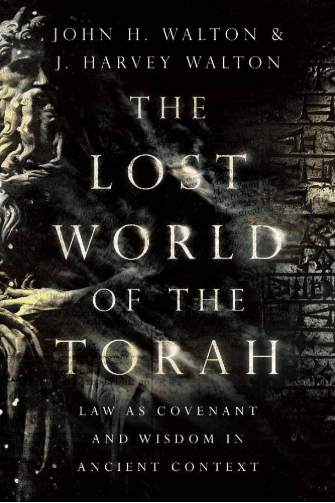 John Walton’s “Lost World” series continues with his newest book, with his son J. Harvey Walton, The Lost World of the Torah.
When one of these books comes out, I open to the Table of Contents and read each of his Propositions. It’s easy to get a skim of the whole this way; he’s not hiding anything with chp titles to make readers wait for the good stuff to come. He just tells you up front what he will be arguing.
There are 23 Propositions in this book, we looked at 1-4 last week and today I want to continue at Proposition 5.
Their essential strategy is to locate the Bible in its historical contexts, and that means the Torah is part of the Ancient Near East (ANE). It is not 1st Century; it is not Roman law; it is not modern constitutional law. The Waltons fight anachronisms all the time. Fighting anachronisms can at times lead to missing continuities.
So far W&W have argued the Torah of the OT is wisdom, not law/legislative. It’s about order, not legislation. The ANE collections of seeming laws were “aspective” and not comprehensive. It is right that W&W cut a path: to be legislation it has to be comprehensive. Thus, “We will use the term legislation to refer to the idea of legal formulations that are prescriptive and therefore create a system of law and an obligation for those under that system.” It sure seems to me that no legislation in any culture has ever been comprehensive; laws are always aspective: they are aspects of life out of which some kind of legal ruling is made that is to shape how other judges are to judge and how humans in that culture are to live. But no legislation, not even Justinian’s massive Digest is comprehensive. W&W: “If a society is going to be governed by law, the law must address every aspect of society.” (How do we know that? Who says so? Can law ever be comprehensive? Doesn’t all law develop and evolve and shift and accrue new rulings, which then become precedence?) I’m not sure using “comprehensive” over against “aspective” says as much as W&W contend.
Now to our post for today.
5 The Torah Is Similar to Ancient Near Eastern Legal Collections and Therefore Also Teaches Wisdom, Not Legislation
The laws of Exodus, Leviticus, Deuteronomy — they are contending — are aspective; they are for judges and kings as precedents for how to rule and judge further; they are then wisdom and not legislation. I’m sure they are wisdom; I’m not sure the negation follows or is necessary.
One of the strategies of W&W is to provoke thought; part of that strategy is to write in strong affirmation-denial. This shocks readers into attention, the way Barth often did. It also creates some bewildering false dichotomies, but I will give them a break: it’s a strategy and rhetoric that does need some nuancing.
Yes, the rulings of the OT are not comprehensive (and for them not legislation therefore), but this point is important:
… the Torah, though clearly recognized as a document (“book of Moses”), is not relied on as the legal, normative basis for judicial decisions. So, for example, David reacts to Nathan’s parable with, “As surely as the Lord lives, the man who did this must die! He must pay for that lamb four times over, because he did such a thing and had no pity” (2 Sam 12:5-6). Exodus 22:1 can be cited as attesting to the custom that theft of a sheep should be repaid fourfold, but there is no indication that David had re searched the law in order to arrive at his decision, nor did he substantiate it based on a legal text. Texts that contain legal sayings may at times have been read aloud as exhortation to the people (as in Deut 31:10-13; Ezra 8), consulted by judges, or studied by kings who sought to be wise (Deut i7:i8-2o). The Torah was intended to give the king wisdom for doing his job.
Now another logical move in this book: these rulings that were valuable for judges and kings to provide wisdom for social order are then incorporated into the OT as a covenant and the rulings in a covenant become, not legislation, but covenant stipulations. As such, they provide order for covenant people on how to live as covenant people to bring good reputation (glory) to God. They are thus not legislation. (Why not both?)
The Hebrew terms — like mishpatim etc — are terms reflecting aspective judgments, not comprehensive codification, which is the mark of legislation.
Torah presents the way of wisdom and life (Deut 30) in the ordered world of the covenant. We can therefore see that the issues that Scripture addresses have to do with wisdom and covenant fidelity, not with legislation and its rules that must be obeyed.
Consequently, we will propose that Torah in biblical usage is an expression of wisdom, not of legislation. It refers to a collection of examples that combine to form a description of the desired established order. We will be using the term to refer to the corpus of legal sayings found throughout the Pentateuch and will seek to demonstrate that these sayings embody standards of wisdom for the ordering of society within the covenant relationship that Yahweh had with Israel.
6: The Israelite Covenant Effectively Functions as an Ancient Near Eastern Suzerainty Treaty
Drawing out what has already been said, and important for the case W&W build, is that the “laws” of the Torah are embedded in a covenant, one that is very much on the order of a suzerainty treaty. To use their terms, “ANE treaty stipulations are aspective, not comprehensive, and their intention is instruction, not legislation.” Again, this rhetoric gets too close to dichotomous thinking. The aim is loyalty not legal obedience, and the overall aim is to enhance the reputation of the suzerain (God). “The kings of the ancient world did not impose law; they gave wisdom as they forged their identity.”
Both legal wisdom texts and treaties serve to establish or enhance the reputation of the king who produced them. In the case of the legal wisdom, the text establishes wisdom and justice and thereby serves to demonstrate that the king is wise and just. In the case of treaties, the document establishes the parameters of a relationship that will demon the treatment of his vassals.
liis in turn indicates that when we turn to apply the message of Israels covenant documents to ourselves, we should think in terms of trying to understand the reputation that Yahweh intended to establish for himself. We should not think in terms of something that Yahweh wants to give to us (law) or something that he expects to receive from us (moral performance).
7: Holiness Is a Status, Not an Objective
Holiness is something about God — about God-ness. It is not something humans achieve but a status God gives. Rhetoric again: “Holiness does not describe a property of Israel; it describes a property of Yahweh.”
Previous Post

March 4, 2019
What To Say When Someone Says Wives Are To Submit
Next Post

March 5, 2019 Jesus' Kingdom
Browse Our Archives
Select a Category Acts of the Apostles Adam Advent Anabaptism Angels Anglican Apologetics Atonement Baptism BCP Prayers Bible Biblical Studies Birds Blogging Bloglossary Bonhoeffer Books Calvinism Christianity Church Church History Coffee Colossians Commentary Recs Conversion Creation Creeds Culture Death Ecclesiastes Economics Education Embracing Grace Emergent Emerging Movement Eschatology Essays Ethics Eucharist Evangelicalism Family Fasting Fathers Fellowship of Differents Footsteps Tour Fun and Whimsical Gospel Grace Happiness Heaven Hell Holy Spirit Irenaeus James Jesus Jesus Creed Job Justification Kingdom of God Law Lectures Lent Liberalism Love and Marriage Mabanteneni Manhood Mary Miracles Missio Alliance MissioLife Missional Missional Jesus Movies and Film New Perspective Northern Seminary OneLife Origins Project Orthodox Parables Pastor's Spouse Pastoring and Leading Pastoring and Preaching Patristics Paul Paul-John Tour Pharisees Pietism Political Theology Prayer and Formation Preaching Problems for Faith Psalm 119 Psalms Public Issues Purgatory Religions Resurrection Revelation Romans Rule of JCreed Science and Faith Sermon on the Mount Sports Ten Commandments Theology Third Way Top Ten Lists Translations Uncategorized Universalism University Ministry Way Out Weekly Meanderings Wisdom Women and Ministry Work Worship Writing & Blogging Youth Ministry
Select a Month July 2021 January 2020 December 2019 November 2019 October 2019 September 2019 August 2019 July 2019 June 2019 May 2019 April 2019 March 2019 February 2019 January 2019 December 2018 November 2018 October 2018 September 2018 August 2018 July 2018 June 2018 May 2018 April 2018 March 2018 February 2018 January 2018 December 2017 November 2017 October 2017 September 2017 August 2017 July 2017 June 2017 May 2017 April 2017 March 2017 February 2017 January 2017 December 2016 November 2016 October 2016 September 2016 August 2016 July 2016 June 2016 May 2016 April 2016 March 2016 February 2016 January 2016 December 2015 November 2015 October 2015 September 2015 August 2015 July 2015 June 2015 May 2015 April 2015 March 2015 February 2015 January 2015 December 2014 November 2014 October 2014 September 2014 August 2014 July 2014 June 2014 May 2014 April 2014 March 2014 February 2014 January 2014 December 2013 November 2013 October 2013 September 2013 August 2013 July 2013 June 2013 May 2013 April 2013 March 2013 February 2013 January 2013 December 2012 November 2012 October 2012 September 2012 August 2012 July 2012 June 2012 May 2012 April 2012 March 2012 February 2012 January 2012 December 2011 November 2011 October 2011 September 2011 August 2011 July 2011 June 2011 May 2011 April 2011 March 2011 February 2011 January 2011 December 2010 November 2010 October 2010 September 2010 August 2010 July 2010 June 2010 May 2010 April 2010 March 2010 February 2010 January 2010 December 2009 November 2009 October 2009 September 2009 August 2009 July 2009 June 2009 May 2009 April 2009 March 2009 February 2009 January 2009 December 2008 November 2008 October 2008 September 2008 August 2008 July 2008 June 2008 May 2008 April 2008 March 2008 February 2008 January 2008 December 2007 November 2007 October 2007 September 2007 August 2007 July 2007 June 2007 May 2007 April 2007 March 2007 February 2007 January 2007 December 2006 November 2006 October 2006 September 2006 August 2006 July 2006 June 2006 May 2006 April 2006 March 2006 February 2006 January 2006 December 2005 November 2005 October 2005 September 2005 August 2005 July 2005 June 2005 May 2005 April 2005 0000
Follow Us!
TAKE THE
Religious Wisdom Quiz
We celebrate a feast with feasting and joy, remembering deliverance from destruction in Persia. What feast are we?
Select your answer to see how you score.
Passover Pentecost Purim Hanukkah
Related posts from Jesus Creed


The Gospel of With Us and Through Us

Northern Seminary Announces: Nijay Gupta Joins Faculty

The Gundrys and Me: Ruth Tucker
TRENDING AT PATHEOS Evangelical

How the author of the world's best hymn...
I've been working with John Newton for a while now. This makes...

Long before this Lectio Divina, Psalm 130 - the song - started...

What About the Trees? Another Living Parable
After I finished writing the last article about falling leaves as a...

Why Classical Education Is a Conversation, Not a...
Come and Read: Joy in Classical Education When I was a little...

Falling Leaves: A Living Parable on Letting Go
I’ve spent the vast majority of my life in the southeast corner...

Cornell University has received a great deal of negative publicity and intense...
view all Evangelical blogs
Ad-Free & Subscriber Log-In Subscription Support
- About Us
- 2026 Calendar
- Videos
- Podcasts
- Library of World Religions
- Faith In Media Tracker
- Advertise With Us
- Write for Us
- Privacy Policy
- Terms of Service
- Do Not Sell My Data
- Contact Us
- Radiant Digital
- Manage Newsletter Subscriptions
- Unsubscribe From Notifications
- Sitemap
Copyright 2008-2026, Patheos. All rights reserved.
Subscription Support Ad-Free & Subscriber Log-In
Follow Patheos