
BuddhistCatholicContemplativeEvangelicalGeneral ChristianHinduJewishLatter-day SaintMuslimNew VisionsProgressive Christian
Beliefs
- Buddhist
- Catholic
- Contemplative
- Evangelical
- General Christian
- Hindu
- Jewish
- Latter-day Saint
- More Voices
- Muslim
- New Visions
- Pagan
- Progressive Christian
Topics
- Religion News
- Food and Religion
- Sports and Religion
- Religious Art
- Religious Music and Entertainment
- Religious Events
- History and Religion
- Style and Religion
- Politics and Religion
- Women in Religion
- Recreation Outdoors and Religion
- Business Finance and Religion
- Careers Workplace and Religion
- Education and Religion
- Family Parenting and Religion
- Health Fitness and Religion
- Home and Religion
- Relationships and Religion
- Technology and Religion
- Travel and Religion
Columnists
- Buddhist Columnists
- Business Finance and Religion Columnists
- Careers Workplace and Religion Columnists
- Catholic Columnists
- Contemplative Columnists
- Education and Religion Columnists
- Evangelists Columnists
- Family Parenting and Religion Columnists
- General Christian Columnists
- Health Fitness and Religion Columnists
- Hindu Columnists
- History and Religion Columnists
- Home and Religion Columnists
- Jewish Columnists
- More Voices Columnists
- Latter Day Columnists
- Muslim Columnists
- New Visions Columnists
- Nonreligious Columnists
- Pagan Columnists
- Politics and Religion Columnists
- Progressive Columnists
- Recreation Outdoors and Religion Columnists
- Relationships and Religion Columnists
- Religion News Columnists
- Religious Art Columnists
- Religious Events Columnists
- Religious Music and Entertainment Columnists
- Sports and Religion Columnists
- Style and Religion Columnists
- Technology and Religion Columnists
- Travel and Religion Columnists
- Women in Religion Columnists
Resource Library
- 2026 Calendar
- Library of World Religions
- The 100 Most Holy Places on Earth
- Patheos Answers
- Podcasts
- Videos
- Faith Leaders Database
- Anglican Episcopalian
- Bahai
- Baptist
- Buddhism
- Christianity
- Confucianism
- Eastern Orthodoxy
- Hinduism
- Holiness and Pentecostal
- ISKCON
- Islam
- Judaism
- Lutheran
- Methodist
- The Church of Jesus Christ of Latter-day Saints
- New Age
- Paganism
- Presbytarian and Reformed
- Protestantism
- Religion Behind the Scenes
- Roman Catholic
- Scientology
- Shia Islam
- Sikhism
- Sufism
- Sunni Islam
- Taoism
- Zen
- See all religions
Research Tools
 Ad-Free & Subscriber Log-In Subscription Support
Ad-Free & Subscriber Log-In Subscription Support
Follow Patheos 

- Trending:
- Forgiveness
- |
- Marriage
- |
- Consciousness
- |
- Death Penalty
- |
- Election
- |
- Halloween
 Jesus Creed
- Home
- Evangelical
- Only the Literal Meaning? (RJS)
Only the Literal Meaning? (RJS)
Last updated on: February 26, 2019 at 4:57 am by RJS
Only the Literal Meaning? (RJS) 2019-02-24T19:15:45-06:00 RJS
Patheos Explore the world's faith through different perspectives on religion and spirituality! Patheos has the views of the prevalent religions and spiritualities of the world.
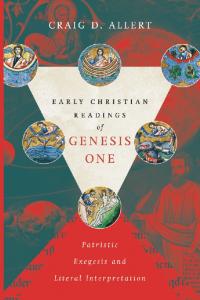 Craig Allert is leading us through a careful consideration of the early church fathers and their interpretation of Genesis One. The most important guidelines are to (1) read the writings in their context and (2) avoid the temptation to proof-text. Reading in context means three things: the context of the work being read, the context of the author’s larger body of work, and the context of the christian and broader culture in which the author writes. The temptation to proof-text is one of the sins of the modern church, one that almost always misreads the passage in question – whether the bible, other Christian writings, or the scientific literature.
Basil of Caesarea (329-379) is often held up as a defender of the literal interpretation of Scripture and an opponent of allegory. His homilies in the Hexaemeron on Genesis 1 are seized upon as ancient support for modern young earth creationism and the “literal” interpretation of these passages. Basil certainly does argue against certain kinds of allegory – but to understand his arguments we really need to understand the alternative views. While it is common to think that he has the allegorizing of Origen in view, Allert argues that this is almost certainly mistaken. In fact, taking the work of Basil as a whole, he generally follows the three-fold method of Origen while not agreeing with all of his conclusions. Basil introduced an innovation into the Eastern church with the doxology – Glory to the Father, and to the Son, and to the Holy Spirit. This was felt by some to be an unbiblical extrapolation. In response Basil wrote a treatise On the Holy Spirit, from which Allert notes:
Basil is quite clear about the danger of an overly literal reading of Scripture, explaining why he believes this near the beginning of the treatise: “The petty exactitude of these men about syllables and words is not, as might be supposed, simple and straightforward; nor is the mischief to which it tends a small one. There is involved a deep and covert design against true religion.” Thus, even though these critics wanted biblical language and only explicit biblical teaching included in Basil’s doxology, he argues that they were actually battling against Scripture. (p. 171)
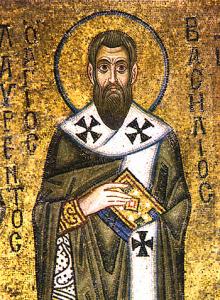 In his commentaries on the Psalms, Basil also uses figurative or allegorical interpretations. Allert mentions explicitly Psalm 28 (p. 173) and alludes to several others. In the Hexaemeron, Basil uses both literal and figurative or allegorical readings. Allert outlines three ways Basil interprets Genesis 1 in ways other than literal.
First, “Basil compares natural phenomena with human situations for the purpose of moral lessons.“ (p. 177) For example:
He explains that there is a “hidden reason” for the varied shape of the moon: “In truth, it is so as to provide for us a clear example of our nature. For, nothing human is stable.” Thus, the moon actually teaches us about our own vicissitudes, and because of that, we should be wary of pride in our successes, power, and wealth. In the flesh there is constant change, so one should care for the soul, “whose good is unchangeable.” The moon is then compared to the human soul. One who is troubled that the moon diminishes its splendor in its waxing and waning should be distressed much more so by the soul, which “having possessed virtue, through neglect destroys its beauty and never remains in the same disposition, but turns and changes constantly through fickleness of mind.” (p. 175)
One could argue that this is an extrapolation not an interpretation – but it remains true that Basil does not limit the message to the literal meaning alone.
Second, he calls his listener to a deeper meaning. He reads into the text of Genesis 1 the presence of the Son (and possibly the Spirit) at creation.
The passage, according to Basil, shows that God not only wanted creation accomplished but also brought it forth through a coworker. … by indicating God as speaking and commanding, “it indicates silently Him to whom He gives the command and to whom He speaks, not because it begrudges us the knowledge, but that it may inflame us to a desire by the very means by which it suggests some traces and indications of the mystery.” He continues with the explicit claim that in these passages Scripture leads us, in an orderly way, to the “idea of the Only-begotten.” “This way of speaking has been wisely and skillfully employed so as to rouse our mind to an inquiry of the Person to whom in these words are directed.”Apparently for Basil, a reading according to common use includes searching for “indications of the mystery.” In this case, the mystery is the agency of Christ in the creation. (p. 178)
A deeper reading, finding Christ in the text, was a common approach in the early church.
Finally, “he uses explicit spiritualization or allegorization.“ (p. 181) The fruit bearing trees of Genesis 1:11 are likened to human souls through connection with the vine and vineyard references in the New Testament. The light from the sun is likened to the true light of the world. Allert asks:
In what sense can either of these two examples from the Hexaemeron be called a “literal” reading? Is Basil’s explanation of the vine, based on the trees in Genesis 1:11, a reading that is accurately described as plain? Does Basil’s move from the creation of light, and then the sun, to participation in the true Light of the world lead us to agree … that Basil advocated and exemplified a humble acceptance of the “common sense” of Genesis? Again, what kind of reading of Scripture is this – literal or allegorical? (pp. 183-184)
What then are we to make of the passages in the Hexaemeron where Basil argues for literal against allegorical meanings? For example 9.1:
I know the laws of allegory, though less by myself than from the works of others. There are those truly, who do not admit the common sense of the Scriptures, for whom water is not water, but some other nature, who see in a plant, in a fish, what their fancy wishes, who change the nature of reptiles and of wild beasts to suit their allegories, like the interpreters of dreams who explain visions in sleep to make them serve their own ends. For me grass is grass; plant, fish, wild beast, domestic animal, I take all in the literal sense. “For I am not ashamed of the gospel.” Those who have written about the nature of the universe have discussed at length the shape of the earth. If it be spherical or cylindrical, if it resemble a disc and is equally rounded in all parts, or if it has the forth of a winnowing basket and is hollow in the middle; all these conjectures have been suggested by cosmographers, each one upsetting that of his predecessor. It will not lead me to give less importance to the creation of the universe, that the servant of God, Moses, is silent as to shapes; … It is this which those seem to me not to have understood, who, giving themselves up to the distorted meaning of allegory, have undertaken to give a majesty of their own invention to Scripture. It is to believe themselves wiser than the Holy Spirit, and to bring forth their own ideas under a pretext of exegesis. Let us hear Scripture as it has been written. (NPNF 2.08 pp. 101-102 – Allert uses a different translation, this is the one I have at my fingertips.)
 Does this passage along with a few others imply a literal reading of the creation passage? In a sense it does – but the argument is not for scientific knowledge in the text. Rather, it is in favor of reading scripture for its intended meaning (in light of Christ) rather than as a repository of codes and such. In fact, Allert suggest that Basil is responding to a view out there in his cultural environment that interpreted creation in a mystical-philosophical sense. The idea that evil that opposes God exists independent of God was ‘out there’ – as was a view of matter as less than good. Consider Genesis 1:2 “darkness was over the surface of the deep” and 1:6-7 “And God said, “Let there be a vault between the waters to separate water from water.” So God made the vault and separated the water under the vault from the water above it. And it was so.” These passages were being interpreted in mystical and damaging ways. Allert writes:
He states that darkness is taken in this verse to indicate an evil that opposes God. “If ‘God is light’ (1 Jn 1:5) they say, assuredly in conformity with the meaning, the power warring against Him would be darkness, a darkness not having its being from another, but a self-begotten evil.” Basil opposes this interpretation, not because it is allegorical in nature but rather because it would mean that darkness subsisted on its own and had not been made by God. This is why Basil, in this instance, claims that the meaning of this phrase is “simple and easily understood by all” and invites his listeners to “accept the concept of darkness simply and without curiosity.” (p. 201)
Earlier in the chapter Allert deals with Basil’s reaction to misinterpretations of verses 6-7
The allegorization to which he objects is of the water under the heaven meaning “spirits of malice.” These spirits who fell are called “sea” because of their unstable and inconsistent movements. It is these kinds of meanings that are “dream interpretations and old women’s tales.” It was popular in Neoplatonic circles to associate demons with the movements of the sea. (p. 187)
What does this mean? Basil does object to fanciful allegorization especially when it misinterprets the whole scheme of the world. He did not take a rigorously literal approach to Scripture, and in fact argued against such an approach when it placed God in the same plane of existence as humans, limited by the created world. “The issue appears not to be either allegorical or literal interpretation. Rather, there are other factors at work in determining how one ought to interpret. ….Basil saw heretical, figurative interpretations as a threat to his common audience because they could not discern them.” (p. 202)
To use proof texts from the Hexaemeron of Basil of Caesarea to demonstrate a long line of interpretation consistent with the modern fundamentalist approach is simply inconsistent with his reasoning and writing. Basil was responding to issues of his day, in ways appropriate for his audience. He was not addressing our specific concerns – although there is much that we can learn from him even today.
All in all, a very interesting chapter in Early Christian Readings of Genesis One (with far more detail than my short interaction covers).
If you wish to contact me directly you may do so at rjs4mail[at]att.net.
If interested you can subscribe to a full text feed of my posts at Musings on Science and Theology.
Previous Post

February 26, 2019
Michael Kruse: Business People 6
Next Post
February 26, 2019 Apostle Paul And James Faulkner, Beautiful!
Browse Our Archives
Select a Category Acts of the Apostles Adam Advent Anabaptism Angels Anglican Apologetics Atonement Baptism BCP Prayers Bible Biblical Studies Birds Blogging Bloglossary Bonhoeffer Books Calvinism Christianity Church Church History Coffee Colossians Commentary Recs Conversion Creation Creeds Culture Death Ecclesiastes Economics Education Embracing Grace Emergent Emerging Movement Eschatology Essays Ethics Eucharist Evangelicalism Family Fasting Fathers Fellowship of Differents Footsteps Tour Fun and Whimsical Gospel Grace Happiness Heaven Hell Holy Spirit Irenaeus James Jesus Jesus Creed Job Justification Kingdom of God Law Lectures Lent Liberalism Love and Marriage Mabanteneni Manhood Mary Miracles Missio Alliance MissioLife Missional Missional Jesus Movies and Film New Perspective Northern Seminary OneLife Origins Project Orthodox Parables Pastor's Spouse Pastoring and Leading Pastoring and Preaching Patristics Paul Paul-John Tour Pharisees Pietism Political Theology Prayer and Formation Preaching Problems for Faith Psalm 119 Psalms Public Issues Purgatory Religions Resurrection Revelation Romans Rule of JCreed Science and Faith Sermon on the Mount Sports Ten Commandments Theology Third Way Top Ten Lists Translations Uncategorized Universalism University Ministry Way Out Weekly Meanderings Wisdom Women and Ministry Work Worship Writing & Blogging Youth Ministry
Select a Month July 2021 January 2020 December 2019 November 2019 October 2019 September 2019 August 2019 July 2019 June 2019 May 2019 April 2019 March 2019 February 2019 January 2019 December 2018 November 2018 October 2018 September 2018 August 2018 July 2018 June 2018 May 2018 April 2018 March 2018 February 2018 January 2018 December 2017 November 2017 October 2017 September 2017 August 2017 July 2017 June 2017 May 2017 April 2017 March 2017 February 2017 January 2017 December 2016 November 2016 October 2016 September 2016 August 2016 July 2016 June 2016 May 2016 April 2016 March 2016 February 2016 January 2016 December 2015 November 2015 October 2015 September 2015 August 2015 July 2015 June 2015 May 2015 April 2015 March 2015 February 2015 January 2015 December 2014 November 2014 October 2014 September 2014 August 2014 July 2014 June 2014 May 2014 April 2014 March 2014 February 2014 January 2014 December 2013 November 2013 October 2013 September 2013 August 2013 July 2013 June 2013 May 2013 April 2013 March 2013 February 2013 January 2013 December 2012 November 2012 October 2012 September 2012 August 2012 July 2012 June 2012 May 2012 April 2012 March 2012 February 2012 January 2012 December 2011 November 2011 October 2011 September 2011 August 2011 July 2011 June 2011 May 2011 April 2011 March 2011 February 2011 January 2011 December 2010 November 2010 October 2010 September 2010 August 2010 July 2010 June 2010 May 2010 April 2010 March 2010 February 2010 January 2010 December 2009 November 2009 October 2009 September 2009 August 2009 July 2009 June 2009 May 2009 April 2009 March 2009 February 2009 January 2009 December 2008 November 2008 October 2008 September 2008 August 2008 July 2008 June 2008 May 2008 April 2008 March 2008 February 2008 January 2008 December 2007 November 2007 October 2007 September 2007 August 2007 July 2007 June 2007 May 2007 April 2007 March 2007 February 2007 January 2007 December 2006 November 2006 October 2006 September 2006 August 2006 July 2006 June 2006 May 2006 April 2006 March 2006 February 2006 January 2006 December 2005 November 2005 October 2005 September 2005 August 2005 July 2005 June 2005 May 2005 April 2005 0000
Follow Us!
TAKE THE
Religious Wisdom Quiz
Where was Jesus born?
Select your answer to see how you score.
Jerusalem Capernaum Bethlehem Nazareth
Related posts from Jesus Creed


The Gospel of With Us and Through Us

Northern Seminary Announces: Nijay Gupta Joins Faculty

The Gundrys and Me: Ruth Tucker
TRENDING AT PATHEOS Evangelical

The REST of Your Life: A Creative Wrestles...
This week I had a conversation with a good friend from church....

How the author of the world's best hymn...
I've been working with John Newton for a while now. This makes...

Long before this Lectio Divina, Psalm 130 - the song - started...

What About the Trees? Another Living Parable
After I finished writing the last article about falling leaves as a...

Why Classical Education Is a Conversation, Not a...
Come and Read: Joy in Classical Education When I was a little...

Cornell University has received a great deal of negative publicity and intense...
view all Evangelical blogs
Ad-Free & Subscriber Log-In Subscription Support
- About Us
- 2026 Calendar
- Videos
- Podcasts
- Library of World Religions
- Faith In Media Tracker
- Advertise With Us
- Write for Us
- Privacy Policy
- Terms of Service
- Do Not Sell My Data
- Contact Us
- Radiant Digital
- Manage Newsletter Subscriptions
- Unsubscribe From Notifications
- Sitemap
Copyright 2008-2026, Patheos. All rights reserved.
Subscription Support Ad-Free & Subscriber Log-In
Follow Patheos