
BuddhistCatholicContemplativeEvangelicalGeneral ChristianHinduJewishLatter-day SaintMuslimNew VisionsProgressive Christian
Beliefs
- Buddhist
- Catholic
- Contemplative
- Evangelical
- General Christian
- Hindu
- Jewish
- Latter-day Saint
- More Voices
- Muslim
- New Visions
- Pagan
- Progressive Christian
Topics
- Religion News
- Food and Religion
- Sports and Religion
- Religious Art
- Religious Music and Entertainment
- Religious Events
- History and Religion
- Style and Religion
- Politics and Religion
- Women in Religion
- Recreation Outdoors and Religion
- Business Finance and Religion
- Careers Workplace and Religion
- Education and Religion
- Family Parenting and Religion
- Health Fitness and Religion
- Home and Religion
- Relationships and Religion
- Technology and Religion
- Travel and Religion
Columnists
- Buddhist Columnists
- Business Finance and Religion Columnists
- Careers Workplace and Religion Columnists
- Catholic Columnists
- Contemplative Columnists
- Education and Religion Columnists
- Evangelists Columnists
- Family Parenting and Religion Columnists
- General Christian Columnists
- Health Fitness and Religion Columnists
- Hindu Columnists
- History and Religion Columnists
- Home and Religion Columnists
- Jewish Columnists
- More Voices Columnists
- Latter Day Columnists
- Muslim Columnists
- New Visions Columnists
- Nonreligious Columnists
- Pagan Columnists
- Politics and Religion Columnists
- Progressive Columnists
- Recreation Outdoors and Religion Columnists
- Relationships and Religion Columnists
- Religion News Columnists
- Religious Art Columnists
- Religious Events Columnists
- Religious Music and Entertainment Columnists
- Sports and Religion Columnists
- Style and Religion Columnists
- Technology and Religion Columnists
- Travel and Religion Columnists
- Women in Religion Columnists
Resource Library
- 2026 Calendar
- Library of World Religions
- The 100 Most Holy Places on Earth
- Patheos Answers
- Podcasts
- Videos
- Faith Leaders Database
- Anglican Episcopalian
- Bahai
- Baptist
- Buddhism
- Christianity
- Confucianism
- Eastern Orthodoxy
- Hinduism
- Holiness and Pentecostal
- ISKCON
- Islam
- Judaism
- Lutheran
- Methodist
- The Church of Jesus Christ of Latter-day Saints
- New Age
- Paganism
- Presbytarian and Reformed
- Protestantism
- Religion Behind the Scenes
- Roman Catholic
- Scientology
- Shia Islam
- Sikhism
- Sufism
- Sunni Islam
- Taoism
- Zen
- See all religions
Research Tools
 Ad-Free & Subscriber Log-In Subscription Support
Ad-Free & Subscriber Log-In Subscription Support
Follow Patheos 

- Trending:
- Forgiveness
- |
- Marriage
- |
- Consciousness
- |
- Death Penalty
- |
- Election
- |
- Halloween
 Jesus Creed
- Home
- Evangelical
- Whiteness, Race, and Slavery in the USA
Whiteness, Race, and Slavery in the USA
Last updated on: February 12, 2019 at 12:13 am by Scot McKnight
Whiteness, Race, and Slavery in the USA 2019-02-09T14:30:20-06:00 Scot McKnight
Patheos Explore the world's faith through different perspectives on religion and spirituality! Patheos has the views of the prevalent religions and spiritualities of the world.
The big picture is this: profit requires labor, labor requires laborers, white North Americans wanted profit, they needed laborers, and African slaves became their laborers.
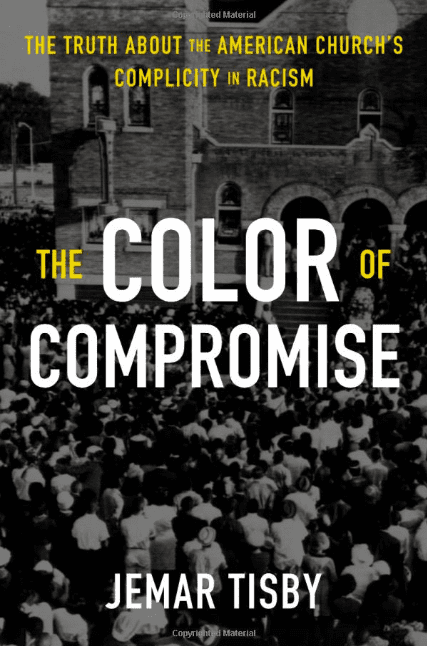
Not all at once, claims Jemar Tisby in his new book, The Color of Compromise. Indentured servants and laborers over time became slaves, and along with this shift was the connection of blackness to inferiority and whiteness to superiority.
My understanding of the history of slavery is that blackness was connected to slavery in about the 6th Century at the hands of Arab/Muslim profit-making and slaves from Africa were shipped into the Arab countries. Tisby’s focus is not that history but how race was connected to slavery in the Americas — from North to the West Indies to Central and South America.
In “Christian America,” Christianity itself was adapted to establish permanency in slavery rather to see slaves as brothers and sisters — siblings — in Christ. Christianity then did not emancipate slave bodies but liberated the soul while keeping the body in slavery.
So slave laws became common in North America:
As slavery became more institutionalized, more rules regulated its practice. By the mid-seventeenth century, colonies began developing “slave codes” to police African bondage. The codes determined that a child was born slave or free based solely on the mother’s status. They mandated slavery for life with no hope of emancipation. The codes deprived the enslaved of legal rights, required permission for slaves to leave their master’s property, forbade marriage between enslaved people, and prohibited them from carrying arms. The slave codes also defined enslaved Africans not as human beings but as chattel—private property on the same level as livestock.
Race is a social construct; it was tied to Christianity at times:
In The Baptism of Early Modern Virginia, historian Rebecca Anne Goetz explains how Europeans on the Atlantic coast of North America developed religious and racial categories in tandem. At first, colonists debated whether Africans were capable of becoming Christians. They adhered to a concept that Goetz calls “hereditary heathenism.” Just as parents passed down physical characteristics to their children, they also passed down their religion. Hereditary heathenism tethered race to religion. From their earliest days in North America, colonists employed religio-cultural categories to signify that European meant “Christian and Native American or African meant “heathen.” Over time, these categories simplified and hardened into racial designations.
Critical in this history was the challenge of the Bible’s message of equality and siblingship between all Christians, and critical here is that race was not tied to superiority in the Bible, so a challenge was at hand:
Even though European missionaries sought to share Christianity with indigenous peoples and Africans, social, political, and economic equality was not part of their plan. Missionaries carefully crafted messages that maintained the social and economic status quo. They truncated the gospel message by failing to confront slavery, and in doing so they reinforced its grip on society.
Motives for conversion were checked:
Francis Le Jau … When Le Jau was able to persuade African slaves to adopt the Christian religion as their own, he confirmed their profession by baptizing them. The vows he made the slaves recite show how European missionaries maintained a strict separation between spiritual and physical freedom. “You declare in the presence of God and before this congregation that you do not ask for holy baptism out of any design to free yourself from the Duty and Obedience you owe to your master while you live, but merely for the good of your soul and to partake of the Grace and Blessings promised to the Members of the Church of Jesus Christ.
Baptism, it was regulated, did not emancipate slave bodies from slavery:
The heading reads, “Key Slavery Statutes of the Virginia General Assembly,” and cites a law enacted in September 1667. … On the question of whether baptism would render slaves free, the Virginia General Assembly decided, “It is enacted and declared by this Grand Assembly, and the authority thereof, that the conferring of baptism does not alter the condition of the person as to his bondage or freedom.” This statute encouraged white enslavers to evangelize their human chattel since baptized slaves would not be freed. In the words of the assembly, “Masters, freed from this doubt, may more carefully endeavor the propagation of Christianity by permitting children, though slaves, or those of greater growth if capable, to be admitted to that sacrament.”
So from the beginning of American colonization, Europeans crafted a Christianity that would allow them to spread the faith without confronting the exploitative economic system of slavery and the emerging social inequality based on color.
Christianity served as a force to help construct racial categories in the colonial period. A corrupt message that saw no contradiction between the brutalities of bondage and the good news of salvation became the norm. European missionaries tried to calm the slave owners’ fears of rebellion by spreading a version of Christianity that emphasized spiritual deliverance, not immediate liberation. Instead of highlighting the dignity of all human beings, European missionaries told Africans that Christianity should make them more obedient and loyal to their earthly masters.
Previous Post

February 11, 2019
Study the Bible in a Cohort
Next Post
February 12, 2019 Why Doubts? What to Do? (RJS)
Browse Our Archives
Select a Category Acts of the Apostles Adam Advent Anabaptism Angels Anglican Apologetics Atonement Baptism BCP Prayers Bible Biblical Studies Birds Blogging Bloglossary Bonhoeffer Books Calvinism Christianity Church Church History Coffee Colossians Commentary Recs Conversion Creation Creeds Culture Death Ecclesiastes Economics Education Embracing Grace Emergent Emerging Movement Eschatology Essays Ethics Eucharist Evangelicalism Family Fasting Fathers Fellowship of Differents Footsteps Tour Fun and Whimsical Gospel Grace Happiness Heaven Hell Holy Spirit Irenaeus James Jesus Jesus Creed Job Justification Kingdom of God Law Lectures Lent Liberalism Love and Marriage Mabanteneni Manhood Mary Miracles Missio Alliance MissioLife Missional Missional Jesus Movies and Film New Perspective Northern Seminary OneLife Origins Project Orthodox Parables Pastor's Spouse Pastoring and Leading Pastoring and Preaching Patristics Paul Paul-John Tour Pharisees Pietism Political Theology Prayer and Formation Preaching Problems for Faith Psalm 119 Psalms Public Issues Purgatory Religions Resurrection Revelation Romans Rule of JCreed Science and Faith Sermon on the Mount Sports Ten Commandments Theology Third Way Top Ten Lists Translations Uncategorized Universalism University Ministry Way Out Weekly Meanderings Wisdom Women and Ministry Work Worship Writing & Blogging Youth Ministry
Select a Month July 2021 January 2020 December 2019 November 2019 October 2019 September 2019 August 2019 July 2019 June 2019 May 2019 April 2019 March 2019 February 2019 January 2019 December 2018 November 2018 October 2018 September 2018 August 2018 July 2018 June 2018 May 2018 April 2018 March 2018 February 2018 January 2018 December 2017 November 2017 October 2017 September 2017 August 2017 July 2017 June 2017 May 2017 April 2017 March 2017 February 2017 January 2017 December 2016 November 2016 October 2016 September 2016 August 2016 July 2016 June 2016 May 2016 April 2016 March 2016 February 2016 January 2016 December 2015 November 2015 October 2015 September 2015 August 2015 July 2015 June 2015 May 2015 April 2015 March 2015 February 2015 January 2015 December 2014 November 2014 October 2014 September 2014 August 2014 July 2014 June 2014 May 2014 April 2014 March 2014 February 2014 January 2014 December 2013 November 2013 October 2013 September 2013 August 2013 July 2013 June 2013 May 2013 April 2013 March 2013 February 2013 January 2013 December 2012 November 2012 October 2012 September 2012 August 2012 July 2012 June 2012 May 2012 April 2012 March 2012 February 2012 January 2012 December 2011 November 2011 October 2011 September 2011 August 2011 July 2011 June 2011 May 2011 April 2011 March 2011 February 2011 January 2011 December 2010 November 2010 October 2010 September 2010 August 2010 July 2010 June 2010 May 2010 April 2010 March 2010 February 2010 January 2010 December 2009 November 2009 October 2009 September 2009 August 2009 July 2009 June 2009 May 2009 April 2009 March 2009 February 2009 January 2009 December 2008 November 2008 October 2008 September 2008 August 2008 July 2008 June 2008 May 2008 April 2008 March 2008 February 2008 January 2008 December 2007 November 2007 October 2007 September 2007 August 2007 July 2007 June 2007 May 2007 April 2007 March 2007 February 2007 January 2007 December 2006 November 2006 October 2006 September 2006 August 2006 July 2006 June 2006 May 2006 April 2006 March 2006 February 2006 January 2006 December 2005 November 2005 October 2005 September 2005 August 2005 July 2005 June 2005 May 2005 April 2005 0000
Follow Us!
TAKE THE
Religious Wisdom Quiz
Who interpreted Nebuchadnezzar's dream of a statue?
Select your answer to see how you score.
Abraham Joseph Ezekiel Daniel
Related posts from Jesus Creed


The Gospel of With Us and Through Us

Northern Seminary Announces: Nijay Gupta Joins Faculty

The Gundrys and Me: Ruth Tucker
TRENDING AT PATHEOS Evangelical

How the author of the world's best hymn...
I've been working with John Newton for a while now. This makes...

Long before this Lectio Divina, Psalm 130 - the song - started...

What About the Trees? Another Living Parable
After I finished writing the last article about falling leaves as a...

Why Classical Education Is a Conversation, Not a...
Come and Read: Joy in Classical Education When I was a little...

Falling Leaves: A Living Parable on Letting Go
I’ve spent the vast majority of my life in the southeast corner...

Cornell University has received a great deal of negative publicity and intense...
view all Evangelical blogs
Ad-Free & Subscriber Log-In Subscription Support
- About Us
- 2026 Calendar
- Videos
- Podcasts
- Library of World Religions
- Faith In Media Tracker
- Advertise With Us
- Write for Us
- Privacy Policy
- Terms of Service
- Do Not Sell My Data
- Contact Us
- Radiant Digital
- Manage Newsletter Subscriptions
- Unsubscribe From Notifications
- Sitemap
Copyright 2008-2026, Patheos. All rights reserved.
Subscription Support Ad-Free & Subscriber Log-In
Follow Patheos