
BuddhistCatholicContemplativeEvangelicalGeneral ChristianHinduJewishLatter-day SaintMuslimNew VisionsProgressive Christian
Beliefs
- Buddhist
- Catholic
- Contemplative
- Evangelical
- General Christian
- Hindu
- Jewish
- Latter-day Saint
- More Voices
- Muslim
- New Visions
- Pagan
- Progressive Christian
Topics
- Religion News
- Food and Religion
- Sports and Religion
- Religious Art
- Religious Music and Entertainment
- Religious Events
- History and Religion
- Style and Religion
- Politics and Religion
- Women in Religion
- Recreation Outdoors and Religion
- Business Finance and Religion
- Careers Workplace and Religion
- Education and Religion
- Family Parenting and Religion
- Health Fitness and Religion
- Home and Religion
- Relationships and Religion
- Technology and Religion
- Travel and Religion
Columnists
- Buddhist Columnists
- Business Finance and Religion Columnists
- Careers Workplace and Religion Columnists
- Catholic Columnists
- Contemplative Columnists
- Education and Religion Columnists
- Evangelists Columnists
- Family Parenting and Religion Columnists
- General Christian Columnists
- Health Fitness and Religion Columnists
- Hindu Columnists
- History and Religion Columnists
- Home and Religion Columnists
- Jewish Columnists
- More Voices Columnists
- Latter Day Columnists
- Muslim Columnists
- New Visions Columnists
- Nonreligious Columnists
- Pagan Columnists
- Politics and Religion Columnists
- Progressive Columnists
- Recreation Outdoors and Religion Columnists
- Relationships and Religion Columnists
- Religion News Columnists
- Religious Art Columnists
- Religious Events Columnists
- Religious Music and Entertainment Columnists
- Sports and Religion Columnists
- Style and Religion Columnists
- Technology and Religion Columnists
- Travel and Religion Columnists
- Women in Religion Columnists
Resource Library
- 2026 Calendar
- Library of World Religions
- The 100 Most Holy Places on Earth
- Patheos Answers
- Podcasts
- Videos
- Faith Leaders Database
- Anglican Episcopalian
- Bahai
- Baptist
- Buddhism
- Christianity
- Confucianism
- Eastern Orthodoxy
- Hinduism
- Holiness and Pentecostal
- ISKCON
- Islam
- Judaism
- Lutheran
- Methodist
- The Church of Jesus Christ of Latter-day Saints
- New Age
- Paganism
- Presbytarian and Reformed
- Protestantism
- Religion Behind the Scenes
- Roman Catholic
- Scientology
- Shia Islam
- Sikhism
- Sufism
- Sunni Islam
- Taoism
- Zen
- See all religions
Research Tools
 Ad-Free & Subscriber Log-In Subscription Support
Ad-Free & Subscriber Log-In Subscription Support
Follow Patheos 

- Trending:
- Forgiveness
- |
- Marriage
- |
- Consciousness
- |
- Death Penalty
- |
- Election
- |
- Halloween
 Jesus Creed
- Home
- Evangelical
- What is a Credible Interpretation? (RJS)
What is a Credible Interpretation? (RJS)
Last updated on: December 20, 2018 at 4:58 am by RJS
What is a Credible Interpretation? (RJS) 2018-12-19T21:39:54-06:00 RJS
Patheos Explore the world's faith through different perspectives on religion and spirituality! Patheos has the views of the prevalent religions and spiritualities of the world.
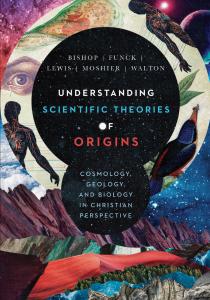 The first chapter of Understanding Scientific Theories of Origins looks at principles of biblical interpretation. Because this is the biggest stumbling block for Christians, it is important to address interpretation head on in order to lay a framework for understanding the relationship between science and Christian faith.
John Walton provides three criteria for a credible interpretation of Scripture (p. 9): (1) it will be supported by “sound exegesis performed in a close reading of the text.” Critical thinking is an important aspect of interpretation. The intellectual exercise of reason – digging into grammar and word usage – is an essential part of interpretation. (2) it will “be compatible with other other texts of Scripture and with tenets of sound theology.” There is an overall coherence to the message of Scripture. (3) it “must be founded on sound hermeneutical principles.“
There is the rub … what are sound hermeneutical principles? What is the appropriate theory and methodology of interpretation of Scripture. Some see the bible as a transcendent text containing hidden knowledge, even coded messages. Modern science and other phenomena completely foreign to the original audience are found by those with eyes to see. But this is not a sound approach to Scripture. Taking this approach, we can find anything we want … as people too often have throughout history.
John puts forth five principles to guide the interpretation of Scripture. (pp. 10-11)
- Authority is found in the understanding and intention of the human author. God chose to reveal himself through the writing of humans in a time and place. The message was intelligible to the authors and the meaning was communicated by those authors to the original audience. It was intelligible to that audience.
- The text cannot mean what it never meant. This is derived from the first principle. “In our quest for the authoritative claims of the Bible, we are committed to the understanding of the human author because that is where God’s authority is vested, and the Bible cannot mean what it never meant.” John uses the Big Bang as an example. We may find the creation story compatible with a big bang – specific time when the universe came into being – but the Bible itself does not make authoritative statements about a big bang.
- The Bible is written for us but not to us. John has emphasized this point in many of his books and talks. God chose to reveal himself in the context of a time and place – the ancient Near East. “That means that for us to benefit from this revelation … we have to penetrate that ancient context and language.“
- The context of Scripture is found in the ancient world. We will misinterpret Scripture if we impose modern categories and ideas on the text. John suggests that while human nature is universal, culture varies over time and place. The Bible conveys many truths about human nature, but does so in the context of an ancient culture.
- The meaning of words is found in their usage. The careful study of the original languages, primarily Greek and Hebrew, is an essential part of biblical interpretation. While the Greek of the New Testament represents a fairly short span of time, the Old Testament spans a long time range. This makes interpretation even more challenging as words can change meaning. We must realize that we are relying on translators who are by necessity practicing interpretation in the process of translation.
These principles will challenge many modern Christians who have learned to take a somewhat different view. After all, isn’t a plain reading of our favorite English translation all that is really necessary? The essence of truth necessary for a saving faith is found in a plain reading of any careful translation or paraphrase – but there is more involved in a growing understanding of the scope and shape of God’s work in the world.
The ancient Near Eastern context of the Old Testament also shapes two important aspects of any discussion of science and the Bible. First, we tend to divide phenomena into categories of natural vs supernatural. Science studies the natural, while God’s action is supernatural. This division is a modern idea that is foreign to the ancient world and thus foreign to Scripture. God is active in everything. In our context today, this means that God is active in natural phenomena as surely as he is active in any supernatural event. A natural explanation does not eliminate God from the picture. Rather than thinking about the universe as a pie cut into slices assigned to God (supernatural) or to nature (natural), John suggests that we should view the universe as a layer cake with the natural the bottom layer and the supernatural the top layer. Science explores the bottom layer with increasing sophistication, but that does not remove the top layer from the cake.
Secondly, Scripture does not and did not provide new revelation about routine natural processes. It uses the understanding of the original audience to convey the intended message. Ancient cosmic geography with a solid vault overhead and a flat earth, pillars and storehouses of snow and hail are assumed in various passages. These are not affirmed as truth – the role of God in creation is affirmed as truth. In the ancient world the brain was not viewed as the center of human thought and reasoning – rather the heart or entrails were thought to fill this role. The bible assumes that the heart was the center of cognitive processes – it does not affirm this to be revealed truth. As John tells us, we don’t need to “find scientific evidence that our blood pumps (i.e. hearts) engage in cognitive processes” to uphold the truthfulness of Scripture as God’s self-revelation. We don’t need a storehouse theory of precipitation. If is not a denial of biblical truth to allow scientific discoveries and insights to shape how we understand routine natural processes.
Routine natural processes can be used by God. In fact, I suggest that this is, and always has been, his most common mode of action in the world (which is, after all, his creation). This includes the origin of the universe, the world, life, and human beings. Sometimes our view of God is just too small.
What do you think of John’s principles of biblical interpretation?
What are the requirements of a credible interpretation?
If you wish to contact me directly you may do so at rjs4mail [at] att.net.
If interested you can subscribe to a full text feed of my posts at Musings on Science and Theology.
Previous Post

December 20, 2018
Three Forms Of Liberation Theology
Next Post
December 21, 2018 Chicagoland's Pastor Scandals Of Power
Browse Our Archives
Select a Category Acts of the Apostles Adam Advent Anabaptism Angels Anglican Apologetics Atonement Baptism BCP Prayers Bible Biblical Studies Birds Blogging Bloglossary Bonhoeffer Books Calvinism Christianity Church Church History Coffee Colossians Commentary Recs Conversion Creation Creeds Culture Death Ecclesiastes Economics Education Embracing Grace Emergent Emerging Movement Eschatology Essays Ethics Eucharist Evangelicalism Family Fasting Fathers Fellowship of Differents Footsteps Tour Fun and Whimsical Gospel Grace Happiness Heaven Hell Holy Spirit Irenaeus James Jesus Jesus Creed Job Justification Kingdom of God Law Lectures Lent Liberalism Love and Marriage Mabanteneni Manhood Mary Miracles Missio Alliance MissioLife Missional Missional Jesus Movies and Film New Perspective Northern Seminary OneLife Origins Project Orthodox Parables Pastor's Spouse Pastoring and Leading Pastoring and Preaching Patristics Paul Paul-John Tour Pharisees Pietism Political Theology Prayer and Formation Preaching Problems for Faith Psalm 119 Psalms Public Issues Purgatory Religions Resurrection Revelation Romans Rule of JCreed Science and Faith Sermon on the Mount Sports Ten Commandments Theology Third Way Top Ten Lists Translations Uncategorized Universalism University Ministry Way Out Weekly Meanderings Wisdom Women and Ministry Work Worship Writing & Blogging Youth Ministry
Select a Month July 2021 January 2020 December 2019 November 2019 October 2019 September 2019 August 2019 July 2019 June 2019 May 2019 April 2019 March 2019 February 2019 January 2019 December 2018 November 2018 October 2018 September 2018 August 2018 July 2018 June 2018 May 2018 April 2018 March 2018 February 2018 January 2018 December 2017 November 2017 October 2017 September 2017 August 2017 July 2017 June 2017 May 2017 April 2017 March 2017 February 2017 January 2017 December 2016 November 2016 October 2016 September 2016 August 2016 July 2016 June 2016 May 2016 April 2016 March 2016 February 2016 January 2016 December 2015 November 2015 October 2015 September 2015 August 2015 July 2015 June 2015 May 2015 April 2015 March 2015 February 2015 January 2015 December 2014 November 2014 October 2014 September 2014 August 2014 July 2014 June 2014 May 2014 April 2014 March 2014 February 2014 January 2014 December 2013 November 2013 October 2013 September 2013 August 2013 July 2013 June 2013 May 2013 April 2013 March 2013 February 2013 January 2013 December 2012 November 2012 October 2012 September 2012 August 2012 July 2012 June 2012 May 2012 April 2012 March 2012 February 2012 January 2012 December 2011 November 2011 October 2011 September 2011 August 2011 July 2011 June 2011 May 2011 April 2011 March 2011 February 2011 January 2011 December 2010 November 2010 October 2010 September 2010 August 2010 July 2010 June 2010 May 2010 April 2010 March 2010 February 2010 January 2010 December 2009 November 2009 October 2009 September 2009 August 2009 July 2009 June 2009 May 2009 April 2009 March 2009 February 2009 January 2009 December 2008 November 2008 October 2008 September 2008 August 2008 July 2008 June 2008 May 2008 April 2008 March 2008 February 2008 January 2008 December 2007 November 2007 October 2007 September 2007 August 2007 July 2007 June 2007 May 2007 April 2007 March 2007 February 2007 January 2007 December 2006 November 2006 October 2006 September 2006 August 2006 July 2006 June 2006 May 2006 April 2006 March 2006 February 2006 January 2006 December 2005 November 2005 October 2005 September 2005 August 2005 July 2005 June 2005 May 2005 April 2005 0000
Follow Us!
TAKE THE
Religious Wisdom Quiz
What is the last book in the Old Testament?
Select your answer to see how you score.
Jonah Genesis Daniel Malachi
Related posts from Jesus Creed


The Gospel of With Us and Through Us

Northern Seminary Announces: Nijay Gupta Joins Faculty

The Gundrys and Me: Ruth Tucker
TRENDING AT PATHEOS Evangelical

How the author of the world's best hymn...
I've been working with John Newton for a while now. This makes...

Long before this Lectio Divina, Psalm 130 - the song - started...

What About the Trees? Another Living Parable
After I finished writing the last article about falling leaves as a...

Why Classical Education Is a Conversation, Not a...
Come and Read: Joy in Classical Education When I was a little...

Falling Leaves: A Living Parable on Letting Go
I’ve spent the vast majority of my life in the southeast corner...

Cornell University has received a great deal of negative publicity and intense...
view all Evangelical blogs
Ad-Free & Subscriber Log-In Subscription Support
- About Us
- 2026 Calendar
- Videos
- Podcasts
- Library of World Religions
- Faith In Media Tracker
- Advertise With Us
- Write for Us
- Privacy Policy
- Terms of Service
- Do Not Sell My Data
- Contact Us
- Radiant Digital
- Manage Newsletter Subscriptions
- Unsubscribe From Notifications
- Sitemap
Copyright 2008-2026, Patheos. All rights reserved.
Subscription Support Ad-Free & Subscriber Log-In
Follow Patheos