
BuddhistCatholicContemplativeEvangelicalGeneral ChristianHinduJewishLatter-day SaintMuslimNew VisionsProgressive Christian
Beliefs
- Buddhist
- Catholic
- Contemplative
- Evangelical
- General Christian
- Hindu
- Jewish
- Latter-day Saint
- More Voices
- Muslim
- New Visions
- Pagan
- Progressive Christian
Topics
- Religion News
- Food and Religion
- Sports and Religion
- Religious Art
- Religious Music and Entertainment
- Religious Events
- History and Religion
- Style and Religion
- Politics and Religion
- Women in Religion
- Recreation Outdoors and Religion
- Business Finance and Religion
- Careers Workplace and Religion
- Education and Religion
- Family Parenting and Religion
- Health Fitness and Religion
- Home and Religion
- Relationships and Religion
- Technology and Religion
- Travel and Religion
Columnists
- Buddhist Columnists
- Business Finance and Religion Columnists
- Careers Workplace and Religion Columnists
- Catholic Columnists
- Contemplative Columnists
- Education and Religion Columnists
- Evangelists Columnists
- Family Parenting and Religion Columnists
- General Christian Columnists
- Health Fitness and Religion Columnists
- Hindu Columnists
- History and Religion Columnists
- Home and Religion Columnists
- Jewish Columnists
- More Voices Columnists
- Latter Day Columnists
- Muslim Columnists
- New Visions Columnists
- Nonreligious Columnists
- Pagan Columnists
- Politics and Religion Columnists
- Progressive Columnists
- Recreation Outdoors and Religion Columnists
- Relationships and Religion Columnists
- Religion News Columnists
- Religious Art Columnists
- Religious Events Columnists
- Religious Music and Entertainment Columnists
- Sports and Religion Columnists
- Style and Religion Columnists
- Technology and Religion Columnists
- Travel and Religion Columnists
- Women in Religion Columnists
Resource Library
- 2026 Calendar
- Library of World Religions
- The 100 Most Holy Places on Earth
- Patheos Answers
- Podcasts
- Videos
- Faith Leaders Database
- Anglican Episcopalian
- Bahai
- Baptist
- Buddhism
- Christianity
- Confucianism
- Eastern Orthodoxy
- Hinduism
- Holiness and Pentecostal
- ISKCON
- Islam
- Judaism
- Lutheran
- Methodist
- The Church of Jesus Christ of Latter-day Saints
- New Age
- Paganism
- Presbytarian and Reformed
- Protestantism
- Religion Behind the Scenes
- Roman Catholic
- Scientology
- Shia Islam
- Sikhism
- Sufism
- Sunni Islam
- Taoism
- Zen
- See all religions
Research Tools
 Ad-Free & Subscriber Log-In Subscription Support
Follow Patheos 

- Trending:
- Advent
- |
- Forgiveness
- |
- Thanksgiving
- |
- Election
- |
- Seasonal Holidays
- |
- Marriage
 Jesus Creed
- Home
- Evangelical
- A Matter of Grace (RJS)
A Matter of Grace (RJS)
Last updated on: November 27, 2018 at 5:00 am by RJS
A Matter of Grace (RJS) 2018-11-25T20:53:19-06:00 RJS
Patheos Explore the world's faith through different perspectives on religion and spirituality! Patheos has the views of the prevalent religions and spiritualities of the world.
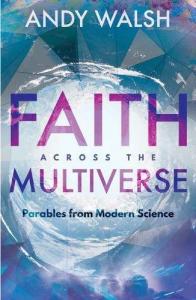 Andy Walsh, Faith Across the Multiverse mixes fiction (usually science fiction of a sort), math, science, and the bible to explore our understanding of the Christian faith and the ways it can be made to live in our times. This is not some “new” gospel or modernized faith, rather it is using imagery and understanding to tell the same story again. Parables, as it were, for the 21st century. In chapter 3 he tackles grace, determinism, and the sovereignty of God.
The theme of grace can be found in a number of stories – often tied directly to biblical themes. Walsh points to a story line in the X-factor comics by Peter David where Rahne Sinclair was found by grace (Road Trip #237 Road to Redemption). A few years ago my husband brought another story to my attention (he even suggested that I post on it sometime), this one Man-Kzin Wars XIV that starts off with a story “A Man Named Saul,” and distinctly Christian themes of forgiveness and redemption. “I spent my entire life screwing up” von Hohenheim said bitterly … It took a lot of walking and thinking and talking to the abbot to see it, but What shall it profit a man if he gain the whole world and lose his own soul?” A gift of mercy, an awareness of the wretched smallness of his soul, and a chance to make amends.
Grace requires failure – and an element of freedom. “Rather than insisting that we conform to a particular mold, God accepts us as we are and tells a story of our lives that weaves into his overall story for the universe – at least if we agree that we want him to do so.” (p. 66) But, Walsh asks, are we free to do what God wants? or even to fail to do what he wants? These are stories and if we take them seriously – as conveying elements of truth through story – we confront the issue of God’s sovereignty and our (free?) action.
Circumstances like these raise questions of whether every outcome is foreordained by God and if we bear any responsibility. One solution is to introduce free will and assert that we are agents who make independent choices. This reintroduces the possibility that we can be held responsible for our choices, because our own agency and no other force realized those choices. But once we add our own free will, then what becomes of God’s will and God’s sovereignty? In what sense can God claim to be in charge or have a plan if we can do whatever we please? Is God always playing catch-up, adjusting his plans to account for our choices? Can any such being claim any sense of sovereignty, or must he acknowledge that he is in fact secondary to the agents making the choices that he has to react to? (p. 67)
 The tension is not only found in stories of our own making such as the two alluded to above, or the Lord of the Rings, or many others we could name, but also in the pages of the Bible. Walsh points to Moses in Exodus 4:10-14 as an example (here I’ve included v. 15).
Moses said to the Lord, “Pardon your servant, Lord. I have never been eloquent, neither in the past nor since you have spoken to your servant. I am slow of speech and tongue.” The Lord said to him, “Who gave human beings their mouths? Who makes them deaf or mute? Who gives them sight or makes them blind? Is it not I, the Lord? Now go; I will help you speak and will teach you what to say.”
But Moses said, “Pardon your servant, Lord. Please send someone else.”
Then the Lord’s anger burned against Moses and he said, “What about your brother, Aaron the Levite? I know he can speak well. He is already on his way to meet you, and he will be glad to see you. You shall speak to him and put words in his mouth; I will help both of you speak and will teach you what to do.
Moses resists and refuses. The Lord becomes angry but adapts to Moses’ reluctance and fear to speak. In this passage God asserts his sovereignty and sends Aaron along – presumably not his original intent, at least not in exactly this role. “If Moses can act independently, then doesn’t that mean he has the capacity to screw up the mission regardless of God’s preparation?” (p. 68)
Perhaps math and science can come to the rescue here and help us reconcile these competing ideas (God’s sovereignty and our freedom). We tend to think in terms of simple equations. Walsh elaborates on how we use an understanding of the parabolic motion of a thrown ball to predict location and make the catch – or event to follow the trajectory with our eyes and estimate the landing position. This is deterministic. A given initial condition produces an intuitively predictable result. But complex systems are not so simple.
 Thomas Robert Malthus predicted a catastrophic situation where populations inevitably increase exponentially overwhelming any increase in the production of food. But populations growth doesn’t follow this simple exponential behavior. Many other factors come into play. And other mathematical models are available with capping behavior on populations, with multiple stability points … or even so-called chaotic behavior, with exquisite sensitivity to initial conditions.
Chaos (which isn’t actually chaotic) brings us to the idea of strange attractors. From Wikipedia: “A dynamic system with a chaotic attractor is locally unstable yet globally stable: once some sequences have entered the attractor, nearby points diverge from one another but never depart from the attractor.” Walsh reflects on this:
This tendency of certain dynamic systems to stay within certain bound despite perturbations, or what might be seen as bumps in a predetermined road, helps me think about grace. More precisely, I find it easier to believe that grace can coexist with God having a purpose or will for how the world turns out. … The stability of the pattern emerges out of the dynamic activity of the system, not in contrast to it. Thus I find strange attractors a useful additional metaphor when thinking about grace. (p. 76)
And then …
Consider what happens when we think of God’s will in strange attractor terms. On the one hand, it is absolutely a well-defined, prespecified plan. The behavior that led to strange attractors was completely defined by our equations; we didn’t have to make adjustments as we went. And yet on the other hand, there is room for free choice in the system as well. We can get off the pattern, and eventually events will come back to that pattern. There are still consequences to that choice, in that the exact spots within the pattern that get visited will change, but overall the system stays in the attractor. … I think it’s probably most helpful to apply the strange attractor analogy to the state of the entire world. You can make individual choices for your own life, including whether you want to choose axioms for your life that allow for the God of the Bible or not. Those choices have real consequences for how future events play out. But the world itself will continue on in the same overall contours it was always following. (pp. 78-79)
God is not constantly adjusting to our decisions to keep his plan on track, but we still have real freedom to choose for ourselves. We simply do not have the ability to change the overall trajectory of God’s creation and redemptive plan. Many biblical stories come to mind, consistent with this general idea. People choose and God’s plan moves forward without fail because he is faithful to his promises. Walsh recalls the story of Esther as one example. When Esther was reluctant to approach King Xerxes (Ahasuerus) regarding Haman’s plot to destroy the Jews Mordecai responded “Do not think that because you are in the king’s house you alone of all the Jews will escape. For if you remain silent at this time, relief and deliverance for the Jews will arise from another place, but you and your father’s family will perish. And who knows but that you have come to your royal position for such a time as this?” (Esther 4:13-14) Mordecai is convinced that God will preserve his people, although some individuals could suffer destruction if Esther failed to act.
Creation has the genuine freedom to choose other than God’s will. At the same time, the system will tend toward those ends that God desires to see. That does not imply God is indifferent to our choices, allowing those ends to justify whatever means are used to reach them. Rather, God has the means to bring all things to a redemptive end regardless of how grieved he is by our choices. A gracious universe is also a universe in which life is possible.
Life is dynamic; every change holds the potential to make things worse instead of better. A universe that can recover from missteps, an organism that can tolerate error, those are systems that can persist, remaining coherent over time. (p. 81)
We too can practice grace by expecting and allowing for disruptions and failure as we live in God’s creation in anticipation of the consummation of his will.
Does the idea of chaotic behavior and strange attractors shed light as a useful metaphor for God’s sovereignty and our freedom?
If you wish to contact me directly you may do so at rjs4mail [at] att.net.
If interested you can subscribe to a full text feed of my posts at Musings on Science and Theology.
Previous Post

November 27, 2018
What's So New About The "New" Testament?
Next Post
November 27, 2018 "Government Dysfunction"
Browse Our Archives
Select a Category Acts of the Apostles Adam Advent Anabaptism Angels Anglican Apologetics Atonement Baptism BCP Prayers Bible Biblical Studies Birds Blogging Bloglossary Bonhoeffer Books Calvinism Christianity Church Church History Coffee Colossians Commentary Recs Conversion Creation Creeds Culture Death Ecclesiastes Economics Education Embracing Grace Emergent Emerging Movement Eschatology Essays Ethics Eucharist Evangelicalism Family Fasting Fathers Fellowship of Differents Footsteps Tour Fun and Whimsical Gospel Grace Happiness Heaven Hell Holy Spirit Irenaeus James Jesus Jesus Creed Job Justification Kingdom of God Law Lectures Lent Liberalism Love and Marriage Mabanteneni Manhood Mary Miracles Missio Alliance MissioLife Missional Missional Jesus Movies and Film New Perspective Northern Seminary OneLife Origins Project Orthodox Parables Pastor's Spouse Pastoring and Leading Pastoring and Preaching Patristics Paul Paul-John Tour Pharisees Pietism Political Theology Prayer and Formation Preaching Problems for Faith Psalm 119 Psalms Public Issues Purgatory Religions Resurrection Revelation Romans Rule of JCreed Science and Faith Sermon on the Mount Sports Ten Commandments Theology Third Way Top Ten Lists Translations Uncategorized Universalism University Ministry Way Out Weekly Meanderings Wisdom Women and Ministry Work Worship Writing & Blogging Youth Ministry
Select a Month July 2021 January 2020 December 2019 November 2019 October 2019 September 2019 August 2019 July 2019 June 2019 May 2019 April 2019 March 2019 February 2019 January 2019 December 2018 November 2018 October 2018 September 2018 August 2018 July 2018 June 2018 May 2018 April 2018 March 2018 February 2018 January 2018 December 2017 November 2017 October 2017 September 2017 August 2017 July 2017 June 2017 May 2017 April 2017 March 2017 February 2017 January 2017 December 2016 November 2016 October 2016 September 2016 August 2016 July 2016 June 2016 May 2016 April 2016 March 2016 February 2016 January 2016 December 2015 November 2015 October 2015 September 2015 August 2015 July 2015 June 2015 May 2015 April 2015 March 2015 February 2015 January 2015 December 2014 November 2014 October 2014 September 2014 August 2014 July 2014 June 2014 May 2014 April 2014 March 2014 February 2014 January 2014 December 2013 November 2013 October 2013 September 2013 August 2013 July 2013 June 2013 May 2013 April 2013 March 2013 February 2013 January 2013 December 2012 November 2012 October 2012 September 2012 August 2012 July 2012 June 2012 May 2012 April 2012 March 2012 February 2012 January 2012 December 2011 November 2011 October 2011 September 2011 August 2011 July 2011 June 2011 May 2011 April 2011 March 2011 February 2011 January 2011 December 2010 November 2010 October 2010 September 2010 August 2010 July 2010 June 2010 May 2010 April 2010 March 2010 February 2010 January 2010 December 2009 November 2009 October 2009 September 2009 August 2009 July 2009 June 2009 May 2009 April 2009 March 2009 February 2009 January 2009 December 2008 November 2008 October 2008 September 2008 August 2008 July 2008 June 2008 May 2008 April 2008 March 2008 February 2008 January 2008 December 2007 November 2007 October 2007 September 2007 August 2007 July 2007 June 2007 May 2007 April 2007 March 2007 February 2007 January 2007 December 2006 November 2006 October 2006 September 2006 August 2006 July 2006 June 2006 May 2006 April 2006 March 2006 February 2006 January 2006 December 2005 November 2005 October 2005 September 2005 August 2005 July 2005 June 2005 May 2005 April 2005 0000
Follow Us!
TAKE THE
Religious Wisdom Quiz
What does "Shalom" mean in Hebrew?
Select your answer to see how you score.
Joy Peace Love Blessing
Related posts from Jesus Creed


The Gospel of With Us and Through Us

Northern Seminary Announces: Nijay Gupta Joins Faculty

The Gundrys and Me: Ruth Tucker
TRENDING AT PATHEOS Evangelical

When you hear the word riches, what comes to mind? For most...

Don’t Miss the Parents: A Creative Christmas Meditation
As we enter the Advent Season, I see many people trying to...

Making Stones Into Bread: Choosing the “Right” Work
I was on my online arts ministry Zoom meeting with the International...

Ukraine’s exhausted Christians face fifth winter of war
By Julian Lukins The full-scale war in Ukraine is taking “a serious...

Russell Brand's Conviction is not anti-Christian Persecution
How do we shed the reputation that the Church is OK with...

Have you ever caught yourself saying, “I’ll do it tomorrow,” or “Now...
view all Evangelical blogs
Ad-Free & Subscriber Log-In Subscription Support
- About Us
- 2026 Calendar
- Videos
- Podcasts
- Library of World Religions
- Faith In Media Tracker
- Advertise With Us
- Write for Us
- Privacy Policy
- Terms of Service
- Do Not Sell My Data
- Contact Us
- Radiant Digital
- Manage Newsletter Subscriptions
- Unsubscribe From Notifications
- Sitemap
Copyright 2008-2026, Patheos, part of the Radiant Digital network of media brands. All rights reserved.
Subscription Support Ad-Free & Subscriber Log-In
Follow Patheos