
BuddhistCatholicContemplativeEvangelicalGeneral ChristianHinduJewishLatter-day SaintMuslimNew VisionsProgressive Christian
Beliefs
- Buddhist
- Catholic
- Contemplative
- Evangelical
- General Christian
- Hindu
- Jewish
- Latter-day Saint
- More Voices
- Muslim
- New Visions
- Pagan
- Progressive Christian
Topics
- Religion News
- Food and Religion
- Sports and Religion
- Religious Art
- Religious Music and Entertainment
- Religious Events
- History and Religion
- Style and Religion
- Politics and Religion
- Women in Religion
- Recreation Outdoors and Religion
- Business Finance and Religion
- Careers Workplace and Religion
- Education and Religion
- Family Parenting and Religion
- Health Fitness and Religion
- Home and Religion
- Relationships and Religion
- Technology and Religion
- Travel and Religion
Columnists
- Buddhist Columnists
- Business Finance and Religion Columnists
- Careers Workplace and Religion Columnists
- Catholic Columnists
- Contemplative Columnists
- Education and Religion Columnists
- Evangelists Columnists
- Family Parenting and Religion Columnists
- General Christian Columnists
- Health Fitness and Religion Columnists
- Hindu Columnists
- History and Religion Columnists
- Home and Religion Columnists
- Jewish Columnists
- More Voices Columnists
- Latter Day Columnists
- Muslim Columnists
- New Visions Columnists
- Nonreligious Columnists
- Pagan Columnists
- Politics and Religion Columnists
- Progressive Columnists
- Recreation Outdoors and Religion Columnists
- Relationships and Religion Columnists
- Religion News Columnists
- Religious Art Columnists
- Religious Events Columnists
- Religious Music and Entertainment Columnists
- Sports and Religion Columnists
- Style and Religion Columnists
- Technology and Religion Columnists
- Travel and Religion Columnists
- Women in Religion Columnists
Resource Library
- 2026 Calendar
- Library of World Religions
- The 100 Most Holy Places on Earth
- Patheos Answers
- Podcasts
- Videos
- Faith Leaders Database
- Anglican Episcopalian
- Bahai
- Baptist
- Buddhism
- Christianity
- Confucianism
- Eastern Orthodoxy
- Hinduism
- Holiness and Pentecostal
- ISKCON
- Islam
- Judaism
- Lutheran
- Methodist
- The Church of Jesus Christ of Latter-day Saints
- New Age
- Paganism
- Presbytarian and Reformed
- Protestantism
- Religion Behind the Scenes
- Roman Catholic
- Scientology
- Shia Islam
- Sikhism
- Sufism
- Sunni Islam
- Taoism
- Zen
- See all religions
Research Tools
 Ad-Free & Subscriber Log-In Subscription Support
Ad-Free & Subscriber Log-In Subscription Support
Follow Patheos 

- Trending:
- Forgiveness
- |
- Marriage
- |
- Consciousness
- |
- Death Penalty
- |
- Election
- |
- Halloween
 Jesus Creed
- Home
- Evangelical
- By Their Fruit … (RJS)
By Their Fruit … (RJS)
Last updated on: October 16, 2018 at 7:36 am by RJS
By Their Fruit … (RJS) 2018-10-16T07:36:10-05:00 RJS
Patheos Explore the world's faith through different perspectives on religion and spirituality! Patheos has the views of the prevalent religions and spiritualities of the world.
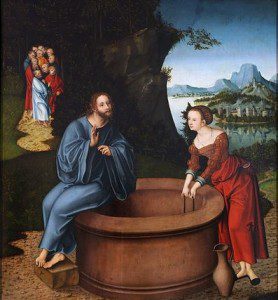 I am in the midst of reposting and then extending a series looking at the questions that surround both biblical womanhood and women in leadership roles. The first two posts in the series looked at the variety of things that women are described as doing in both the Old and the New Testaments (A Look at Biblical Womanhood and Women of the New Testament). These range from the “expected” roles of wife and mother to judge, prophet, builder, business women, evangelist, one-on-one teacher, witness, student. It has been argued that a woman is a prophetess rather than a prophet – but it doesn’t appear to be a difference in role, calling, or office, rather it is a distinction of gendered language.
The third post in the series considered the question of authority and authoritarianism in the teaching of Jesus and the New Testament portrayal of the church (All Authority?). My contention is that our only true authority is God, with all authority given to Jesus. As humans we are brothers and sisters who stand before Christ. There is no hierarchical mediation before him. Within the Christian church and family no human being – male or female – is given the role of dominance, to domineer over others.
Some are called to lead and to teach. Although the New Testament doesn’t institute a hierarchy before God, it is clear that some are called to lead in a variety of roles. Paul writes to the Corinthians
Now you are the body of Christ, and each one of you is a part of it. And God has placed in the church first of all apostles, second prophets, third teachers, then miracles, then gifts of healing, of helping, of guidance, and of different kinds of tongues. Are all apostles? Are all prophets? Are all teachers? Do all work miracles? Do all have gifts of healing? Do all speak in tongues? Do all interpret? Now eagerly desire the greater gifts.
And yet I will show you the most excellent way. (1 Cor. 12:28-31)
Which leads into 1 Cor. 13 … “If I have not love, I gain nothing.” A rather significant progression. And Paul writes to the Ephesians:
So Christ himself gave the apostles, the prophets, the evangelists, the pastors and teachers, to equip his people for works of service, so that the body of Christ may be built up until we all reach unity in the faith and in the knowledge of the Son of God and become mature, attaining to the whole measure of the fullness of Christ.
Then we will no longer be infants, tossed back and forth by the waves, and blown here and there by every wind of teaching and by the cunning and craftiness of people in their deceitful scheming. Instead, speaking the truth in love, we will grow to become in every respect the mature body of him who is the head, that is, Christ. From him the whole body, joined and held together by every supporting ligament, grows and builds itself up in love, as each part does its work. (Ephesians 4:11-16)
The purpose of Christian leaders is to equip the body of Christ for works of service (a life of love), building them up to maturity. The calling of a Christian pastor, teacher, prophet, is to build up peers before God. It is not to acquire followers or admirers, or to command obedience. There is no call for personal authority or dominance. A faithful Christian leader will find themselves walking shoulder to shoulder with a growing group of mature Christians.
But what are the characteristics of a Christian leader? It is common here to turn to 1 Timothy 3 or Titus 1 to outline qualifications for leadership. I think this is the wrong approach. It isn’t that those characteristics are wrong (when rightly interpreted), but that they represent details that grow out of the much more extensive and expansive teaching of the New Testament. Without that context the qualifications will be misinterpreted.
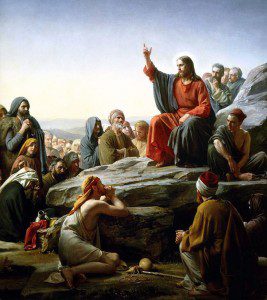 By their Fruit. The words of Jesus in Matthew 7 are worth turning to first.
Watch out for false prophets. They come to you in sheep’s clothing, but inwardly they are ferocious wolves. By their fruit you will recognize them. 7:15-16
The fruit are not the elements of worldly success that we might expect, not even the elements of religious success.
Many will say to me on that day, ‘Lord, Lord, did we not prophesy in your name and in your name drive out demons and in your name perform many miracles?’ Then I will tell them plainly, ‘I never knew you. Away from me, you evildoers!’ 7:22-23
These people prophesy, drive out demons and perform miracles! In some way the power of God works through them. Yet, they are not true followers of God. The final passage sheds some light.
Therefore everyone who hears these words of mine and puts them into practice is like a wise man who built his house on the rock. 7:28
The faithful prophet, teacher, leader will hear the words of Jesus and put them into practice. The key here is the great commandment to love God with heart, mind, soul, and strength and to love your neighbor as yourself. (Mk. 12:28-31, Mt 22:24-40, Lk 10:25-28) And John 13:34-35 “A new command I give you: Love one another. As I have loved you, so you must love one another. By this everyone will know that you are my disciples, if you love one another.“
There is an interesting parallel between the words of Jesus in Matthew 7 and Paul in 1 Corinthians 13.
If I speak in the tongues of men or of angels … If I have the gift of prophecy and can fathom all mysteries and all knowledge, and if I have a faith that can move mountains, … If I give all I possess to the poor … but do not have love, I gain nothing.
The passage in Philippians 2 is also worth noting.
Do nothing out of selfish ambition or vain conceit. Rather, in humility value others above yourselves, not looking to your own interests but each of you to the interests of the others. In your relationships with one another, have the same mindset as Christ Jesus” (2:3-5)
Leaders are to be servants called to the ‘self-emptying humiliation of the cross.’ Hard to live up to, but a command running through the New Testament.
A faithful Christian, and by corollary prophet, teacher, leader, will live out the great commandments. Among other things this means that the faithful leader will emulate the Samaritan in Luke 10, not the priest or the Levite. Care for others is preeminent. Concern for position, image, and “purity” (self-righteousness) takes a back seat – or more likely disappears altogether. True humility, valuing others above oneself, looking out for their interests, is an indispensable characteristic. Good doctrine is important, but good doctrine without love is nothing. This theme of love runs through the teaching of Jesus and through the letters of Paul, Peter, and John. (see for instance: Romans 12:10, 13:8. 1 Cor. 13, Ephesians 4:2, 1 Thess. 4:9, 2Thess. 1:3, 1 Peter 3:8, 1 John all over the place, 2 John 1:5)
And don’t forget the fruit of the Spirit “love, joy, peace, forbearance, kindness, goodness, faithfulness, gentleness and self-control.” (Gal. 5:22-23)
I could go deeper into this – and pull up a wide range of passages. No one lives up to this perfectly. False teachers aren’t those with lapses (hopefully occasional). False teachers include those who don’t hold up these elements as the mature ideal that they (and we) are called to strive after.
There are essentials of doctrine. But good doctrine without love is nothing but a resounding gong and a clanging cymbal.
What are the fruit of false prophets?
What are the fruit of a faithful prophet and teacher?
If you wish to contact me directly you may do so at rjs4mail[at]att.net.
If interested you can subscribe to a full text feed of my posts at Musings on Science and Theology.
Previous Post

October 16, 2018
Rhetoric: For New Testament Readers
Next Post
October 17, 2018 Resources For Domestic Violence And Abuse
Browse Our Archives
Select a Category Acts of the Apostles Adam Advent Anabaptism Angels Anglican Apologetics Atonement Baptism BCP Prayers Bible Biblical Studies Birds Blogging Bloglossary Bonhoeffer Books Calvinism Christianity Church Church History Coffee Colossians Commentary Recs Conversion Creation Creeds Culture Death Ecclesiastes Economics Education Embracing Grace Emergent Emerging Movement Eschatology Essays Ethics Eucharist Evangelicalism Family Fasting Fathers Fellowship of Differents Footsteps Tour Fun and Whimsical Gospel Grace Happiness Heaven Hell Holy Spirit Irenaeus James Jesus Jesus Creed Job Justification Kingdom of God Law Lectures Lent Liberalism Love and Marriage Mabanteneni Manhood Mary Miracles Missio Alliance MissioLife Missional Missional Jesus Movies and Film New Perspective Northern Seminary OneLife Origins Project Orthodox Parables Pastor's Spouse Pastoring and Leading Pastoring and Preaching Patristics Paul Paul-John Tour Pharisees Pietism Political Theology Prayer and Formation Preaching Problems for Faith Psalm 119 Psalms Public Issues Purgatory Religions Resurrection Revelation Romans Rule of JCreed Science and Faith Sermon on the Mount Sports Ten Commandments Theology Third Way Top Ten Lists Translations Uncategorized Universalism University Ministry Way Out Weekly Meanderings Wisdom Women and Ministry Work Worship Writing & Blogging Youth Ministry
Select a Month July 2021 January 2020 December 2019 November 2019 October 2019 September 2019 August 2019 July 2019 June 2019 May 2019 April 2019 March 2019 February 2019 January 2019 December 2018 November 2018 October 2018 September 2018 August 2018 July 2018 June 2018 May 2018 April 2018 March 2018 February 2018 January 2018 December 2017 November 2017 October 2017 September 2017 August 2017 July 2017 June 2017 May 2017 April 2017 March 2017 February 2017 January 2017 December 2016 November 2016 October 2016 September 2016 August 2016 July 2016 June 2016 May 2016 April 2016 March 2016 February 2016 January 2016 December 2015 November 2015 October 2015 September 2015 August 2015 July 2015 June 2015 May 2015 April 2015 March 2015 February 2015 January 2015 December 2014 November 2014 October 2014 September 2014 August 2014 July 2014 June 2014 May 2014 April 2014 March 2014 February 2014 January 2014 December 2013 November 2013 October 2013 September 2013 August 2013 July 2013 June 2013 May 2013 April 2013 March 2013 February 2013 January 2013 December 2012 November 2012 October 2012 September 2012 August 2012 July 2012 June 2012 May 2012 April 2012 March 2012 February 2012 January 2012 December 2011 November 2011 October 2011 September 2011 August 2011 July 2011 June 2011 May 2011 April 2011 March 2011 February 2011 January 2011 December 2010 November 2010 October 2010 September 2010 August 2010 July 2010 June 2010 May 2010 April 2010 March 2010 February 2010 January 2010 December 2009 November 2009 October 2009 September 2009 August 2009 July 2009 June 2009 May 2009 April 2009 March 2009 February 2009 January 2009 December 2008 November 2008 October 2008 September 2008 August 2008 July 2008 June 2008 May 2008 April 2008 March 2008 February 2008 January 2008 December 2007 November 2007 October 2007 September 2007 August 2007 July 2007 June 2007 May 2007 April 2007 March 2007 February 2007 January 2007 December 2006 November 2006 October 2006 September 2006 August 2006 July 2006 June 2006 May 2006 April 2006 March 2006 February 2006 January 2006 December 2005 November 2005 October 2005 September 2005 August 2005 July 2005 June 2005 May 2005 April 2005 0000
Follow Us!
TAKE THE
Religious Wisdom Quiz
True or False: Job's three friends were named Eliphaz, Bildad, and Zophar.
Select your answer to see how you score.
TRUE FALSE
Related posts from Jesus Creed


The Gospel of With Us and Through Us

Northern Seminary Announces: Nijay Gupta Joins Faculty

The Gundrys and Me: Ruth Tucker
TRENDING AT PATHEOS Evangelical

The REST of Your Life: A Creative Wrestles...
This week I had a conversation with a good friend from church....

How the author of the world's best hymn...
I've been working with John Newton for a while now. This makes...

Long before this Lectio Divina, Psalm 130 - the song - started...

What About the Trees? Another Living Parable
After I finished writing the last article about falling leaves as a...

Why Classical Education Is a Conversation, Not a...
Come and Read: Joy in Classical Education When I was a little...

Cornell University has received a great deal of negative publicity and intense...
view all Evangelical blogs
Ad-Free & Subscriber Log-In Subscription Support
- About Us
- 2026 Calendar
- Videos
- Podcasts
- Library of World Religions
- Faith In Media Tracker
- Advertise With Us
- Write for Us
- Privacy Policy
- Terms of Service
- Do Not Sell My Data
- Contact Us
- Radiant Digital
- Manage Newsletter Subscriptions
- Unsubscribe From Notifications
- Sitemap
Copyright 2008-2026, Patheos. All rights reserved.
Subscription Support Ad-Free & Subscriber Log-In
Follow Patheos