
BuddhistCatholicContemplativeEvangelicalGeneral ChristianHinduJewishLatter-day SaintMuslimNew VisionsProgressive Christian
Beliefs
- Buddhist
- Catholic
- Contemplative
- Evangelical
- General Christian
- Hindu
- Jewish
- Latter-day Saint
- More Voices
- Muslim
- New Visions
- Pagan
- Progressive Christian
Topics
- Religion News
- Food and Religion
- Sports and Religion
- Religious Art
- Religious Music and Entertainment
- Religious Events
- History and Religion
- Style and Religion
- Politics and Religion
- Women in Religion
- Recreation Outdoors and Religion
- Business Finance and Religion
- Careers Workplace and Religion
- Education and Religion
- Family Parenting and Religion
- Health Fitness and Religion
- Home and Religion
- Relationships and Religion
- Technology and Religion
- Travel and Religion
Columnists
- Buddhist Columnists
- Business Finance and Religion Columnists
- Careers Workplace and Religion Columnists
- Catholic Columnists
- Contemplative Columnists
- Education and Religion Columnists
- Evangelists Columnists
- Family Parenting and Religion Columnists
- General Christian Columnists
- Health Fitness and Religion Columnists
- Hindu Columnists
- History and Religion Columnists
- Home and Religion Columnists
- Jewish Columnists
- More Voices Columnists
- Latter Day Columnists
- Muslim Columnists
- New Visions Columnists
- Nonreligious Columnists
- Pagan Columnists
- Politics and Religion Columnists
- Progressive Columnists
- Recreation Outdoors and Religion Columnists
- Relationships and Religion Columnists
- Religion News Columnists
- Religious Art Columnists
- Religious Events Columnists
- Religious Music and Entertainment Columnists
- Sports and Religion Columnists
- Style and Religion Columnists
- Technology and Religion Columnists
- Travel and Religion Columnists
- Women in Religion Columnists
Resource Library
- 2026 Calendar
- Library of World Religions
- The 100 Most Holy Places on Earth
- Patheos Answers
- Podcasts
- Videos
- Faith Leaders Database
- Anglican Episcopalian
- Bahai
- Baptist
- Buddhism
- Christianity
- Confucianism
- Eastern Orthodoxy
- Hinduism
- Holiness and Pentecostal
- ISKCON
- Islam
- Judaism
- Lutheran
- Methodist
- The Church of Jesus Christ of Latter-day Saints
- New Age
- Paganism
- Presbytarian and Reformed
- Protestantism
- Religion Behind the Scenes
- Roman Catholic
- Scientology
- Shia Islam
- Sikhism
- Sufism
- Sunni Islam
- Taoism
- Zen
- See all religions
Research Tools
 Ad-Free & Subscriber Log-In Subscription Support
Follow Patheos 

- Trending:
- Advent
- |
- Forgiveness
- |
- Thanksgiving
- |
- Election
- |
- Seasonal Holidays
- |
- Marriage
 Jesus Creed
- Home
- Evangelical
- Prophecy As Miracle
Prophecy As Miracle
Last updated on: October 10, 2018 at 12:05 am by Scot McKnight
Prophecy As Miracle 2018-10-06T11:34:53-05:00 Scot McKnight
Patheos Explore the world's faith through different perspectives on religion and spirituality! Patheos has the views of the prevalent religions and spiritualities of the world.
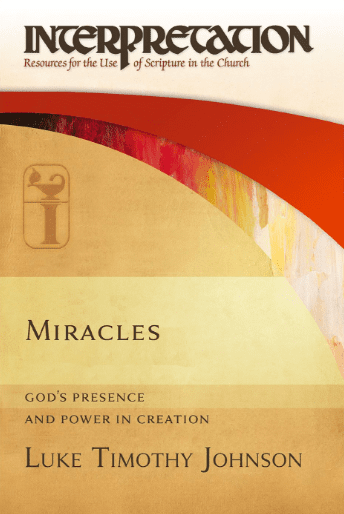 Luke Timothy Johnson connects — with theological force and accuracy — prophecy to miracle; in Luke Timothy Johnson’s, Miracles: God’s Presence and Power in Creation.
What Johnson says here is why it is so unhelpful for so many today to equate the “prophetic” with criticism of the federal, state or local government. To be prophetic has a much deeper claim that the capacity to criticize — often done on the internet or in some kind of public boycott. Bloggers or those with a big platform are not thereby qualified to be prophets.
Johnson gets it right, as it begins with a revelation from God in an experiential encounter with God:
My recitation of prophetic experiences has a point. The prophets appear as human beings whose ordinary life has been interrupted or intersected by some experience of transcendence …
and that experienced reality contains a message:
bearing within itself a “word” that the prophet feels impelled to deliver, even at the risk of mockery, misunderstanding, and persecution.
It’s both, not just word and not just experience, but experience embedding a word of revelation:
The prophets’ experience of the divine presence and power is not incidental to the word they deliver. In many cases, indeed, the word is communicated by that experience and is deciphered through the interpretation of such a vision.
Again:
The prophetic books provide us the opportunity to reflect on miracles from another angle, now not as the performance of astonishing deeds that effect change in the external world—such as a limb being straightened that formerly was bent—but as the manifestation of God’s presence and power through human perception and speech…
Thus, this is not simply perception but neither is simply natural:
The prophets therefore show us the irreducibly experiential basis for claims to the miraculous. It is possible and indeed natural to ascribe the movements of peoples and the noise of wars, in the ancient as in the contemporary world, to purely human agency, the consequences of human calculation and will. There is usually nothing on the surface of such events to demand a more mysterious cause. The statement “This is all the work of God,” if it is to be more than a broadly theoretical argument about providence, makes sense only on the basis of the powerful (and often disruptive) experience of God’s work within the fabric of an individual’s or group’s experience that can then address the larger context.
The prophet communicates the divine origin of his or her words, and this too is important for casting a critical eye on what is so often today called the prophetic:
Such personal (and sometimes communal) experience cannot be communicated through general propositions and arguments concerning the nature of the world, but must be communicated through forms of personal witness: “I saw the Lord, . . . high and lofty” (Isa. 6:1-18); “the Lord said to me” (Isa. 8:1; Jer. 1:7); “thus says the Lord God” (Ezek. 5:5).
The language of the prophet trades on the common because they are often talking about the quotidian and ordinary in real life:
For the most part, though, the prophets’ language draws from the noncultic world, finding poetic metaphors in the realms of weather (normal and abnormal), animal behavior, agriculture, trade, human sexual activity, and household objects (pots, plumb fines, paving stones), and using them to interpret the social and political events of their day. In this way, the prophets are the most realistic and “worldly” of biblical figures. Their visions do not offer an escape from the entanglements of social and political life, but a distinctive perspective on those entanglements: God’s perspective.
Prophets utter their words with great risk:
Because the miracle that is prophecy is so subjective, so based in personal experience that is not accessible to the gaze of others, the prophet is extraordinarily vulnerable. Certainly the small glimpses we get of the life experience of Isaiah, Amos, Ezekiel, and Hosea suggest the lands of mockery and persecution that prophets might expect from others, and the kind of shame and uncertainty they might feel from within.
The prophetic then is an interplay between revelation and word and fulfillment:
The first miracle of prophecy, then, is that humans speak and act through divine agency. The second miracle is that the words of the prophets are actualized in the empirical order through the same divine agency. Such “fulfillment” is a powerful pointer to God’s presence and power in creation, for it is clear that no human power can bring about the empirical realization of a human prediction months, years, decades, or even centuries after it is spoken. The second miracle, in effect, certifies the miraculous character of the original oracle, for neither can humans of their own power accurately predict what will happen in the future.
I don’t know scholarship in the prophets well, but Johnson’s bibliography falls short: no Heschel? Has anyone grasped the interplay of the existential, experiential and word as he did with his concept of pathos? no David Stacey on prophetic actions?
Previous Post

October 9, 2018
All Authority? (RJS)
Next Post
October 11, 2018 Alan Jacobs And Marilynne Robinson's Faith
Browse Our Archives
Select a Category Acts of the Apostles Adam Advent Anabaptism Angels Anglican Apologetics Atonement Baptism BCP Prayers Bible Biblical Studies Birds Blogging Bloglossary Bonhoeffer Books Calvinism Christianity Church Church History Coffee Colossians Commentary Recs Conversion Creation Creeds Culture Death Ecclesiastes Economics Education Embracing Grace Emergent Emerging Movement Eschatology Essays Ethics Eucharist Evangelicalism Family Fasting Fathers Fellowship of Differents Footsteps Tour Fun and Whimsical Gospel Grace Happiness Heaven Hell Holy Spirit Irenaeus James Jesus Jesus Creed Job Justification Kingdom of God Law Lectures Lent Liberalism Love and Marriage Mabanteneni Manhood Mary Miracles Missio Alliance MissioLife Missional Missional Jesus Movies and Film New Perspective Northern Seminary OneLife Origins Project Orthodox Parables Pastor's Spouse Pastoring and Leading Pastoring and Preaching Patristics Paul Paul-John Tour Pharisees Pietism Political Theology Prayer and Formation Preaching Problems for Faith Psalm 119 Psalms Public Issues Purgatory Religions Resurrection Revelation Romans Rule of JCreed Science and Faith Sermon on the Mount Sports Ten Commandments Theology Third Way Top Ten Lists Translations Uncategorized Universalism University Ministry Way Out Weekly Meanderings Wisdom Women and Ministry Work Worship Writing & Blogging Youth Ministry
Select a Month July 2021 January 2020 December 2019 November 2019 October 2019 September 2019 August 2019 July 2019 June 2019 May 2019 April 2019 March 2019 February 2019 January 2019 December 2018 November 2018 October 2018 September 2018 August 2018 July 2018 June 2018 May 2018 April 2018 March 2018 February 2018 January 2018 December 2017 November 2017 October 2017 September 2017 August 2017 July 2017 June 2017 May 2017 April 2017 March 2017 February 2017 January 2017 December 2016 November 2016 October 2016 September 2016 August 2016 July 2016 June 2016 May 2016 April 2016 March 2016 February 2016 January 2016 December 2015 November 2015 October 2015 September 2015 August 2015 July 2015 June 2015 May 2015 April 2015 March 2015 February 2015 January 2015 December 2014 November 2014 October 2014 September 2014 August 2014 July 2014 June 2014 May 2014 April 2014 March 2014 February 2014 January 2014 December 2013 November 2013 October 2013 September 2013 August 2013 July 2013 June 2013 May 2013 April 2013 March 2013 February 2013 January 2013 December 2012 November 2012 October 2012 September 2012 August 2012 July 2012 June 2012 May 2012 April 2012 March 2012 February 2012 January 2012 December 2011 November 2011 October 2011 September 2011 August 2011 July 2011 June 2011 May 2011 April 2011 March 2011 February 2011 January 2011 December 2010 November 2010 October 2010 September 2010 August 2010 July 2010 June 2010 May 2010 April 2010 March 2010 February 2010 January 2010 December 2009 November 2009 October 2009 September 2009 August 2009 July 2009 June 2009 May 2009 April 2009 March 2009 February 2009 January 2009 December 2008 November 2008 October 2008 September 2008 August 2008 July 2008 June 2008 May 2008 April 2008 March 2008 February 2008 January 2008 December 2007 November 2007 October 2007 September 2007 August 2007 July 2007 June 2007 May 2007 April 2007 March 2007 February 2007 January 2007 December 2006 November 2006 October 2006 September 2006 August 2006 July 2006 June 2006 May 2006 April 2006 March 2006 February 2006 January 2006 December 2005 November 2005 October 2005 September 2005 August 2005 July 2005 June 2005 May 2005 April 2005 0000
Follow Us!
TAKE THE
Religious Wisdom Quiz
Who was Jonathan's son, crippled as a child, whom David showed kindness?
Select your answer to see how you score.
Abinadab Jedidiah Siba Mephibosheth
Related posts from Jesus Creed


The Gospel of With Us and Through Us

Northern Seminary Announces: Nijay Gupta Joins Faculty

The Gundrys and Me: Ruth Tucker
TRENDING AT PATHEOS Evangelical

Making Stones Into Bread: Choosing the “Right” Work
I was on my online arts ministry Zoom meeting with the International...

Ukraine’s exhausted Christians face fifth winter of war
By Julian Lukins The full-scale war in Ukraine is taking “a serious...

Russell Brand's Conviction is not anti-Christian Persecution
How do we shed the reputation that the Church is OK with...

Have you ever caught yourself saying, “I’ll do it tomorrow,” or “Now...

Write Your Story: A Great Way to Find...
A few month’s back, my son was scrolling around Facebook and saw...

Throughout history, people have pursued pleasure, possessions, relationships, and success in an...
view all Evangelical blogs
Ad-Free & Subscriber Log-In Subscription Support
- About Us
- 2026 Calendar
- Videos
- Podcasts
- Library of World Religions
- Faith In Media Tracker
- Advertise With Us
- Write for Us
- Privacy Policy
- Terms of Service
- Do Not Sell My Data
- Contact Us
- Radiant Digital
- Manage Newsletter Subscriptions
- Unsubscribe From Notifications
- Sitemap
Copyright 2008-2026, Patheos, part of the Radiant Digital network of media brands. All rights reserved.
Subscription Support Ad-Free & Subscriber Log-In
Follow Patheos