
BuddhistCatholicContemplativeEvangelicalGeneral ChristianHinduJewishLatter-day SaintMuslimNew VisionsProgressive Christian
Beliefs
- Buddhist
- Catholic
- Contemplative
- Evangelical
- General Christian
- Hindu
- Jewish
- Latter-day Saint
- More Voices
- Muslim
- New Visions
- Pagan
- Progressive Christian
Topics
- Religion News
- Food and Religion
- Sports and Religion
- Religious Art
- Religious Music and Entertainment
- Religious Events
- History and Religion
- Style and Religion
- Politics and Religion
- Women in Religion
- Recreation Outdoors and Religion
- Business Finance and Religion
- Careers Workplace and Religion
- Education and Religion
- Family Parenting and Religion
- Health Fitness and Religion
- Home and Religion
- Relationships and Religion
- Technology and Religion
- Travel and Religion
Columnists
- Buddhist Columnists
- Business Finance and Religion Columnists
- Careers Workplace and Religion Columnists
- Catholic Columnists
- Contemplative Columnists
- Education and Religion Columnists
- Evangelists Columnists
- Family Parenting and Religion Columnists
- General Christian Columnists
- Health Fitness and Religion Columnists
- Hindu Columnists
- History and Religion Columnists
- Home and Religion Columnists
- Jewish Columnists
- More Voices Columnists
- Latter Day Columnists
- Muslim Columnists
- New Visions Columnists
- Nonreligious Columnists
- Pagan Columnists
- Politics and Religion Columnists
- Progressive Columnists
- Recreation Outdoors and Religion Columnists
- Relationships and Religion Columnists
- Religion News Columnists
- Religious Art Columnists
- Religious Events Columnists
- Religious Music and Entertainment Columnists
- Sports and Religion Columnists
- Style and Religion Columnists
- Technology and Religion Columnists
- Travel and Religion Columnists
- Women in Religion Columnists
Resource Library
- 2026 Calendar
- Library of World Religions
- The 100 Most Holy Places on Earth
- Patheos Answers
- Podcasts
- Videos
- Faith Leaders Database
- Anglican Episcopalian
- Bahai
- Baptist
- Buddhism
- Christianity
- Confucianism
- Eastern Orthodoxy
- Hinduism
- Holiness and Pentecostal
- ISKCON
- Islam
- Judaism
- Lutheran
- Methodist
- The Church of Jesus Christ of Latter-day Saints
- New Age
- Paganism
- Presbytarian and Reformed
- Protestantism
- Religion Behind the Scenes
- Roman Catholic
- Scientology
- Shia Islam
- Sikhism
- Sufism
- Sunni Islam
- Taoism
- Zen
- See all religions
Research Tools
 Ad-Free & Subscriber Log-In Subscription Support
Ad-Free & Subscriber Log-In Subscription Support
Follow Patheos 

- Trending:
- Forgiveness
- |
- Marriage
- |
- Consciousness
- |
- Death Penalty
- |
- Election
- |
- Halloween
 Jesus Creed
- Home
- Evangelical
- Second Letter Of Clement (But Not A Letter)
Second Letter Of Clement (But Not A Letter)
Last updated on: October 2, 2018 at 12:12 am by Scot McKnight
Second Letter Of Clement (But Not A Letter) 2018-09-29T15:43:49-05:00 Scot McKnight
Patheos Explore the world's faith through different perspectives on religion and spirituality! Patheos has the views of the prevalent religions and spiritualities of the world.
 We turn now to 2 Clement.
The so-called Second Letter of Clement is not a letter, nor is it by Clement. It is, in fact, a sermon or “word of exhortation” composed by an anonymous presbyter (17.3), the oldest surviving complete Christian sermon outside the New Testament. Using a text from Isaiah (54:1; see 2.1 below), it presents a call to repentance, purity, and steadfastness, apparently in the context of a community gathered for worship (17.3).1 The “reader” (19.1) of the sermon, addressing a primarily Gentile congregation (1.6; 3.1), may also be reacting against gnostic influences (10.5; cf. the stress on the deity of Jesus [1.1] and the resurrection and judgment [9.1-5]).
Our series uses for its text Michael Holmes, The Apostolic Fathers. What about date, origin, etc?
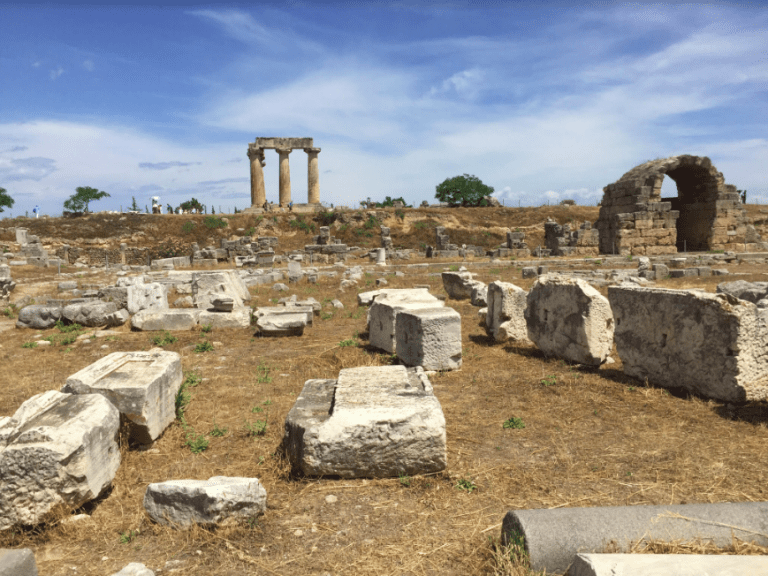
W. H. C. Frend places it in Rome, perhaps around AD 100. E.J. Goodspeed has adopted the view that 2 Clement is really the lost letter of Bishop Soter of Rome mentioned by Bishop Dionysius of Corinth (ca. 170)… Lightfoot long ago noted that the reference in 7.1 to people “coming to enter the contests,” without any identification of the location, implies that the speaker was near the site of the contests, in this case Corinth, home of the well-known Isthmian games. He suggests that 2 Clement was a sermon, read to the Corinthian congregation sometime between AD 120 and 140, that was for some reason particularly notable and therefore preserved, along with other important documents such as the letter from Bishop Soter mentioned by Bishop Dionysius and the earlier letter from the Roman church written by Clement, whose name was eventually attached to the anonymous sermon. …
The date and occasion of 2 Clement, then, remain open questions.
What’s it about? It’s evidently a sermon. Upon finishing reading of Scripture it is an exhortation to faithfulness to the way of Christ in the face of threats like gnosticism, false teachers and rebellion against leaders.
Notice that opening “as we do of God.” This is very close to affirming the deity of Christ who is Judge, and belittling him is serious. Our redemption and conversion, the Preacher says, require faithfulness.
2Clem. 1:1 Brothers and sisters, we ought to think of Jesus Christ as we do of God, as judge of the living and the dead. And we ought not to belittle the one who is our salvation, 2 for when we belittle him, we also hope to receive but little. And those who listen as though these are small matters do wrong, and we also do wrong, when we fail to acknowledge from where and by whom and to what place we were called, and how much suffering Jesus Christ endured for our sake. 3 What repayment, then, shall we give to him, or what fruit worthy of what he has given to us? And how many holy acts do we owe him? 4 For he has given us the light; as a father he has called us children; he saved us when we were perishing. 5 What praise, then, shall we give him, or what repayment in return for what we received? 6 Our minds were blinded, and we worshiped stones and wood and gold and silver and brass, things made by humans; indeed, our whole life was nothing but death. So while we were thus wrapped in darkness and our vision was filled with this thick mist we recovered our sight, by his will laying aside the cloud wrapped around us. 7 For he had mercy upon us and in his compassion he saved us when we had no hope of salvation except that which comes from him, even though he had seen in us much deception and destruction. 8 For he called us when we did not exist, and out of nothing he willed us into being.
The Preacher turns to OT Scriptures: Isa 54:1. He reads it allegorically or at least moralistically as referring to their contemporary situation, where numbers of believers have increased.
2Clem. 2:1 “Rejoice, O barren woman, who bears no children; break forth and shout, you who have no labor pains; for the deserted woman has more children than she who has a husband.” Now when he said, “Rejoice, O barren woman, who bears no children,” he spoke of us, for our church was barren before children were given to it. 2 And when he said, “Shout, you who have no labor pains,” he means this: we should offer up our prayers to God sincerely, and not grow weary like women in labor. 3 And he said, “for the deserted woman has more children than she who has a husband,” because our people seemed to be abandoned by God, but now that we have believed, we have become more numerous than those who seemed to have God.
He turns to Jesus as Scripture. This is the earliest record of something in the NT being called Scripture. The theme is
4 And another scripture says, “I have not come to call the righteous, but sinners.” 5 He means this: it is necessary to save those who are perishing. 6 For it is a great and marvelous thing to support not those things that are standing but those that are falling. 7 So also Christ willed to save what was perishing, and he saved many when he came and called us who were already perishing.
Having quoted Jesus he now exhorts them once again to listen to him and obey him.
2Clem. 3:1 Seeing, then, that he has shown us such mercy—first of all, that we who are living do not sacrifice to dead gods, nor do we worship them, but through him have come to know the Father of truth—what else is knowledge with respect to him if it is not refusing to deny the one through whom we have come to know him? 2 Indeed, he himself says, “whoever acknowledges me before men, I will acknowledge before my Father.” 3 This, then, is our reward, if we acknowledge the one through whom we were saved.
How is Jesus acknowledged? (I add the ways in numbers.)
2Clem. 3:4 But how do we acknowledge him? (1) By doing what he says and (2) not disobeying his commandments, and (3) honoring him not only with our lips but with our whole heart and with our whole mind. 5 And in Isaiah he also says, “This people honors me with their lips, but their heart is far from me.”
2Clem. 4:1 Let us, therefore, (4) not merely call him Lord, for this will not save us. 2 For he says, “Not everyone who says to me, ‘Lord, Lord,’ will be saved, but only the one who does what is right.” 3 So then, brothers and sisters, let us acknowledge him in our actions (5) by loving one another, (6) by not committing adultery or (7) slandering one another or (8) being jealous, (9) but by being self-controlled, compassionate, and kind. (10) And we ought to have sympathy for one another, and not be avaricious. By these actions let us acknowledge him, and not by their opposites.
The judgment remains fixed in the Preacher’s attention as well as the implication of disobedience:
4 Further, we must fear not humans but God. 5 For this reason, if you do these things, the Lord has said, “If you are gathered with me close to my breast, yet you do not keep my commandments, I will throw you out and say to you: ‘Get away from me; I do not know where you are from, you evildoers.’?”
Previous Post

October 1, 2018
Finders Returners
Next Post
October 2, 2018 Women of the New Testament (RJS)
Browse Our Archives
Select a Category Acts of the Apostles Adam Advent Anabaptism Angels Anglican Apologetics Atonement Baptism BCP Prayers Bible Biblical Studies Birds Blogging Bloglossary Bonhoeffer Books Calvinism Christianity Church Church History Coffee Colossians Commentary Recs Conversion Creation Creeds Culture Death Ecclesiastes Economics Education Embracing Grace Emergent Emerging Movement Eschatology Essays Ethics Eucharist Evangelicalism Family Fasting Fathers Fellowship of Differents Footsteps Tour Fun and Whimsical Gospel Grace Happiness Heaven Hell Holy Spirit Irenaeus James Jesus Jesus Creed Job Justification Kingdom of God Law Lectures Lent Liberalism Love and Marriage Mabanteneni Manhood Mary Miracles Missio Alliance MissioLife Missional Missional Jesus Movies and Film New Perspective Northern Seminary OneLife Origins Project Orthodox Parables Pastor's Spouse Pastoring and Leading Pastoring and Preaching Patristics Paul Paul-John Tour Pharisees Pietism Political Theology Prayer and Formation Preaching Problems for Faith Psalm 119 Psalms Public Issues Purgatory Religions Resurrection Revelation Romans Rule of JCreed Science and Faith Sermon on the Mount Sports Ten Commandments Theology Third Way Top Ten Lists Translations Uncategorized Universalism University Ministry Way Out Weekly Meanderings Wisdom Women and Ministry Work Worship Writing & Blogging Youth Ministry
Select a Month July 2021 January 2020 December 2019 November 2019 October 2019 September 2019 August 2019 July 2019 June 2019 May 2019 April 2019 March 2019 February 2019 January 2019 December 2018 November 2018 October 2018 September 2018 August 2018 July 2018 June 2018 May 2018 April 2018 March 2018 February 2018 January 2018 December 2017 November 2017 October 2017 September 2017 August 2017 July 2017 June 2017 May 2017 April 2017 March 2017 February 2017 January 2017 December 2016 November 2016 October 2016 September 2016 August 2016 July 2016 June 2016 May 2016 April 2016 March 2016 February 2016 January 2016 December 2015 November 2015 October 2015 September 2015 August 2015 July 2015 June 2015 May 2015 April 2015 March 2015 February 2015 January 2015 December 2014 November 2014 October 2014 September 2014 August 2014 July 2014 June 2014 May 2014 April 2014 March 2014 February 2014 January 2014 December 2013 November 2013 October 2013 September 2013 August 2013 July 2013 June 2013 May 2013 April 2013 March 2013 February 2013 January 2013 December 2012 November 2012 October 2012 September 2012 August 2012 July 2012 June 2012 May 2012 April 2012 March 2012 February 2012 January 2012 December 2011 November 2011 October 2011 September 2011 August 2011 July 2011 June 2011 May 2011 April 2011 March 2011 February 2011 January 2011 December 2010 November 2010 October 2010 September 2010 August 2010 July 2010 June 2010 May 2010 April 2010 March 2010 February 2010 January 2010 December 2009 November 2009 October 2009 September 2009 August 2009 July 2009 June 2009 May 2009 April 2009 March 2009 February 2009 January 2009 December 2008 November 2008 October 2008 September 2008 August 2008 July 2008 June 2008 May 2008 April 2008 March 2008 February 2008 January 2008 December 2007 November 2007 October 2007 September 2007 August 2007 July 2007 June 2007 May 2007 April 2007 March 2007 February 2007 January 2007 December 2006 November 2006 October 2006 September 2006 August 2006 July 2006 June 2006 May 2006 April 2006 March 2006 February 2006 January 2006 December 2005 November 2005 October 2005 September 2005 August 2005 July 2005 June 2005 May 2005 April 2005 0000
Follow Us!
TAKE THE
Religious Wisdom Quiz
Who follows the rider of the Pale Horse in Revelation?
Select your answer to see how you score.
The Angel Gabriel The Four Winds Hades The Saints
Related posts from Jesus Creed
The End Of A Very Interesting Letter
The Need To Remember Good Examples
TRENDING AT PATHEOS Evangelical

The REST of Your Life: A Creative Wrestles...
This week I had a conversation with a good friend from church....

How the author of the world's best hymn...
I've been working with John Newton for a while now. This makes...

Long before this Lectio Divina, Psalm 130 - the song - started...

What About the Trees? Another Living Parable
After I finished writing the last article about falling leaves as a...

Why Classical Education Is a Conversation, Not a...
Come and Read: Joy in Classical Education When I was a little...

Cornell University has received a great deal of negative publicity and intense...
view all Evangelical blogs
Ad-Free & Subscriber Log-In Subscription Support
- About Us
- 2026 Calendar
- Videos
- Podcasts
- Library of World Religions
- Faith In Media Tracker
- Advertise With Us
- Write for Us
- Privacy Policy
- Terms of Service
- Do Not Sell My Data
- Contact Us
- Radiant Digital
- Manage Newsletter Subscriptions
- Unsubscribe From Notifications
- Sitemap
Copyright 2008-2026, Patheos. All rights reserved.
Subscription Support Ad-Free & Subscriber Log-In
Follow Patheos