
BuddhistCatholicContemplativeEvangelicalGeneral ChristianHinduJewishLatter-day SaintMuslimNew VisionsProgressive Christian
Beliefs
- Buddhist
- Catholic
- Contemplative
- Evangelical
- General Christian
- Hindu
- Jewish
- Latter-day Saint
- More Voices
- Muslim
- New Visions
- Pagan
- Progressive Christian
Topics
- Religion News
- Food and Religion
- Sports and Religion
- Religious Art
- Religious Music and Entertainment
- Religious Events
- History and Religion
- Style and Religion
- Politics and Religion
- Women in Religion
- Recreation Outdoors and Religion
- Business Finance and Religion
- Careers Workplace and Religion
- Education and Religion
- Family Parenting and Religion
- Health Fitness and Religion
- Home and Religion
- Relationships and Religion
- Technology and Religion
- Travel and Religion
Columnists
- Buddhist Columnists
- Business Finance and Religion Columnists
- Careers Workplace and Religion Columnists
- Catholic Columnists
- Contemplative Columnists
- Education and Religion Columnists
- Evangelists Columnists
- Family Parenting and Religion Columnists
- General Christian Columnists
- Health Fitness and Religion Columnists
- Hindu Columnists
- History and Religion Columnists
- Home and Religion Columnists
- Jewish Columnists
- More Voices Columnists
- Latter Day Columnists
- Muslim Columnists
- New Visions Columnists
- Nonreligious Columnists
- Pagan Columnists
- Politics and Religion Columnists
- Progressive Columnists
- Recreation Outdoors and Religion Columnists
- Relationships and Religion Columnists
- Religion News Columnists
- Religious Art Columnists
- Religious Events Columnists
- Religious Music and Entertainment Columnists
- Sports and Religion Columnists
- Style and Religion Columnists
- Technology and Religion Columnists
- Travel and Religion Columnists
- Women in Religion Columnists
Resource Library
- 2026 Calendar
- Library of World Religions
- The 100 Most Holy Places on Earth
- Patheos Answers
- Podcasts
- Videos
- Faith Leaders Database
- Anglican Episcopalian
- Bahai
- Baptist
- Buddhism
- Christianity
- Confucianism
- Eastern Orthodoxy
- Hinduism
- Holiness and Pentecostal
- ISKCON
- Islam
- Judaism
- Lutheran
- Methodist
- The Church of Jesus Christ of Latter-day Saints
- New Age
- Paganism
- Presbytarian and Reformed
- Protestantism
- Religion Behind the Scenes
- Roman Catholic
- Scientology
- Shia Islam
- Sikhism
- Sufism
- Sunni Islam
- Taoism
- Zen
- See all religions
Research Tools
 Ad-Free & Subscriber Log-In Subscription Support
Follow Patheos 

- Trending:
- Advent
- |
- Forgiveness
- |
- Thanksgiving
- |
- Election
- |
- Seasonal Holidays
- |
- Marriage
 Jesus Creed
- Home
- Evangelical
- Creeds Before the Canon? (RJS)
Creeds Before the Canon? (RJS)
Last updated on: September 20, 2018 at 5:31 am by RJS
Creeds Before the Canon? (RJS) 2018-09-20T05:31:09-05:00 RJS
Patheos Explore the world's faith through different perspectives on religion and spirituality! Patheos has the views of the prevalent religions and spiritualities of the world.
 The creeds came before the canon but developed from and alongside the apostolic writings that became our New Testament.
I read a thread of comments last week (not on my post) where it was claimed that there are something like 30000 Christian denominations. I don’t know if this number is correct or not. And I don’t care. The commenter was arguing against the clarity of Scripture and noted that 29,999 of these must be wrong. But the commenter was off by 1. All 30,000 are wrong … someplace in some way. In fact, the one thing we can be sure of is that every last one of us are wrong in some fashion when we interpret and apply Scripture. Most of the errors are small, of no real importance – but the point remains, reading and interpreting Scripture is a human activity and thus prone to misunderstanding. No form of human communication is perfect. We need humility (and prayer).
We read and interpret Scripture in a community – small groups, local churches, larger organizations, and denominations, and we read it in the stream of the communion of saints over the last 2000 years (or more for the Old Testament books). No Christian stands alone, no local church or pastor/theologian stands alone.
The early church confronted the problems of interpretation and drift from the very beginning. Even before some of the books in our Bible were written and well before they were collected and the canon defined and closed. Problems in interpretation are apparent in Acts and the letters of Paul, who sometimes deals with issues of interpretation in the churches. This was a serious issue in the early church, especially as it moved out of the Apostolic era. What is the essence of Christian belief and what moves outside the bounds? Remember, they had letters and other writings taken as edifying, of value to the church, even authoritative – but not a defined canon. Michael Bird (What Christians ought to Believe: An Introduction to Christian Doctrine Through the Apostles’ Creed) reminds us of criteria used in the church as the canon was developed (see, for instance, Eusebius The Church History written before 325 AD)
1. Apostolicity: Was it written by an apostle?
2. Orthodoxy: Did it conform to the rule of faith?
3. Antiquity: Could it be dated to the apostolic age?
4. Catholicity: Was it generally accepted in the worship and instruction of the majority of churches.
The rule of faith is found in the writings of the early church fathers. (Quotes below are from The Ante-Nicene Fathers vol. 1, 3, 4). It doesn’t focus on all aspects of Christian life, or on how we are to live in light of what we believe. But it does outline our basic beliefs about God, Jesus, the Holy Spirit, the Church and our future hope. Between 100 and 200 AD we have examples from Ignatius, Irenaeus and Tertullian.
Ignatius. ca. 107 AD, The Epistle of Ignatius to the Trallians (shorter version) has:
Stop your ears, therefore, when any one speaks to you at variance with Jesus Christ, who was descended from David, and was also of Mary; who was truly born, and did eat and drink. He was truly persecuted under Pontius Pilate; He was truly crucified, and [truly] died, in the sight of beings in heaven, and on earth, and under the earth. He was also truly raised from the dead, His Father quickening Him, even as after the same manner His Father will so raise up us who believe in Him by Christ Jesus, apart from whom we do not possess the true life.
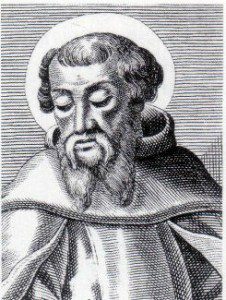
Ignatius focuses on Christ in this letter but puts forth clearly the elements of belief in Christ. The image at the top of this post is an illustration of the martyrdom of Ignatius produced in ca. 1000 AD. His letters were written to churches as he traveled to his martyrdom.
 Irenaeus. A generation or two later we have Irenaeus as he writes against errant beliefs confronting the church. Two passages are particularly interesting. I have added emphasis to the statements we find later in the creeds.
ca. AD 180, Irenaeus, Against Heresies 1:10:1-2
The Church, though dispersed through our the whole world, even to the ends of the earth, has received from the apostles and their disciples this faith: [The church believes] in one God, the Father Almighty, Maker of heaven, and earth, and the sea, and all things that are in them; and in one Christ Jesus, the Son of God, who became incarnate for our salvation; and in the Holy Spirit, who proclaimed through the prophets the dispensations of God, and the advents, and the birth from a virgin, and the passion, and the resurrection from the dead, and the ascension into heaven in the flesh of the beloved Christ Jesus, our Lord, and His [future] manifestation from heaven in the glory of the Father “to gather all things in one,” and to raise up anew all flesh of the whole human race, in order that to Christ Jesus, our Lord, and God, and Savior, and King, according to the will of the invisible Father, “every knee should bow, of things in heaven, and things in earth, and things under the earth, and that every tongue should confess” to Him, and that He should execute just judgment towards all; …
As I have already observed, the Church, having received this preaching and this faith, although scattered throughout the whole world, yet, as if occupying but one house, carefully preserves it. She also believes these points [of doctrine] just as if she had but one soul, and one and the same heart, and she proclaims them, and teaches them, and hands them down, with perfect harmony, as if she possessed only one mouth. For, although the languages of the world are dissimilar, yet the import of the tradition is one and the same.
According to Irenaeus the church has one set of beliefs across the known world. And they do not depend on on the apostolic writings but from the continuous tradition of the church. Even churches without access to the writings follow the Tradition – the rule of faith. He elaborates on this in another passage.
Against Heresies 3:4:1-2 (Irenaeus had writings of the apostles – but not the defined canon)
For how should it be if the apostles themselves had not left us writings? Would it not be necessary, to follow the course of the tradition which they handed down to those to whom they did commit the Churches?
To which course many nations of those barbarians who believe in Christ do assent, having salvation written in their hearts by the Spirit, without paper or ink, and, carefully preserving the ancient tradition, believing in one God, the Creator of heaven and earth, and all things therein, by means of Christ Jesus, the Son of God; who, because of His surpassing love towards His creation, condescended to be born of the virgin, He Himself uniting man through Himself to God, and having suffered under Pontius Pilate, and rising again, and having been received up in splendor, shall come in glory, the Savior of those who are saved, and the Judge of those who are judged, and sending into eternal fire those who transform the truth, and despise His Father and His advent.
Those who, in the absence of written documents, have believed this faith, are barbarians, so far as regards our language; but as regards doctrine, manner, and tenor of life, they are, because of faith, very wise indeed; and they do please God, ordering their conversation in all righteousness, chastity, and wisdom. If any one were to preach to these men the inventions of the heretics, speaking to them in their own language, they would at once stop their ears, and flee as far off as possible, not enduring even to listen to the blasphemous address.
The rule of faith is important. The holy universal church is comprised of Christians who affirm this rule of faith.
 Tertullian. Coming only a little later, Tertullian refers often to the rule of faith. Two examples below:
ca. 200 AD Tertullian, On the Veiling of Virgins 1
The rule of faith, indeed, is altogether one, alone immovable and irreformable; the rule, to wit, of believing in one only God omnipotent, the Creator of the universe, and His Son Jesus Christ, born of the Virgin Mary, crucified under Pontius Pilate, raised again the third day from the dead, received in the heavens, sitting now at the right (hand) of the Father, destined to come to judge quick and dead through the resurrection of the flesh as well (as of the spirit).
Tertullian, Against Praxeus 2
We, however, … believe that there is one only God, … that this one only God has also a Son, His Word, who proceeded from Himself, by whom all things were made, and without whom nothing was made. Him we believe to have been sent by the Father into the Virgin, and to have been born of her—being both Man and God, the Son of Man and the Son of God, and to have been called by the name of Jesus Christ; we believe Him to have suffered, died, and been buried, according to the Scriptures, and, after He had been raised again by the Father and taken back to heaven, to be sitting at the right hand of the Father, and that He will come to judge the quick and the dead; who sent also from heaven from the Father, according to His own promise, the Holy Ghost, the Paraclete, the sanctifier of the faith of those who believe in the Father, and in the Son, and in the Holy Ghost. That this rule of faith has come down to us from the beginning of the gospel.
Many other examples can be cited from the early church fathers – but that would make this post far too long. The Apostles Creed refines this rule of faith, putting it in a concise and memorable form. But the roots go way back – to the apostolic teaching and through the very early church.
The rule of faith is not more important than Scripture, and it alone is not enough. There is much more we learn from the Gospels and the Epistles. But the rule of faith does define the essence of Christian belief about God – and has for over 1900 years. We read our Bible through the lens of this rule.
If you wish to contact me directly you may do so at rjs4mail [at] att.net.
If interested you can subscribe to a full text feed of my posts at Musings on Science and Theology.
Previous Post

September 19, 2018
Willow Creek's New Advisory Council
Next Post
September 21, 2018 Somebody Better Than Me (Mike Glenn)
Browse Our Archives
Select a Category Acts of the Apostles Adam Advent Anabaptism Angels Anglican Apologetics Atonement Baptism BCP Prayers Bible Biblical Studies Birds Blogging Bloglossary Bonhoeffer Books Calvinism Christianity Church Church History Coffee Colossians Commentary Recs Conversion Creation Creeds Culture Death Ecclesiastes Economics Education Embracing Grace Emergent Emerging Movement Eschatology Essays Ethics Eucharist Evangelicalism Family Fasting Fathers Fellowship of Differents Footsteps Tour Fun and Whimsical Gospel Grace Happiness Heaven Hell Holy Spirit Irenaeus James Jesus Jesus Creed Job Justification Kingdom of God Law Lectures Lent Liberalism Love and Marriage Mabanteneni Manhood Mary Miracles Missio Alliance MissioLife Missional Missional Jesus Movies and Film New Perspective Northern Seminary OneLife Origins Project Orthodox Parables Pastor's Spouse Pastoring and Leading Pastoring and Preaching Patristics Paul Paul-John Tour Pharisees Pietism Political Theology Prayer and Formation Preaching Problems for Faith Psalm 119 Psalms Public Issues Purgatory Religions Resurrection Revelation Romans Rule of JCreed Science and Faith Sermon on the Mount Sports Ten Commandments Theology Third Way Top Ten Lists Translations Uncategorized Universalism University Ministry Way Out Weekly Meanderings Wisdom Women and Ministry Work Worship Writing & Blogging Youth Ministry
Select a Month July 2021 January 2020 December 2019 November 2019 October 2019 September 2019 August 2019 July 2019 June 2019 May 2019 April 2019 March 2019 February 2019 January 2019 December 2018 November 2018 October 2018 September 2018 August 2018 July 2018 June 2018 May 2018 April 2018 March 2018 February 2018 January 2018 December 2017 November 2017 October 2017 September 2017 August 2017 July 2017 June 2017 May 2017 April 2017 March 2017 February 2017 January 2017 December 2016 November 2016 October 2016 September 2016 August 2016 July 2016 June 2016 May 2016 April 2016 March 2016 February 2016 January 2016 December 2015 November 2015 October 2015 September 2015 August 2015 July 2015 June 2015 May 2015 April 2015 March 2015 February 2015 January 2015 December 2014 November 2014 October 2014 September 2014 August 2014 July 2014 June 2014 May 2014 April 2014 March 2014 February 2014 January 2014 December 2013 November 2013 October 2013 September 2013 August 2013 July 2013 June 2013 May 2013 April 2013 March 2013 February 2013 January 2013 December 2012 November 2012 October 2012 September 2012 August 2012 July 2012 June 2012 May 2012 April 2012 March 2012 February 2012 January 2012 December 2011 November 2011 October 2011 September 2011 August 2011 July 2011 June 2011 May 2011 April 2011 March 2011 February 2011 January 2011 December 2010 November 2010 October 2010 September 2010 August 2010 July 2010 June 2010 May 2010 April 2010 March 2010 February 2010 January 2010 December 2009 November 2009 October 2009 September 2009 August 2009 July 2009 June 2009 May 2009 April 2009 March 2009 February 2009 January 2009 December 2008 November 2008 October 2008 September 2008 August 2008 July 2008 June 2008 May 2008 April 2008 March 2008 February 2008 January 2008 December 2007 November 2007 October 2007 September 2007 August 2007 July 2007 June 2007 May 2007 April 2007 March 2007 February 2007 January 2007 December 2006 November 2006 October 2006 September 2006 August 2006 July 2006 June 2006 May 2006 April 2006 March 2006 February 2006 January 2006 December 2005 November 2005 October 2005 September 2005 August 2005 July 2005 June 2005 May 2005 April 2005 0000
Follow Us!
TAKE THE
Religious Wisdom Quiz
What does "Shalom" mean in Hebrew?
Select your answer to see how you score.
Joy Peace Love Blessing
Related posts from Jesus Creed


The Gospel of With Us and Through Us

Northern Seminary Announces: Nijay Gupta Joins Faculty

The Gundrys and Me: Ruth Tucker
TRENDING AT PATHEOS Evangelical

When you hear the word riches, what comes to mind? For most...

Don’t Miss the Parents: A Creative Christmas Meditation
As we enter the Advent Season, I see many people trying to...

Making Stones Into Bread: Choosing the “Right” Work
I was on my online arts ministry Zoom meeting with the International...

Ukraine’s exhausted Christians face fifth winter of war
By Julian Lukins The full-scale war in Ukraine is taking “a serious...

Russell Brand's Conviction is not anti-Christian Persecution
How do we shed the reputation that the Church is OK with...

Have you ever caught yourself saying, “I’ll do it tomorrow,” or “Now...
view all Evangelical blogs
Ad-Free & Subscriber Log-In Subscription Support
- About Us
- 2026 Calendar
- Videos
- Podcasts
- Library of World Religions
- Faith In Media Tracker
- Advertise With Us
- Write for Us
- Privacy Policy
- Terms of Service
- Do Not Sell My Data
- Contact Us
- Radiant Digital
- Manage Newsletter Subscriptions
- Unsubscribe From Notifications
- Sitemap
Copyright 2008-2026, Patheos, part of the Radiant Digital network of media brands. All rights reserved.
Subscription Support Ad-Free & Subscriber Log-In
Follow Patheos