
BuddhistCatholicContemplativeEvangelicalGeneral ChristianHinduJewishLatter-day SaintMuslimNew VisionsProgressive Christian
Beliefs
- Buddhist
- Catholic
- Contemplative
- Evangelical
- General Christian
- Hindu
- Jewish
- Latter-day Saint
- More Voices
- Muslim
- New Visions
- Pagan
- Progressive Christian
Topics
- Religion News
- Food and Religion
- Sports and Religion
- Religious Art
- Religious Music and Entertainment
- Religious Events
- History and Religion
- Style and Religion
- Politics and Religion
- Women in Religion
- Recreation Outdoors and Religion
- Business Finance and Religion
- Careers Workplace and Religion
- Education and Religion
- Family Parenting and Religion
- Health Fitness and Religion
- Home and Religion
- Relationships and Religion
- Technology and Religion
- Travel and Religion
Columnists
- Buddhist Columnists
- Business Finance and Religion Columnists
- Careers Workplace and Religion Columnists
- Catholic Columnists
- Contemplative Columnists
- Education and Religion Columnists
- Evangelists Columnists
- Family Parenting and Religion Columnists
- General Christian Columnists
- Health Fitness and Religion Columnists
- Hindu Columnists
- History and Religion Columnists
- Home and Religion Columnists
- Jewish Columnists
- More Voices Columnists
- Latter Day Columnists
- Muslim Columnists
- New Visions Columnists
- Nonreligious Columnists
- Pagan Columnists
- Politics and Religion Columnists
- Progressive Columnists
- Recreation Outdoors and Religion Columnists
- Relationships and Religion Columnists
- Religion News Columnists
- Religious Art Columnists
- Religious Events Columnists
- Religious Music and Entertainment Columnists
- Sports and Religion Columnists
- Style and Religion Columnists
- Technology and Religion Columnists
- Travel and Religion Columnists
- Women in Religion Columnists
Resource Library
- 2026 Calendar
- Library of World Religions
- The 100 Most Holy Places on Earth
- Patheos Answers
- Podcasts
- Videos
- Faith Leaders Database
- Anglican Episcopalian
- Bahai
- Baptist
- Buddhism
- Christianity
- Confucianism
- Eastern Orthodoxy
- Hinduism
- Holiness and Pentecostal
- ISKCON
- Islam
- Judaism
- Lutheran
- Methodist
- The Church of Jesus Christ of Latter-day Saints
- New Age
- Paganism
- Presbytarian and Reformed
- Protestantism
- Religion Behind the Scenes
- Roman Catholic
- Scientology
- Shia Islam
- Sikhism
- Sufism
- Sunni Islam
- Taoism
- Zen
- See all religions
Research Tools
 Ad-Free & Subscriber Log-In Subscription Support
Follow Patheos 

- Trending:
- Advent
- |
- Forgiveness
- |
- Thanksgiving
- |
- Election
- |
- Seasonal Holidays
- |
- Marriage
 Jesus Creed
- Home
- Evangelical
- Math + Theology = ? (RJS)
Math + Theology = ? (RJS)
Last updated on: September 11, 2018 at 11:57 am by RJS
Math + Theology = ? (RJS) 2018-09-11T11:57:35-05:00 RJS
Patheos Explore the world's faith through different perspectives on religion and spirituality! Patheos has the views of the prevalent religions and spiritualities of the world.
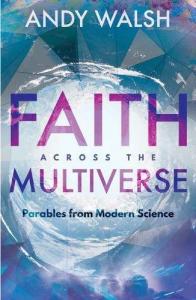 What does math have to do with theology? Andy Walsh, Faith Across the Multiverse, makes some interesting connections. The logic of mathematics can help us think more clearly about theology. In Chapter 1 (the second chapter since he starts with 0) Walsh explores paradox, logic, math, and the way we view the world (this is where theology comes in). This is a fascinating chapter that considers the Bible, Math, Geometry, Paul Revere, the Matrix, the X-men, Raiders of the Lost Ark, Contact … and gets us to consider some very important points about God and the nature of our faith in God. If this chapter is an accurate indicator of what is to come, the book should be an excellent conversation starter. I will highlight only a few points that particularly struck me as I read the chapter.
Human language is vague and ambiguous. Yes it can be used to communicate clearly – but this is not what always happens. Math uses axioms, rules and proofs to avoid ambiguity. “Math helps us communicate precisely about abstract ideas, which is why I think it can help us wrap our minds around abstract qualities of God and our relationship with him.” (p. 26) There is a reason why many current Philosophy professors were math majors as undergraduates (a fact that surprised me when I first realized it.) Math is great preparation for Philosophy.
Axioms. Math, with its careful logic and precise rules, teaches us that we need to start with unprovable axioms. Every system starts with some assumptions taken to be true. From these initial postulates a wide range of other propositions can be proven. Math also teaches us that in any construct some conclusions, even if true, will be unprovable. There is a proof of incompleteness …
Remarkably, not only did the proposed basis for math fail to be proven complete, it was actually explicitly proven incomplete; some questions were demonstrably unanswerable. A simplified explanation of the proof of incompleteness is that you can create an expression whose meaning is essentially “This expression cannot be proved:’ And yet, since it is built up from proven expressions according to the rules of the language, it should be considered proved. In other words, what was proved was the unprovability of the statement. This essentially rendered that expression undecidable, meaning there is no way to know if it is true or false, given the axioms we chose. (p. 31)
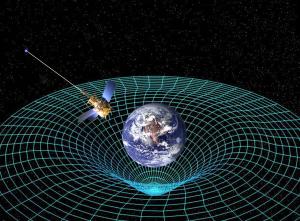 One example Walsh uses is the distinction between Euclidean and non-Euclidean geometries (although he doesn’t use the word Euclidean). Two lines are defined as parallel if they both intersect a third at right angles. We commonly think that parallel lines remain equidistant and never intersect. But this is an axiom, not a provable fact. The axiom defines a flat space. It is perfectly logical to construct geometries where parallel lines may intersect or diverge – these define a curved space. Both kinds of geometries are useful. In fact, the geometry of curved spaces turns out to be far more useful in physics than the geometry of flat spaces (image credit NASA). But … the truth of some statements about parallel lines and other objects depend on the nature of the geometry chosen, i.e. the axioms on which the logical framework is based. These axioms are chosen, they are not “self-evident” or provable.
What does this have to do with faith and theology? Quite simply, it is necessary to choose the assumptions on which we base our lives. Belief in God is an axiom. It is consistent with observation, but is not provable a priori i.e. “from first principles.” It is one of the first principles. Walsh’s discussion says it well:
This perspective provides us with an operational definition of faith. Instead of defining it in terms of dogma or rejection of evidence, let’s say that faith is choosing a set of assumptions, or axioms, for understanding the world. And if you prefer, we can further refine this definition to state that faith is specifically choosing assumptions that either explicitly include a God or gods, or at least do not explicitly disallow the existence of such a being or beings. Many atheists and other areligious folks bristle at the idea of calling their choice of assumptions faith, and that’s understandable given the general usage of the words. I don’t see any need to insist on that broader definition of “faith;’ so long as we all understand that at some point we are all making a choice of assumptions, and that no particular set of assumptions is privileged a priori nor the only option for a consistent view of the world.
Assuming God rather than proving him might seem like dodging any requirement to provide evidence. Axioms can certainly be informed by evidence, and my belief in God is definitely informed by historical corroboration of the Bible. But axioms cannot themselves be deductively proven; as with pudding, the proof is in the tasting. I am primarily interested with what conclusions follow from my belief in God and how useful they are in my real life. This is comparable to the situation in geometry, where multiple geometries are logically and mathematically valid but the ones where parallel lines intersect are useful for describing a wider range of real world experiences. (p. 35)
Information. Walsh goes on to dig into information theory and the ways in which information can be conveyed.
01100111 01101111 01100100 00100000 01101001 01110011 00100000 01101100 01101111 01110110 01100101 00101110
47 6F 64 20 69 73 20 6C 6F 76 65 2E
Information does not exist in a vacuum and is not intrinsic to the symbol that carries information … “its meaning is extrinsic and relational.” He uses Paul Revere (one if by land, two if by sea) and David and Jonathan (1 Samuel 20: If I say to him, ‘Look, the arrows are on this side of you; bring them here,’ then come, because, as surely as the Lord lives, you are safe; there is no danger. But if I say to the boy, ‘Look, the arrows are beyond you,’ then you must go, because the Lord has sent you away.) as examples. Information is carried because both parties understand the potential messages. The information is not intrinsic to the lamps in the Old North Church or to Jonathon’s specific words to the boy he sends to fetch the arrows. The meaning is extrinsic to these bits – and is known in the relationship between the conveyor and recipient. After working through several biblical stories Walsh concludes “I think the idea that meaning is extrinsic and relational is on solid ground biblically, rather than being antithetical to the teaching of the Bible. And so we should not be surprised when others look at the world around them and claim that it is meaningless. They are looking at the bits of the message, but the meaning isn’t in the bits.” (p. 39-40)
Completeness and God. Walsh speculates on the relationship between completeness and God – The axiom system defined by God is complete and infinite. We are finite and will never know all truth – but that doesn’t mean that God doesn’t or can’t. It is also clear that knowing the axioms is not enough. Just as we will not be good chess players simply because we know the rules – we will not be good Christians simply by choosing God. In both cases we must actually play the game, in fact we must spend many hours playing the game and practicing.
Translating that to our definition of faith as choosing God for an axiom, we see that the book of James says something very similar. “What good is it, my brothers and sisters, if someone claims to have faith but does not have works?” (James 2:14). In our terms, choosing the axiom of faith is not enough to know God; it is simply a prerequisite. Knowing God is the process of taking that axiom and figuring out what truths it contains. That means playing the game-living your life according to the theorems, the true statements, that follow from belief in God. This is what James means by showing faith through works, and what separates knowing God from knowing of God, which, as James notes in verse 19, even the demons know of God.
…
And so we have a picture of faith that is not inherently uninquisitive or unempirical. Instead, faith represents a particular set of assumptions about the world, including that God is the ultimate author of the universe and the Bible. These assumptions are not privileged a priori or deductively superior; they are a matter of volition. The work of faith is to discern the meaning in what we observe in the world around us in a way that is consistent with those assumptions and then act accordingly.
This process of living our faith should then be highly exploratory, requiring active engagement and not passive acceptance. For, as we noted, even if God is Truth, that doesn’t guarantee that we will know God or Truth perfectly. We need to regularly check to see if the theorems we are choosing, the actions we take, the way we live our lives, are consistent with the axioms we have chosen. (p. 44)
Faith in God is not illogical, irrational, or “unscientific.” Nor should we expect to be able to prove the existence of God from first principles.
We are called as Christians to play the game – to live out our faith.
What do you think of Walsh’s discussion of the necessity of axioms in any logical framework?
How does this relate to faith in God?
Does it challenge some of your assumptions – or those of skeptical friends, family, and colleagues?
If you wish to contact me directly, you may do so at rjs4mail[at]att.net.
If interested you can subscribe to a full text feed of my posts at Musings on Science and Theology.
Previous Post

September 11, 2018
Miracles, Experience, And Mythic Narratives
Next Post
September 12, 2018 Faith in the Shadows (Austin Fischer)
Browse Our Archives
Select a Category Acts of the Apostles Adam Advent Anabaptism Angels Anglican Apologetics Atonement Baptism BCP Prayers Bible Biblical Studies Birds Blogging Bloglossary Bonhoeffer Books Calvinism Christianity Church Church History Coffee Colossians Commentary Recs Conversion Creation Creeds Culture Death Ecclesiastes Economics Education Embracing Grace Emergent Emerging Movement Eschatology Essays Ethics Eucharist Evangelicalism Family Fasting Fathers Fellowship of Differents Footsteps Tour Fun and Whimsical Gospel Grace Happiness Heaven Hell Holy Spirit Irenaeus James Jesus Jesus Creed Job Justification Kingdom of God Law Lectures Lent Liberalism Love and Marriage Mabanteneni Manhood Mary Miracles Missio Alliance MissioLife Missional Missional Jesus Movies and Film New Perspective Northern Seminary OneLife Origins Project Orthodox Parables Pastor's Spouse Pastoring and Leading Pastoring and Preaching Patristics Paul Paul-John Tour Pharisees Pietism Political Theology Prayer and Formation Preaching Problems for Faith Psalm 119 Psalms Public Issues Purgatory Religions Resurrection Revelation Romans Rule of JCreed Science and Faith Sermon on the Mount Sports Ten Commandments Theology Third Way Top Ten Lists Translations Uncategorized Universalism University Ministry Way Out Weekly Meanderings Wisdom Women and Ministry Work Worship Writing & Blogging Youth Ministry
Select a Month July 2021 January 2020 December 2019 November 2019 October 2019 September 2019 August 2019 July 2019 June 2019 May 2019 April 2019 March 2019 February 2019 January 2019 December 2018 November 2018 October 2018 September 2018 August 2018 July 2018 June 2018 May 2018 April 2018 March 2018 February 2018 January 2018 December 2017 November 2017 October 2017 September 2017 August 2017 July 2017 June 2017 May 2017 April 2017 March 2017 February 2017 January 2017 December 2016 November 2016 October 2016 September 2016 August 2016 July 2016 June 2016 May 2016 April 2016 March 2016 February 2016 January 2016 December 2015 November 2015 October 2015 September 2015 August 2015 July 2015 June 2015 May 2015 April 2015 March 2015 February 2015 January 2015 December 2014 November 2014 October 2014 September 2014 August 2014 July 2014 June 2014 May 2014 April 2014 March 2014 February 2014 January 2014 December 2013 November 2013 October 2013 September 2013 August 2013 July 2013 June 2013 May 2013 April 2013 March 2013 February 2013 January 2013 December 2012 November 2012 October 2012 September 2012 August 2012 July 2012 June 2012 May 2012 April 2012 March 2012 February 2012 January 2012 December 2011 November 2011 October 2011 September 2011 August 2011 July 2011 June 2011 May 2011 April 2011 March 2011 February 2011 January 2011 December 2010 November 2010 October 2010 September 2010 August 2010 July 2010 June 2010 May 2010 April 2010 March 2010 February 2010 January 2010 December 2009 November 2009 October 2009 September 2009 August 2009 July 2009 June 2009 May 2009 April 2009 March 2009 February 2009 January 2009 December 2008 November 2008 October 2008 September 2008 August 2008 July 2008 June 2008 May 2008 April 2008 March 2008 February 2008 January 2008 December 2007 November 2007 October 2007 September 2007 August 2007 July 2007 June 2007 May 2007 April 2007 March 2007 February 2007 January 2007 December 2006 November 2006 October 2006 September 2006 August 2006 July 2006 June 2006 May 2006 April 2006 March 2006 February 2006 January 2006 December 2005 November 2005 October 2005 September 2005 August 2005 July 2005 June 2005 May 2005 April 2005 0000
Follow Us!
TAKE THE
Religious Wisdom Quiz
What does "Shalom" mean in Hebrew?
Select your answer to see how you score.
Joy Peace Love Blessing
Related posts from Jesus Creed


The Gospel of With Us and Through Us

Northern Seminary Announces: Nijay Gupta Joins Faculty

The Gundrys and Me: Ruth Tucker
TRENDING AT PATHEOS Evangelical

When you hear the word riches, what comes to mind? For most...

Don’t Miss the Parents: A Creative Christmas Meditation
As we enter the Advent Season, I see many people trying to...

Making Stones Into Bread: Choosing the “Right” Work
I was on my online arts ministry Zoom meeting with the International...

Ukraine’s exhausted Christians face fifth winter of war
By Julian Lukins The full-scale war in Ukraine is taking “a serious...

Russell Brand's Conviction is not anti-Christian Persecution
How do we shed the reputation that the Church is OK with...

Have you ever caught yourself saying, “I’ll do it tomorrow,” or “Now...
view all Evangelical blogs
Ad-Free & Subscriber Log-In Subscription Support
- About Us
- 2026 Calendar
- Videos
- Podcasts
- Library of World Religions
- Faith In Media Tracker
- Advertise With Us
- Write for Us
- Privacy Policy
- Terms of Service
- Do Not Sell My Data
- Contact Us
- Radiant Digital
- Manage Newsletter Subscriptions
- Unsubscribe From Notifications
- Sitemap
Copyright 2008-2026, Patheos, part of the Radiant Digital network of media brands. All rights reserved.
Subscription Support Ad-Free & Subscriber Log-In
Follow Patheos