
BuddhistCatholicContemplativeEvangelicalGeneral ChristianHinduJewishLatter-day SaintMuslimNew VisionsProgressive Christian
Beliefs
- Buddhist
- Catholic
- Contemplative
- Evangelical
- General Christian
- Hindu
- Jewish
- Latter-day Saint
- More Voices
- Muslim
- New Visions
- Pagan
- Progressive Christian
Topics
- Religion News
- Food and Religion
- Sports and Religion
- Religious Art
- Religious Music and Entertainment
- Religious Events
- History and Religion
- Style and Religion
- Politics and Religion
- Women in Religion
- Recreation Outdoors and Religion
- Business Finance and Religion
- Careers Workplace and Religion
- Education and Religion
- Family Parenting and Religion
- Health Fitness and Religion
- Home and Religion
- Relationships and Religion
- Technology and Religion
- Travel and Religion
Columnists
- Buddhist Columnists
- Business Finance and Religion Columnists
- Careers Workplace and Religion Columnists
- Catholic Columnists
- Contemplative Columnists
- Education and Religion Columnists
- Evangelists Columnists
- Family Parenting and Religion Columnists
- General Christian Columnists
- Health Fitness and Religion Columnists
- Hindu Columnists
- History and Religion Columnists
- Home and Religion Columnists
- Jewish Columnists
- More Voices Columnists
- Latter Day Columnists
- Muslim Columnists
- New Visions Columnists
- Nonreligious Columnists
- Pagan Columnists
- Politics and Religion Columnists
- Progressive Columnists
- Recreation Outdoors and Religion Columnists
- Relationships and Religion Columnists
- Religion News Columnists
- Religious Art Columnists
- Religious Events Columnists
- Religious Music and Entertainment Columnists
- Sports and Religion Columnists
- Style and Religion Columnists
- Technology and Religion Columnists
- Travel and Religion Columnists
- Women in Religion Columnists
Resource Library
- 2026 Calendar
- Library of World Religions
- The 100 Most Holy Places on Earth
- Patheos Answers
- Podcasts
- Videos
- Faith Leaders Database
- Anglican Episcopalian
- Bahai
- Baptist
- Buddhism
- Christianity
- Confucianism
- Eastern Orthodoxy
- Hinduism
- Holiness and Pentecostal
- ISKCON
- Islam
- Judaism
- Lutheran
- Methodist
- The Church of Jesus Christ of Latter-day Saints
- New Age
- Paganism
- Presbytarian and Reformed
- Protestantism
- Religion Behind the Scenes
- Roman Catholic
- Scientology
- Shia Islam
- Sikhism
- Sufism
- Sunni Islam
- Taoism
- Zen
- See all religions
Research Tools
 Ad-Free & Subscriber Log-In Subscription Support
Ad-Free & Subscriber Log-In Subscription Support
Follow Patheos 

- Trending:
- Forgiveness
- |
- Marriage
- |
- Consciousness
- |
- Death Penalty
- |
- Election
- |
- Halloween
 Jesus Creed
- Home
- Evangelical
- The Most Challenging Passage (RJS)
The Most Challenging Passage (RJS)
Last updated on: July 3, 2018 at 8:58 am by RJS
The Most Challenging Passage (RJS) 2018-07-03T08:58:15-05:00 RJS
Patheos Explore the world's faith through different perspectives on religion and spirituality! Patheos has the views of the prevalent religions and spiritualities of the world.
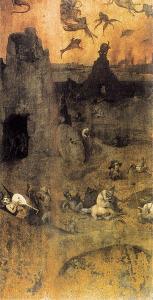 I have long felt that the most challenging passage in Scripture is found at the beginning of Genesis 6.
When human beings began to increase in number on the earth and daughters were born to them, the sons of God saw that the daughters of humans were beautiful, and they married any of them they chose. Then the Lord said, “My Spirit will not contend with humans forever, for they are mortal; their days will be a hundred and twenty years.”
The Nephilim were on the earth in those days—and also afterward—when the sons of God went to the daughters of humans and had children by them. They were the heroes of old, men of renown. (v. 1-4)
The most challenging, that is, to the insistence that Genesis 1-11 is intended as a narrative of past history.
Tremper Longman and John Walton admit that this is a tough passage to interpret. In his commentary on Genesis John calls it “one of the thorniest in Old Testament interpretation.” Who are the “sons of God” and why were their relationships with the daughters of humans wrong? (And as an aside, how did the Nephilim survive the flood?) Many interpretations have been advanced over the years and both Tremper and John outline some of these in their commentaries on Genesis (NIVAC: Genesis; The Story of God: Genesis). Tremper leans toward the idea that the sons of God are angels while John seems to favor the connection with heroic tyrant kings of old. Another possibility raised is that the sons of God are descendants of Seth and the daughters of humans were from the line of Cain. In The Lost World of the Flood John and Tremper suggest some connections with Mesopotamian texts and stories and admit that we simply cannot know for sure the background of this particular passage.
Frankly, if we insist that Genesis 2-11 is historical narrative giving us a snapshot of deep time (even if using rhetorical devices and figurative language as many commenters including John and Tremper agree) … this passage is a real problem. I find none of the possibilities terribly convincing. They have the feel of tortured attempts to make Scripture fit a mold we have established. John and Tremper remain committed to a historical narrative of sorts, with this passage referring to some kind of actual event. My personal opinion is that this passage is one of the clearest indications we have that Genesis 2-11 uses concepts from the ancient world to set the stage for the election of Abraham and Israel. There is important truth in Genesis 2-11, but God’s revealed truth is found in the use to which the narrator (author of Genesis) puts the stories not in any historical roots.
John and Tremper agree that the use the narrator is making of the story is of primary importance. The world is a mess. Instead of order it is characterized by increasing disorder devolving to chaos.
The Lord saw how great the wickedness of the human race had become on the earth, and that every inclination of the thoughts of the human heart was only evil all the time. The Lord regretted that he had made human beings on the earth, and his heart was deeply troubled. So the Lord said, “I will wipe from the face of the earth the human race I have created—and with them the animals, the birds and the creatures that move along the ground—for I regret that I have made them.” (v. 5-7)
The entire human experiment had failed – or so it seems. “But Noah found favor in the eyes of the Lord.” (v. 8) And in the flood we have a do-over, a restart. With chaos unleashed to clear the stage for a re-creation and re-established order.
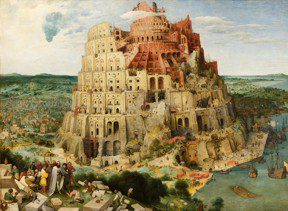 But destruction and re-creation did not establish order. Before we know it humans have again strayed. They start to build a tower to establish a relationship with God on their terms and to make a name for themselves. The story is ancient – it uses, John and Tremper note, appropriate technologies for something like 3250 to 2750 BC. The tower is a ziggurat – a structure in ancient Mesopotamia designed to allow the gods to come down to earth. The people are making an irreverent attempt to take control, bring God to them, and make a name for themselves.
Genesis 11:1-9 gives an account of the builders taking initiative to reinitiate sacred space through the abiding presence of God in a temple (associated with the ziggurat), to bring God down, and thereby regain a privilege lost in Eden. (p. 137)
And this story is a fitting conclusion to the primordial period setting the stage for Abraham.
Tower builders conceived of sacred space as focused on themselves (making a name for themselves) – a repetition of the Garden of Eden scenario – thus forming an inclusio to Genesis 1-11. The motivation of the building project was for order determined by them and built around themselves. (pp. 137-138)
The confusion of tongues and scattering of people is a necessary prologue to election. The solution starts with Abraham and then with the people of Israel.
Genesis 11 is failed human initiative to reestablish God’s presence; Genesis 12 is God’s initiative that will lead to relationship in his presence and sacred space. (p. 139)
The stage is set.
The idea that all diversity in human language and dispersal from the Fertile Crescent occurred a mere 4000 years ago is hard to defend. There is so much evidence to the contrary. But perhaps the prologue to the flood, with the sons of God and the Nephilim, tells us that we should not consider Genesis 2-11 as historical narrative and this includes elements of the Babel story. It is pointless to worry too much about historical roots. Instead we should look for truth in the use the narrator makes of the stories. (Again, John and Tremper affirm some kind of historical root – the opinion here is my suggestion, not theirs.)
What do you make of the sons of God and the Nephilim?
What does this passage tell us about the nature of the primeval history in Genesis 2-11?
If you wish to contact me directly you may do so at rjs4mail[at]att.net
If interested you can subscribe to a full text feed of my posts at Musings on Science and Theology.
Previous Post

July 3, 2018
Was Jesus Violent?
Next Post
July 3, 2018 Mitch Albom's Right
Browse Our Archives
Select a Category Acts of the Apostles Adam Advent Anabaptism Angels Anglican Apologetics Atonement Baptism BCP Prayers Bible Biblical Studies Birds Blogging Bloglossary Bonhoeffer Books Calvinism Christianity Church Church History Coffee Colossians Commentary Recs Conversion Creation Creeds Culture Death Ecclesiastes Economics Education Embracing Grace Emergent Emerging Movement Eschatology Essays Ethics Eucharist Evangelicalism Family Fasting Fathers Fellowship of Differents Footsteps Tour Fun and Whimsical Gospel Grace Happiness Heaven Hell Holy Spirit Irenaeus James Jesus Jesus Creed Job Justification Kingdom of God Law Lectures Lent Liberalism Love and Marriage Mabanteneni Manhood Mary Miracles Missio Alliance MissioLife Missional Missional Jesus Movies and Film New Perspective Northern Seminary OneLife Origins Project Orthodox Parables Pastor's Spouse Pastoring and Leading Pastoring and Preaching Patristics Paul Paul-John Tour Pharisees Pietism Political Theology Prayer and Formation Preaching Problems for Faith Psalm 119 Psalms Public Issues Purgatory Religions Resurrection Revelation Romans Rule of JCreed Science and Faith Sermon on the Mount Sports Ten Commandments Theology Third Way Top Ten Lists Translations Uncategorized Universalism University Ministry Way Out Weekly Meanderings Wisdom Women and Ministry Work Worship Writing & Blogging Youth Ministry
Select a Month July 2021 January 2020 December 2019 November 2019 October 2019 September 2019 August 2019 July 2019 June 2019 May 2019 April 2019 March 2019 February 2019 January 2019 December 2018 November 2018 October 2018 September 2018 August 2018 July 2018 June 2018 May 2018 April 2018 March 2018 February 2018 January 2018 December 2017 November 2017 October 2017 September 2017 August 2017 July 2017 June 2017 May 2017 April 2017 March 2017 February 2017 January 2017 December 2016 November 2016 October 2016 September 2016 August 2016 July 2016 June 2016 May 2016 April 2016 March 2016 February 2016 January 2016 December 2015 November 2015 October 2015 September 2015 August 2015 July 2015 June 2015 May 2015 April 2015 March 2015 February 2015 January 2015 December 2014 November 2014 October 2014 September 2014 August 2014 July 2014 June 2014 May 2014 April 2014 March 2014 February 2014 January 2014 December 2013 November 2013 October 2013 September 2013 August 2013 July 2013 June 2013 May 2013 April 2013 March 2013 February 2013 January 2013 December 2012 November 2012 October 2012 September 2012 August 2012 July 2012 June 2012 May 2012 April 2012 March 2012 February 2012 January 2012 December 2011 November 2011 October 2011 September 2011 August 2011 July 2011 June 2011 May 2011 April 2011 March 2011 February 2011 January 2011 December 2010 November 2010 October 2010 September 2010 August 2010 July 2010 June 2010 May 2010 April 2010 March 2010 February 2010 January 2010 December 2009 November 2009 October 2009 September 2009 August 2009 July 2009 June 2009 May 2009 April 2009 March 2009 February 2009 January 2009 December 2008 November 2008 October 2008 September 2008 August 2008 July 2008 June 2008 May 2008 April 2008 March 2008 February 2008 January 2008 December 2007 November 2007 October 2007 September 2007 August 2007 July 2007 June 2007 May 2007 April 2007 March 2007 February 2007 January 2007 December 2006 November 2006 October 2006 September 2006 August 2006 July 2006 June 2006 May 2006 April 2006 March 2006 February 2006 January 2006 December 2005 November 2005 October 2005 September 2005 August 2005 July 2005 June 2005 May 2005 April 2005 0000
Follow Us!
TAKE THE
Religious Wisdom Quiz
What did God create on the first day?
Select your answer to see how you score.
Land Animals Plants Light
Related posts from Jesus Creed


The Gospel of With Us and Through Us

Northern Seminary Announces: Nijay Gupta Joins Faculty

The Gundrys and Me: Ruth Tucker
TRENDING AT PATHEOS Evangelical

The REST of Your Life: A Creative Wrestles...
This week I had a conversation with a good friend from church....

How the author of the world's best hymn...
I've been working with John Newton for a while now. This makes...

Long before this Lectio Divina, Psalm 130 - the song - started...

What About the Trees? Another Living Parable
After I finished writing the last article about falling leaves as a...

Why Classical Education Is a Conversation, Not a...
Come and Read: Joy in Classical Education When I was a little...

Cornell University has received a great deal of negative publicity and intense...
view all Evangelical blogs
Ad-Free & Subscriber Log-In Subscription Support
- About Us
- 2026 Calendar
- Videos
- Podcasts
- Library of World Religions
- Faith In Media Tracker
- Advertise With Us
- Write for Us
- Privacy Policy
- Terms of Service
- Do Not Sell My Data
- Contact Us
- Radiant Digital
- Manage Newsletter Subscriptions
- Unsubscribe From Notifications
- Sitemap
Copyright 2008-2026, Patheos. All rights reserved.
Subscription Support Ad-Free & Subscriber Log-In
Follow Patheos