
BuddhistCatholicContemplativeEvangelicalGeneral ChristianHinduJewishLatter-day SaintMuslimNew VisionsProgressive Christian
Beliefs
- Buddhist
- Catholic
- Contemplative
- Evangelical
- General Christian
- Hindu
- Jewish
- Latter-day Saint
- More Voices
- Muslim
- New Visions
- Pagan
- Progressive Christian
Topics
- Religion News
- Food and Religion
- Sports and Religion
- Religious Art
- Religious Music and Entertainment
- Religious Events
- History and Religion
- Style and Religion
- Politics and Religion
- Women in Religion
- Recreation Outdoors and Religion
- Business Finance and Religion
- Careers Workplace and Religion
- Education and Religion
- Family Parenting and Religion
- Health Fitness and Religion
- Home and Religion
- Relationships and Religion
- Technology and Religion
- Travel and Religion
Columnists
- Buddhist Columnists
- Business Finance and Religion Columnists
- Careers Workplace and Religion Columnists
- Catholic Columnists
- Contemplative Columnists
- Education and Religion Columnists
- Evangelists Columnists
- Family Parenting and Religion Columnists
- General Christian Columnists
- Health Fitness and Religion Columnists
- Hindu Columnists
- History and Religion Columnists
- Home and Religion Columnists
- Jewish Columnists
- More Voices Columnists
- Latter Day Columnists
- Muslim Columnists
- New Visions Columnists
- Nonreligious Columnists
- Pagan Columnists
- Politics and Religion Columnists
- Progressive Columnists
- Recreation Outdoors and Religion Columnists
- Relationships and Religion Columnists
- Religion News Columnists
- Religious Art Columnists
- Religious Events Columnists
- Religious Music and Entertainment Columnists
- Sports and Religion Columnists
- Style and Religion Columnists
- Technology and Religion Columnists
- Travel and Religion Columnists
- Women in Religion Columnists
Resource Library
- 2026 Calendar
- Library of World Religions
- The 100 Most Holy Places on Earth
- Patheos Answers
- Podcasts
- Videos
- Faith Leaders Database
- Anglican Episcopalian
- Bahai
- Baptist
- Buddhism
- Christianity
- Confucianism
- Eastern Orthodoxy
- Hinduism
- Holiness and Pentecostal
- ISKCON
- Islam
- Judaism
- Lutheran
- Methodist
- The Church of Jesus Christ of Latter-day Saints
- New Age
- Paganism
- Presbytarian and Reformed
- Protestantism
- Religion Behind the Scenes
- Roman Catholic
- Scientology
- Shia Islam
- Sikhism
- Sufism
- Sunni Islam
- Taoism
- Zen
- See all religions
Research Tools
 Ad-Free & Subscriber Log-In Subscription Support
Follow Patheos 

- Trending:
- Advent
- |
- Forgiveness
- |
- Thanksgiving
- |
- Election
- |
- Seasonal Holidays
- |
- Marriage
 Jesus Creed
- Home
- Evangelical
- Errant or Inerrant … By What Standard? (RJS)
Errant or Inerrant … By What Standard? (RJS)
Last updated on: June 7, 2018 at 5:00 am by RJS
Errant or Inerrant … By What Standard? (RJS) 2018-06-06T22:26:12-05:00 RJS
Patheos Explore the world's faith through different perspectives on religion and spirituality! Patheos has the views of the prevalent religions and spiritualities of the world.
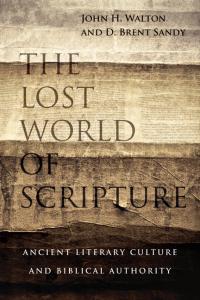 The next chapter of The Lost World of Scripture by John Walton and Brent Sandy summarizes their main points thus far. The Bible as we have it emerged out of an oral culture and reflects the values and expectations of that culture. God revealed himself to his people in that culture and the stories and events were passed along through generations (Old Testament) or decades (New Testament) before being written down. There are some exceptions. The letters of Paul were written to churches. Revelation and a few books of the Old Testament (perhaps Ezekiel?) were produced in written form. And there are some written sources used in producing the books of the Bible – the annals of the Kings of Judah and Israel for example (see 1 and 2 Kings).
The Bible we have shows many remnants of the oral culture in which it originated.
Variations are inevitable and don’t raise eyebrows. Nor do the undermine the veracity of the message. We fret the details – but the original audience didn’t.
Speeches represent the intent of the speaker, but are not expected to be literal transcriptions. “Ancient historians recognized that variations were unavoidable when drawing from oral sources, and without scripts of speeches they reconstructed what speakers likely said, though the style of the author shows through in the speeches.” (p. 185) Consider the speeches of Moses in the Pentateuch (Exodus to Deuteronomy). “Summarizing briefly, some of the sermons and other oral pronouncements of Moses were likely written during his lifetime and under his supervision, though others may have been produced by later generations following various stages of oral transmission.” (p. 193) And all of these, from whatever source (oral or written) were collected and translated into the Hebrew text.
Jesus and his followers were completely comfortable with the oral culture. “Authority did not begin in written text.” (p. 186) Spoken words and messages passed along by Jesus and his followers carried the authority of God’s message.
“Exact wording was rarely possible and usually unnecessary to represent truth reliably.” … “The variants that appear among the Gospels are witness to the flexibility of the transmission process. The essence was preserved, although precise wording and fixed details may not have been.” (p. 186)
Translation is interpretation – something that was taken for granted in the ancient oral culture. The Septuagint interprets the Hebrew text, sometimes introducing slightly different ideas. Occasionally details from a later time may appear in the new telling of a story – perhaps domesticated camels in Genesis and some place names etc. represent later variations – the oral text preserved meaning but not exact wording or detail. (John and Brent don’t bring up the issue of camels – but it is one that has been raised by commenters and readers here before.)
The Dead Sea Scrolls show signs of the acceptance of variants and even “insertions, deletions, rearrangement and paraphrasing.” John and Brent quote Bruce Waltke (How We Got the Hebrew Bible in The Bible at Qumran). “The presence of such a variety of text types at a single location … suggests that members of that community … do not seem to have been particularly troubled by discrepancies in biblical manuscripts.” (p. 190)
The use of the Old Testament in the New Testament also demonstrates a comfort level with variation and interpretation. Quotes are paraphrases, occasionally they are misattributed (Mk 1:2, Jn 10:34). Passages are adapted to make a point, or imperfectly recalled from memory – Paul, in particular, did this.
John and Brent conclude:
As noted above, if we fail to appreciate ancient communicative processes and do not make room for the uniqueness of oral culture, them we put our understanding of ancient texts in jeopardy. This applies in particular to the implications of orality for doctrines of Scripture. The inerrancy view affirms that Scripture is free from error in all respects. But with the evidence for frequency of variants and differences in detail noted throughout this book – either because of oral transmission or scribal alteration – one could argue that there are a variety of errors in the written texts of Scripture. But by what standard? If modern print culture provides the criteria, then yes, we would have to admit there are errors. But is that nor overlooking the distinctiveness of oral culture?
…
To say there are errors in the Bible is to read Scripture anachronistically. Conversely, those who say that there are not errors need to make clear that they are representing an ancient view of reliable representations of truth. Modern print culture simply must not be the standard by which the practices of ancient composition and transmission are judged. (p. 195-196)
And an important closer:
Common definitions of inerrancy do not fit scenarios understood in light of orality (though some responsible constructive theological accounts come close). Yet orality was the way God chose, which must mean it was the right way. Evidently we need to adjust our understanding of inerrancy to the evidence we find in Scripture. (p. 196, emphasis added)
Personally I find the term “inerrancy” of little value. Scripture is inspired by God and reliably reveals and transmits his Word to us. I read and study it for this message – not to separate truth from “error” or to squeeze it into the mold of our 20th/21st century expectation. We have to let Scripture itself be our guide as to appropriate modes and genres for preserving the message.
John and Brent emphasize the oral culture as distinct from our modern text based culture and the implications this has for the ways that truth is accurately conveyed. At times they seem to over emphasize orality – but the overall thesis is important as are the conclusions.
Aside from some outliers, Christians have always been comfortable with the spoken word and sermon as well as with translation and interpretation. Every translation is an interpretation and all we have is translations for much of Scripture. Every sermon and Scripture reading carries an element of performance. The message is reliably transmitted in these modes. The Bible retains ample evidence to its ancient and oral origins and transmission. We need to be comfortable with Scripture as we have it, not as we would have done it if we were in charge.
More to come in part 3 of the The Lost World of Scripture.
If you wish to contact me directly you may do so at rjs4mail[at]att.net
If interested you can subscribe to a full text feed of my posts at Musings on Science and Theology.
Previous Post

June 7, 2018
Justification By Faith In The Age of Authenticity
Next Post
June 8, 2018 Schisms In The Church
Browse Our Archives
Select a Category Acts of the Apostles Adam Advent Anabaptism Angels Anglican Apologetics Atonement Baptism BCP Prayers Bible Biblical Studies Birds Blogging Bloglossary Bonhoeffer Books Calvinism Christianity Church Church History Coffee Colossians Commentary Recs Conversion Creation Creeds Culture Death Ecclesiastes Economics Education Embracing Grace Emergent Emerging Movement Eschatology Essays Ethics Eucharist Evangelicalism Family Fasting Fathers Fellowship of Differents Footsteps Tour Fun and Whimsical Gospel Grace Happiness Heaven Hell Holy Spirit Irenaeus James Jesus Jesus Creed Job Justification Kingdom of God Law Lectures Lent Liberalism Love and Marriage Mabanteneni Manhood Mary Miracles Missio Alliance MissioLife Missional Missional Jesus Movies and Film New Perspective Northern Seminary OneLife Origins Project Orthodox Parables Pastor's Spouse Pastoring and Leading Pastoring and Preaching Patristics Paul Paul-John Tour Pharisees Pietism Political Theology Prayer and Formation Preaching Problems for Faith Psalm 119 Psalms Public Issues Purgatory Religions Resurrection Revelation Romans Rule of JCreed Science and Faith Sermon on the Mount Sports Ten Commandments Theology Third Way Top Ten Lists Translations Uncategorized Universalism University Ministry Way Out Weekly Meanderings Wisdom Women and Ministry Work Worship Writing & Blogging Youth Ministry
Select a Month July 2021 January 2020 December 2019 November 2019 October 2019 September 2019 August 2019 July 2019 June 2019 May 2019 April 2019 March 2019 February 2019 January 2019 December 2018 November 2018 October 2018 September 2018 August 2018 July 2018 June 2018 May 2018 April 2018 March 2018 February 2018 January 2018 December 2017 November 2017 October 2017 September 2017 August 2017 July 2017 June 2017 May 2017 April 2017 March 2017 February 2017 January 2017 December 2016 November 2016 October 2016 September 2016 August 2016 July 2016 June 2016 May 2016 April 2016 March 2016 February 2016 January 2016 December 2015 November 2015 October 2015 September 2015 August 2015 July 2015 June 2015 May 2015 April 2015 March 2015 February 2015 January 2015 December 2014 November 2014 October 2014 September 2014 August 2014 July 2014 June 2014 May 2014 April 2014 March 2014 February 2014 January 2014 December 2013 November 2013 October 2013 September 2013 August 2013 July 2013 June 2013 May 2013 April 2013 March 2013 February 2013 January 2013 December 2012 November 2012 October 2012 September 2012 August 2012 July 2012 June 2012 May 2012 April 2012 March 2012 February 2012 January 2012 December 2011 November 2011 October 2011 September 2011 August 2011 July 2011 June 2011 May 2011 April 2011 March 2011 February 2011 January 2011 December 2010 November 2010 October 2010 September 2010 August 2010 July 2010 June 2010 May 2010 April 2010 March 2010 February 2010 January 2010 December 2009 November 2009 October 2009 September 2009 August 2009 July 2009 June 2009 May 2009 April 2009 March 2009 February 2009 January 2009 December 2008 November 2008 October 2008 September 2008 August 2008 July 2008 June 2008 May 2008 April 2008 March 2008 February 2008 January 2008 December 2007 November 2007 October 2007 September 2007 August 2007 July 2007 June 2007 May 2007 April 2007 March 2007 February 2007 January 2007 December 2006 November 2006 October 2006 September 2006 August 2006 July 2006 June 2006 May 2006 April 2006 March 2006 February 2006 January 2006 December 2005 November 2005 October 2005 September 2005 August 2005 July 2005 June 2005 May 2005 April 2005 0000
Follow Us!
TAKE THE
Religious Wisdom Quiz
What does "Shalom" mean in Hebrew?
Select your answer to see how you score.
Joy Peace Love Blessing
Related posts from Jesus Creed


The Gospel of With Us and Through Us

Northern Seminary Announces: Nijay Gupta Joins Faculty

The Gundrys and Me: Ruth Tucker
TRENDING AT PATHEOS Evangelical

When you hear the word riches, what comes to mind? For most...

Don’t Miss the Parents: A Creative Christmas Meditation
As we enter the Advent Season, I see many people trying to...

Making Stones Into Bread: Choosing the “Right” Work
I was on my online arts ministry Zoom meeting with the International...

Ukraine’s exhausted Christians face fifth winter of war
By Julian Lukins The full-scale war in Ukraine is taking “a serious...

Russell Brand's Conviction is not anti-Christian Persecution
How do we shed the reputation that the Church is OK with...

Have you ever caught yourself saying, “I’ll do it tomorrow,” or “Now...
view all Evangelical blogs
Ad-Free & Subscriber Log-In Subscription Support
- About Us
- 2026 Calendar
- Videos
- Podcasts
- Library of World Religions
- Faith In Media Tracker
- Advertise With Us
- Write for Us
- Privacy Policy
- Terms of Service
- Do Not Sell My Data
- Contact Us
- Radiant Digital
- Manage Newsletter Subscriptions
- Unsubscribe From Notifications
- Sitemap
Copyright 2008-2026, Patheos, part of the Radiant Digital network of media brands. All rights reserved.
Subscription Support Ad-Free & Subscriber Log-In
Follow Patheos