
BuddhistCatholicContemplativeEvangelicalGeneral ChristianHinduJewishLatter-day SaintMuslimNew VisionsProgressive Christian
Beliefs
- Buddhist
- Catholic
- Contemplative
- Evangelical
- General Christian
- Hindu
- Jewish
- Latter-day Saint
- More Voices
- Muslim
- New Visions
- Pagan
- Progressive Christian
Topics
- Religion News
- Food and Religion
- Sports and Religion
- Religious Art
- Religious Music and Entertainment
- Religious Events
- History and Religion
- Style and Religion
- Politics and Religion
- Women in Religion
- Recreation Outdoors and Religion
- Business Finance and Religion
- Careers Workplace and Religion
- Education and Religion
- Family Parenting and Religion
- Health Fitness and Religion
- Home and Religion
- Relationships and Religion
- Technology and Religion
- Travel and Religion
Columnists
- Buddhist Columnists
- Business Finance and Religion Columnists
- Careers Workplace and Religion Columnists
- Catholic Columnists
- Contemplative Columnists
- Education and Religion Columnists
- Evangelists Columnists
- Family Parenting and Religion Columnists
- General Christian Columnists
- Health Fitness and Religion Columnists
- Hindu Columnists
- History and Religion Columnists
- Home and Religion Columnists
- Jewish Columnists
- More Voices Columnists
- Latter Day Columnists
- Muslim Columnists
- New Visions Columnists
- Nonreligious Columnists
- Pagan Columnists
- Politics and Religion Columnists
- Progressive Columnists
- Recreation Outdoors and Religion Columnists
- Relationships and Religion Columnists
- Religion News Columnists
- Religious Art Columnists
- Religious Events Columnists
- Religious Music and Entertainment Columnists
- Sports and Religion Columnists
- Style and Religion Columnists
- Technology and Religion Columnists
- Travel and Religion Columnists
- Women in Religion Columnists
Resource Library
- 2026 Calendar
- Library of World Religions
- The 100 Most Holy Places on Earth
- Patheos Answers
- Podcasts
- Videos
- Faith Leaders Database
- Anglican Episcopalian
- Bahai
- Baptist
- Buddhism
- Christianity
- Confucianism
- Eastern Orthodoxy
- Hinduism
- Holiness and Pentecostal
- ISKCON
- Islam
- Judaism
- Lutheran
- Methodist
- The Church of Jesus Christ of Latter-day Saints
- New Age
- Paganism
- Presbytarian and Reformed
- Protestantism
- Religion Behind the Scenes
- Roman Catholic
- Scientology
- Shia Islam
- Sikhism
- Sufism
- Sunni Islam
- Taoism
- Zen
- See all religions
Research Tools
 Ad-Free & Subscriber Log-In Subscription Support
Follow Patheos 

- Trending:
- Advent
- |
- Forgiveness
- |
- Thanksgiving
- |
- Election
- |
- Seasonal Holidays
- |
- Marriage
 Jesus Creed
- Home
- Evangelical
- Sin: Insights from Paul and James (RJS)
Sin: Insights from Paul and James (RJS)
Last updated on: February 27, 2018 at 5:06 am by RJS
Sin: Insights from Paul and James (RJS) 2018-02-26T17:49:28-06:00 RJS
Patheos Explore the world's faith through different perspectives on religion and spirituality! Patheos has the views of the prevalent religions and spiritualities of the world.
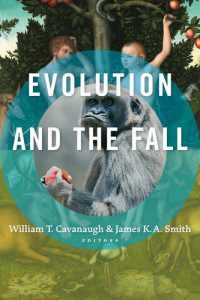 What claims are made in the New Testament when it comes to Adam and Original Sin?
Joel B. Green, Provost, Dean of the School of Theology, and Professor of New Testament Interpretation at Fuller Theological Seminary contributed a chapter to the recent book Evolution and the Fall addressing just this question. Green finds the primary significant passages in Paul (of course) and James. The latter is unusual and gives something of a different emphasis to his discussion than that found in the work of most other scholars.
Before digging into Paul and James, Green looks other Second Temple works, Life of Adam and Eve, 4 Ezra, 2 Baruch, and Biblical Antiquities. Although the sin of Adam and Eve plays no significant role in the Old Testament after Genesis 3, it had become a topic of speculation in the Jewish world. This provides a context for Paul and James. Green concludes: “Paul and James would have swum in the same theological pond as the Jewish authors … and their contributions can be read in dialog with perspectives like those of 4 Ezra or Biblical Antiquities.” (p. 106)
Green’s summary of the pond: Adam’s disobedience results in human mortality but each individual human remains responsible for his or her own sin. “In short, when sin’s origins are discussed, Jewish writers of the Second Temple period refer to human choice even as they speak of Adam’s (or Adam and Eve’s) influence. Sin is not compulsory, even if its ubiquity might suggest its inevitability.” (p. 105)
So what about Paul and James?
Paul understands sin as “more a power from which humans need to be liberated than individual wrongful deeds for which humans require forgiveness.” (p. 106) This is particularly clear in Romans 5-7.
Sin “entered the world” (Rom. 5:12), where it exercised power reminiscent of a master-slave or king-subject relationship. Humans are “controlled by sin” (Rom 6:6), the aim of sin is to “rule your bodies, to make you obey their cravings [epthymia]” (Rom. 6:12, my translation), people present “parts of their body to sin as weapons to do wrong” (Rom. 6:13), and people comport themselves as slaves to sin (Rom. 6:16). Whereas in the Life of Adam and Eve, cravings give rise to sin, for Paul the opposite is the case: sin produces all kinds of cravings. And whereas in the Second Temple literature we surveyed obedience to the law was the means for countering cravings and sin, for Paul the law is an instrument sin uses to cultivate those cravings (epthymia; Rom. 6:12; 7:7-8). The baptized were formerly enslaved to sin, but they are now liberated from its dominion (Rom. 6:17-18, 20, 22). (p. 107)
Green also argues that Paul universalizes the power of sin over all of humankind, but this is “because everyone follows Adam in sinning.”
Adam’s sin sets the pattern for human sin more broadly, to be sure. But for Paul sim itself is a power that cannot be overcome through obedience to God’s instruction, not because God’s instruction is defective but because human efforts are inadequate in the face of sin’s pull. Accordingly all humanity stands in need of the life available in Christ. (p. 110)
Everyone needs Christ, and this is God’s path to conquer the power of sin in the world. This is the revolution in Paul’s portrayal of the good news of Jesus Christ.
Sin from within. James, according to Green, has a somewhat more personal take and also a view that is closer to the Second Temple literature. The cravings of human desire gives birth to sin. God is not to blame for human sin because sin originates from within. “This God does not send temptations (James 1:13-15), but good things. This God does not waver between giving good things and bad things, for his character is consistently oriented toward providing good things.” (p. 112)
Left to their own devices, humans for James are subject to their own cravings; their hearts lean toward disobedience. He does not tell us how this came to be, apart from intimating that this is the way of earthly wisdom. … Reflecting on James, Wesley rightly concluded, “We are therefore to look for the cause of every sin, in, not out of , ourselves.” Or as James puts it, “Everyone is tempted by their own cravings; they are lured away and enticed by them.” (James 1:14). (p. 114)
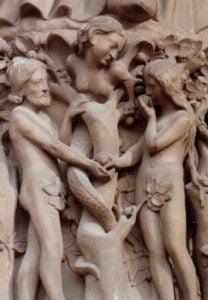 Original Sin. Paul and James provide a context from which the “traditional view” of the Fall can be developed, but the doctrine is not clearly taught within Scripture. The emphasis in Paul is on sin as a power and master, the emphasis in James on sin as human cravings rather than coming from God. Because the doctrine is only developed from Scripture rather than clearly defined in the pages of Scripture there is room for us to reconsider aspects of this doctrine.
Green concludes:
Accordingly, on the issue of original sin, scripture provides plenty of room to take seriously the primary questions raised by evolutionary biology. The qualified view of original sin to which scripture bears witness does not require belief in a first human couple, Adam and Eve, or in traditional notions of a historical “fall,” or in the traditional view of sin’s genetic transmission. The doctrine of original sin – this is not one of those areas where one might urge a forced choice: scripture versus science. (p. 116)
Summary comments. Green’s insights into both Paul and James are well worth reading in their entirety. His discussion of Paul’s focus on sin as a power sent me back to the text once again, considering the central purpose of Paul’s argument. Paul’s encounter with the risen Christ has taken him out of his first century “pond” and given him new insights from which we benefit. But the focus is no on Adam, the focus is on Christ and his victory over sin. We are no longer enslaved. James, on the other hand reflected on sin from the first century pond in which he swam, but he also has much to offer us.
Is sin an external power or an internal craving?
What do you see as the focus of Paul and James and their views of sin?
If you wish to contact me directly you may do so at rjs4mail[at]att.net.
If interested you can subscribe to a full text feed of my posts at Musings on Science and Theology.
Previous Post

February 27, 2018
Progressive Christianity: Nine Marks
Next Post
February 28, 2018 Mission Or Mission?
Browse Our Archives
Select a Category Acts of the Apostles Adam Advent Anabaptism Angels Anglican Apologetics Atonement Baptism BCP Prayers Bible Biblical Studies Birds Blogging Bloglossary Bonhoeffer Books Calvinism Christianity Church Church History Coffee Colossians Commentary Recs Conversion Creation Creeds Culture Death Ecclesiastes Economics Education Embracing Grace Emergent Emerging Movement Eschatology Essays Ethics Eucharist Evangelicalism Family Fasting Fathers Fellowship of Differents Footsteps Tour Fun and Whimsical Gospel Grace Happiness Heaven Hell Holy Spirit Irenaeus James Jesus Jesus Creed Job Justification Kingdom of God Law Lectures Lent Liberalism Love and Marriage Mabanteneni Manhood Mary Miracles Missio Alliance MissioLife Missional Missional Jesus Movies and Film New Perspective Northern Seminary OneLife Origins Project Orthodox Parables Pastor's Spouse Pastoring and Leading Pastoring and Preaching Patristics Paul Paul-John Tour Pharisees Pietism Political Theology Prayer and Formation Preaching Problems for Faith Psalm 119 Psalms Public Issues Purgatory Religions Resurrection Revelation Romans Rule of JCreed Science and Faith Sermon on the Mount Sports Ten Commandments Theology Third Way Top Ten Lists Translations Uncategorized Universalism University Ministry Way Out Weekly Meanderings Wisdom Women and Ministry Work Worship Writing & Blogging Youth Ministry
Select a Month July 2021 January 2020 December 2019 November 2019 October 2019 September 2019 August 2019 July 2019 June 2019 May 2019 April 2019 March 2019 February 2019 January 2019 December 2018 November 2018 October 2018 September 2018 August 2018 July 2018 June 2018 May 2018 April 2018 March 2018 February 2018 January 2018 December 2017 November 2017 October 2017 September 2017 August 2017 July 2017 June 2017 May 2017 April 2017 March 2017 February 2017 January 2017 December 2016 November 2016 October 2016 September 2016 August 2016 July 2016 June 2016 May 2016 April 2016 March 2016 February 2016 January 2016 December 2015 November 2015 October 2015 September 2015 August 2015 July 2015 June 2015 May 2015 April 2015 March 2015 February 2015 January 2015 December 2014 November 2014 October 2014 September 2014 August 2014 July 2014 June 2014 May 2014 April 2014 March 2014 February 2014 January 2014 December 2013 November 2013 October 2013 September 2013 August 2013 July 2013 June 2013 May 2013 April 2013 March 2013 February 2013 January 2013 December 2012 November 2012 October 2012 September 2012 August 2012 July 2012 June 2012 May 2012 April 2012 March 2012 February 2012 January 2012 December 2011 November 2011 October 2011 September 2011 August 2011 July 2011 June 2011 May 2011 April 2011 March 2011 February 2011 January 2011 December 2010 November 2010 October 2010 September 2010 August 2010 July 2010 June 2010 May 2010 April 2010 March 2010 February 2010 January 2010 December 2009 November 2009 October 2009 September 2009 August 2009 July 2009 June 2009 May 2009 April 2009 March 2009 February 2009 January 2009 December 2008 November 2008 October 2008 September 2008 August 2008 July 2008 June 2008 May 2008 April 2008 March 2008 February 2008 January 2008 December 2007 November 2007 October 2007 September 2007 August 2007 July 2007 June 2007 May 2007 April 2007 March 2007 February 2007 January 2007 December 2006 November 2006 October 2006 September 2006 August 2006 July 2006 June 2006 May 2006 April 2006 March 2006 February 2006 January 2006 December 2005 November 2005 October 2005 September 2005 August 2005 July 2005 June 2005 May 2005 April 2005 0000
Follow Us!
TAKE THE
Religious Wisdom Quiz
What happened to the golden calf?
Select your answer to see how you score.
Burned, ground to powder Taken to Canaan Set up for worship Hidden
Related posts from Jesus Creed


The Gospel of With Us and Through Us

Northern Seminary Announces: Nijay Gupta Joins Faculty

The Gundrys and Me: Ruth Tucker
TRENDING AT PATHEOS Evangelical

Making Stones Into Bread: Choosing the “Right” Work
I was on my online arts ministry Zoom meeting with the International...

Ukraine’s exhausted Christians face fifth winter of war
By Julian Lukins The full-scale war in Ukraine is taking “a serious...

Russell Brand's Conviction is not anti-Christian Persecution
How do we shed the reputation that the Church is OK with...

Have you ever caught yourself saying, “I’ll do it tomorrow,” or “Now...

Write Your Story: A Great Way to Find...
A few month’s back, my son was scrolling around Facebook and saw...

Throughout history, people have pursued pleasure, possessions, relationships, and success in an...
view all Evangelical blogs
Ad-Free & Subscriber Log-In Subscription Support
- About Us
- 2026 Calendar
- Videos
- Podcasts
- Library of World Religions
- Faith In Media Tracker
- Advertise With Us
- Write for Us
- Privacy Policy
- Terms of Service
- Do Not Sell My Data
- Contact Us
- Radiant Digital
- Manage Newsletter Subscriptions
- Unsubscribe From Notifications
- Sitemap
Copyright 2008-2026, Patheos, part of the Radiant Digital network of media brands. All rights reserved.
Subscription Support Ad-Free & Subscriber Log-In
Follow Patheos