
BuddhistCatholicContemplativeEvangelicalGeneral ChristianHinduJewishLatter-day SaintMuslimNew VisionsProgressive Christian
Beliefs
- Buddhist
- Catholic
- Contemplative
- Evangelical
- General Christian
- Hindu
- Jewish
- Latter-day Saint
- More Voices
- Muslim
- New Visions
- Pagan
- Progressive Christian
Topics
- Religion News
- Food and Religion
- Sports and Religion
- Religious Art
- Religious Music and Entertainment
- Religious Events
- History and Religion
- Style and Religion
- Politics and Religion
- Women in Religion
- Recreation Outdoors and Religion
- Business Finance and Religion
- Careers Workplace and Religion
- Education and Religion
- Family Parenting and Religion
- Health Fitness and Religion
- Home and Religion
- Relationships and Religion
- Technology and Religion
- Travel and Religion
Columnists
- Buddhist Columnists
- Business Finance and Religion Columnists
- Careers Workplace and Religion Columnists
- Catholic Columnists
- Contemplative Columnists
- Education and Religion Columnists
- Evangelists Columnists
- Family Parenting and Religion Columnists
- General Christian Columnists
- Health Fitness and Religion Columnists
- Hindu Columnists
- History and Religion Columnists
- Home and Religion Columnists
- Jewish Columnists
- More Voices Columnists
- Latter Day Columnists
- Muslim Columnists
- New Visions Columnists
- Nonreligious Columnists
- Pagan Columnists
- Politics and Religion Columnists
- Progressive Columnists
- Recreation Outdoors and Religion Columnists
- Relationships and Religion Columnists
- Religion News Columnists
- Religious Art Columnists
- Religious Events Columnists
- Religious Music and Entertainment Columnists
- Sports and Religion Columnists
- Style and Religion Columnists
- Technology and Religion Columnists
- Travel and Religion Columnists
- Women in Religion Columnists
Resource Library
- 2026 Calendar
- Library of World Religions
- The 100 Most Holy Places on Earth
- Patheos Answers
- Podcasts
- Videos
- Faith Leaders Database
- Anglican Episcopalian
- Bahai
- Baptist
- Buddhism
- Christianity
- Confucianism
- Eastern Orthodoxy
- Hinduism
- Holiness and Pentecostal
- ISKCON
- Islam
- Judaism
- Lutheran
- Methodist
- The Church of Jesus Christ of Latter-day Saints
- New Age
- Paganism
- Presbytarian and Reformed
- Protestantism
- Religion Behind the Scenes
- Roman Catholic
- Scientology
- Shia Islam
- Sikhism
- Sufism
- Sunni Islam
- Taoism
- Zen
- See all religions
Research Tools
 Ad-Free & Subscriber Log-In Subscription Support
Follow Patheos 

- Trending:
- Advent
- |
- Forgiveness
- |
- Thanksgiving
- |
- Election
- |
- Seasonal Holidays
- |
- Marriage
 Jesus Creed
- Home
- Evangelical
- Before Nature, Before Books (RJS)
Before Nature, Before Books (RJS)
Last updated on: February 20, 2018 at 4:37 am by RJS
Before Nature, Before Books (RJS) 2018-02-18T17:18:12-06:00 RJS
Patheos Explore the world's faith through different perspectives on religion and spirituality! Patheos has the views of the prevalent religions and spiritualities of the world.
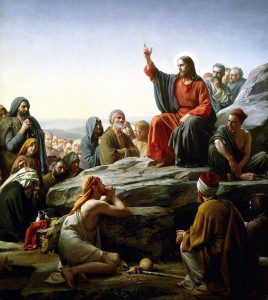 Jesus did not speak the ‘red letters’ in your Bible. He did not speak English … or even Greek. What we have is translation, interpretation, and paraphrase.The Gospels convey the true story of Jesus, but it does so through the medium of written communication that made sense to the original audience and continues to carry the message to us today. The evangelists pulled together incidents from the life, death, and resurrection of Jesus, putting them in written form, in books, but they pulled them from an oral culture where variants (e.g., the fig tree was found withered instantly (Mt 21:19) or on the next day (Mk 11:14,20); the number of women at the tomb, 1 (Jn), 2 (Mt) , 3 (Mk), more (Lk)); and the like) were not considered troublesome.
The same is true of the Old Testament, but the distance from our culture and context even greater than it is in the New Testament. The Old Testament describes an era of human history that is both before nature and before books.
How can we dig deeper?
The essence of the message contained in the Old Testament can be understood by the average reader of a good translation. However, much of the nuance and detail is lost when this is as far as we go. The Old Testament is not a text of Western modernity, or even of medieval Europe or ancient Greece. It is an ancient Near Eastern text originally composed or assembled in a specific time and place. It carries with it the nuances of that time and place. John Walton, in his book coauthored with D. Brent Sandy, The Lost World of Scripture, emphasizes that the ancient Near East was a hearing dominant culture, not a text dominant culture. Texts served a different purpose in that world than they do in ours. One consequence of this is that authority rested with individuals and offices rather than with books. The Old Testament is not a series of books by authors, but for the most part a collection of documents assembled to convey a particular message. The history of Israel is integral to this message but the focus is on God.
How did Israel come to be the people of God, the chosen people?
Why or how did Israel rebel and wind up in exile?
What does God ask of his people?
What is Israel’s hope for the future? What shape will this take?
The answers to these questions, and the way they developed in the intertestamental period (second Temple Judaism) provides a foundation for the Christian message. As Paul writes in his letter to the Galatians: “But when the fullness of time had come, God sent his Son, … born under the law … so that we might receive adoption as children.” (4:4-5) Everything that happened was “according to the scriptures.” (e.g. 1 Cor. 15) At the right time, in the right context, fulfilling God’s purposes in the Old Testament. The scriptures “are able to make you wise for salvation through faith in Christ Jesus.” (2 Tim. 3:15)
 The Hebrew scriptures can be trusted to lead us to salvation. They are God-breathed for this purpose. This is an important constraint, but it doesn’t answer most of our questions on inspiration and interpretation. Because of the way the Old Testament took shape and the culture in which it took shape we are probably going off track if we focus on inspired authorship of specific books. Deuteronomy, for example, contains the words of Moses speaking as God’s prophet edited into a narrative, but the book was not written by Moses in its final form.
What about Genesis? As I understand it, the documentary hypothesis with four easily identified and separable sources has fallen out of favor, but the the book of Genesis as composed from different sources or documents is well supported by the evidence. Narratives, most likely orally current in the population, have been woven together to tell the story of the descent of humankind from its original calling and the election of Abraham, Isaac and Jacob as the family through whom God would (eventually) put things right. It ends with the people thriving in Egypt. As Christians we believe that the assembly of this text into the form we have it was accomplished under the influence of the Holy Spirit working in the congregation of God’s people. Any role that Moses had in the assembly of Genesis (Walton seems to think he had a role, I’m skeptical) was that of a ‘tradent‘ i.e. “a person who hands down or transmits (especially oral) tradition.” The text never mentions Moses and he is not the authority behind the text or the stories. It is also clear that at least some editorial changes were made far later than the time of Moses.
 The story of Genesis begins by making it clear that the YHWH, the one and only creator God, formed the earth for his good purpose. However, the narrative telling this story was composed, told, and written in a culture that did not separate the natural and the supernatural in the fashion that we do today. Francesca Rochberg in Before Nature makes this point with respect to ancient Near Eastern cuneiform culture in general. The same can be said for ancient Egyptian culture. The identification of nature as separate from the action of intelligent agents (human or divine) was unknown in the ancient cultures. This means that Genesis is not a science book and the original audience did not think about science – although they most certainly did think about the world in a fashion that included empirical observations of the heavens and the earth. God could have dictated mysteries incomprehensible to the ancient Israelites, but there is no evidence that he did so. The narrative appears consistent with the general ancient Near Eastern understanding of the world, … except where it relates to the purpose of God in creation, the absence of other deities, and the vocational calling of humankind. As Walton puts it:
The Bible gives us a theological perspective about the material world (God has created it, he sustains it, it is contingent on him, he is sovereign over it, etc.) but it does not give us any naturalistic insight (which is precisely what science does do). Any information about the material world in the Bible is either a result of the most basic observation or represents a typical way of thinking in the ancient world. (p. 50)
Genesis uses the words, sentences, rhetorical structures, genres, and “common knowledge” of the audience to achieve an intent e.g. bless, promise, instruct, assert. Inerrancy and the authority of the text is found in the intent, not in the incidental features of the ancient Near Eastern context. “That is, even though the people in Israel believed there were waters above the earth held back by a solid sky, or that cognitive processes took place in the heart or kidneys, [the text] is not affirming those beliefs as revealed truth.” (p. 45) Walton likes the example of thinking with our heart, kidneys, or entrails and uses it often. This is the literal interpretation of the words in the Old Testament. We, rightly, do not reject the importance of the brain in cognition on the basis of Scripture. The same practice should be followed true for a range of observations in Genesis. Because the intended message of Genesis had nothing to do with science, i.e. the material workings of the so-called ‘natural’ world, it makes no scientific claims. The common understandings of the culture are used to convey and record important (sometimes new) ideas about God and his mission.
We will dig into more ideas presented in The Lost World of Scripture in the coming posts.
What is the intended communication of Genesis 1-3?
If you wish to contact me directly you may do so at rjs4mail[at]att.net.
If interested you can subscribe to a full text feed of my posts at Musings on Science and Theology.
Previous Post

February 20, 2018
Reading The Bible, Interpreting The Bible
Next Post
February 20, 2018 What's the Just Punishment For Louisville?
Browse Our Archives
Select a Category Acts of the Apostles Adam Advent Anabaptism Angels Anglican Apologetics Atonement Baptism BCP Prayers Bible Biblical Studies Birds Blogging Bloglossary Bonhoeffer Books Calvinism Christianity Church Church History Coffee Colossians Commentary Recs Conversion Creation Creeds Culture Death Ecclesiastes Economics Education Embracing Grace Emergent Emerging Movement Eschatology Essays Ethics Eucharist Evangelicalism Family Fasting Fathers Fellowship of Differents Footsteps Tour Fun and Whimsical Gospel Grace Happiness Heaven Hell Holy Spirit Irenaeus James Jesus Jesus Creed Job Justification Kingdom of God Law Lectures Lent Liberalism Love and Marriage Mabanteneni Manhood Mary Miracles Missio Alliance MissioLife Missional Missional Jesus Movies and Film New Perspective Northern Seminary OneLife Origins Project Orthodox Parables Pastor's Spouse Pastoring and Leading Pastoring and Preaching Patristics Paul Paul-John Tour Pharisees Pietism Political Theology Prayer and Formation Preaching Problems for Faith Psalm 119 Psalms Public Issues Purgatory Religions Resurrection Revelation Romans Rule of JCreed Science and Faith Sermon on the Mount Sports Ten Commandments Theology Third Way Top Ten Lists Translations Uncategorized Universalism University Ministry Way Out Weekly Meanderings Wisdom Women and Ministry Work Worship Writing & Blogging Youth Ministry
Select a Month July 2021 January 2020 December 2019 November 2019 October 2019 September 2019 August 2019 July 2019 June 2019 May 2019 April 2019 March 2019 February 2019 January 2019 December 2018 November 2018 October 2018 September 2018 August 2018 July 2018 June 2018 May 2018 April 2018 March 2018 February 2018 January 2018 December 2017 November 2017 October 2017 September 2017 August 2017 July 2017 June 2017 May 2017 April 2017 March 2017 February 2017 January 2017 December 2016 November 2016 October 2016 September 2016 August 2016 July 2016 June 2016 May 2016 April 2016 March 2016 February 2016 January 2016 December 2015 November 2015 October 2015 September 2015 August 2015 July 2015 June 2015 May 2015 April 2015 March 2015 February 2015 January 2015 December 2014 November 2014 October 2014 September 2014 August 2014 July 2014 June 2014 May 2014 April 2014 March 2014 February 2014 January 2014 December 2013 November 2013 October 2013 September 2013 August 2013 July 2013 June 2013 May 2013 April 2013 March 2013 February 2013 January 2013 December 2012 November 2012 October 2012 September 2012 August 2012 July 2012 June 2012 May 2012 April 2012 March 2012 February 2012 January 2012 December 2011 November 2011 October 2011 September 2011 August 2011 July 2011 June 2011 May 2011 April 2011 March 2011 February 2011 January 2011 December 2010 November 2010 October 2010 September 2010 August 2010 July 2010 June 2010 May 2010 April 2010 March 2010 February 2010 January 2010 December 2009 November 2009 October 2009 September 2009 August 2009 July 2009 June 2009 May 2009 April 2009 March 2009 February 2009 January 2009 December 2008 November 2008 October 2008 September 2008 August 2008 July 2008 June 2008 May 2008 April 2008 March 2008 February 2008 January 2008 December 2007 November 2007 October 2007 September 2007 August 2007 July 2007 June 2007 May 2007 April 2007 March 2007 February 2007 January 2007 December 2006 November 2006 October 2006 September 2006 August 2006 July 2006 June 2006 May 2006 April 2006 March 2006 February 2006 January 2006 December 2005 November 2005 October 2005 September 2005 August 2005 July 2005 June 2005 May 2005 April 2005 0000
Follow Us!
TAKE THE
Religious Wisdom Quiz
What does "Beelzebub" mean?
Select your answer to see how you score.
Lord of the Flies Evil One Accuser Prince of Darkness
Related posts from Jesus Creed


The Gospel of With Us and Through Us

Northern Seminary Announces: Nijay Gupta Joins Faculty

The Gundrys and Me: Ruth Tucker
TRENDING AT PATHEOS Evangelical

Don’t Miss the Parents: A Creative Christmas Meditation
As we enter the Advent Season, I see a lot of people...

Making Stones Into Bread: Choosing the “Right” Work
I was on my online arts ministry Zoom meeting with the International...

Ukraine’s exhausted Christians face fifth winter of war
By Julian Lukins The full-scale war in Ukraine is taking “a serious...

Russell Brand's Conviction is not anti-Christian Persecution
How do we shed the reputation that the Church is OK with...

Have you ever caught yourself saying, “I’ll do it tomorrow,” or “Now...

Throughout history, people have pursued pleasure, possessions, relationships, and success in an...
view all Evangelical blogs
Ad-Free & Subscriber Log-In Subscription Support
- About Us
- 2026 Calendar
- Videos
- Podcasts
- Library of World Religions
- Faith In Media Tracker
- Advertise With Us
- Write for Us
- Privacy Policy
- Terms of Service
- Do Not Sell My Data
- Contact Us
- Radiant Digital
- Manage Newsletter Subscriptions
- Unsubscribe From Notifications
- Sitemap
Copyright 2008-2026, Patheos, part of the Radiant Digital network of media brands. All rights reserved.
Subscription Support Ad-Free & Subscriber Log-In
Follow Patheos