
BuddhistCatholicContemplativeEvangelicalGeneral ChristianHinduJewishLatter-day SaintMuslimNew VisionsProgressive Christian
Beliefs
- Buddhist
- Catholic
- Contemplative
- Evangelical
- General Christian
- Hindu
- Jewish
- Latter-day Saint
- More Voices
- Muslim
- New Visions
- Pagan
- Progressive Christian
Topics
- Religion News
- Food and Religion
- Sports and Religion
- Religious Art
- Religious Music and Entertainment
- Religious Events
- History and Religion
- Style and Religion
- Politics and Religion
- Women in Religion
- Recreation Outdoors and Religion
- Business Finance and Religion
- Careers Workplace and Religion
- Education and Religion
- Family Parenting and Religion
- Health Fitness and Religion
- Home and Religion
- Relationships and Religion
- Technology and Religion
- Travel and Religion
Columnists
- Buddhist Columnists
- Business Finance and Religion Columnists
- Careers Workplace and Religion Columnists
- Catholic Columnists
- Contemplative Columnists
- Education and Religion Columnists
- Evangelists Columnists
- Family Parenting and Religion Columnists
- General Christian Columnists
- Health Fitness and Religion Columnists
- Hindu Columnists
- History and Religion Columnists
- Home and Religion Columnists
- Jewish Columnists
- More Voices Columnists
- Latter Day Columnists
- Muslim Columnists
- New Visions Columnists
- Nonreligious Columnists
- Pagan Columnists
- Politics and Religion Columnists
- Progressive Columnists
- Recreation Outdoors and Religion Columnists
- Relationships and Religion Columnists
- Religion News Columnists
- Religious Art Columnists
- Religious Events Columnists
- Religious Music and Entertainment Columnists
- Sports and Religion Columnists
- Style and Religion Columnists
- Technology and Religion Columnists
- Travel and Religion Columnists
- Women in Religion Columnists
Resource Library
- 2026 Calendar
- Library of World Religions
- The 100 Most Holy Places on Earth
- Patheos Answers
- Podcasts
- Videos
- Faith Leaders Database
- Anglican Episcopalian
- Bahai
- Baptist
- Buddhism
- Christianity
- Confucianism
- Eastern Orthodoxy
- Hinduism
- Holiness and Pentecostal
- ISKCON
- Islam
- Judaism
- Lutheran
- Methodist
- The Church of Jesus Christ of Latter-day Saints
- New Age
- Paganism
- Presbytarian and Reformed
- Protestantism
- Religion Behind the Scenes
- Roman Catholic
- Scientology
- Shia Islam
- Sikhism
- Sufism
- Sunni Islam
- Taoism
- Zen
- See all religions
Research Tools
 Ad-Free & Subscriber Log-In Subscription Support
Ad-Free & Subscriber Log-In Subscription Support
Follow Patheos 

- Trending:
- Forgiveness
- |
- Marriage
- |
- Consciousness
- |
- Death Penalty
- |
- Election
- |
- Halloween
 Jesus Creed
- Home
- Evangelical
- Instead Of Substitution
Instead Of Substitution
Last updated on: January 24, 2018 at 6:49 am by Scot McKnight
Instead Of Substitution 2018-01-24T06:49:16-06:00 Scot McKnight
Patheos Explore the world's faith through different perspectives on religion and spirituality! Patheos has the views of the prevalent religions and spiritualities of the world.
Substitutionary atonement, however it is nuanced with terms like satisfaction, propitiation, penal substitution, et al., is unpopular today. Instead of substitution, scholars have proposed three big substitutionary explanations (sorry for the punning).
 Simon Gathercole examines these alternatives in Defending Substitution: An Essay on Atonement in Paul.
In Germany, Stellvertretung in the sense of “place taking.” Gathercole focuses on two scholars, Hartmut Gese and Otfried Hofius. Here are the main lines of thinking of Gese in his study of OT atonement/sacrifice/Day of Atonement:
[The] people as a whole are represented by the priest;
the priest establishes a connection with the animal by laying hands on it;
the animal therefore carries the identity of the priest (and so of the people as a whole);
the sacrifice of the animal enacts the human forfeiting of life;
the life of the animal (and therefore of priest and people) is carried in the blood;
the blood is sprinkled in the Holy of Holies;
the blood thereby comes into contact with God;
ergo, since the blood of the animal comes into contact with God, so do the priest and the people, whose identity is carried by the animal (33).
This is not substitution but inclusive place-taking. The priest identifies with the animal by placing hands on it and the animal takes the priest with it into death, while the blood takes the priest/people into the presence of God. Hofius focuses on the whole person and sin being together so that sin cannot be removed from the person (Kantian idea). Again, his emphasis is on inclusive place-taking.
Gathercole finds four problems: (1) absence of laying on of hands in Lev 16; (2) the scapegoat is substitutionary, as is clear in Lev 16:21-22; (3) too much Kant; (4) sins in the plural is not dealt with.
In England, Morna Hooker’s “interchange” (not “exchange”) theory.
In brief, in this conception of the atonement, it is not that Jesus swaps places with his people-in this death on the cross. Rather, he goes to the place where they are and takes them from there to salvation (38-39).
In short, “Christ identified with the human condition in order that we might be identified with his (39).
Hooker’s theory is formed against exchange and substitution and here are her major elements:
The problem of the human condition is sin and death—that is, the sinful condition of Adamic humanity is the position from which people need to be rescued.
Christ then enters into this condition.
Christ thereby unites himself to us, but humans also must identify with him.
Having been united with him in his death, we pass out of death and into resurrection life with him (receiving the declaration “not guilty” as he did).
We now continue to live with him, and in him we are formed increasingly into his likeness (39-40).
Again, Gathercole’s appreciations are met with some disagreements: (1) he does not agree with her that Paul actually criticizes substitution; (2) he is not convinced this theory appreciates the achievements of the cross enough; (3) what about individual sins?
In the USA, the apocalyptic deliverance model. [SMcK: this approach offers an alternative narrative/story to the whole mission of God in this world.]
This is in conscious and direct contrast to forensic and substitutionary models and its Two Ways: either obey the Law and find salvation or disobey it and find damnation. Here is J. Louis Martyn:
Anti-God powers have managed to commence their own rule over the world, leading human beings into idolatry and thus into slavery, producing a wrong situation that was not intended by God and that will not be long tolerated by him. For in his own time, God will inaugurate a victorious and liberating apocalyptic war against these evil powers, delivering his elect from their grasp and thus making right that which has gone wrong because of the powers’ malignant machinations. This kind of apocalyptic eschatology is fundamental to Paul’s letters.
[In brief, from Martyn:] the human plight consists fundamentally of enslavement to supra-human powers; and God’s redemptive act is his deed of liberation (44).
Very much at work in the apocalyptic model, and Gathercole mentions Martyn, de Boer, Gaventa, and D. Campbell, is upper case Sin and Law and less time for sin as sins.
In contrast to the drama with three actors [God, humans, Christ], one of which is “Christ as the substitutionary sacrifice,” there are four: the introduction of the cosmic power of Sin or the enslaving power of the Law fundamentally changes the landscape and the role of Christ, who (instead?) “comes to embody the enslaving curse” (45).
Gathercole responds: (1) he thinks it works better for Galatians and not for Romans, esp for 1-4 and it does not work for 1 Thess; (2) the plight is reduced too much to victim of cosmic powers and there is an absence of guilt (Rom 1-3); (3) How does this model explain how it works?: (4) what about sins?
Gathercole: “The problem with such models is that, again, if they are seen as dominant, they neglect a crucial factor in Paul’s conception of the atonement, that is, that Paul sees Christ’s death as dealing with sins plural. Sins—individual infractions of the divine will—are frequently mentioned in Paul, and yet one finds them frequently marginalized in scholarship” (48).
The contention that Paul likes Sin and not sins is wrong, and Gathercole compellingly proves this.
The prejudice, therefore, that Paul is not interested in sins (plural) or acts of transgression, however expressed, is a mistaken one. As a result, to explicate the atonement overridingly in terms of victory over Sin as a power is one-sided. Paul frequently refers to the human plight in terms of sins, transgressions, and trespasses, and so it is no surprise to see reference to Christ’s death as dealing with these—even summarizing his gospel this way (50).
Another theory is that Sin is Paul and “sins” pre-Pauline tradition in Paul’s letters. But proving what is pre-Pauline (apocalyptic theory often takes Gal 1:4 that way) is more than difficult and rarely compelling. And, so what if it is pre-Pauline: if Paul picks it up it becomes his, too. Eg., 1 Cor 15:3-8.
Representation and apocalyptic theories often focus on Sin and downplay sins.
Previous Post

January 23, 2018
John Piper And Women Seminary Professors
Next Post
January 24, 2018 Free People Free People
Browse Our Archives
Select a Category Acts of the Apostles Adam Advent Anabaptism Angels Anglican Apologetics Atonement Baptism BCP Prayers Bible Biblical Studies Birds Blogging Bloglossary Bonhoeffer Books Calvinism Christianity Church Church History Coffee Colossians Commentary Recs Conversion Creation Creeds Culture Death Ecclesiastes Economics Education Embracing Grace Emergent Emerging Movement Eschatology Essays Ethics Eucharist Evangelicalism Family Fasting Fathers Fellowship of Differents Footsteps Tour Fun and Whimsical Gospel Grace Happiness Heaven Hell Holy Spirit Irenaeus James Jesus Jesus Creed Job Justification Kingdom of God Law Lectures Lent Liberalism Love and Marriage Mabanteneni Manhood Mary Miracles Missio Alliance MissioLife Missional Missional Jesus Movies and Film New Perspective Northern Seminary OneLife Origins Project Orthodox Parables Pastor's Spouse Pastoring and Leading Pastoring and Preaching Patristics Paul Paul-John Tour Pharisees Pietism Political Theology Prayer and Formation Preaching Problems for Faith Psalm 119 Psalms Public Issues Purgatory Religions Resurrection Revelation Romans Rule of JCreed Science and Faith Sermon on the Mount Sports Ten Commandments Theology Third Way Top Ten Lists Translations Uncategorized Universalism University Ministry Way Out Weekly Meanderings Wisdom Women and Ministry Work Worship Writing & Blogging Youth Ministry
Select a Month July 2021 January 2020 December 2019 November 2019 October 2019 September 2019 August 2019 July 2019 June 2019 May 2019 April 2019 March 2019 February 2019 January 2019 December 2018 November 2018 October 2018 September 2018 August 2018 July 2018 June 2018 May 2018 April 2018 March 2018 February 2018 January 2018 December 2017 November 2017 October 2017 September 2017 August 2017 July 2017 June 2017 May 2017 April 2017 March 2017 February 2017 January 2017 December 2016 November 2016 October 2016 September 2016 August 2016 July 2016 June 2016 May 2016 April 2016 March 2016 February 2016 January 2016 December 2015 November 2015 October 2015 September 2015 August 2015 July 2015 June 2015 May 2015 April 2015 March 2015 February 2015 January 2015 December 2014 November 2014 October 2014 September 2014 August 2014 July 2014 June 2014 May 2014 April 2014 March 2014 February 2014 January 2014 December 2013 November 2013 October 2013 September 2013 August 2013 July 2013 June 2013 May 2013 April 2013 March 2013 February 2013 January 2013 December 2012 November 2012 October 2012 September 2012 August 2012 July 2012 June 2012 May 2012 April 2012 March 2012 February 2012 January 2012 December 2011 November 2011 October 2011 September 2011 August 2011 July 2011 June 2011 May 2011 April 2011 March 2011 February 2011 January 2011 December 2010 November 2010 October 2010 September 2010 August 2010 July 2010 June 2010 May 2010 April 2010 March 2010 February 2010 January 2010 December 2009 November 2009 October 2009 September 2009 August 2009 July 2009 June 2009 May 2009 April 2009 March 2009 February 2009 January 2009 December 2008 November 2008 October 2008 September 2008 August 2008 July 2008 June 2008 May 2008 April 2008 March 2008 February 2008 January 2008 December 2007 November 2007 October 2007 September 2007 August 2007 July 2007 June 2007 May 2007 April 2007 March 2007 February 2007 January 2007 December 2006 November 2006 October 2006 September 2006 August 2006 July 2006 June 2006 May 2006 April 2006 March 2006 February 2006 January 2006 December 2005 November 2005 October 2005 September 2005 August 2005 July 2005 June 2005 May 2005 April 2005 0000
Follow Us!
TAKE THE
Religious Wisdom Quiz
What does "Golgotha" literally mean?
Select your answer to see how you score.
Place of death Suffering ground Skull place Crucifixion hill
Related posts from Jesus Creed
New Birth Transcending Atonement Theories
The Biggest Problem For Atonement Theories?
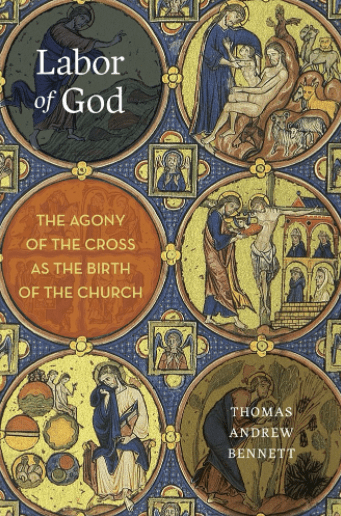
"God In Labor" in Christian Theology
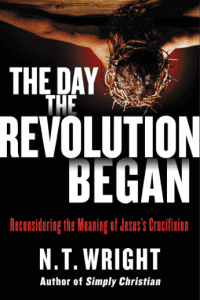
Passovering Your Atonement Theory
TRENDING AT PATHEOS Evangelical

How the author of the world's best hymn...
I've been working with John Newton for a while now. This makes...

Long before this Lectio Divina, Psalm 130 - the song - started...

What About the Trees? Another Living Parable
After I finished writing the last article about falling leaves as a...

Why Classical Education Is a Conversation, Not a...
Come and Read: Joy in Classical Education When I was a little...

Falling Leaves: A Living Parable on Letting Go
I’ve spent the vast majority of my life in the southeast corner...

Cornell University has received a great deal of negative publicity and intense...
view all Evangelical blogs
Ad-Free & Subscriber Log-In Subscription Support
- About Us
- 2026 Calendar
- Videos
- Podcasts
- Library of World Religions
- Faith In Media Tracker
- Advertise With Us
- Write for Us
- Privacy Policy
- Terms of Service
- Do Not Sell My Data
- Contact Us
- Radiant Digital
- Manage Newsletter Subscriptions
- Unsubscribe From Notifications
- Sitemap
Copyright 2008-2026, Patheos. All rights reserved.
Subscription Support Ad-Free & Subscriber Log-In
Follow Patheos