
BuddhistCatholicContemplativeEvangelicalGeneral ChristianHinduJewishLatter-day SaintMuslimNew VisionsProgressive Christian
Beliefs
- Buddhist
- Catholic
- Contemplative
- Evangelical
- General Christian
- Hindu
- Jewish
- Latter-day Saint
- More Voices
- Muslim
- New Visions
- Pagan
- Progressive Christian
Topics
- Religion News
- Food and Religion
- Sports and Religion
- Religious Art
- Religious Music and Entertainment
- Religious Events
- History and Religion
- Style and Religion
- Politics and Religion
- Women in Religion
- Recreation Outdoors and Religion
- Business Finance and Religion
- Careers Workplace and Religion
- Education and Religion
- Family Parenting and Religion
- Health Fitness and Religion
- Home and Religion
- Relationships and Religion
- Technology and Religion
- Travel and Religion
Columnists
- Buddhist Columnists
- Business Finance and Religion Columnists
- Careers Workplace and Religion Columnists
- Catholic Columnists
- Contemplative Columnists
- Education and Religion Columnists
- Evangelists Columnists
- Family Parenting and Religion Columnists
- General Christian Columnists
- Health Fitness and Religion Columnists
- Hindu Columnists
- History and Religion Columnists
- Home and Religion Columnists
- Jewish Columnists
- More Voices Columnists
- Latter Day Columnists
- Muslim Columnists
- New Visions Columnists
- Nonreligious Columnists
- Pagan Columnists
- Politics and Religion Columnists
- Progressive Columnists
- Recreation Outdoors and Religion Columnists
- Relationships and Religion Columnists
- Religion News Columnists
- Religious Art Columnists
- Religious Events Columnists
- Religious Music and Entertainment Columnists
- Sports and Religion Columnists
- Style and Religion Columnists
- Technology and Religion Columnists
- Travel and Religion Columnists
- Women in Religion Columnists
Resource Library
- 2026 Calendar
- Library of World Religions
- The 100 Most Holy Places on Earth
- Patheos Answers
- Podcasts
- Videos
- Faith Leaders Database
- Anglican Episcopalian
- Bahai
- Baptist
- Buddhism
- Christianity
- Confucianism
- Eastern Orthodoxy
- Hinduism
- Holiness and Pentecostal
- ISKCON
- Islam
- Judaism
- Lutheran
- Methodist
- The Church of Jesus Christ of Latter-day Saints
- New Age
- Paganism
- Presbytarian and Reformed
- Protestantism
- Religion Behind the Scenes
- Roman Catholic
- Scientology
- Shia Islam
- Sikhism
- Sufism
- Sunni Islam
- Taoism
- Zen
- See all religions
Research Tools
 Ad-Free & Subscriber Log-In Subscription Support
Follow Patheos 

- Trending:
- Advent
- |
- Forgiveness
- |
- Thanksgiving
- |
- Election
- |
- Seasonal Holidays
- |
- Marriage
 Jesus Creed
- Home
- Evangelical
- Return to Adam (RJS)
Return to Adam (RJS)
Last updated on: November 9, 2017 at 3:08 pm by RJS
Return to Adam (RJS) 2017-11-09T15:08:38-06:00 RJS
Patheos Explore the world's faith through different perspectives on religion and spirituality! Patheos has the views of the prevalent religions and spiritualities of the world.
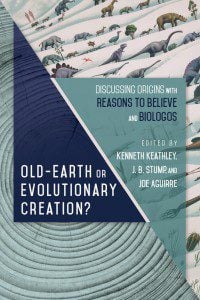 One of the most contentious questions in the conversation between contemporary science and faith is the question of Adam – more specifically human origins and the origin of sin. The next set of essays and responses in Old Earth or Evolutionary Creation homes in on this question. Loren Haarsma and Kenneth Samples provide perspectives from BioLogos and Reasons to Believe respectively. Ted Cabal acts as the Southern Baptist moderator for this discussion. The question posed doesn’t ask for a definitive answer, but rather for the range of viable positions concerning Adam and Eve.
Loren Haarsma begins by laying a foundation with three key doctrines to which the people associated with BioLogos are committed (p. 50).
- Humans are created “in the image of God,” with a special relationship to God and a role to play in God’s creation.
- All humans who have ever lived have sinned by rebelling against God’s revealed will.
- God has dealt with sin through Christ’s incarnation, death, resurrection, ascension, and promised return.
Viable positions concerning Adam will affirm these three points – even if questioning some of the traditional theological positions that have surrounded them. There are a number of viable views of Adam that are consistent with these doctrines. They can’t all be right of course, but it is not wise to question the commitment of individuals to orthodox Christian belief on the basis of their preferences or current thinking here.
Loren sketches four general positions on the question of Adam and Eve that are faithful to Christian doctrines and to our understanding of biology, genetics, and evolution (pp. 53-55).
- Adam and Eve as a transformed pair of ancient representative-ancestors of all humanity. … God specially selected a pair not only to receive special revelation but also to be miraculously transformed … to make it possible for them to be truly holy, capable of obeying all of God’s spiritual and moral requirements. While they were for a while able not to sin, nevertheless they sinned, and the special grace that allowed them to be sinless was withdrawn. … The spiritual, psychological, and cultural effects of sin eventually spread to the entire population.
- Adam and Eve as a small group of ancient representative-ancestors of all humanity. … God specially selected a small family group of a few dozen individuals to receive special revelation. Although they could have lived according to God’s expectations for them, they chose to sin. These people are among the ancestors of all humans.
- Adam and Eve as a pair of recent representatives of all humanity. God specially selected a pair of individuals to receive revelation and to act as representatives (but not ancestors) of all human beings. They disobeyed God and fell into sin in a concentrated historical event. Because they sinned as representatives of all humanity, all of humanity fell into sin.
- Adam and Eve as literary figures in a highly compressed history of all our ancestors. … God used both general and special revelation to tell them how they ought to behave and the consequences of disobedience. They chose disobedience again and again.
There is much to unpack behind each of Loren’s brief descriptions and my summaries just hit the high points of his descriptions. There are many variations and implications to be explored in these and related positions.
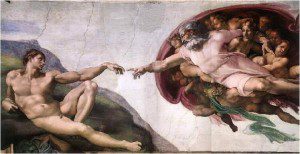 Kenneth Samples and Reasons to Believe are far more specific. RTB teaches, and its people affirm, a traditional view of Adam and Eve.
- God immediately and supernaturally created Adam directly, immediately, and in fully functional form from the dust of the ground, and Eve was created later from the body of Adam.
- God uniquely created Adam and Eve in the divine image.
- Adam and Eve were the first human beings created and progenitors of the entire human race.
- Adam and Eve’s act of disobedience brought sin into the world, and that original sin was passed on to their descendants.
Samples believes that this is the best foundation for the historic Christian view. He also holds that it is the only view really consistent with Scripture, at least in part because (he claims) both Jesus and Paul viewed Adam as historical and Paul’s theology requires a historical Adam. This is an area where the Bible must trump science – the scientific consensus on human origins must be discarded. Now Samples doesn’t put it quite like this. He emphasizes the flux in human knowledge and understanding. Current scientific conclusions may (and often are) still in a state of flux and confusion. “RTB does not think it is wise or prudent to set aside an essential biblical truth of Asam’s historicity and fatherhood of the human race based on current scientific consensus that is open to change and interpretation.” (p. 60)
Redirect. Ted Cabal posed a couple of great questions in redirect. I put my own paraphrase of these questions here. To Loren: Don’t these views (especially #4) imply that the first humans were created as sinners? To Kenneth: How does RTB reconcile their view that there is a correlation of biblical and scientific when both are rightly interpreted with the insistence on a traditional view of Adam?
Loren responded that “God did not create the first humans as sinners; however God did create the first humans with the ability to choose to sin.” (p. 61) I think this is a key point, and it is true no matter what view a Christian takes of human origins. The special creation of Adam and Eve, whether in the context of an old or young creation holds the same view. Sin requires disobedience to God’s commands and humans were created with the ability (even inevitability) of falling into sin.
He also points out that there are theological consequences to the traditional view, and these must be reckoned with. “Science by itself never dictates how we interpret Scripture. Science only alerts us to new theological problems we had not considered before.” (p. 62)
Kenneth Samples reiterated the RTB position on Adam and Eve and then addressed Ted’s question. Summarized and/or paraphrased the points on p. 66: (1) Scripture is the supreme authority because of its explicit propositional nature. (2) The historicity of Adam and his role as progenitor of the human race seems to be the clear teaching of Scripture. (3) To depart is to destructively reinterpret the nature of historic Christianity. (3) Science on human origins is fluid and open to interpretation. (4) It seems biblically prudent and necessary to continue to affirm the teaching of historic Christianity.
He warns that the flexibility on the question of Adam allowed by BioLogos “may lead to an uncomfortable uncertainty.” (p. 66)
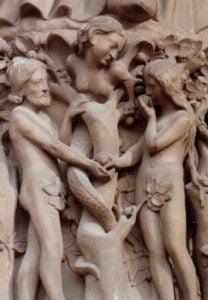 Some thoughts of my own. I don’t see the question of Adam as foundational in the way that Kenneth Samples and Ted Cabal (and perhaps even Loren Haarsma) do. Despite Samples assertion, Jesus never mentions or alludes to Adam and Eve except indirectly. Jesus refers to the institution of marriage between a man and a woman as ordained and instituted by God; he jumps from Genesis 1:27 (male and female) to 2:24 ‘For this reason a man will leave his father and mother and be united to his wife, and the two will become one flesh.’
More than this – the foundation of Christian faith is a belief in God the creator of all and in Jesus Christ and his life, death, resurrection. Adam has been used and emphasized in the church as a way to flesh out exactly what this means. We should be open to the fact that our interpretations – this fleshing out – could be wrong. Paul uses Adam to flesh out his understanding of Christ – but even here our interpretation of Paul’s intent could be wrong. This is the essence of Scot’s argument in Adam and the Genome. Paul may not have intended what became the Augustinian view of original sin in his teaching.
I also think that we should move from thinking of Scripture as “propositional” and toward reading it as the story of God’s mission in the world. There are some important propositions to be sure, but in general the overarching story carries the message. Scripture is a supreme authority – not because it is propositional, but because it reveals God’s relationship with his people through a variety of means and literary genre.
It is dangerous to make non-essentials foundational. The flexibility allowed by BioLogos on the question of Adam does lead to uncomfortable uncertainty – but this is a current necessity. The RTB position runs the risk of conveying the impression that studies of human origins provide a scientific means of disproving Christian faith. If, down the road, all of the science that is “fluid and open to interpretation” becomes less fluid and quite demonstrably sound, insistence on a traditional view of Adam becomes a barrier to faith. Speaking only for myself, if the choice is (1) ‘traditional’ view as outlined by Samples and agreed to by Cabal or (2) Christianity is a fraud … well then I must conclude that science has disproved Christianity. The “traditional” view is not defensible in light of what we do know today, imperfect and fluid though it may be. However, I am convinced that the choice is not between (1) and (2) … we must continue to talk, read, study, pray, and think.
I would rather err on the side of “uncertainty” than proclaim with certainty an unnecessarily restrictive position.
What is your thinking on this question?
How important are Adam and Eve to Christian faith?
If you wish to contact me directly, you may do so at rjs4mail[at]att.net
If interested you can subscribe to a full text feed of my posts at Musings on Science and Theology.
Previous Post

November 9, 2017
Which Evangelicalism Have You Abandoned?
Next Post
November 9, 2017 The Church And Bible Reading: Podcast Q & A
Browse Our Archives
Select a Category Acts of the Apostles Adam Advent Anabaptism Angels Anglican Apologetics Atonement Baptism BCP Prayers Bible Biblical Studies Birds Blogging Bloglossary Bonhoeffer Books Calvinism Christianity Church Church History Coffee Colossians Commentary Recs Conversion Creation Creeds Culture Death Ecclesiastes Economics Education Embracing Grace Emergent Emerging Movement Eschatology Essays Ethics Eucharist Evangelicalism Family Fasting Fathers Fellowship of Differents Footsteps Tour Fun and Whimsical Gospel Grace Happiness Heaven Hell Holy Spirit Irenaeus James Jesus Jesus Creed Job Justification Kingdom of God Law Lectures Lent Liberalism Love and Marriage Mabanteneni Manhood Mary Miracles Missio Alliance MissioLife Missional Missional Jesus Movies and Film New Perspective Northern Seminary OneLife Origins Project Orthodox Parables Pastor's Spouse Pastoring and Leading Pastoring and Preaching Patristics Paul Paul-John Tour Pharisees Pietism Political Theology Prayer and Formation Preaching Problems for Faith Psalm 119 Psalms Public Issues Purgatory Religions Resurrection Revelation Romans Rule of JCreed Science and Faith Sermon on the Mount Sports Ten Commandments Theology Third Way Top Ten Lists Translations Uncategorized Universalism University Ministry Way Out Weekly Meanderings Wisdom Women and Ministry Work Worship Writing & Blogging Youth Ministry
Select a Month July 2021 January 2020 December 2019 November 2019 October 2019 September 2019 August 2019 July 2019 June 2019 May 2019 April 2019 March 2019 February 2019 January 2019 December 2018 November 2018 October 2018 September 2018 August 2018 July 2018 June 2018 May 2018 April 2018 March 2018 February 2018 January 2018 December 2017 November 2017 October 2017 September 2017 August 2017 July 2017 June 2017 May 2017 April 2017 March 2017 February 2017 January 2017 December 2016 November 2016 October 2016 September 2016 August 2016 July 2016 June 2016 May 2016 April 2016 March 2016 February 2016 January 2016 December 2015 November 2015 October 2015 September 2015 August 2015 July 2015 June 2015 May 2015 April 2015 March 2015 February 2015 January 2015 December 2014 November 2014 October 2014 September 2014 August 2014 July 2014 June 2014 May 2014 April 2014 March 2014 February 2014 January 2014 December 2013 November 2013 October 2013 September 2013 August 2013 July 2013 June 2013 May 2013 April 2013 March 2013 February 2013 January 2013 December 2012 November 2012 October 2012 September 2012 August 2012 July 2012 June 2012 May 2012 April 2012 March 2012 February 2012 January 2012 December 2011 November 2011 October 2011 September 2011 August 2011 July 2011 June 2011 May 2011 April 2011 March 2011 February 2011 January 2011 December 2010 November 2010 October 2010 September 2010 August 2010 July 2010 June 2010 May 2010 April 2010 March 2010 February 2010 January 2010 December 2009 November 2009 October 2009 September 2009 August 2009 July 2009 June 2009 May 2009 April 2009 March 2009 February 2009 January 2009 December 2008 November 2008 October 2008 September 2008 August 2008 July 2008 June 2008 May 2008 April 2008 March 2008 February 2008 January 2008 December 2007 November 2007 October 2007 September 2007 August 2007 July 2007 June 2007 May 2007 April 2007 March 2007 February 2007 January 2007 December 2006 November 2006 October 2006 September 2006 August 2006 July 2006 June 2006 May 2006 April 2006 March 2006 February 2006 January 2006 December 2005 November 2005 October 2005 September 2005 August 2005 July 2005 June 2005 May 2005 April 2005 0000
Follow Us!
TAKE THE
Religious Wisdom Quiz
What does "Beersheba" mean?
Select your answer to see how you score.
House of the King Blessed Field Well of the Oath Valley of Water
Related posts from Jesus Creed


The Gospel of With Us and Through Us

Northern Seminary Announces: Nijay Gupta Joins Faculty

The Gundrys and Me: Ruth Tucker
TRENDING AT PATHEOS Evangelical

When you hear the word riches, what comes to mind? For most...

Don’t Miss the Parents: A Creative Christmas Meditation
As we enter the Advent Season, I see many people trying to...

Making Stones Into Bread: Choosing the “Right” Work
I was on my online arts ministry Zoom meeting with the International...

Ukraine’s exhausted Christians face fifth winter of war
By Julian Lukins The full-scale war in Ukraine is taking “a serious...

Russell Brand's Conviction is not anti-Christian Persecution
How do we shed the reputation that the Church is OK with...

Have you ever caught yourself saying, “I’ll do it tomorrow,” or “Now...
view all Evangelical blogs
Ad-Free & Subscriber Log-In Subscription Support
- About Us
- 2026 Calendar
- Videos
- Podcasts
- Library of World Religions
- Faith In Media Tracker
- Advertise With Us
- Write for Us
- Privacy Policy
- Terms of Service
- Do Not Sell My Data
- Contact Us
- Radiant Digital
- Manage Newsletter Subscriptions
- Unsubscribe From Notifications
- Sitemap
Copyright 2008-2026, Patheos, part of the Radiant Digital network of media brands. All rights reserved.
Subscription Support Ad-Free & Subscriber Log-In
Follow Patheos