
BuddhistCatholicContemplativeEvangelicalGeneral ChristianHinduJewishLatter-day SaintMuslimNew VisionsProgressive Christian
Beliefs
- Buddhist
- Catholic
- Contemplative
- Evangelical
- General Christian
- Hindu
- Jewish
- Latter-day Saint
- More Voices
- Muslim
- New Visions
- Pagan
- Progressive Christian
Topics
- Religion News
- Food and Religion
- Sports and Religion
- Religious Art
- Religious Music and Entertainment
- Religious Events
- History and Religion
- Style and Religion
- Politics and Religion
- Women in Religion
- Recreation Outdoors and Religion
- Business Finance and Religion
- Careers Workplace and Religion
- Education and Religion
- Family Parenting and Religion
- Health Fitness and Religion
- Home and Religion
- Relationships and Religion
- Technology and Religion
- Travel and Religion
Columnists
- Buddhist Columnists
- Business Finance and Religion Columnists
- Careers Workplace and Religion Columnists
- Catholic Columnists
- Contemplative Columnists
- Education and Religion Columnists
- Evangelists Columnists
- Family Parenting and Religion Columnists
- General Christian Columnists
- Health Fitness and Religion Columnists
- Hindu Columnists
- History and Religion Columnists
- Home and Religion Columnists
- Jewish Columnists
- More Voices Columnists
- Latter Day Columnists
- Muslim Columnists
- New Visions Columnists
- Nonreligious Columnists
- Pagan Columnists
- Politics and Religion Columnists
- Progressive Columnists
- Recreation Outdoors and Religion Columnists
- Relationships and Religion Columnists
- Religion News Columnists
- Religious Art Columnists
- Religious Events Columnists
- Religious Music and Entertainment Columnists
- Sports and Religion Columnists
- Style and Religion Columnists
- Technology and Religion Columnists
- Travel and Religion Columnists
- Women in Religion Columnists
Resource Library
- 2026 Calendar
- Library of World Religions
- The 100 Most Holy Places on Earth
- Patheos Answers
- Podcasts
- Videos
- Faith Leaders Database
- Anglican Episcopalian
- Bahai
- Baptist
- Buddhism
- Christianity
- Confucianism
- Eastern Orthodoxy
- Hinduism
- Holiness and Pentecostal
- ISKCON
- Islam
- Judaism
- Lutheran
- Methodist
- The Church of Jesus Christ of Latter-day Saints
- New Age
- Paganism
- Presbytarian and Reformed
- Protestantism
- Religion Behind the Scenes
- Roman Catholic
- Scientology
- Shia Islam
- Sikhism
- Sufism
- Sunni Islam
- Taoism
- Zen
- See all religions
Research Tools
 Ad-Free & Subscriber Log-In Subscription Support
Ad-Free & Subscriber Log-In Subscription Support
Follow Patheos 

- Trending:
- Forgiveness
- |
- Marriage
- |
- Consciousness
- |
- Death Penalty
- |
- Election
- |
- Halloween
 Jesus Creed
- Home
- Evangelical
- “God In Labor” in Christian Theology
“God In Labor” in Christian Theology
Last updated on: September 18, 2017 at 12:07 am by Scot McKnight
“God In Labor” in Christian Theology 2017-09-17T13:10:27-05:00 Scot McKnight
Patheos Explore the world's faith through different perspectives on religion and spirituality! Patheos has the views of the prevalent religions and spiritualities of the world.
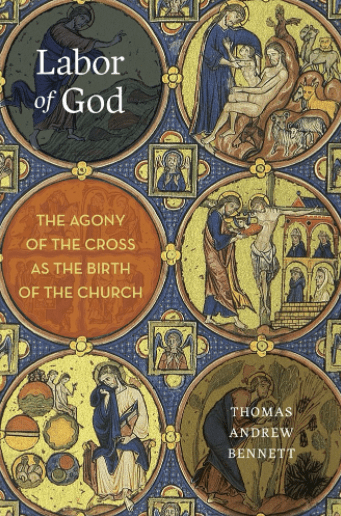 When Richard Bauckham, Murray Rae, and Michael Gorman lend their name to a book on atonement, I’m all ears. They’ve done so to Thomas Andrew Bennett’s elegantly written new (and not long) study, Labor of God: The Agony of the Cross as the Birth of the Church. This is not one of those “the church got it all wrong” books but instead a book that suggests one theme — childbirth, becoming children of God, or in the big theme “God in labor” — can be a fresh entry point for understanding the complex set of ideas at work in any understanding of the atonement. The book is beyond refreshing.
The biggest problem I see in atonement discussions is the incompleteness of framework: that is, atonement isn’t located in the bigger story of the Bible of both creation and ultimate new-heavens-new-earth kingdom story. Thus, it falls for a minor motif (theodicy, etc) in the larger story and abstracts theology from the living reality of what God is accomplishing.
Bennett has the potential to connect atonement to the big story.
Here is a taste both of Bennett’s prose and the big ideas of the book.
Among these tendrils and roots, there is one image in particular that has cropped up from time to time, in the thoughts and writings of mystics and anchoresses, church fathers and mothers. It is an image of the cross that burst forth in visions and was then abruptly dropped, left by the wayside in systematic, doctrinal work. Perhaps the implications of this way of framing cross-thought were simply too radical—if such a thing is even possible—for theology to comprehend. Like classical Pauline images of the cross, it is strange and unruly, picturing the cross—surely the paradigmatic expression of despair—as surprisingly hopeful. Like the image of sacrifice it does not shrink from crucifixion’s physical horror, but unlike sacrifice it does not trade in the conceptual economy of victims and perpetrators. It eschews, in fact, notions of economy entirely, radically opposing the cross to the language of exchange, of this for that, him for us. And yet it does so without losing the concept of cost, of the truth that whatever Jesus’ crucifixion accomplished, it did so only at great physical, emotional, and psychological cost to the man Jesus and, possibly, the implicated Godhead. Like the image of victory, this overlooked metaphor, this biblical but not merely exegetical image, this ignored root from the Christian tradition, pictures the cross as embodied, costly exertion that succeeds. But the victory embedded in it is different from classical articulations of Christus Victor, for this fresh vision of the cross does not picture invisible forces or spiritual adversaries as the agents of our oppression. It instead remembers in the best Christian way that it is ultimately the corrupting influence of sin that must be defeated, and it makes sense of how the cross can actually do this.
This image, the one that really can revivify a teologia crucis for the twenty-first century, ultimately draws its power from a deep connection to genesis, that is, origination. It evokes a semantic field that encompasses growth, new life, a fresh start, and the rhythms of the known, observable universe wherein pain and sometimes death are the fertilizers out of which new life springs. And this is how it accounts for the change that Christians confess the cross brings to persons, communities, and even the world itself. It is able to conceptualize coherently an instrument of denigration and torture as the process or mechanism out of which newness comes, new life for people as well as th eir environs.
In this largely unnoticed strand of Christian theology, the crucifixion of Jesus of Nazareth is known as the birthing pangs—the labor—of God, who bears renewed, spiritual sons and daughters into the world. The blood and water that poured from Jesus are the blood and water that have accompanied every infant that has entered the world. The scarring harm, unavoidable and intrinsic to birth, marked too the body of the incarnate, laboring God. New life and new hope, long the prize and purpose of labor, spring forth in the Spirit from the mothering Jesus, incarnating into a dying world spiritual sons and daughters, possessors of God’s own inextinguishable life and heritable character. The cross is the labor of God. And in theological reflection drawn from this image, we argue that contemporary Christian atonement theology may once again recover the brazen, dissonant, radically gracious self-giving love of God (4-5).
Bennett finds his starting point in Johannine literature (John 3:37, 7; Titus 3:5; 1 Peter 1:23), and finds echoes of God in labor in Anselm, Julian of Norwich, Marguerite d’Oingt, feminist theology, as well as in Murray Rae. Here’s the thrust:
The language of second birth is therefore suggestive; it hints at theological depths in a way that other metaphors in John do not. It is enigmatic, forcing us to ask, “What is birth from above for John? What does it signal?” In short, “birth from above” takes place in Jesus’ crucifixion, and it signals the process by which human beings become natural children of God. In and through the cross, a fundamental change takes place in the relations holding between human beings, Jesus, and the Father—and the change implicates family and, in twenty-first century terms, DNA. At the cross, Jesus labors to bring humanity into God’s family. He gives us our second birth (8).
When creation is tied to redemption and to new creation, we are on to something vital. How’s this for a suggestive, if not provocative, opening?
If an essential feature of a faithful proclamation of the cross is radicality, then we may expect to shock and be shocked as Mother Jesus and the labor of God reconfigure what the church teaches about reconciliation in and through a humiliating death (14).
Previous Post

September 17, 2017
WOW!!!
Next Post
September 18, 2017 Is 1 Corinthians 14:34-35 Authentic? No.
Browse Our Archives
Select a Category Acts of the Apostles Adam Advent Anabaptism Angels Anglican Apologetics Atonement Baptism BCP Prayers Bible Biblical Studies Birds Blogging Bloglossary Bonhoeffer Books Calvinism Christianity Church Church History Coffee Colossians Commentary Recs Conversion Creation Creeds Culture Death Ecclesiastes Economics Education Embracing Grace Emergent Emerging Movement Eschatology Essays Ethics Eucharist Evangelicalism Family Fasting Fathers Fellowship of Differents Footsteps Tour Fun and Whimsical Gospel Grace Happiness Heaven Hell Holy Spirit Irenaeus James Jesus Jesus Creed Job Justification Kingdom of God Law Lectures Lent Liberalism Love and Marriage Mabanteneni Manhood Mary Miracles Missio Alliance MissioLife Missional Missional Jesus Movies and Film New Perspective Northern Seminary OneLife Origins Project Orthodox Parables Pastor's Spouse Pastoring and Leading Pastoring and Preaching Patristics Paul Paul-John Tour Pharisees Pietism Political Theology Prayer and Formation Preaching Problems for Faith Psalm 119 Psalms Public Issues Purgatory Religions Resurrection Revelation Romans Rule of JCreed Science and Faith Sermon on the Mount Sports Ten Commandments Theology Third Way Top Ten Lists Translations Uncategorized Universalism University Ministry Way Out Weekly Meanderings Wisdom Women and Ministry Work Worship Writing & Blogging Youth Ministry
Select a Month July 2021 January 2020 December 2019 November 2019 October 2019 September 2019 August 2019 July 2019 June 2019 May 2019 April 2019 March 2019 February 2019 January 2019 December 2018 November 2018 October 2018 September 2018 August 2018 July 2018 June 2018 May 2018 April 2018 March 2018 February 2018 January 2018 December 2017 November 2017 October 2017 September 2017 August 2017 July 2017 June 2017 May 2017 April 2017 March 2017 February 2017 January 2017 December 2016 November 2016 October 2016 September 2016 August 2016 July 2016 June 2016 May 2016 April 2016 March 2016 February 2016 January 2016 December 2015 November 2015 October 2015 September 2015 August 2015 July 2015 June 2015 May 2015 April 2015 March 2015 February 2015 January 2015 December 2014 November 2014 October 2014 September 2014 August 2014 July 2014 June 2014 May 2014 April 2014 March 2014 February 2014 January 2014 December 2013 November 2013 October 2013 September 2013 August 2013 July 2013 June 2013 May 2013 April 2013 March 2013 February 2013 January 2013 December 2012 November 2012 October 2012 September 2012 August 2012 July 2012 June 2012 May 2012 April 2012 March 2012 February 2012 January 2012 December 2011 November 2011 October 2011 September 2011 August 2011 July 2011 June 2011 May 2011 April 2011 March 2011 February 2011 January 2011 December 2010 November 2010 October 2010 September 2010 August 2010 July 2010 June 2010 May 2010 April 2010 March 2010 February 2010 January 2010 December 2009 November 2009 October 2009 September 2009 August 2009 July 2009 June 2009 May 2009 April 2009 March 2009 February 2009 January 2009 December 2008 November 2008 October 2008 September 2008 August 2008 July 2008 June 2008 May 2008 April 2008 March 2008 February 2008 January 2008 December 2007 November 2007 October 2007 September 2007 August 2007 July 2007 June 2007 May 2007 April 2007 March 2007 February 2007 January 2007 December 2006 November 2006 October 2006 September 2006 August 2006 July 2006 June 2006 May 2006 April 2006 March 2006 February 2006 January 2006 December 2005 November 2005 October 2005 September 2005 August 2005 July 2005 June 2005 May 2005 April 2005 0000
Follow Us!
TAKE THE
Religious Wisdom Quiz
How did Jesus provide for the temple tax?
Select your answer to see how you score.
He borrowed from Judas Found in a tree A coin in a fish's mouth He multiplied bread
Related posts from Jesus Creed

New Birth Transcending Atonement Theories
The Biggest Problem For Atonement Theories?
Passovering Your Atonement Theory
TRENDING AT PATHEOS Evangelical

How the author of the world's best hymn...
I've been working with John Newton for a while now. This makes...

Long before this Lectio Divina, Psalm 130 - the song - started...

What About the Trees? Another Living Parable
After I finished writing the last article about falling leaves as a...

Why Classical Education Is a Conversation, Not a...
Come and Read: Joy in Classical Education When I was a little...

Falling Leaves: A Living Parable on Letting Go
I’ve spent the vast majority of my life in the southeast corner...

Cornell University has received a great deal of negative publicity and intense...
view all Evangelical blogs
Ad-Free & Subscriber Log-In Subscription Support
- About Us
- 2026 Calendar
- Videos
- Podcasts
- Library of World Religions
- Faith In Media Tracker
- Advertise With Us
- Write for Us
- Privacy Policy
- Terms of Service
- Do Not Sell My Data
- Contact Us
- Radiant Digital
- Manage Newsletter Subscriptions
- Unsubscribe From Notifications
- Sitemap
Copyright 2008-2026, Patheos. All rights reserved.
Subscription Support Ad-Free & Subscriber Log-In
Follow Patheos