
BuddhistCatholicContemplativeEvangelicalGeneral ChristianHinduJewishLatter-day SaintMuslimNew VisionsProgressive Christian
Beliefs
- Buddhist
- Catholic
- Contemplative
- Evangelical
- General Christian
- Hindu
- Jewish
- Latter-day Saint
- More Voices
- Muslim
- New Visions
- Pagan
- Progressive Christian
Topics
- Religion News
- Food and Religion
- Sports and Religion
- Religious Art
- Religious Music and Entertainment
- Religious Events
- History and Religion
- Style and Religion
- Politics and Religion
- Women in Religion
- Recreation Outdoors and Religion
- Business Finance and Religion
- Careers Workplace and Religion
- Education and Religion
- Family Parenting and Religion
- Health Fitness and Religion
- Home and Religion
- Relationships and Religion
- Technology and Religion
- Travel and Religion
Columnists
- Buddhist Columnists
- Business Finance and Religion Columnists
- Careers Workplace and Religion Columnists
- Catholic Columnists
- Contemplative Columnists
- Education and Religion Columnists
- Evangelists Columnists
- Family Parenting and Religion Columnists
- General Christian Columnists
- Health Fitness and Religion Columnists
- Hindu Columnists
- History and Religion Columnists
- Home and Religion Columnists
- Jewish Columnists
- More Voices Columnists
- Latter Day Columnists
- Muslim Columnists
- New Visions Columnists
- Nonreligious Columnists
- Pagan Columnists
- Politics and Religion Columnists
- Progressive Columnists
- Recreation Outdoors and Religion Columnists
- Relationships and Religion Columnists
- Religion News Columnists
- Religious Art Columnists
- Religious Events Columnists
- Religious Music and Entertainment Columnists
- Sports and Religion Columnists
- Style and Religion Columnists
- Technology and Religion Columnists
- Travel and Religion Columnists
- Women in Religion Columnists
Resource Library
- 2026 Calendar
- Library of World Religions
- The 100 Most Holy Places on Earth
- Patheos Answers
- Podcasts
- Videos
- Faith Leaders Database
- Anglican Episcopalian
- Bahai
- Baptist
- Buddhism
- Christianity
- Confucianism
- Eastern Orthodoxy
- Hinduism
- Holiness and Pentecostal
- ISKCON
- Islam
- Judaism
- Lutheran
- Methodist
- The Church of Jesus Christ of Latter-day Saints
- New Age
- Paganism
- Presbytarian and Reformed
- Protestantism
- Religion Behind the Scenes
- Roman Catholic
- Scientology
- Shia Islam
- Sikhism
- Sufism
- Sunni Islam
- Taoism
- Zen
- See all religions
Research Tools
 Ad-Free & Subscriber Log-In Subscription Support
Ad-Free & Subscriber Log-In Subscription Support
Follow Patheos 

- Trending:
- Forgiveness
- |
- Marriage
- |
- Consciousness
- |
- Death Penalty
- |
- Election
- |
- Halloween
 Jesus Creed
- Home
- Evangelical
- Why Did It Take So Long?
Why Did It Take So Long?
Last updated on: August 17, 2017 at 6:33 am by Scot McKnight
Why Did It Take So Long? 2017-08-17T06:33:24-05:00 Scot McKnight
Patheos Explore the world's faith through different perspectives on religion and spirituality! Patheos has the views of the prevalent religions and spiritualities of the world.
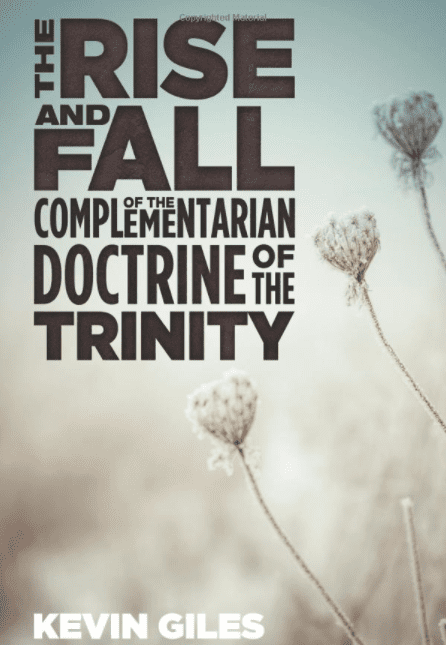 Why did it take so long for orthodox Trinitarians to recognize or at least call out the non-orthodox views of the complementarian Trinitarian theory of the Trinity?
That is a question asked by Kevin Giles in The Rise and Fall of the Complementarian Doctrine of the Trinity.
A conference at Trinity Evangelical Divinity School in 2008 (Grudem, Ware, McCall, Yandell) confused many …
previously mentioned reviews by Aimee Byrd and Rachel Miller…
an event at Southern Seminary (Grudem, Ware, Sanders, Lethan, Ayres) seemed to give the complementarian theory a boost …
a collection of essays by Jowers and House did not seem to make any impact …
but Kevin Giles thinks his book The Eternal Generation of the Son: Maintaining Orthodoxy in Trinitarian Theology was an important moment in creating an opportunity for classic Reformed complementarians to break out into a civil war with the complementarian Trinitarians like Grudem and Ware. In fact, it wasn’t just his book: it was Michael Horton’s very favorable review in Modern Reformation (Dec 2014) that propelled the classic Reformed folks to disagree with Grudem and Ware. By the way, check out who blurbed Giles’ book Eternal Generation (link above, blurbs on site).
The question: Why did it take so long?
I must admit that the question that never goes away for me is, why did it take so long for well-informed evangelical and Reformed theologians to come out and say that what complementarians were teaching on the Trinity directly contradicts the teaching of the creeds and confessions of the church? Evangelical theologians who wrote books on the Trinity should have known that to order the persons of the Trinity hierarchically is the essence of the error called “subordinationism” (58).
His lone exception was Millard Erickson. Too many said too much not to call this problem out. So, Kevin Giles proposes five possible or confessed reasons.
- I asked Carl Trueman why he only came out in 2016 and he told me, “I only really became aware of this issue about eighteen months ago.” … Westminster Seminary is well-known as a bastion of complementarianism. I thus dare to say, Trueman should have known for years that most evangelicals and Reformed Christians had come to accept that the divine persons were hierarchically ordered in the immanent Trinity. [Trueman, it must at least be said, is a church historian more than a systematician; furthermore, ]
- I was surprised by how many told me that they said nothing because they thought this was teaching so wrong it was below their dignity to comment on it. SMcK: this is specious and is better explained by #3.
- Third, as we think of how so few spoke against this teaching we have to recognize that in the evangelical world there is an abysmal ignorance of the doctrine of the Trinity. [SMcK: This is perhaps the most important observation. Evangelicals are not confessional but biblical and evangelicals often pay lip service to the creeds but have not studied them intensively. I say this as one who went through TEDS, who taught at TEDS, and who was at NPU for 17 years: Creeds were often spoken of as creedalism. Of course the theologians at each school knew creeds but I met no one with the depth of Bradley Nassif at NPU who is both Orthodox and evangelical, and Brad is thoroughly conversant with all things creedal. I have not met his rival in these institutions. I could be wrong about the lack of creed emphasis in these schools, but I’m telling you my experience. When I brought up this eternal subordinationism stuff with him, he called it out immediately and one time said, “This sounds like Arianism to me.”] Giles again: What this means is that large numbers of evangelical and Reformed people did not realize that to hierarchically order the divine persons is to contradict the faith of the church. … What this means is that when evangelicals began arguing for hierarchical ordering in the Trinity and quoting texts in support and claiming this was historic orthodoxy they met with virtually no opposition. Evangelical ignorance of the primary doctrine of the faith, our distinctive doctrine of the triune God revealed in history and Scripture, and spelled out carefully in the creeds and confessions of the church, had left wide open the door for error to enter and take over the evangelical house.
- [Political power of complementarians, Giles after being asked to speak at schools] My host has said to me, “I am pleased to have you speak because I need to keep my head down. Most of the faculty are complementarians and any criticism of their position on women or the Trinity is not tolerated. For me to openly dissent would cause a painful split among the academic staff. I would be marginalized.” … a one-time friend and fellow graduate of Moore Theological College in Sydney said to me very angrily, “Kevin, we [complementarians] will never give way to you on the Trinity because to do so would weaken our case for male headship, and nothing is more important for us.” #that’sit!
- Complementarians had convinced themselves that what they taught on women and the Trinity is “what the Bible teaches.” To disagree was thus by definition to reject biblical authority. What this argument did was shut down completely any critical and independent thinking, the most important academic virtue. People who argued that the Bible in fact does not teach the creation-given subordination of women and/or the eternal subordination of the Son were not to be listened to, no matter what evidence they offered.
Giles offers this stunning conclusion:
Now we see the huge importance of the recent rejection of the com plementarian doctrine of the Trinity by complementarian confessional Reformed theologians. They have said, to Grudem and Ware, the leaders of the complementarians, what you have been teaching on the Trinity is not “what the Bible teaches,” according to the creeds and confessions of the church. You have let your great concern to uphold male “headship” as you understand it corrupt your reading of the Scriptures on the Trinity. 61
Why, he asks, is Christianity Today silent on the shift that has occurred? “It would seem that there is tacit agreement by all involved that this embarrassing defeat for complementarians is to be swept under the carpet and never mentioned again” (63). There’s more: We have now a classic example of revisionism: many (former) complementarian theory Trinitarians now claim they have always believed in eternal generation. Not so.
Kevin Giles says it is time for theologians to announce publicly where they are on this issue, but I would add: it is also time for them to deny eternal subordination of the Son and to call it what it is: wrong, if not a blatant heresy. Giles:
For me, the term “heresy” is rightly used to designate teaching that directly denies the ecumenical creeds and the confessions of the church.
Dr. Ware and Dr. Grudem and anyone else are free to break with the consensus fidelium and in doing so express their personal opinion, their hairesis in the biblical meaning of this word, but they need to honestly admit what they are teaching is not the faith of the church. It is their opinion.
Finally, I return to McGrath’s definition of heresy. It “designates teaching that emerges from within the community of faith on the one hand yet is ultimately destructive of the faith on the other.” It is “an intellectually defective vision of the Christian faith.” I think this definition perfectly captures the complementarian doctrine of the Trinity.
I make one point: to affirm the creed is to affirm more than the creed, but the culture that created and embraces and indwells the creeds. That, I’m sure, is not where Grudem and Ware have been.
It’s time for institutions to tell the truth. It’s time for theologians to tell the truth. It’s time for them to say they were wrong.
Previous Post

August 16, 2017
Symbols Matter, Confederate Flags Matter
Next Post
August 17, 2017 An Emergent Creation? (RJS)
Browse Our Archives
Select a Category Acts of the Apostles Adam Advent Anabaptism Angels Anglican Apologetics Atonement Baptism BCP Prayers Bible Biblical Studies Birds Blogging Bloglossary Bonhoeffer Books Calvinism Christianity Church Church History Coffee Colossians Commentary Recs Conversion Creation Creeds Culture Death Ecclesiastes Economics Education Embracing Grace Emergent Emerging Movement Eschatology Essays Ethics Eucharist Evangelicalism Family Fasting Fathers Fellowship of Differents Footsteps Tour Fun and Whimsical Gospel Grace Happiness Heaven Hell Holy Spirit Irenaeus James Jesus Jesus Creed Job Justification Kingdom of God Law Lectures Lent Liberalism Love and Marriage Mabanteneni Manhood Mary Miracles Missio Alliance MissioLife Missional Missional Jesus Movies and Film New Perspective Northern Seminary OneLife Origins Project Orthodox Parables Pastor's Spouse Pastoring and Leading Pastoring and Preaching Patristics Paul Paul-John Tour Pharisees Pietism Political Theology Prayer and Formation Preaching Problems for Faith Psalm 119 Psalms Public Issues Purgatory Religions Resurrection Revelation Romans Rule of JCreed Science and Faith Sermon on the Mount Sports Ten Commandments Theology Third Way Top Ten Lists Translations Uncategorized Universalism University Ministry Way Out Weekly Meanderings Wisdom Women and Ministry Work Worship Writing & Blogging Youth Ministry
Select a Month July 2021 January 2020 December 2019 November 2019 October 2019 September 2019 August 2019 July 2019 June 2019 May 2019 April 2019 March 2019 February 2019 January 2019 December 2018 November 2018 October 2018 September 2018 August 2018 July 2018 June 2018 May 2018 April 2018 March 2018 February 2018 January 2018 December 2017 November 2017 October 2017 September 2017 August 2017 July 2017 June 2017 May 2017 April 2017 March 2017 February 2017 January 2017 December 2016 November 2016 October 2016 September 2016 August 2016 July 2016 June 2016 May 2016 April 2016 March 2016 February 2016 January 2016 December 2015 November 2015 October 2015 September 2015 August 2015 July 2015 June 2015 May 2015 April 2015 March 2015 February 2015 January 2015 December 2014 November 2014 October 2014 September 2014 August 2014 July 2014 June 2014 May 2014 April 2014 March 2014 February 2014 January 2014 December 2013 November 2013 October 2013 September 2013 August 2013 July 2013 June 2013 May 2013 April 2013 March 2013 February 2013 January 2013 December 2012 November 2012 October 2012 September 2012 August 2012 July 2012 June 2012 May 2012 April 2012 March 2012 February 2012 January 2012 December 2011 November 2011 October 2011 September 2011 August 2011 July 2011 June 2011 May 2011 April 2011 March 2011 February 2011 January 2011 December 2010 November 2010 October 2010 September 2010 August 2010 July 2010 June 2010 May 2010 April 2010 March 2010 February 2010 January 2010 December 2009 November 2009 October 2009 September 2009 August 2009 July 2009 June 2009 May 2009 April 2009 March 2009 February 2009 January 2009 December 2008 November 2008 October 2008 September 2008 August 2008 July 2008 June 2008 May 2008 April 2008 March 2008 February 2008 January 2008 December 2007 November 2007 October 2007 September 2007 August 2007 July 2007 June 2007 May 2007 April 2007 March 2007 February 2007 January 2007 December 2006 November 2006 October 2006 September 2006 August 2006 July 2006 June 2006 May 2006 April 2006 March 2006 February 2006 January 2006 December 2005 November 2005 October 2005 September 2005 August 2005 July 2005 June 2005 May 2005 April 2005 0000
Follow Us!
TAKE THE
Religious Wisdom Quiz
What is the correct order of 'these three' that remain, as mentioned in 1 Corinthians 13?
Select your answer to see how you score.
Faith, hope, love Love, faith, hope Hope, faith, love Faith, love, hope
Related posts from Jesus Creed


The Gospel of With Us and Through Us

Northern Seminary Announces: Nijay Gupta Joins Faculty

The Gundrys and Me: Ruth Tucker
TRENDING AT PATHEOS Evangelical

The REST of Your Life: A Creative Wrestles...
This week I had a conversation with a good friend from church....

How the author of the world's best hymn...
I've been working with John Newton for a while now. This makes...

Long before this Lectio Divina, Psalm 130 - the song - started...

What About the Trees? Another Living Parable
After I finished writing the last article about falling leaves as a...

Why Classical Education Is a Conversation, Not a...
Come and Read: Joy in Classical Education When I was a little...

Cornell University has received a great deal of negative publicity and intense...
view all Evangelical blogs
Ad-Free & Subscriber Log-In Subscription Support
- About Us
- 2026 Calendar
- Videos
- Podcasts
- Library of World Religions
- Faith In Media Tracker
- Advertise With Us
- Write for Us
- Privacy Policy
- Terms of Service
- Do Not Sell My Data
- Contact Us
- Radiant Digital
- Manage Newsletter Subscriptions
- Unsubscribe From Notifications
- Sitemap
Copyright 2008-2026, Patheos. All rights reserved.
Subscription Support Ad-Free & Subscriber Log-In
Follow Patheos