
BuddhistCatholicContemplativeEvangelicalGeneral ChristianHinduJewishLatter-day SaintMuslimNew VisionsProgressive Christian
Beliefs
- Buddhist
- Catholic
- Contemplative
- Evangelical
- General Christian
- Hindu
- Jewish
- Latter-day Saint
- More Voices
- Muslim
- New Visions
- Pagan
- Progressive Christian
Topics
- Religion News
- Food and Religion
- Sports and Religion
- Religious Art
- Religious Music and Entertainment
- Religious Events
- History and Religion
- Style and Religion
- Politics and Religion
- Women in Religion
- Recreation Outdoors and Religion
- Business Finance and Religion
- Careers Workplace and Religion
- Education and Religion
- Family Parenting and Religion
- Health Fitness and Religion
- Home and Religion
- Relationships and Religion
- Technology and Religion
- Travel and Religion
Columnists
- Buddhist Columnists
- Business Finance and Religion Columnists
- Careers Workplace and Religion Columnists
- Catholic Columnists
- Contemplative Columnists
- Education and Religion Columnists
- Evangelists Columnists
- Family Parenting and Religion Columnists
- General Christian Columnists
- Health Fitness and Religion Columnists
- Hindu Columnists
- History and Religion Columnists
- Home and Religion Columnists
- Jewish Columnists
- More Voices Columnists
- Latter Day Columnists
- Muslim Columnists
- New Visions Columnists
- Nonreligious Columnists
- Pagan Columnists
- Politics and Religion Columnists
- Progressive Columnists
- Recreation Outdoors and Religion Columnists
- Relationships and Religion Columnists
- Religion News Columnists
- Religious Art Columnists
- Religious Events Columnists
- Religious Music and Entertainment Columnists
- Sports and Religion Columnists
- Style and Religion Columnists
- Technology and Religion Columnists
- Travel and Religion Columnists
- Women in Religion Columnists
Resource Library
- 2026 Calendar
- Library of World Religions
- The 100 Most Holy Places on Earth
- Patheos Answers
- Podcasts
- Videos
- Faith Leaders Database
- Anglican Episcopalian
- Bahai
- Baptist
- Buddhism
- Christianity
- Confucianism
- Eastern Orthodoxy
- Hinduism
- Holiness and Pentecostal
- ISKCON
- Islam
- Judaism
- Lutheran
- Methodist
- The Church of Jesus Christ of Latter-day Saints
- New Age
- Paganism
- Presbytarian and Reformed
- Protestantism
- Religion Behind the Scenes
- Roman Catholic
- Scientology
- Shia Islam
- Sikhism
- Sufism
- Sunni Islam
- Taoism
- Zen
- See all religions
Research Tools
 Ad-Free & Subscriber Log-In Subscription Support
Ad-Free & Subscriber Log-In Subscription Support
Follow Patheos 

- Trending:
- Forgiveness
- |
- Marriage
- |
- Consciousness
- |
- Death Penalty
- |
- Election
- |
- Halloween
 Jesus Creed
- Home
- Evangelical
- Civil War among the Complementarians
Civil War among the Complementarians
Last updated on: August 17, 2017 at 6:34 am by Scot McKnight
Civil War among the Complementarians 2017-08-17T06:34:05-05:00 Scot McKnight
Patheos Explore the world's faith through different perspectives on religion and spirituality! Patheos has the views of the prevalent religions and spiritualities of the world.
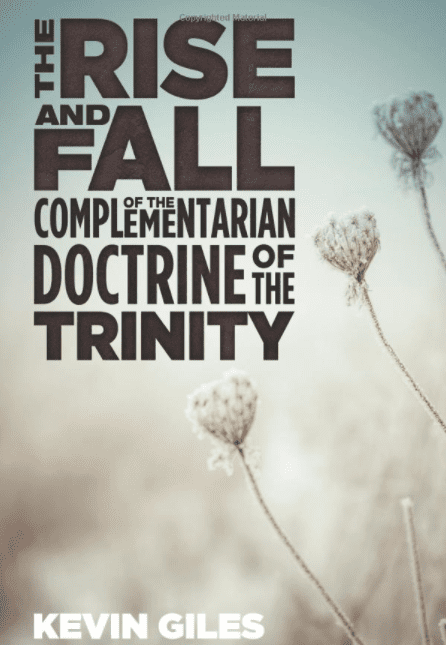 Just over a year ago complementarianism as we knew it began to crack open. The story of its crack-up is told by Kevin Giles, The Rise and Fall of the Complementarian Doctrine of the Trinity.
I remember the events because I routinely reposted the major critical posts and read the responses by such folks as Denny Burk, Owen Strachan, and others.
Now to the story of what Giles calls the “civil war.”
On June 3, everything changed. Civil war broke out in the evangelical community. A deep and sharp split among those who call themselves complementarians suddenly and unexpectedly appeared. The contestants were not divided over the gender question, but rather over the Trinity. Two Reformed women, Rachel Miller and Aimee Byrd, of whom I will say more later, had raised concerns about what was being taught on the Trinity by complementarians prior to June 2016, but the battle only really took off when Dr. Liam Goligher, the respected and able senior pastor of the historic Tenth Presbyterian Church in Philadelphia, made a blistering attack on complementarian teaching on the Trinity. In very strong Ianguage he accused Dr. Wayne Grudem and Dr. Bruce Ware, the leaders o’ 0f the complementarian movement, of breaking with orthodoxy, of idolatry, and of departing from biblical Christianity (35).
[Goligher is quoted saying:] They are building their case [for the subordination of women] by reinventing the doctrine of God, and are doing so without telling the Christian public what they are up to. What we have is in fact a departure from biblical Christianity as expressed in our creeds and confessions (36).
[CT Caleb Lindgren reported and Giles summarizes Lindgren:] He says that some of the best known confessional Reformed theologians have branded the complementarian doctrine of the Trinity “heresy” (37).
The debate, Giles observes, about the Trinity was not as Grudem and Ware dubbed it: a debate between evangelical complementarians and evangelical feminists (their term for Giles), but between confessional Reformed types and non-confessional, Bible-only types like Grudem, Ware, Burk, and Strachan.
When Lewis Ayres and Michel Barnes — two very well known specialists in Nicene theology — entered the debate with Ayres dubbing Grudem’s stuff “daft” and Ware’s as “too simplistic” the more accurate situation was being described. At this time I was reading Lewis Ayres carefully, and I found his work immensely informed and erudite. Mike Bird said this at the time:
When two of the biggest names in fourth-century trinitarian theology graciously dismantle your theological argument for basing human relationships on a subordinationist trinitarianism, the game is over. Time to abandon the SS Subordinationism, man the life boats, look for a nice Nicene Island for refuge to land on, and find less complicated ways of arguing for complementarianism” (38).
Giles, not at the level of Ayres or Barnes but still very informed on Nicene orthodoxy, offers his conclusion:
Their teaching on the Trinity has been judged by their peers as a blatant denial of the creeds and confessions; a rejection of what the church has agreed is the teaching of Scripture on the one God who is the Father, the Son, and the Holy Spirit, three “co-equal” divine persons (38-39).
Enter Rachel Miller and Aimee Byrd.
I think it is true to say that Rachel Miller fired the first shots that led to the civil war among complementarians that began in earnest in June 2016. In 2012 she first raised questions about the way in which many of her fellow complementarians spoke about women. Aimee Byrd followed in her steps, making similar points on the website The Mortification of Spin. In February 2013 she wrote a number of blogs critical of patriarchal-complementarianism. She even called this teaching “sanctified testosterone” (39).
Add others: Carl Trueman, Andrew Wilson, and others. But Aimee Byrd had a decisive observation: “CI invited a man to write [in opposition to the complementarian doctrine of the eternal subordination of the Son] and suddenly, men were concerned and noticed it” (41).
Robert Letham, too, said the argument from human father-sons to divine Father-Son relations is an Arian or Arian-like move.
Now to the ETS meeting in San Antonio.
The 2016 ETS conference, as I have mentioned in chapter 1, was planned as a winner for complementarian trinitarian theology. When the call for papers to be given at the conference went out in April, things were looking good for complementarians. They felt they had “won.” I put in two proposals for papers on the Trinity. In June I was notified both proposals had been rejected. I was not surprised. Evangelical egalitarians get a very hard time in the Evangelical Theological Society.45 Two weeks later, Dr. Sam Storms, the incoming president of ETS, wrote to me inviting me to give the opening address in a plenary forum on the Trinity on the first day of the conference, in which Millard Erickson would with me take the “egalitarian evangelical” position on the Trinity and Wayne Grudem and Bruce Ware, “the complementarian position.’ … I wrote back accepting this totally unexpected invitation, but pointed out that there was no “evangeli cal egalitarian” doctrine of the Trinity. I would not speak on that topic. I would, however, be willing to speak on the creedal and confessional doctrine of the Trinity. Dr. Storms graciously conceded to my request (44).
[In Giles’ paper in San Antonio:] I then pointed out that the Nicene Creed made seven wonderful affirmations about Jesus Christ, the Son of God. In each case, I argued, Dr. Grudem and Dr. Ware explicitly or implicitly denied each one of them. I suggested their most serious error was that they defined the Father-Son relationship in terms of human analogies rather than Scripture. … One of the seven creedal affirmations I noted, that Grudem and Ware explicitly rejected, was the confession, “We believe … the only Son of God [is] eternally begotten of the Father.” In other words, both of them denied the doctrine of the eternal generation of the Son, a doctrine on which is predicated everything following that this creed says about the Son (45).
Ware responds by saying he and Grudem now accept eternal generation, after twenty years of denying it. Giles will have none of their reason, which is what they thought now John 1:14 et al teach. Giles says No, it doesn’t meant that; it means “only.” Even if it means “only” begotten it does not mean “eternal generation.” Their adherence to authority relations in the Trinity defiles their co-equal and eternal generation affirmations. “In Nicene orthodoxy, what primarily and essentially differentiates the Father and the Son is that the Father is unbegotten God, and the Son begotten God. Differing origination is what distinguishes the Father and the Son” (47).
I think at the ETS conference in November 2016 everyone present realized that Dr. Grudem and Dr. Ware had met their Waterloo. The case for a hierarchical Trinity where the three divine persons are eternally differentiated by their differing authority has to be rejected by all who claim to be orthodox Christians.
Powerful complementarians who a year ago were enthusiastically teaching the complementarian doctrine of a hierarchical ordered Trinity and confidently grounding women’s subordination in divine life are now saying they reject this teach ing. Al Mohler… J. Ligon Duncan … Denny Burk [and about Burk Giles says:] He also says, it has now become clear to me that to be a complementarian who believes in the subordination of women in terms of the Danvers Statement you do not have to be “reliant upon an analogy” between women and the Son. This comment should be carefully noted. Burk reiterates what Ligon Duncan said. The post-June 2016 position of the Council for Biblical Manhood and Womanhood is that you do not have to believe in a hierarchically ordered Trinity, you can hold to Nicene orthodoxy, which excludes hierarchical ordering in the immanent Trinity, and still be a complementarian. This is a complete about-face by Denny Burk (51-52).
Previous Post

August 15, 2017
At Northern Pastors Matter, Churches Matter
Next Post
August 16, 2017 Symbols Matter, Confederate Flags Matter
Browse Our Archives
Select a Category Acts of the Apostles Adam Advent Anabaptism Angels Anglican Apologetics Atonement Baptism BCP Prayers Bible Biblical Studies Birds Blogging Bloglossary Bonhoeffer Books Calvinism Christianity Church Church History Coffee Colossians Commentary Recs Conversion Creation Creeds Culture Death Ecclesiastes Economics Education Embracing Grace Emergent Emerging Movement Eschatology Essays Ethics Eucharist Evangelicalism Family Fasting Fathers Fellowship of Differents Footsteps Tour Fun and Whimsical Gospel Grace Happiness Heaven Hell Holy Spirit Irenaeus James Jesus Jesus Creed Job Justification Kingdom of God Law Lectures Lent Liberalism Love and Marriage Mabanteneni Manhood Mary Miracles Missio Alliance MissioLife Missional Missional Jesus Movies and Film New Perspective Northern Seminary OneLife Origins Project Orthodox Parables Pastor's Spouse Pastoring and Leading Pastoring and Preaching Patristics Paul Paul-John Tour Pharisees Pietism Political Theology Prayer and Formation Preaching Problems for Faith Psalm 119 Psalms Public Issues Purgatory Religions Resurrection Revelation Romans Rule of JCreed Science and Faith Sermon on the Mount Sports Ten Commandments Theology Third Way Top Ten Lists Translations Uncategorized Universalism University Ministry Way Out Weekly Meanderings Wisdom Women and Ministry Work Worship Writing & Blogging Youth Ministry
Select a Month July 2021 January 2020 December 2019 November 2019 October 2019 September 2019 August 2019 July 2019 June 2019 May 2019 April 2019 March 2019 February 2019 January 2019 December 2018 November 2018 October 2018 September 2018 August 2018 July 2018 June 2018 May 2018 April 2018 March 2018 February 2018 January 2018 December 2017 November 2017 October 2017 September 2017 August 2017 July 2017 June 2017 May 2017 April 2017 March 2017 February 2017 January 2017 December 2016 November 2016 October 2016 September 2016 August 2016 July 2016 June 2016 May 2016 April 2016 March 2016 February 2016 January 2016 December 2015 November 2015 October 2015 September 2015 August 2015 July 2015 June 2015 May 2015 April 2015 March 2015 February 2015 January 2015 December 2014 November 2014 October 2014 September 2014 August 2014 July 2014 June 2014 May 2014 April 2014 March 2014 February 2014 January 2014 December 2013 November 2013 October 2013 September 2013 August 2013 July 2013 June 2013 May 2013 April 2013 March 2013 February 2013 January 2013 December 2012 November 2012 October 2012 September 2012 August 2012 July 2012 June 2012 May 2012 April 2012 March 2012 February 2012 January 2012 December 2011 November 2011 October 2011 September 2011 August 2011 July 2011 June 2011 May 2011 April 2011 March 2011 February 2011 January 2011 December 2010 November 2010 October 2010 September 2010 August 2010 July 2010 June 2010 May 2010 April 2010 March 2010 February 2010 January 2010 December 2009 November 2009 October 2009 September 2009 August 2009 July 2009 June 2009 May 2009 April 2009 March 2009 February 2009 January 2009 December 2008 November 2008 October 2008 September 2008 August 2008 July 2008 June 2008 May 2008 April 2008 March 2008 February 2008 January 2008 December 2007 November 2007 October 2007 September 2007 August 2007 July 2007 June 2007 May 2007 April 2007 March 2007 February 2007 January 2007 December 2006 November 2006 October 2006 September 2006 August 2006 July 2006 June 2006 May 2006 April 2006 March 2006 February 2006 January 2006 December 2005 November 2005 October 2005 September 2005 August 2005 July 2005 June 2005 May 2005 April 2005 0000
Follow Us!
TAKE THE
Religious Wisdom Quiz
What city did David capture and make his capital?
Select your answer to see how you score.
Jerusalem Hebron Bethlehem Gibeon
Related posts from Jesus Creed


The Gospel of With Us and Through Us

Northern Seminary Announces: Nijay Gupta Joins Faculty

The Gundrys and Me: Ruth Tucker
TRENDING AT PATHEOS Evangelical

The REST of Your Life: A Creative Wrestles...
This week I had a conversation with a good friend from church....

How the author of the world's best hymn...
I've been working with John Newton for a while now. This makes...

Long before this Lectio Divina, Psalm 130 - the song - started...

What About the Trees? Another Living Parable
After I finished writing the last article about falling leaves as a...

Why Classical Education Is a Conversation, Not a...
Come and Read: Joy in Classical Education When I was a little...

Cornell University has received a great deal of negative publicity and intense...
view all Evangelical blogs
Ad-Free & Subscriber Log-In Subscription Support
- About Us
- 2026 Calendar
- Videos
- Podcasts
- Library of World Religions
- Faith In Media Tracker
- Advertise With Us
- Write for Us
- Privacy Policy
- Terms of Service
- Do Not Sell My Data
- Contact Us
- Radiant Digital
- Manage Newsletter Subscriptions
- Unsubscribe From Notifications
- Sitemap
Copyright 2008-2026, Patheos. All rights reserved.
Subscription Support Ad-Free & Subscriber Log-In
Follow Patheos