
BuddhistCatholicContemplativeEvangelicalGeneral ChristianHinduJewishLatter-day SaintMuslimNew VisionsProgressive Christian
Beliefs
- Buddhist
- Catholic
- Contemplative
- Evangelical
- General Christian
- Hindu
- Jewish
- Latter-day Saint
- More Voices
- Muslim
- New Visions
- Pagan
- Progressive Christian
Topics
- Religion News
- Food and Religion
- Sports and Religion
- Religious Art
- Religious Music and Entertainment
- Religious Events
- History and Religion
- Style and Religion
- Politics and Religion
- Women in Religion
- Recreation Outdoors and Religion
- Business Finance and Religion
- Careers Workplace and Religion
- Education and Religion
- Family Parenting and Religion
- Health Fitness and Religion
- Home and Religion
- Relationships and Religion
- Technology and Religion
- Travel and Religion
Columnists
- Buddhist Columnists
- Business Finance and Religion Columnists
- Careers Workplace and Religion Columnists
- Catholic Columnists
- Contemplative Columnists
- Education and Religion Columnists
- Evangelists Columnists
- Family Parenting and Religion Columnists
- General Christian Columnists
- Health Fitness and Religion Columnists
- Hindu Columnists
- History and Religion Columnists
- Home and Religion Columnists
- Jewish Columnists
- More Voices Columnists
- Latter Day Columnists
- Muslim Columnists
- New Visions Columnists
- Nonreligious Columnists
- Pagan Columnists
- Politics and Religion Columnists
- Progressive Columnists
- Recreation Outdoors and Religion Columnists
- Relationships and Religion Columnists
- Religion News Columnists
- Religious Art Columnists
- Religious Events Columnists
- Religious Music and Entertainment Columnists
- Sports and Religion Columnists
- Style and Religion Columnists
- Technology and Religion Columnists
- Travel and Religion Columnists
- Women in Religion Columnists
Resource Library
- 2026 Calendar
- Library of World Religions
- The 100 Most Holy Places on Earth
- Patheos Answers
- Podcasts
- Videos
- Faith Leaders Database
- Anglican Episcopalian
- Bahai
- Baptist
- Buddhism
- Christianity
- Confucianism
- Eastern Orthodoxy
- Hinduism
- Holiness and Pentecostal
- ISKCON
- Islam
- Judaism
- Lutheran
- Methodist
- The Church of Jesus Christ of Latter-day Saints
- New Age
- Paganism
- Presbytarian and Reformed
- Protestantism
- Religion Behind the Scenes
- Roman Catholic
- Scientology
- Shia Islam
- Sikhism
- Sufism
- Sunni Islam
- Taoism
- Zen
- See all religions
Research Tools
 Ad-Free & Subscriber Log-In Subscription Support
Ad-Free & Subscriber Log-In Subscription Support
Follow Patheos 

- Trending:
- Forgiveness
- |
- Marriage
- |
- Consciousness
- |
- Death Penalty
- |
- Election
- |
- Halloween
 Jesus Creed
- Home
- Evangelical
- Cause and Effect (RJS)
Cause and Effect (RJS)
Last updated on: May 16, 2017 at 5:10 am by RJS
Cause and Effect (RJS) 2017-05-14T20:47:44-05:00 RJS
Patheos Explore the world's faith through different perspectives on religion and spirituality! Patheos has the views of the prevalent religions and spiritualities of the world.
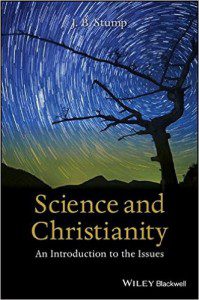 How should we think about divine action?
As Christians we believe in a personal God who acts in relationship with his creatures and to his creation. Christianity is theistic not deistic. But the question of divine action – how God can (or cannot) interact with his creation has become a significant question. We wonder if God’s action should be scientifically testable or discernible. Is God a cause from within creation or outside of creation? Chapter 10 of J. B. Stump’s recent book Science and Christianity: An Introduction to the Issues, looks at these questions.
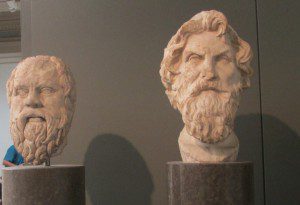 In classical Greek philosophy Aristotle argues that cause can be broken down into four complementary answers. Jim Stump uses the example of Michelangelo’s statue of David to illustrate the differences (p. 120):
- The efficient cause of the statue is Michelangelo’s chiseling the block of marble into the shape that it now has.
- The material cause of the statue is the substance that it is made – the marble – which provides some limitation to what it could be (we couldn’t make an enduring statue out of butter).
- The formal cause of the statue is the kind of thin that it is; according to both Plato’s and Aristotle’s metaphysics, there are essences of things which determine the kind of thing an object can be.
- The final cause of the statue is the purpose for which it was made.
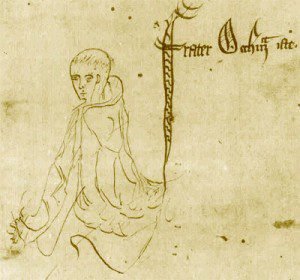 Today, after the rise of scientific thinking over the last 600 years or so, we more or less limit discussions of cause to the efficient cause – the material chain of events that led to the object taking the natural form in which we find it. “This limitation to efficient causes is what makes divine action such a difficult problem. There is no room for purposeful action of any agents – human or divine – so once we understand the efficient causes of something, our minds today are conditioned to think there is nothing else to say.” (p. 120) Jim traces this back to the principle known as Ockham’s razor. According to Wikipedia: “His principle can be interpreted as stating Among competing hypotheses, the one with the fewest assumptions should be selected.” Jim’s summary is similar “The closest statement of the principle in Ockham’s works is “a plurality of hypothesis must never be posited without necessity.” (p. 122)
Ockham’s razor has come to mean that if a natural mechanism for some phenomenon exists we should not posit the involvement of any supernatural being, whether God, a leprechaun, or a flying spaghetti monster. As a corollary, this manner of thinking has led some theologians to question the possibility of miracles. The world we see around us appears to represent the work of an absentee God who started the process and stepped away.
Miracles. Many different approaches have been taken to the explanation of miracles – from total denial, to the scientific explanations finding space for God’s action in quantum uncertainty and chaos. John Polkinghorne thinks through these ideas in many of his books (you can find a list of books on his Amazon page). Jim separates quantum uncertainty and chaos, but I think we need to consider these simultaneously. I do hold to the “Copenhagen Interpretation” that quantum events are genuinely random and can only be described probabilistically. Chaos theory has to do with extreme sensitivity to initial conditions – classically this means that the inability to predict future events is only the result of imperfect knowledge of the system at one time (assigned as t=0). In quantum theory, however, there is always some intrinsic uncertainty. Taken together, we can have a reality that is not completely causally closed. (In a causally closed system, perfect knowledge of conditions at one time permits complete understanding at all subsequent (and prior) times.)
If there is a realm of existence beyond the physical world we experience, i.e. if there is a God, there is another argument against causal closure of the physical world as well. The rules that govern our physical universe may not describe all of reality. To attribute the laws of physics to all of reality “is an assumption of science which is metaphysical or theological, not a scientific conclusion.” (p. 125)
A God who can intervene, but only does so sparingly raises another kind of problem for many people – the problem of evil. If God can intervene, but doesn’t, thereby permitting all kinds of moral and natural evil, what kind of God is he? Many find it hard to claim this is the action of a God who is love. This question will come up again in a later chapter on the problem of evil.
Mind and Relationship. I am not convinced searching for space for divine action in quantum uncertainty and chaos is the right approach. A better approach is the one Jim ends the chapter with. When a mind is involved in the process there can certainly be multiple levels of cause for an event. John Polkinghorne uses a teakettle example. If a teakettle is boiling it can be described scientifically: fire causes the water in the kettle to increase in kinetic energy, thereby causing the vapor pressure of the liquid to reach the atmospheric pressure, at which time boiling occurs. It can also be described according to the purposeful actions of a mind – I wanted a cup of tea before going to bed, or I wanted to boil crayfish from the lake to eat them (something we used to do on canoe trips in the Boundary Waters).
Ockham’s razor should not be taken as some absolute rule separating divine action from natural cause. It is not unreasonable to posit layers of cause similar to the reasoning of the ancient Greeks and of Thomas Aquinas. There can be both primary cause and secondary cause.
If God is a personal being as the Christian creeds attest, then it is perfectly legitimate to explore that personal aspect of reality in theological terms while at the same time encouraging others to explore the level of description more appropriate to the fundamental laws and forces of nature. And just as the two explanations for the teakettle boiling are not in conflict, neither are scientific and theological explanations of an even in conflict.
Some might criticize this approach as succumbing to the Independent thesis discussed in Chapter 1, in which science and theology have no common ground. … But there is an important difference in the approach being commended in this chapter: scientific explanation and personal (or theological) explanations are talking about the same thing, just appealing to different aspects of it. (p. 130)
Humans can be both the result of evolutionary processes and the result of the intentional purposes of God. These are not competing explanations.
How do you think about divine action?
Is this a problem?
If you wish to contact me directly you may do so at rjs4mail[at]att.net.
If interested you can subscribe to a full text feed of my posts at Musings on Science and Theology.
Previous Post

May 16, 2017
Tim Suttle Gets it Right!
Next Post
May 17, 2017 Matthew Bates: When Justification Meets Allegiance
Browse Our Archives
Select a Category Acts of the Apostles Adam Advent Anabaptism Angels Anglican Apologetics Atonement Baptism BCP Prayers Bible Biblical Studies Birds Blogging Bloglossary Bonhoeffer Books Calvinism Christianity Church Church History Coffee Colossians Commentary Recs Conversion Creation Creeds Culture Death Ecclesiastes Economics Education Embracing Grace Emergent Emerging Movement Eschatology Essays Ethics Eucharist Evangelicalism Family Fasting Fathers Fellowship of Differents Footsteps Tour Fun and Whimsical Gospel Grace Happiness Heaven Hell Holy Spirit Irenaeus James Jesus Jesus Creed Job Justification Kingdom of God Law Lectures Lent Liberalism Love and Marriage Mabanteneni Manhood Mary Miracles Missio Alliance MissioLife Missional Missional Jesus Movies and Film New Perspective Northern Seminary OneLife Origins Project Orthodox Parables Pastor's Spouse Pastoring and Leading Pastoring and Preaching Patristics Paul Paul-John Tour Pharisees Pietism Political Theology Prayer and Formation Preaching Problems for Faith Psalm 119 Psalms Public Issues Purgatory Religions Resurrection Revelation Romans Rule of JCreed Science and Faith Sermon on the Mount Sports Ten Commandments Theology Third Way Top Ten Lists Translations Uncategorized Universalism University Ministry Way Out Weekly Meanderings Wisdom Women and Ministry Work Worship Writing & Blogging Youth Ministry
Select a Month July 2021 January 2020 December 2019 November 2019 October 2019 September 2019 August 2019 July 2019 June 2019 May 2019 April 2019 March 2019 February 2019 January 2019 December 2018 November 2018 October 2018 September 2018 August 2018 July 2018 June 2018 May 2018 April 2018 March 2018 February 2018 January 2018 December 2017 November 2017 October 2017 September 2017 August 2017 July 2017 June 2017 May 2017 April 2017 March 2017 February 2017 January 2017 December 2016 November 2016 October 2016 September 2016 August 2016 July 2016 June 2016 May 2016 April 2016 March 2016 February 2016 January 2016 December 2015 November 2015 October 2015 September 2015 August 2015 July 2015 June 2015 May 2015 April 2015 March 2015 February 2015 January 2015 December 2014 November 2014 October 2014 September 2014 August 2014 July 2014 June 2014 May 2014 April 2014 March 2014 February 2014 January 2014 December 2013 November 2013 October 2013 September 2013 August 2013 July 2013 June 2013 May 2013 April 2013 March 2013 February 2013 January 2013 December 2012 November 2012 October 2012 September 2012 August 2012 July 2012 June 2012 May 2012 April 2012 March 2012 February 2012 January 2012 December 2011 November 2011 October 2011 September 2011 August 2011 July 2011 June 2011 May 2011 April 2011 March 2011 February 2011 January 2011 December 2010 November 2010 October 2010 September 2010 August 2010 July 2010 June 2010 May 2010 April 2010 March 2010 February 2010 January 2010 December 2009 November 2009 October 2009 September 2009 August 2009 July 2009 June 2009 May 2009 April 2009 March 2009 February 2009 January 2009 December 2008 November 2008 October 2008 September 2008 August 2008 July 2008 June 2008 May 2008 April 2008 March 2008 February 2008 January 2008 December 2007 November 2007 October 2007 September 2007 August 2007 July 2007 June 2007 May 2007 April 2007 March 2007 February 2007 January 2007 December 2006 November 2006 October 2006 September 2006 August 2006 July 2006 June 2006 May 2006 April 2006 March 2006 February 2006 January 2006 December 2005 November 2005 October 2005 September 2005 August 2005 July 2005 June 2005 May 2005 April 2005 0000
Follow Us!
TAKE THE
Religious Wisdom Quiz
Who said, "To obey is better than sacrifice"?
Select your answer to see how you score.
Samuel Isaiah Solomon David
Related posts from Jesus Creed


The Gospel of With Us and Through Us

Northern Seminary Announces: Nijay Gupta Joins Faculty

The Gundrys and Me: Ruth Tucker
TRENDING AT PATHEOS Evangelical

The REST of Your Life: A Creative Wrestles...
This week I had a conversation with a good friend from church....

How the author of the world's best hymn...
I've been working with John Newton for a while now. This makes...

Long before this Lectio Divina, Psalm 130 - the song - started...

What About the Trees? Another Living Parable
After I finished writing the last article about falling leaves as a...

Why Classical Education Is a Conversation, Not a...
Come and Read: Joy in Classical Education When I was a little...

Cornell University has received a great deal of negative publicity and intense...
view all Evangelical blogs
Ad-Free & Subscriber Log-In Subscription Support
- About Us
- 2026 Calendar
- Videos
- Podcasts
- Library of World Religions
- Faith In Media Tracker
- Advertise With Us
- Write for Us
- Privacy Policy
- Terms of Service
- Do Not Sell My Data
- Contact Us
- Radiant Digital
- Manage Newsletter Subscriptions
- Unsubscribe From Notifications
- Sitemap
Copyright 2008-2026, Patheos. All rights reserved.
Subscription Support Ad-Free & Subscriber Log-In
Follow Patheos