
BuddhistCatholicContemplativeEvangelicalGeneral ChristianHinduJewishLatter-day SaintMuslimNew VisionsProgressive Christian
Beliefs
- Buddhist
- Catholic
- Contemplative
- Evangelical
- General Christian
- Hindu
- Jewish
- Latter-day Saint
- More Voices
- Muslim
- New Visions
- Pagan
- Progressive Christian
Topics
- Religion News
- Food and Religion
- Sports and Religion
- Religious Art
- Religious Music and Entertainment
- Religious Events
- History and Religion
- Style and Religion
- Politics and Religion
- Women in Religion
- Recreation Outdoors and Religion
- Business Finance and Religion
- Careers Workplace and Religion
- Education and Religion
- Family Parenting and Religion
- Health Fitness and Religion
- Home and Religion
- Relationships and Religion
- Technology and Religion
- Travel and Religion
Columnists
- Buddhist Columnists
- Business Finance and Religion Columnists
- Careers Workplace and Religion Columnists
- Catholic Columnists
- Contemplative Columnists
- Education and Religion Columnists
- Evangelists Columnists
- Family Parenting and Religion Columnists
- General Christian Columnists
- Health Fitness and Religion Columnists
- Hindu Columnists
- History and Religion Columnists
- Home and Religion Columnists
- Jewish Columnists
- More Voices Columnists
- Latter Day Columnists
- Muslim Columnists
- New Visions Columnists
- Nonreligious Columnists
- Pagan Columnists
- Politics and Religion Columnists
- Progressive Columnists
- Recreation Outdoors and Religion Columnists
- Relationships and Religion Columnists
- Religion News Columnists
- Religious Art Columnists
- Religious Events Columnists
- Religious Music and Entertainment Columnists
- Sports and Religion Columnists
- Style and Religion Columnists
- Technology and Religion Columnists
- Travel and Religion Columnists
- Women in Religion Columnists
Resource Library
- 2026 Calendar
- Library of World Religions
- The 100 Most Holy Places on Earth
- Patheos Answers
- Podcasts
- Videos
- Faith Leaders Database
- Anglican Episcopalian
- Bahai
- Baptist
- Buddhism
- Christianity
- Confucianism
- Eastern Orthodoxy
- Hinduism
- Holiness and Pentecostal
- ISKCON
- Islam
- Judaism
- Lutheran
- Methodist
- The Church of Jesus Christ of Latter-day Saints
- New Age
- Paganism
- Presbytarian and Reformed
- Protestantism
- Religion Behind the Scenes
- Roman Catholic
- Scientology
- Shia Islam
- Sikhism
- Sufism
- Sunni Islam
- Taoism
- Zen
- See all religions
Research Tools
 Ad-Free & Subscriber Log-In Subscription Support
Follow Patheos 

- Trending:
- Advent
- |
- Forgiveness
- |
- Thanksgiving
- |
- Election
- |
- Seasonal Holidays
- |
- Marriage
 Jesus Creed
- Home
- Evangelical
- Before Galileo (RJS)
Before Galileo (RJS)
Last updated on: April 25, 2017 at 12:27 pm by RJS
Before Galileo (RJS) 2017-04-25T12:27:05-05:00 RJS
Patheos Explore the world's faith through different perspectives on religion and spirituality! Patheos has the views of the prevalent religions and spiritualities of the world.
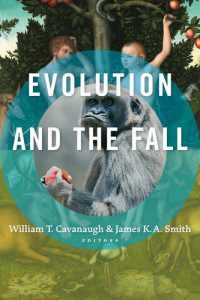 I picked up another new book this week – to add to my stack. This book Evolution and the Fall contains a collection of essays by a number of authors including Biologist Darrel Falk, philosopher James K.A. Smith, theologian Joel Green and Old Testament scholar J. Richard Middleton. It looks well worth dipping into over the coming months. This book is the result of a collaboration facilitated by the Colossian Forum where these Christian scholars met together regularly over several years for worship, fellowship, and intellectual engagement on the issues surrounding evolution and the fall.
The introduction lays out the premise. Christian thinkers need to gather together in communion to thrash through the kinds of hard questions raised by evolution, especially human evolution. Our model shouldn’t be Galileo. Rather, we should be looking before Galileo to the manner in which the church worked through key issues. The preferred model should be the Council of Chalcedon where the leading thinkers and bishops of the church gathered to thrash out issues surrounding the nature of Jesus as both divine and human.
Why is this a better model? First, comparison with Galileo sets the wrong tone.
Since we now tend to look at the church’s response to Galileo as misguided, reactionary, and backward, this “Galilean” framing of the new origins debate does two things: First it casts scientists – and those Christian scholars who champion science – as heroes and martyrs willing to embrace progress and enlightenment. Second, and as a result, this framing of the debate associates concern with Christian orthodoxy as backward, timid, and fundamentalist. (p. xvi)
Second, this model focuses on the importance of Christian fellowship and worship in the discussion.
Creative and constructive theological work requires faithful imagination. But that requires two things: time and worship. We need time to train and stretch our imaginative muscles; time to ruminate on issues and opportunities; time to listen and contemplate; and above all time to pray. So the cultivation of faithful imagination also requires bathing and baptizing the imagination in the cadences of the biblical story – which is precisely the goal of Christian worship. Thus the cultivation of constructive theological imagination begins with liturgical formation. (xviii)
This emphasis is not surprising given the thrust of much of James K.A. Smith’s recent work including Desiring the Kingdom and Imagining the Kingdom. Intentional liturgical formation is an indispensable condition for faithful Christian scholarship. To think together, we must also worship together – ideally in communion with each other (but this is asking too much for many these days, … and science isn’t the issue).
In the introduction Cavanaugh and Smith also dig into the importance of tradition. Rather than an image of jettisoning old ideas and replacing them with new ideas, we should realize that knowledge and understanding develops within a tradition and heritage.
From the point of view of a tradition like the Christian tradition, “reasons” and “advances” are understood differently because there is a weight granted to the tradition as tradition; there is a requirement that any advance be seen as an extension, not a supersession, of the tradition. There are no prizes for novelty in a tradition. (xxiv-xxv)
The extension, modification, or reformulation of a “traditional” position must be demonstrated to be faithful and subject to the discernment of what Cavanaugh and Smith term “the community of practice” (the people of God).
 Some thoughts: The discussion begun in this book, and in the recent book by Scot and Dennis Adam and the Genome that I’m also in the process of reading, is an essential one. As we wrestle with these questions, the emphasis of Cavanaugh, Smith, and the Colossian Forum, on worship and faithful community is indispensable.This needs to be a community effort in the church.
In one respect the comparison to Chalcedon rather than Galileo is clearly appropriate. The nature of humankind and the origin of sin raise questions that are far more theologically significant than those raised by the mechanics of the motion of heavenly bodies. The theological thinking required in the church resembles Chalcedon and Nicea more than it resembles the Galileo affair.
However, the introduction by Cavanaugh (a theologian) and Smith (a philosopher) also left me scratching my head. I would add the caveat that to avoid turning this into a Galileo moment, with the church seen as “backward, timid, and fundamentalist,” the conversation must include on equal footing faithful Christians with real expertise in a range of sciences and social sciences. Not because we are heroes and martyrs, but because we are all committed to the same end, which is truth about God, his creation, and his purposes. A consensus shaped in ignorance that orthodoxy requires the biological equivalent of a flat or immovable earth would have devastating consequences.
On the other hand, ignorance and arrogance can be a fundamental a problem among scientists (both Christian and non-Christian). Far too often there are pronouncements about the theological significance of this or that discovery without rigorous and careful consideration. We need to be in conversation with theologians, philosophers, and biblical scholars. Christian scientists must take the effort to understand the theological issues and questions.
Finally, the key questions revolve around Christian orthodoxy, but we need a good definition of orthodoxy. This is easier said than done. In a footnote Cavanaugh and Smith use an illustration involving the game of soccer. When does a change in the rules transform the game into something that is no longer soccer? Would a rule that a player could catch and drop the ball cross this line?
 Likewise, when does a position become non-Christian, beyond the pale? Christianity, of course, is not a game. Here we are in search, to the best of our ability, of God’s truth. Error is error, whether overly stringent or overly lax. The book looks to Chalcedon for a model – which may be too late in the game. For the fundamentals of orthodoxy perhaps we should be content with the Apostle’s or Nicene Creeds. I favor the Apostles Creed, the essence of which is found in a number of early church writers, predating the Nicene Creed.
I believe in God, the Father almighty,
creator of heaven and earth.
I believe in Jesus Christ, God’s only Son, our Lord,
who was conceived by the Holy Spirit,
born of the Virgin Mary,
suffered under Pontius Pilate,
was crucified, died, and was buried;
he descended to the dead.
On the third day he rose again;
he ascended into heaven,
he is seated at the right hand of the Father,
and he will come to judge the living and the dead.
I believe in the Holy Spirit,
the holy catholic Church,
the communion of saints,
the forgiveness of sins,
the resurrection of the body,
and the life everlasting. Amen.
A position that denies the Father, Son, or Holy Spirit, the incarnation, crucifixion or resurrection, the forgiveness of sins, the resurrection of the body or the life everlasting – this steps outside the realm of orthodoxy. Inside of these bounds, an argument or formulation may be right or wrong in varying degree, but we should be slow to push it beyond the pale of Christian orthodoxy.
Nothing here about a creation week, original sin, Adam or the Fall. This doesn’t mean that anything goes. It does mean that we can afford to be slow and methodical as we consider the issues involved. Evolution and the Fall should lead us into some fascinating discussions.
How should issues like evolution and the Fall be approached?
What defines Christian orthodoxy?
If you wish to contact me directly you may do so at rjs4mail[at]att.net.
If interested you can subscribe to a full text feed of my posts at Musings on Science and Theology.
Previous Post

April 25, 2017
Evaluating the APEST Theory of Church Flourishing (Bob Robinson)
Next Post
April 26, 2017 How Central is Christ in Your Understanding of God?
Browse Our Archives
Select a Category Acts of the Apostles Adam Advent Anabaptism Angels Anglican Apologetics Atonement Baptism BCP Prayers Bible Biblical Studies Birds Blogging Bloglossary Bonhoeffer Books Calvinism Christianity Church Church History Coffee Colossians Commentary Recs Conversion Creation Creeds Culture Death Ecclesiastes Economics Education Embracing Grace Emergent Emerging Movement Eschatology Essays Ethics Eucharist Evangelicalism Family Fasting Fathers Fellowship of Differents Footsteps Tour Fun and Whimsical Gospel Grace Happiness Heaven Hell Holy Spirit Irenaeus James Jesus Jesus Creed Job Justification Kingdom of God Law Lectures Lent Liberalism Love and Marriage Mabanteneni Manhood Mary Miracles Missio Alliance MissioLife Missional Missional Jesus Movies and Film New Perspective Northern Seminary OneLife Origins Project Orthodox Parables Pastor's Spouse Pastoring and Leading Pastoring and Preaching Patristics Paul Paul-John Tour Pharisees Pietism Political Theology Prayer and Formation Preaching Problems for Faith Psalm 119 Psalms Public Issues Purgatory Religions Resurrection Revelation Romans Rule of JCreed Science and Faith Sermon on the Mount Sports Ten Commandments Theology Third Way Top Ten Lists Translations Uncategorized Universalism University Ministry Way Out Weekly Meanderings Wisdom Women and Ministry Work Worship Writing & Blogging Youth Ministry
Select a Month July 2021 January 2020 December 2019 November 2019 October 2019 September 2019 August 2019 July 2019 June 2019 May 2019 April 2019 March 2019 February 2019 January 2019 December 2018 November 2018 October 2018 September 2018 August 2018 July 2018 June 2018 May 2018 April 2018 March 2018 February 2018 January 2018 December 2017 November 2017 October 2017 September 2017 August 2017 July 2017 June 2017 May 2017 April 2017 March 2017 February 2017 January 2017 December 2016 November 2016 October 2016 September 2016 August 2016 July 2016 June 2016 May 2016 April 2016 March 2016 February 2016 January 2016 December 2015 November 2015 October 2015 September 2015 August 2015 July 2015 June 2015 May 2015 April 2015 March 2015 February 2015 January 2015 December 2014 November 2014 October 2014 September 2014 August 2014 July 2014 June 2014 May 2014 April 2014 March 2014 February 2014 January 2014 December 2013 November 2013 October 2013 September 2013 August 2013 July 2013 June 2013 May 2013 April 2013 March 2013 February 2013 January 2013 December 2012 November 2012 October 2012 September 2012 August 2012 July 2012 June 2012 May 2012 April 2012 March 2012 February 2012 January 2012 December 2011 November 2011 October 2011 September 2011 August 2011 July 2011 June 2011 May 2011 April 2011 March 2011 February 2011 January 2011 December 2010 November 2010 October 2010 September 2010 August 2010 July 2010 June 2010 May 2010 April 2010 March 2010 February 2010 January 2010 December 2009 November 2009 October 2009 September 2009 August 2009 July 2009 June 2009 May 2009 April 2009 March 2009 February 2009 January 2009 December 2008 November 2008 October 2008 September 2008 August 2008 July 2008 June 2008 May 2008 April 2008 March 2008 February 2008 January 2008 December 2007 November 2007 October 2007 September 2007 August 2007 July 2007 June 2007 May 2007 April 2007 March 2007 February 2007 January 2007 December 2006 November 2006 October 2006 September 2006 August 2006 July 2006 June 2006 May 2006 April 2006 March 2006 February 2006 January 2006 December 2005 November 2005 October 2005 September 2005 August 2005 July 2005 June 2005 May 2005 April 2005 0000
Follow Us!
TAKE THE
Religious Wisdom Quiz
I was breathing out murderous threats, but a blinding light changed everything. I became the greatest missionary the church has known. Who am I?
Select your answer to see how you score.
Saul Barnabas Stephen Peter
Related posts from Jesus Creed


The Gospel of With Us and Through Us

Northern Seminary Announces: Nijay Gupta Joins Faculty

The Gundrys and Me: Ruth Tucker
TRENDING AT PATHEOS Evangelical

When you hear the word riches, what comes to mind? For most...

Don’t Miss the Parents: A Creative Christmas Meditation
As we enter the Advent Season, I see many people trying to...

Making Stones Into Bread: Choosing the “Right” Work
I was on my online arts ministry Zoom meeting with the International...

Ukraine’s exhausted Christians face fifth winter of war
By Julian Lukins The full-scale war in Ukraine is taking “a serious...

Russell Brand's Conviction is not anti-Christian Persecution
How do we shed the reputation that the Church is OK with...

Have you ever caught yourself saying, “I’ll do it tomorrow,” or “Now...
view all Evangelical blogs
Ad-Free & Subscriber Log-In Subscription Support
- About Us
- 2026 Calendar
- Videos
- Podcasts
- Library of World Religions
- Faith In Media Tracker
- Advertise With Us
- Write for Us
- Privacy Policy
- Terms of Service
- Do Not Sell My Data
- Contact Us
- Radiant Digital
- Manage Newsletter Subscriptions
- Unsubscribe From Notifications
- Sitemap
Copyright 2008-2026, Patheos, part of the Radiant Digital network of media brands. All rights reserved.
Subscription Support Ad-Free & Subscriber Log-In
Follow Patheos