
BuddhistCatholicContemplativeEvangelicalGeneral ChristianHinduJewishLatter-day SaintMuslimNew VisionsProgressive Christian
Beliefs
- Buddhist
- Catholic
- Contemplative
- Evangelical
- General Christian
- Hindu
- Jewish
- Latter-day Saint
- More Voices
- Muslim
- New Visions
- Pagan
- Progressive Christian
Topics
- Religion News
- Food and Religion
- Sports and Religion
- Religious Art
- Religious Music and Entertainment
- Religious Events
- History and Religion
- Style and Religion
- Politics and Religion
- Women in Religion
- Recreation Outdoors and Religion
- Business Finance and Religion
- Careers Workplace and Religion
- Education and Religion
- Family Parenting and Religion
- Health Fitness and Religion
- Home and Religion
- Relationships and Religion
- Technology and Religion
- Travel and Religion
Columnists
- Buddhist Columnists
- Business Finance and Religion Columnists
- Careers Workplace and Religion Columnists
- Catholic Columnists
- Contemplative Columnists
- Education and Religion Columnists
- Evangelists Columnists
- Family Parenting and Religion Columnists
- General Christian Columnists
- Health Fitness and Religion Columnists
- Hindu Columnists
- History and Religion Columnists
- Home and Religion Columnists
- Jewish Columnists
- More Voices Columnists
- Latter Day Columnists
- Muslim Columnists
- New Visions Columnists
- Nonreligious Columnists
- Pagan Columnists
- Politics and Religion Columnists
- Progressive Columnists
- Recreation Outdoors and Religion Columnists
- Relationships and Religion Columnists
- Religion News Columnists
- Religious Art Columnists
- Religious Events Columnists
- Religious Music and Entertainment Columnists
- Sports and Religion Columnists
- Style and Religion Columnists
- Technology and Religion Columnists
- Travel and Religion Columnists
- Women in Religion Columnists
Resource Library
- 2026 Calendar
- Library of World Religions
- The 100 Most Holy Places on Earth
- Patheos Answers
- Podcasts
- Videos
- Faith Leaders Database
- Anglican Episcopalian
- Bahai
- Baptist
- Buddhism
- Christianity
- Confucianism
- Eastern Orthodoxy
- Hinduism
- Holiness and Pentecostal
- ISKCON
- Islam
- Judaism
- Lutheran
- Methodist
- The Church of Jesus Christ of Latter-day Saints
- New Age
- Paganism
- Presbytarian and Reformed
- Protestantism
- Religion Behind the Scenes
- Roman Catholic
- Scientology
- Shia Islam
- Sikhism
- Sufism
- Sunni Islam
- Taoism
- Zen
- See all religions
Research Tools
 Ad-Free & Subscriber Log-In Subscription Support
Follow Patheos 

- Trending:
- Advent
- |
- Forgiveness
- |
- Thanksgiving
- |
- Election
- |
- Seasonal Holidays
- |
- Marriage
 Jesus Creed
- Home
- Evangelical
- Paul, Women, and the Culture of that Time
Paul, Women, and the Culture of that Time
Last updated on: March 15, 2017 at 3:00 am by Scot McKnight
Paul, Women, and the Culture of that Time 2017-03-11T13:10:30-06:00 Scot McKnight
Patheos Explore the world's faith through different perspectives on religion and spirituality! Patheos has the views of the prevalent religions and spiritualities of the world.
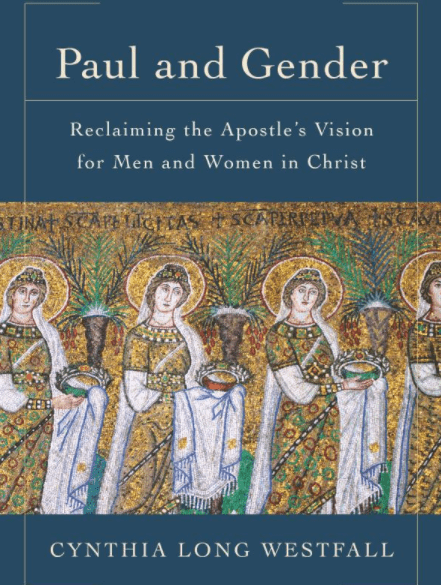 Culture matters and when it comes to an ancient texts it matters even more because that culture is not ours. In her new book, Paul and Gender, Cynthia Westfall investigates culture as a filter we need to rediscover and she then examines what it meant for Paul to ask women to veil.
Here is a complex sentence but she packs into it a boatload of information vital for what happens in the chapter:
“Cultural and linguistic information about gender is demonstrated through the culture and specifically through the structure of the language, as well as the vocabulary, symbols, and metaphors. However, a culture’s language structure, symbols, and metaphors that involve gender should not be equated with the message of a speaker who utilizes that language. When Paul employs the structure and vocabulary of the Greek language or refers to cultural symbols, metaphors, or practices about gender, we need to be alert as to how much of Greco-Roman cultural practices and worldview are part of Paul’s message, and what cultural assumptions are truly adopted by him” (7-8, my italics).
Westfall sketches Paul in context briefly with some attention to rhetoric and Aristotle and the Greco-Roman view of women, which was fluid but also dependent upon status of a woman and the status of a group. If a group was dangerous the various actions of women would be scrutinized. Thus,
The female version of so-called honor was the primary female “virtue” of shame, which was comprised of deferential behavior, modesty, and chastity that enhanced the honor of the male head of the household (see Sir. 26:10-16; 42:9-12; 4 Mace. 18:6-8; Thucydides, Hist. 2.45.2). … Therefore, when Paul gives honor and recognition to so many female members of the Roman church in Romans 16, it stands out as a significant deviation from the cultural practice and ideal (18-19).
The husband and wife were usually unequal partners in the patronage system in the Greco-Roman world. The husband functioned as the benefactor, and the woman functioned as the inferior party in the marital relationship, unless she brought a large dowry into the marriage. Patronage between unequal pairs often consisted of both authority and reciprocity, which were reflected in the household. The wife received her identity, social position, and a share in the property from her husband and her husband’s family (with the exception of the Roman practice of marrying without manus). The husband received authority and honor in the household, his house was managed, and he obtained his legal heirs from the marital relationship, heirs who would make their contributions to the family economy (20-21). [SMcK: I’m not so sure that marriage is to be explained through patronage.]
Then she turns to space/place and gender: males more for the public and females for the household.
All this is then applied to women, veiling and 1 Cor 11:2-16. Here are her conclusions, which I enumerate:
This study disproves the presupposition in biblical studies that the veil symbolized a woman’s submission to her husband. Wearing the veil was not a private symbol, but rather a public practice regulated by law and custom, and men as well as women were expected to submit to the custom. Briefly, the veil represented a woman’s honor, status, and protection. [Her hair was her glory and beauty; unveiled meant sexually available.] Once the practice of veiling is understood, five things become apparent:
- Men were the ones in the culture who made the laws for veiling, and they thought it was in their interest to prevent certain classes of women from veiling.
- It was (and is) common for women to resist removing their veil because it symbolizes honor and protection.
- It is more likely that women who were not allowed to veil in public would want to wear a veil in the community to symbolize that they were made righteous by Christ.
- Paul’s direction for all women to veil was countercultural and favorable toward women.
- The practice of all women wearing the veil equalized social relationships in the Christian community.
There is now an ongoing debate about how much in this passage is from Paul and how much from his opponents, and Lucy Peppiatt has recently shown (Women and Worship at Corinth) just how contested every line in this passage is. Westfall’s conclusions here are reasonable but so far as I am reading there’s not likely to be a consensus any time soon.
Just the issue of veiling remains contested. Notice this from a note:
However, Craig Keener, in common with Winter, proposes a different kind of class conflict than is argued here; on the basis of Greco-Roman statues of women from this period having unveiled heads, he suggests that upper-class women would show off their hairstyles following the imperial court, while lower-class women would follow a more conservative interpretation of modesty.
Westfall: “Slaves, prostitutes, and freedwomen were prohibited from veiling.” Both of these are from p. 25.
Previous Post

March 15, 2017
A Priority to Rest?
Next Post
March 15, 2017 Dangerous Gospel: The Model Home (Jonathan Storment)
Browse Our Archives
Select a Category Acts of the Apostles Adam Advent Anabaptism Angels Anglican Apologetics Atonement Baptism BCP Prayers Bible Biblical Studies Birds Blogging Bloglossary Bonhoeffer Books Calvinism Christianity Church Church History Coffee Colossians Commentary Recs Conversion Creation Creeds Culture Death Ecclesiastes Economics Education Embracing Grace Emergent Emerging Movement Eschatology Essays Ethics Eucharist Evangelicalism Family Fasting Fathers Fellowship of Differents Footsteps Tour Fun and Whimsical Gospel Grace Happiness Heaven Hell Holy Spirit Irenaeus James Jesus Jesus Creed Job Justification Kingdom of God Law Lectures Lent Liberalism Love and Marriage Mabanteneni Manhood Mary Miracles Missio Alliance MissioLife Missional Missional Jesus Movies and Film New Perspective Northern Seminary OneLife Origins Project Orthodox Parables Pastor's Spouse Pastoring and Leading Pastoring and Preaching Patristics Paul Paul-John Tour Pharisees Pietism Political Theology Prayer and Formation Preaching Problems for Faith Psalm 119 Psalms Public Issues Purgatory Religions Resurrection Revelation Romans Rule of JCreed Science and Faith Sermon on the Mount Sports Ten Commandments Theology Third Way Top Ten Lists Translations Uncategorized Universalism University Ministry Way Out Weekly Meanderings Wisdom Women and Ministry Work Worship Writing & Blogging Youth Ministry
Select a Month July 2021 January 2020 December 2019 November 2019 October 2019 September 2019 August 2019 July 2019 June 2019 May 2019 April 2019 March 2019 February 2019 January 2019 December 2018 November 2018 October 2018 September 2018 August 2018 July 2018 June 2018 May 2018 April 2018 March 2018 February 2018 January 2018 December 2017 November 2017 October 2017 September 2017 August 2017 July 2017 June 2017 May 2017 April 2017 March 2017 February 2017 January 2017 December 2016 November 2016 October 2016 September 2016 August 2016 July 2016 June 2016 May 2016 April 2016 March 2016 February 2016 January 2016 December 2015 November 2015 October 2015 September 2015 August 2015 July 2015 June 2015 May 2015 April 2015 March 2015 February 2015 January 2015 December 2014 November 2014 October 2014 September 2014 August 2014 July 2014 June 2014 May 2014 April 2014 March 2014 February 2014 January 2014 December 2013 November 2013 October 2013 September 2013 August 2013 July 2013 June 2013 May 2013 April 2013 March 2013 February 2013 January 2013 December 2012 November 2012 October 2012 September 2012 August 2012 July 2012 June 2012 May 2012 April 2012 March 2012 February 2012 January 2012 December 2011 November 2011 October 2011 September 2011 August 2011 July 2011 June 2011 May 2011 April 2011 March 2011 February 2011 January 2011 December 2010 November 2010 October 2010 September 2010 August 2010 July 2010 June 2010 May 2010 April 2010 March 2010 February 2010 January 2010 December 2009 November 2009 October 2009 September 2009 August 2009 July 2009 June 2009 May 2009 April 2009 March 2009 February 2009 January 2009 December 2008 November 2008 October 2008 September 2008 August 2008 July 2008 June 2008 May 2008 April 2008 March 2008 February 2008 January 2008 December 2007 November 2007 October 2007 September 2007 August 2007 July 2007 June 2007 May 2007 April 2007 March 2007 February 2007 January 2007 December 2006 November 2006 October 2006 September 2006 August 2006 July 2006 June 2006 May 2006 April 2006 March 2006 February 2006 January 2006 December 2005 November 2005 October 2005 September 2005 August 2005 July 2005 June 2005 May 2005 April 2005 0000
Follow Us!
TAKE THE
Religious Wisdom Quiz
How many letters (epistles) did Paul write in the New Testament?
Select your answer to see how you score.
14 12 10 13
Related posts from Jesus Creed


The Gospel of With Us and Through Us

Northern Seminary Announces: Nijay Gupta Joins Faculty

The Gundrys and Me: Ruth Tucker
TRENDING AT PATHEOS Evangelical

When you hear the word riches, what comes to mind? For most...

Don’t Miss the Parents: A Creative Christmas Meditation
As we enter the Advent Season, I see many people trying to...

Making Stones Into Bread: Choosing the “Right” Work
I was on my online arts ministry Zoom meeting with the International...

Ukraine’s exhausted Christians face fifth winter of war
By Julian Lukins The full-scale war in Ukraine is taking “a serious...

Russell Brand's Conviction is not anti-Christian Persecution
How do we shed the reputation that the Church is OK with...

Have you ever caught yourself saying, “I’ll do it tomorrow,” or “Now...
view all Evangelical blogs
Ad-Free & Subscriber Log-In Subscription Support
- About Us
- 2026 Calendar
- Videos
- Podcasts
- Library of World Religions
- Faith In Media Tracker
- Advertise With Us
- Write for Us
- Privacy Policy
- Terms of Service
- Do Not Sell My Data
- Contact Us
- Radiant Digital
- Manage Newsletter Subscriptions
- Unsubscribe From Notifications
- Sitemap
Copyright 2008-2026, Patheos, part of the Radiant Digital network of media brands. All rights reserved.
Subscription Support Ad-Free & Subscriber Log-In
Follow Patheos