
BuddhistCatholicContemplativeEvangelicalGeneral ChristianHinduJewishLatter-day SaintMuslimNew VisionsProgressive Christian
Beliefs
- Buddhist
- Catholic
- Contemplative
- Evangelical
- General Christian
- Hindu
- Jewish
- Latter-day Saint
- More Voices
- Muslim
- New Visions
- Pagan
- Progressive Christian
Topics
- Religion News
- Food and Religion
- Sports and Religion
- Religious Art
- Religious Music and Entertainment
- Religious Events
- History and Religion
- Style and Religion
- Politics and Religion
- Women in Religion
- Recreation Outdoors and Religion
- Business Finance and Religion
- Careers Workplace and Religion
- Education and Religion
- Family Parenting and Religion
- Health Fitness and Religion
- Home and Religion
- Relationships and Religion
- Technology and Religion
- Travel and Religion
Columnists
- Buddhist Columnists
- Business Finance and Religion Columnists
- Careers Workplace and Religion Columnists
- Catholic Columnists
- Contemplative Columnists
- Education and Religion Columnists
- Evangelists Columnists
- Family Parenting and Religion Columnists
- General Christian Columnists
- Health Fitness and Religion Columnists
- Hindu Columnists
- History and Religion Columnists
- Home and Religion Columnists
- Jewish Columnists
- More Voices Columnists
- Latter Day Columnists
- Muslim Columnists
- New Visions Columnists
- Nonreligious Columnists
- Pagan Columnists
- Politics and Religion Columnists
- Progressive Columnists
- Recreation Outdoors and Religion Columnists
- Relationships and Religion Columnists
- Religion News Columnists
- Religious Art Columnists
- Religious Events Columnists
- Religious Music and Entertainment Columnists
- Sports and Religion Columnists
- Style and Religion Columnists
- Technology and Religion Columnists
- Travel and Religion Columnists
- Women in Religion Columnists
Resource Library
- 2026 Calendar
- Library of World Religions
- The 100 Most Holy Places on Earth
- Patheos Answers
- Podcasts
- Videos
- Faith Leaders Database
- Anglican Episcopalian
- Bahai
- Baptist
- Buddhism
- Christianity
- Confucianism
- Eastern Orthodoxy
- Hinduism
- Holiness and Pentecostal
- ISKCON
- Islam
- Judaism
- Lutheran
- Methodist
- The Church of Jesus Christ of Latter-day Saints
- New Age
- Paganism
- Presbytarian and Reformed
- Protestantism
- Religion Behind the Scenes
- Roman Catholic
- Scientology
- Shia Islam
- Sikhism
- Sufism
- Sunni Islam
- Taoism
- Zen
- See all religions
Research Tools
 Ad-Free & Subscriber Log-In Subscription Support
Ad-Free & Subscriber Log-In Subscription Support
Follow Patheos 

- Trending:
- Forgiveness
- |
- Marriage
- |
- Consciousness
- |
- Death Penalty
- |
- Election
- |
- Halloween
 Jesus Creed
- Home
- Evangelical
- Revisiting the Fall (RJS)
Revisiting the Fall (RJS)
Last updated on: March 14, 2017 at 5:52 am by RJS
Revisiting the Fall (RJS) 2017-03-14T05:52:19-05:00 RJS
Patheos Explore the world's faith through different perspectives on religion and spirituality! Patheos has the views of the prevalent religions and spiritualities of the world.
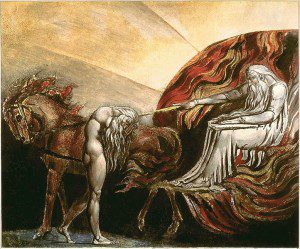 J. Richard Middleton has thought-provoking post at BioLogos that deals Evolution and the Historical Fall (now a couple of weeks old, but I only read it in the last few days). This short essay is well worth reading, and worth some comment here.
(1) A historical Fall. Richard, like many of the rest of us, finds the biblical and empirical case for a Fall of some sort compelling. He points out that the the Scriptures clearly teach a fallen humanity. But it goes a little deeper than this:
It has always been important to me that the Bible claimed that the world God created was good (indeed, “very good”; Gen. 1:31), and that evil was later introduced into this world by human disobedience. This notion of a historical Fall, which denies a pre-existing principle of evil and lays the origin of evil clearly at the feet of humanity, distinguishes the biblical version of creation from other accounts of origins. Yet it has become de rigueur among many Christian proponents of evolutionary creation to deny the classical doctrine of a historical Fall and to claim that Homo sapiens emerged in a sinful state. However, I don’t think this is a necessary move for those who want to affirm the truth of the Bible and an evolutionary account of human origins.
It isn’t completely clear from the essay, but I think that Richard is looking at human evil, an inclination to disobedience, violence, and oppression, rather than the origin of every phenomenon that might be called “evil.” We were not created sinful, we were created to be the image of God and in communion with God, but we are undeniably sinful and have been throughout all of remembered or recorded history. He suggests that the narrative of Genesis 3 and following depicts a progression of temptation and disobedience. Among other things God assumes that Cain can do what is right, and tells him that he must master the sin that crouches at his door. Sin develops and grows in the opening chapters of Genesis, but it is not a “quasi-genetic” transmission. More likely it is a cultural communal transmission. “Rather than an immediate change in human nature, the narrative of Genesis portrays a process by which humans come more and more under the sway of sin.”
(2) A possible scenario. Richard gives a possible evolutionary scenario for the fall. (Perhaps not strictly ‘evolutionary’, rather compatible with evolution and with neuroscience.) He makes a suggestion along the lines of the point I was trying to make at the end of my last post “Should Naturalism Define Science?” If there is a God, and he is in relationship with humans, this will change humans in a profound way.
Although we can’t know exactly when Homo sapiens first became aware of the prodding of conscience, we can speculate that at some point God entered into a relationship with some representative population of early humans, calling them to live as his image in the world (for more on the imago Dei as a calling or vocation, see The Liberating Image: The Imago Dei in Genesis 1). This new relationship (with its concomitant ethical call) would have engendered a significant change in the consciousness of Homo sapiens and then in their behavior.
We know from experience that relationships change us, sometimes decisively. No one who enters into marriage or becomes a parent is the same after (at least, if we take the relationship seriously). Even our pets change us; and evolutionists have discussed how various human-animal relationships may have led to significant adaptations in human behavior.
Being in relationship thus puts certain (explicit or implicit) demands on us; and as we respond to the other we begin to change, not only in our actions, but also in our thinking and our values. We now know that behavioral changes begin to lay down new neural pathways in the brain; we quite literally become different people over time.
Perhaps humans became differentiated as “spiritual” beings through relationship with God, and were given the calling to be his image in the world. The fall is a result of both moral consciousness and sinful resistance that spread throughout the entire community. We became and become different people in sinful community. This is consistent with a faithful reading of the text.
The Fall is not a myth Moving from Middleton to a theologian who influenced my early thinking, Donald Bloesch, in volume one of Essentials of Evangelical Theology (2 Volumes in 1) (a book I read in a college Theology class many years ago), notes that Genesis contains mythic and legendary elements in common with the ancient near eastern milieu of the original audience. The Fall is not a myth – but the text of Genesis is distinctly mythohistorical. It uses myth to convey truth.
At this point it is important to establish the correct hermeneutical procedure for understanding the “myth” of the fall. In order to discover what the author really intended we must take into consideration the literary genre of the narrative. In this way the literal sense is not less but more respected. … To affirm that there are mythical and legendary elements in the Scripture is not to detract from its divine inspiration nor from its historical basis but to attest that the Holy Spirit has made use of various kinds of language and imagery to convey divine truth. (p. 104-105).
Bloesch affirms a historical fall but not the story of Adam and Eve in Genesis as exact literal history. He suggests that Adam and Eve may or may not have existed as a unique initial pair.
It seems, however, that the story of the fall does assume that mankind has a common ancestor or ancestors who forfeited earthly happiness by falling into sin. The story has a dual focus: it points not only to generic man but to primal man. Its message holds true in both cases: man is not created a sinner but becomes a sinner through a tragic misuse of his freedom. (p. 107)
Everything that we know about hominin evolution points to humankind emerging as a population of some number of thousands of individuals. Within the next week or so I will begin a walk through the new book Adam and the Genome by Dennis Venema and Scot. Dennis focuses on the evidence for evolution and human evolution in particular.
Given what we know today about sociology, psychology, neurosciences, etc., it doesn’t take much imagination to envision both the God-breathed origin of humans as spiritual beings and the Fall as temporal historical event of sinful disobedience spreading through the entire community.
Is the fall a historical event? If so how?
What is the intent of the biblical story in Genesis 1-3 … 1-6 … 1-11?
If you wish to contact me directly you may do so at rjs4mail[at]att.net
If interested you can subscribe to a full text feed of my posts at Musings on Science and Theology.
Previous Post

March 14, 2017
It's American for our Politicians to Reference the Bible
Next Post
March 15, 2017 A Priority to Rest?
Browse Our Archives
Select a Category Acts of the Apostles Adam Advent Anabaptism Angels Anglican Apologetics Atonement Baptism BCP Prayers Bible Biblical Studies Birds Blogging Bloglossary Bonhoeffer Books Calvinism Christianity Church Church History Coffee Colossians Commentary Recs Conversion Creation Creeds Culture Death Ecclesiastes Economics Education Embracing Grace Emergent Emerging Movement Eschatology Essays Ethics Eucharist Evangelicalism Family Fasting Fathers Fellowship of Differents Footsteps Tour Fun and Whimsical Gospel Grace Happiness Heaven Hell Holy Spirit Irenaeus James Jesus Jesus Creed Job Justification Kingdom of God Law Lectures Lent Liberalism Love and Marriage Mabanteneni Manhood Mary Miracles Missio Alliance MissioLife Missional Missional Jesus Movies and Film New Perspective Northern Seminary OneLife Origins Project Orthodox Parables Pastor's Spouse Pastoring and Leading Pastoring and Preaching Patristics Paul Paul-John Tour Pharisees Pietism Political Theology Prayer and Formation Preaching Problems for Faith Psalm 119 Psalms Public Issues Purgatory Religions Resurrection Revelation Romans Rule of JCreed Science and Faith Sermon on the Mount Sports Ten Commandments Theology Third Way Top Ten Lists Translations Uncategorized Universalism University Ministry Way Out Weekly Meanderings Wisdom Women and Ministry Work Worship Writing & Blogging Youth Ministry
Select a Month July 2021 January 2020 December 2019 November 2019 October 2019 September 2019 August 2019 July 2019 June 2019 May 2019 April 2019 March 2019 February 2019 January 2019 December 2018 November 2018 October 2018 September 2018 August 2018 July 2018 June 2018 May 2018 April 2018 March 2018 February 2018 January 2018 December 2017 November 2017 October 2017 September 2017 August 2017 July 2017 June 2017 May 2017 April 2017 March 2017 February 2017 January 2017 December 2016 November 2016 October 2016 September 2016 August 2016 July 2016 June 2016 May 2016 April 2016 March 2016 February 2016 January 2016 December 2015 November 2015 October 2015 September 2015 August 2015 July 2015 June 2015 May 2015 April 2015 March 2015 February 2015 January 2015 December 2014 November 2014 October 2014 September 2014 August 2014 July 2014 June 2014 May 2014 April 2014 March 2014 February 2014 January 2014 December 2013 November 2013 October 2013 September 2013 August 2013 July 2013 June 2013 May 2013 April 2013 March 2013 February 2013 January 2013 December 2012 November 2012 October 2012 September 2012 August 2012 July 2012 June 2012 May 2012 April 2012 March 2012 February 2012 January 2012 December 2011 November 2011 October 2011 September 2011 August 2011 July 2011 June 2011 May 2011 April 2011 March 2011 February 2011 January 2011 December 2010 November 2010 October 2010 September 2010 August 2010 July 2010 June 2010 May 2010 April 2010 March 2010 February 2010 January 2010 December 2009 November 2009 October 2009 September 2009 August 2009 July 2009 June 2009 May 2009 April 2009 March 2009 February 2009 January 2009 December 2008 November 2008 October 2008 September 2008 August 2008 July 2008 June 2008 May 2008 April 2008 March 2008 February 2008 January 2008 December 2007 November 2007 October 2007 September 2007 August 2007 July 2007 June 2007 May 2007 April 2007 March 2007 February 2007 January 2007 December 2006 November 2006 October 2006 September 2006 August 2006 July 2006 June 2006 May 2006 April 2006 March 2006 February 2006 January 2006 December 2005 November 2005 October 2005 September 2005 August 2005 July 2005 June 2005 May 2005 April 2005 0000
Follow Us!
TAKE THE
Religious Wisdom Quiz
What book comes directly after Lamentations?
Select your answer to see how you score.
Daniel Jeremiah Ezekiel Hosea
Related posts from Jesus Creed


The Gospel of With Us and Through Us

Northern Seminary Announces: Nijay Gupta Joins Faculty

The Gundrys and Me: Ruth Tucker
TRENDING AT PATHEOS Evangelical

The REST of Your Life: A Creative Wrestles...
This week I had a conversation with a good friend from church....

How the author of the world's best hymn...
I've been working with John Newton for a while now. This makes...

Long before this Lectio Divina, Psalm 130 - the song - started...

What About the Trees? Another Living Parable
After I finished writing the last article about falling leaves as a...

Why Classical Education Is a Conversation, Not a...
Come and Read: Joy in Classical Education When I was a little...

Cornell University has received a great deal of negative publicity and intense...
view all Evangelical blogs
Ad-Free & Subscriber Log-In Subscription Support
- About Us
- 2026 Calendar
- Videos
- Podcasts
- Library of World Religions
- Faith In Media Tracker
- Advertise With Us
- Write for Us
- Privacy Policy
- Terms of Service
- Do Not Sell My Data
- Contact Us
- Radiant Digital
- Manage Newsletter Subscriptions
- Unsubscribe From Notifications
- Sitemap
Copyright 2008-2026, Patheos. All rights reserved.
Subscription Support Ad-Free & Subscriber Log-In
Follow Patheos