
BuddhistCatholicContemplativeEvangelicalGeneral ChristianHinduJewishLatter-day SaintMuslimNew VisionsProgressive Christian
Beliefs
- Buddhist
- Catholic
- Contemplative
- Evangelical
- General Christian
- Hindu
- Jewish
- Latter-day Saint
- More Voices
- Muslim
- New Visions
- Pagan
- Progressive Christian
Topics
- Religion News
- Food and Religion
- Sports and Religion
- Religious Art
- Religious Music and Entertainment
- Religious Events
- History and Religion
- Style and Religion
- Politics and Religion
- Women in Religion
- Recreation Outdoors and Religion
- Business Finance and Religion
- Careers Workplace and Religion
- Education and Religion
- Family Parenting and Religion
- Health Fitness and Religion
- Home and Religion
- Relationships and Religion
- Technology and Religion
- Travel and Religion
Columnists
- Buddhist Columnists
- Business Finance and Religion Columnists
- Careers Workplace and Religion Columnists
- Catholic Columnists
- Contemplative Columnists
- Education and Religion Columnists
- Evangelists Columnists
- Family Parenting and Religion Columnists
- General Christian Columnists
- Health Fitness and Religion Columnists
- Hindu Columnists
- History and Religion Columnists
- Home and Religion Columnists
- Jewish Columnists
- More Voices Columnists
- Latter Day Columnists
- Muslim Columnists
- New Visions Columnists
- Nonreligious Columnists
- Pagan Columnists
- Politics and Religion Columnists
- Progressive Columnists
- Recreation Outdoors and Religion Columnists
- Relationships and Religion Columnists
- Religion News Columnists
- Religious Art Columnists
- Religious Events Columnists
- Religious Music and Entertainment Columnists
- Sports and Religion Columnists
- Style and Religion Columnists
- Technology and Religion Columnists
- Travel and Religion Columnists
- Women in Religion Columnists
Resource Library
- 2026 Calendar
- Library of World Religions
- The 100 Most Holy Places on Earth
- Patheos Answers
- Podcasts
- Videos
- Faith Leaders Database
- Anglican Episcopalian
- Bahai
- Baptist
- Buddhism
- Christianity
- Confucianism
- Eastern Orthodoxy
- Hinduism
- Holiness and Pentecostal
- ISKCON
- Islam
- Judaism
- Lutheran
- Methodist
- The Church of Jesus Christ of Latter-day Saints
- New Age
- Paganism
- Presbytarian and Reformed
- Protestantism
- Religion Behind the Scenes
- Roman Catholic
- Scientology
- Shia Islam
- Sikhism
- Sufism
- Sunni Islam
- Taoism
- Zen
- See all religions
Research Tools
 Ad-Free & Subscriber Log-In Subscription Support
Ad-Free & Subscriber Log-In Subscription Support
Follow Patheos 

- Trending:
- Forgiveness
- |
- Marriage
- |
- Consciousness
- |
- Death Penalty
- |
- Election
- |
- Halloween
 Jesus Creed
- Home
- Evangelical
- It’s American for our Politicians to Reference the Bible
It’s American for our Politicians to Reference the Bible
Last updated on: March 14, 2017 at 12:04 am by Scot McKnight
It’s American for our Politicians to Reference the Bible 2017-03-11T11:35:27-06:00 Scot McKnight
Patheos Explore the world's faith through different perspectives on religion and spirituality! Patheos has the views of the prevalent religions and spiritualities of the world.
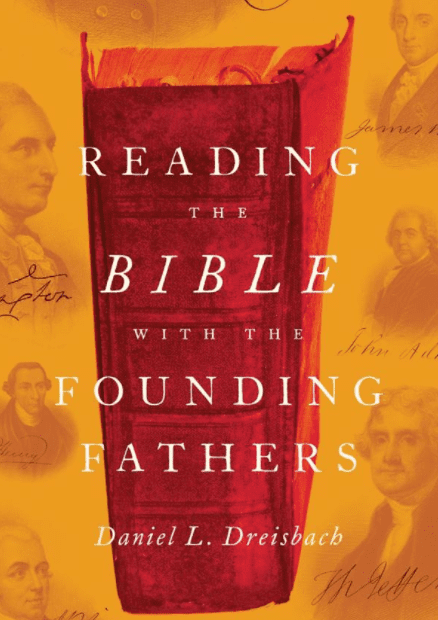 Over the years I have been as pleased as annoyed when politicians — from Kennedy (my earliest memory of a president) to Trump (harumph) — quote the Bible or allude to the Bible or make use of the Bible when they are speaking. Daniel Dreisbach, in his new and very well researched book, Reading the Bible with the Founding Fathers, examines both the common use of the Bible by our politicians and how they did what they did.
Let’s make it clear what Dreisbach is not doing:
This book does not make claims about the interior faith commitments of the founding fathers, although it is certainly true that many were devout Christians; it is also true that some influential founders were skeptical of the central claims of Christianity. Nor do I argue that all the founders embraced the Bible as the revealed word of God. Clearly, some did not. The central claim or thesis of this book is not that America is a Christian nation. Whether America is or ever was a “Christian nation” is an important, complex question that merits scrutiny, but it is not the subject of this study. The book, however, offers insights into the questions whether individual founders were orthodox Christians or whether America was, in some sense, a Christian nation (18).
Frankly, many today would miss allusions to the Bible and many politicians would miss even more allusions. We have become a biblically illiterate nation (some think the Bible sounds like Shakespeare!) with biblically illiterate leaders and in so becoming we have become tone deaf to the biblically-shaped rhetoric of our past. Hence,
A biblical literacy and an awareness of the Bible’s place in the culture of the American founding not only enriches one’s understanding of the nation’s history but also provides insight into the identity of the American people and the values reflected in their systems of civil government and laws. Knowledge of the Bible and its place in the American experience, in short, helps Americans better understand themselves and their history. Conversely, the increasing biblical illiteracy of the modern age almost inevitably distorts the conception Americans have of themselves as a people, the nation, and their political experiment in self-government (19).
Dreisbach covers so many interesting themes: important texts like Micah 6:8, the creation of the American seal, resisting (perceived) tyrants, Benjamin Franklin’s historic call for prayer in the Constitutional Convention, the first prayer in Congress, the marks of a godly magistrate, the idea of liberty, George Washington’s history-forming taking of the oath of the president, and the importance of American metaphors for liberty.
Here is Ben Franklin’s address and request from pp. 137-138, and it is worth your while to read every word:
The small Progress we have made, after 4 or 5 weeks’ close Attendance and continual Reasonings with each other, our different Sentiments on almost every Question, several of the last producing as many Noes as Ayes, is, methinks, a melancholy Proof of the Imperfection of the Human Understanding. We indeed seem to feel our own want of political Wisdom, since we have been running all about in Search of it. We have gone back to ancient History for Models of Government, and examin’d the different Forms of those Republics, which, having been originally form’d with the Seeds of their own Dissolution, now no longer exist; and we have view’d modern States all round Europe, but find none of their Constitutions suitable to our circumstances.
In this Situation of this Assembly, groping, as it were, in the dark [Job 12:25] to find Political Truth, and scarce able to distinguish it when presented to us, how has it happened, Sir, that we have not hitherto once thought of humbly applying to the Father of Lights [James 1:17] to illuminate our Understandings? In the Beginning of the Contest with Britain, when we were sensible of Danger, we had daily Prayers in this Room for the Divine Protection. Our Prayers, Sir, were heard;—and they were graciously answered. All of us, who were engag’d in the Struggle, must have observed frequent Instances of a superintending Providence in our Favour. To that kind Providence we owe this happy Opportunity of Consulting in Peace on the Means of establishing our future national Felicity. And have we now forgotten that powerful Friend? or do we imagine we no longer need its assistance? I have lived, Sir, a long time; and the longer I live, the more convincing proofs I see of this Truth, that GOD governs in the Affairs of Men [cf. Daniel 4:17]. And if a Sparrow cannot fall to the Ground without his Notice [Matthew 10:29; Luke 12:6], is it probable that an Empire can rise without his Aid? We have been assured, Sir, in the Sacred Writings, that “except the Lord build the House, they labour in vain that build it” [Psalm 127:1], I firmly believe this; and I also believe, that, without his concurring Aid, we shall succeed in this political Building no better than the Builders of Babel [Genesis 11:1-9]; we shall be divided by our little, partial, local Interests, our Projects will be confounded, and we ourselves shall become a Reproach and a Bye-word [see Deuteronomy 28:37; 1 Kings 9:7; 2 Chronicles 7:20; Psalm 44:14] down to future Ages. And, what is worse, Mankind may hereafter, from this unfortunate Instance, despair of establishing Government by human Wisdom, and leave it to Chance, War, and Conquest.
I therefore beg leave to move,
That henceforth Prayers, imploring the Assistance of Heaven and its Blessing on our Deliberations, be held in this Assembly every morning before we proceed to Business; and that one or more of the Clergy of this city be requested to officiate in that Service.
Quite the request.
Here is Dreisbach’s major conclusion:
The Bible shaped the world of the founding fathers in profound and manifold ways. The founders’ written and spoken words give evidence that they were intimately familiar with the text sacred to the Christian faith. The language and cadences of the King James Bible, especially, permeated their patterns and figures of speech (229).
Lest you jump up and accusingly ask, “We need to be told this?” Well, Yes, but the book is a detailed and magnificently articulated set of studies on how the Bible was used by our past leaders. Dreisbach knows the Bible was used to prop up republicanism not to resurrect ancient Biblical government. But…
Nevertheless, the Bible was the most authoritative, accessible, and familiar book in eighteenth-century America, and it was an important source that Americans studied for insights into law, politics, civil government, and many other activities of human society. The Bible was thought to offer valuable insights into human nature, political authority, and other matters of importance to political theory. Moreover, the moral instruction found in Scripture was thought to nurture the civic virtues a people require for self-government. For these reasons, the student of the American founding is well advised to be attentive to how the founders read the Bible and its place in the political culture of the founding era (231).
Critics have made their points, and made them well, and I re-format and enumerate to make them clear:
- Critics have expressed concern that the Bible was invoked to buttress unrighteous causes, such as chattel slavery, or that believers in biblical authority have misperceived divine guidance or calls to action based on misinterpretations of the Sacred Text.
- There is a danger that pious citizens will fall for the deception that comes from confusing one’s personal interests for God’s will.
- Another criticism is that the founders used biblical language and themes in the service of a “civil religion.” A civil religion, as the term is used here, deliberately appropriates sacred language, themes, and symbols for a distinctly political purpose, such as promoting national unity or legitimizing the political regime. In addition to the political invocation of biblical language, the founders’ uses of the Bible in public ceremonies, such as George Washington’s presidential inauguration, and public prayers, such as the first prayer service in the Continental Congress, further contributed to crafting a distinctly American civil or political religion.
- Critics have decried selected founders’ alleged misappropriation of sacred language, themes, and symbols for profane political purposes. This, they say, poses the danger of attributing divine purposes and authority to a temporal political enterprise. The concern is that the political authority will requisition religion in general and the Bible in particular to serve its own ends.
- Another concern is that political uses of the Bible (and the Christian religion) trivialize or debase the sacred Word of God. Indeed, some critics go so far as to say that deployment of the Bible in partisan political discourse verges on blasphemy.
These were for some the “golden days” of the faith in America, and much has changed since those days, but it is worthy of serious thinking to ponder the influence of the Bible in political rhetoric.
Previous Post

March 13, 2017
Russell Moore is on Target and thus the Target
Next Post
March 14, 2017 Revisiting the Fall (RJS)
Browse Our Archives
Select a Category Acts of the Apostles Adam Advent Anabaptism Angels Anglican Apologetics Atonement Baptism BCP Prayers Bible Biblical Studies Birds Blogging Bloglossary Bonhoeffer Books Calvinism Christianity Church Church History Coffee Colossians Commentary Recs Conversion Creation Creeds Culture Death Ecclesiastes Economics Education Embracing Grace Emergent Emerging Movement Eschatology Essays Ethics Eucharist Evangelicalism Family Fasting Fathers Fellowship of Differents Footsteps Tour Fun and Whimsical Gospel Grace Happiness Heaven Hell Holy Spirit Irenaeus James Jesus Jesus Creed Job Justification Kingdom of God Law Lectures Lent Liberalism Love and Marriage Mabanteneni Manhood Mary Miracles Missio Alliance MissioLife Missional Missional Jesus Movies and Film New Perspective Northern Seminary OneLife Origins Project Orthodox Parables Pastor's Spouse Pastoring and Leading Pastoring and Preaching Patristics Paul Paul-John Tour Pharisees Pietism Political Theology Prayer and Formation Preaching Problems for Faith Psalm 119 Psalms Public Issues Purgatory Religions Resurrection Revelation Romans Rule of JCreed Science and Faith Sermon on the Mount Sports Ten Commandments Theology Third Way Top Ten Lists Translations Uncategorized Universalism University Ministry Way Out Weekly Meanderings Wisdom Women and Ministry Work Worship Writing & Blogging Youth Ministry
Select a Month July 2021 January 2020 December 2019 November 2019 October 2019 September 2019 August 2019 July 2019 June 2019 May 2019 April 2019 March 2019 February 2019 January 2019 December 2018 November 2018 October 2018 September 2018 August 2018 July 2018 June 2018 May 2018 April 2018 March 2018 February 2018 January 2018 December 2017 November 2017 October 2017 September 2017 August 2017 July 2017 June 2017 May 2017 April 2017 March 2017 February 2017 January 2017 December 2016 November 2016 October 2016 September 2016 August 2016 July 2016 June 2016 May 2016 April 2016 March 2016 February 2016 January 2016 December 2015 November 2015 October 2015 September 2015 August 2015 July 2015 June 2015 May 2015 April 2015 March 2015 February 2015 January 2015 December 2014 November 2014 October 2014 September 2014 August 2014 July 2014 June 2014 May 2014 April 2014 March 2014 February 2014 January 2014 December 2013 November 2013 October 2013 September 2013 August 2013 July 2013 June 2013 May 2013 April 2013 March 2013 February 2013 January 2013 December 2012 November 2012 October 2012 September 2012 August 2012 July 2012 June 2012 May 2012 April 2012 March 2012 February 2012 January 2012 December 2011 November 2011 October 2011 September 2011 August 2011 July 2011 June 2011 May 2011 April 2011 March 2011 February 2011 January 2011 December 2010 November 2010 October 2010 September 2010 August 2010 July 2010 June 2010 May 2010 April 2010 March 2010 February 2010 January 2010 December 2009 November 2009 October 2009 September 2009 August 2009 July 2009 June 2009 May 2009 April 2009 March 2009 February 2009 January 2009 December 2008 November 2008 October 2008 September 2008 August 2008 July 2008 June 2008 May 2008 April 2008 March 2008 February 2008 January 2008 December 2007 November 2007 October 2007 September 2007 August 2007 July 2007 June 2007 May 2007 April 2007 March 2007 February 2007 January 2007 December 2006 November 2006 October 2006 September 2006 August 2006 July 2006 June 2006 May 2006 April 2006 March 2006 February 2006 January 2006 December 2005 November 2005 October 2005 September 2005 August 2005 July 2005 June 2005 May 2005 April 2005 0000
Follow Us!
TAKE THE
Religious Wisdom Quiz
Which book contains the story of Hosea's marriage to an unfaithful wife?
Select your answer to see how you score.
Hosea Joel Micah Jonah
Related posts from Jesus Creed


Weekly Meanderings, 16 March 2019

TRENDING AT PATHEOS Evangelical

How the author of the world's best hymn...
I've been working with John Newton for a while now. This makes...

Long before this Lectio Divina, Psalm 130 - the song - started...

What About the Trees? Another Living Parable
After I finished writing the last article about falling leaves as a...

Why Classical Education Is a Conversation, Not a...
Come and Read: Joy in Classical Education When I was a little...

Falling Leaves: A Living Parable on Letting Go
I’ve spent the vast majority of my life in the southeast corner...

Cornell University has received a great deal of negative publicity and intense...
view all Evangelical blogs
Ad-Free & Subscriber Log-In Subscription Support
- About Us
- 2026 Calendar
- Videos
- Podcasts
- Library of World Religions
- Faith In Media Tracker
- Advertise With Us
- Write for Us
- Privacy Policy
- Terms of Service
- Do Not Sell My Data
- Contact Us
- Radiant Digital
- Manage Newsletter Subscriptions
- Unsubscribe From Notifications
- Sitemap
Copyright 2008-2026, Patheos. All rights reserved.
Subscription Support Ad-Free & Subscriber Log-In
Follow Patheos