
BuddhistCatholicContemplativeEvangelicalGeneral ChristianHinduJewishLatter-day SaintMuslimNew VisionsProgressive Christian
Beliefs
- Buddhist
- Catholic
- Contemplative
- Evangelical
- General Christian
- Hindu
- Jewish
- Latter-day Saint
- More Voices
- Muslim
- New Visions
- Pagan
- Progressive Christian
Topics
- Religion News
- Food and Religion
- Sports and Religion
- Religious Art
- Religious Music and Entertainment
- Religious Events
- History and Religion
- Style and Religion
- Politics and Religion
- Women in Religion
- Recreation Outdoors and Religion
- Business Finance and Religion
- Careers Workplace and Religion
- Education and Religion
- Family Parenting and Religion
- Health Fitness and Religion
- Home and Religion
- Relationships and Religion
- Technology and Religion
- Travel and Religion
Columnists
- Buddhist Columnists
- Business Finance and Religion Columnists
- Careers Workplace and Religion Columnists
- Catholic Columnists
- Contemplative Columnists
- Education and Religion Columnists
- Evangelists Columnists
- Family Parenting and Religion Columnists
- General Christian Columnists
- Health Fitness and Religion Columnists
- Hindu Columnists
- History and Religion Columnists
- Home and Religion Columnists
- Jewish Columnists
- More Voices Columnists
- Latter Day Columnists
- Muslim Columnists
- New Visions Columnists
- Nonreligious Columnists
- Pagan Columnists
- Politics and Religion Columnists
- Progressive Columnists
- Recreation Outdoors and Religion Columnists
- Relationships and Religion Columnists
- Religion News Columnists
- Religious Art Columnists
- Religious Events Columnists
- Religious Music and Entertainment Columnists
- Sports and Religion Columnists
- Style and Religion Columnists
- Technology and Religion Columnists
- Travel and Religion Columnists
- Women in Religion Columnists
Resource Library
- 2026 Calendar
- Library of World Religions
- The 100 Most Holy Places on Earth
- Patheos Answers
- Podcasts
- Videos
- Faith Leaders Database
- Anglican Episcopalian
- Bahai
- Baptist
- Buddhism
- Christianity
- Confucianism
- Eastern Orthodoxy
- Hinduism
- Holiness and Pentecostal
- ISKCON
- Islam
- Judaism
- Lutheran
- Methodist
- The Church of Jesus Christ of Latter-day Saints
- New Age
- Paganism
- Presbytarian and Reformed
- Protestantism
- Religion Behind the Scenes
- Roman Catholic
- Scientology
- Shia Islam
- Sikhism
- Sufism
- Sunni Islam
- Taoism
- Zen
- See all religions
Research Tools
 Ad-Free & Subscriber Log-In Subscription Support
Ad-Free & Subscriber Log-In Subscription Support
Follow Patheos 

- Trending:
- Forgiveness
- |
- Marriage
- |
- Consciousness
- |
- Death Penalty
- |
- Election
- |
- Halloween
 Jesus Creed
- Home
- Evangelical
- Weekly Meanderings, 11 March 2017
Weekly Meanderings, 11 March 2017
Last updated on: March 11, 2017 at 12:03 am by Scot McKnight
Weekly Meanderings, 11 March 2017 2017-03-10T13:48:17-06:00 Scot McKnight
Patheos Explore the world's faith through different perspectives on religion and spirituality! Patheos has the views of the prevalent religions and spiritualities of the world.
 Folks, we have been doing Weekly Meanderings for a decade or so, always a sampling of this week’s meanderings through blogs, news and internet sites.
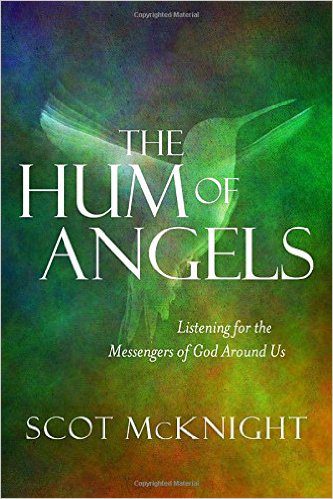
A good week with some interviews about our The Hum of Angels. People ask me the most fascinating of questions, and often enough with an eye that says “I’ve had an angel experience, too.”
Babylon Bee is today’s Wittenburg Door, and this one takes on pastor fashion:
A wise man once said that the single greatest cause of atheism in the world today is Christians who acknowledge Jesus with their lips—and then walk out the door and deny him with their lack of fashion sense. This rampant hypocrisy is even more serious when we’re talking about pastors who can’t seem to dress to save their lives, even though it’s one of the most important disciplines shepherds are called to master in order to serve God’s church and win people to Christ.
Luckily for you, The Babylon Bee is here to help. Pass these fashion tips on to your pastor to help him keep his style game on point. You get bonus points if you print this article out and stick it in the offering plate along with a strongly worded comment card this Sunday.
1.) Wear flannel everything. And we do mean everything. Shirts, hats, scarves, beards, boxers, briefs—make sure you are covered head to toe in flannel, so people will know you’re both stylish enough to preach the gospel and rugged enough to go cut down a tree or two if you have to.
2.) If your pants aren’t cutting off your circulation, they’re not tight enough. If you can walk without looking like a duck learning how to waddle, you need to go down a size or three. Besides, how will you hit the notes in all those Chris Tomlin songs the worship leader plays without your trusty pair of skinnies?
3.) Rock a secular band T-shirt so everyone knows you’re not too stuffy. Sport a Red Hot Chili Peppers tee while you’re preaching, or slip into a pre-faded Zeppelin concert shirt while you’re teaching life groups. This way, people think you probably have a pretty wild testimony filled with drugs and rock & roll, but more importantly, they know you’re not too judgmental like some of those weirdo pastor guys.
…. through 7 at the link above, but it ends on this portending note:
Pastors are often overworked, stressed, and depressed. Sharing this article with a pastor might be the best thing that happens to him all day—and might change his life, and the lives of countless other souls, forever. The power is in you to make that happen!
You gotta admit this is funny if not a gag gift, Reasons to Vote for Democrats: A Comprehensive Guide:
Wow, 1400 or so Amazon reviews.
SEATTLE (AP) — A joke book “written” by a conservative author and filled with blank pages in a dig at Democrats is the top selling book on Amazon.
“Reasons to Vote for Democrats: A Comprehensive Guide” consists of 266 pages. It has a table of contents, chapters and a bibliography, but no words on the pages other than the book and chapter titles. It’s billed in the description as “a political treatise sure to stand the test of time.”
As of Friday morning, it was Amazon’s best-selling book. The paperback is available for about $8.
Author Michael J. Knowles tells Fox News that when he took a look at the Democrats’ “record and reasons to vote for them,” he thought “it was probably best to just leave all the pages blank.”
OTTAWA – Religiously based U.S. high schools are proving to be especially good at turning out graduates who become civic-minded adults, finds a new study funded by Cardus an independent, North American think tank.
Catholic school graduates are over 50 per cent more likely than public school graduates to volunteer for organizations that fight poverty, according to data in the Panel Study of Income Dynamics – the world’s longest active panel study of households and family. The same data show graduates of Evangelical Protestant and other non-Catholic religious schools are about 40 per cent more likely to volunteer in general as adults than their public school counterparts are.
“Graduates of Catholic high schools seem to reflect the approach of Catholic social teaching, which emphasizes the importance of relieving poverty, among other priorities, like providing health care and education,” said Dr. Beth Green, Program Director for Cardus Education. “And it’s not surprising to see these results among evangelical graduates whose religious culture values putting others before self and sacrificing for the common good.”
The study also found a difference in charitable giving. Even after accounting for differences in socio-economic status, American graduates of Catholic, Evangelical, and other non-Catholic religious schools are more likely than public school graduates to make charitable donations. In terms of the amounts donated, graduates of Evangelical Protestant and other non-Catholic religious schools annually give on average $1,273 more than public school graduates do to charitable causes.
Sociologists Dr. David Sikkink and Dr. Jonathan Schwarz authored the study, The Lasting Impact of High School on Giving and Volunteering in the U.S., as part of their work at the Cardus Religious Schools Initiative at the University of Notre Dame.
(NEWSER) – Plenty of adults would struggle to spell “colloquial,” “odori” and “sevruga.” Five-year-old Edith Fuller made it look like a cakewalk. An early crowd favorite, Edith beat out about 50 competitors age 5 to 14 at the Green Country Regional Spelling Bee in Tulsa, Okla., on Saturday, making her the youngest person ever to qualify for the Scripps National Spelling Bee, reports KJRH. Her winning word was “jnana”—which refers to the acquisition of knowledge through meditation and study in Hinduism—though she afterward used a less tricky word to describe her emotion: “I feel thankful,” said Edith, who is home-schooled.
Edith’s parents say they discovered her talent for spelling last summer when she correctly spelled “restaurant” without having been taught the word, reports Tulsa World. “We knew there was something special there,” says mom Annie Fuller. To prepare for the competition, Edith looked up words she couldn’t spell correctly, allowing her to “learn about different countries and cultures and different kinds of food,” Fuller says. “I’m proud she held her own.” A rep says Scripps officials “look forward to welcoming Edith Fuller and all of our more than 280 national spellers” in Washington, DC, per ABC News. The competition kicks off May 28.
So how should Christians think about educational policy? The history of Christian higher education provides food for reflection today. I suggest we consider the parallels between women’s higher education and African-American higher education that were all too real for Pauli Murray. The first US institution to grant a true BA degree to women—and perhaps the first in the world—was Oberlin College in Ohio, an evangelical institution that boasted famous revivalist Charles Finney as one of its early presidents. Founded in 1833, Oberlin admitted women to the BA program in 1837, and the first women took their bachelor’s degrees in 1841. Oberlin was not only the first coeducational college in the United States; it was also one of the few colleges to educate black and white students together. In other words, it educated women and men of both races during a time of great fear of racial intermarriage, or “miscegenation” as it was known. And that’s still not all: Oberlin also pioneered a sort of work-study program designed to make the college affordable to women and men who would otherwise find it financially prohibitive to obtain higher education.
I argue in my book that Oberlin’s founders created such an unparalleled institution out of a philosophy I call “evangelical pragmatism.” (No relation to the American philosophical movement.) Evangelical pragmatists were a subset of American evangelicals so committed to the advancement of the Christian message that they were willing to override contemporary race, class, and gender norms to get the job done. Specifically, they argued that women—and in the case of Oberlin, African-Americans—ought to receive an education of the same quality historically offered to white men so that more people would be maximally equipped to preach and teach the gospel thoughtfully and well. Evangelical pragmatists believed that all people could best serve God when they developed their talents as fully as possible. They thought God would then personally direct individuals into the lines of work that best advanced divine purposes.
At Oberlin, the coin of evangelical pragmatism had two sides. One was admitting students without regard to race, class, or sex. The leaders of Oberlin believed doing so would increase the number of people as prepared as possible to be useful to God—but also that the policy was simple justice. Oberlin’s founder John J. Shipherd asked the trustees to admit black students in part “…because it is right principle; and God will bless us in doing right” (quoted in A New Moral Vision, p. 68, emphasis original). The other side of the coin sought to provide all admitted students with even more biblical and theological training than was standard at American colleges at the time. In this manner, not only would an Oberlin education unfold more people’s nascent abilities, but it would also train them in the specifics of the Christian faith that Oberlin leaders believed essential to students’ own spiritual maturity and to their ability to evangelize others. Both sides of the coin served God: the first by developing the talents of all people God had created, and the second by providing them with a distinctly Christian education.
The contemporary school choice debate pits these goods against one another. As I have written before at The Anxious Bench, I am a firm believer in institutional pluralism at the collegiate level. It seems to me to be the best way to serve multiple constituencies well. In pre-collegiate education, however, a voucher system as currently designed would make specifically Christian education affordable to more students only by pulling money away from public schools, which remain either the best or the only option for many students across the country. To provide more students religious schooling, vouchers potentially lower the quality of education available to others.
The leaders of Oberlin would have been horrified if they had believed that their approach to training more people for Christ would have meant leaving other people fewer opportunities. Their vision of justice was more holistic than that. In order to help bring all of God’s creation to full flower, Christians today need to think not only of our own children, but also of the children of others. We should make sure that any educational policy we advocate both allows us to pass on the faith to the next generation and best facilitates the flourishing of all people God has created, regardless of race, class, gender—or religion.
Previous Post

March 10, 2017
Baffled by the Criticisms of The Shack?
Next Post
March 11, 2017 Rod Dreher Disputes JKA Smith
Browse Our Archives
Select a Category Acts of the Apostles Adam Advent Anabaptism Angels Anglican Apologetics Atonement Baptism BCP Prayers Bible Biblical Studies Birds Blogging Bloglossary Bonhoeffer Books Calvinism Christianity Church Church History Coffee Colossians Commentary Recs Conversion Creation Creeds Culture Death Ecclesiastes Economics Education Embracing Grace Emergent Emerging Movement Eschatology Essays Ethics Eucharist Evangelicalism Family Fasting Fathers Fellowship of Differents Footsteps Tour Fun and Whimsical Gospel Grace Happiness Heaven Hell Holy Spirit Irenaeus James Jesus Jesus Creed Job Justification Kingdom of God Law Lectures Lent Liberalism Love and Marriage Mabanteneni Manhood Mary Miracles Missio Alliance MissioLife Missional Missional Jesus Movies and Film New Perspective Northern Seminary OneLife Origins Project Orthodox Parables Pastor's Spouse Pastoring and Leading Pastoring and Preaching Patristics Paul Paul-John Tour Pharisees Pietism Political Theology Prayer and Formation Preaching Problems for Faith Psalm 119 Psalms Public Issues Purgatory Religions Resurrection Revelation Romans Rule of JCreed Science and Faith Sermon on the Mount Sports Ten Commandments Theology Third Way Top Ten Lists Translations Uncategorized Universalism University Ministry Way Out Weekly Meanderings Wisdom Women and Ministry Work Worship Writing & Blogging Youth Ministry
Select a Month July 2021 January 2020 December 2019 November 2019 October 2019 September 2019 August 2019 July 2019 June 2019 May 2019 April 2019 March 2019 February 2019 January 2019 December 2018 November 2018 October 2018 September 2018 August 2018 July 2018 June 2018 May 2018 April 2018 March 2018 February 2018 January 2018 December 2017 November 2017 October 2017 September 2017 August 2017 July 2017 June 2017 May 2017 April 2017 March 2017 February 2017 January 2017 December 2016 November 2016 October 2016 September 2016 August 2016 July 2016 June 2016 May 2016 April 2016 March 2016 February 2016 January 2016 December 2015 November 2015 October 2015 September 2015 August 2015 July 2015 June 2015 May 2015 April 2015 March 2015 February 2015 January 2015 December 2014 November 2014 October 2014 September 2014 August 2014 July 2014 June 2014 May 2014 April 2014 March 2014 February 2014 January 2014 December 2013 November 2013 October 2013 September 2013 August 2013 July 2013 June 2013 May 2013 April 2013 March 2013 February 2013 January 2013 December 2012 November 2012 October 2012 September 2012 August 2012 July 2012 June 2012 May 2012 April 2012 March 2012 February 2012 January 2012 December 2011 November 2011 October 2011 September 2011 August 2011 July 2011 June 2011 May 2011 April 2011 March 2011 February 2011 January 2011 December 2010 November 2010 October 2010 September 2010 August 2010 July 2010 June 2010 May 2010 April 2010 March 2010 February 2010 January 2010 December 2009 November 2009 October 2009 September 2009 August 2009 July 2009 June 2009 May 2009 April 2009 March 2009 February 2009 January 2009 December 2008 November 2008 October 2008 September 2008 August 2008 July 2008 June 2008 May 2008 April 2008 March 2008 February 2008 January 2008 December 2007 November 2007 October 2007 September 2007 August 2007 July 2007 June 2007 May 2007 April 2007 March 2007 February 2007 January 2007 December 2006 November 2006 October 2006 September 2006 August 2006 July 2006 June 2006 May 2006 April 2006 March 2006 February 2006 January 2006 December 2005 November 2005 October 2005 September 2005 August 2005 July 2005 June 2005 May 2005 April 2005 0000
Follow Us!
TAKE THE
Religious Wisdom Quiz
Who did God call to lead the Israelites out of Egypt?
Select your answer to see how you score.
Joseph David Aaron Moses
Related posts from Jesus Creed


Weekly Meanderings, 16 March 2019

TRENDING AT PATHEOS Evangelical

How the author of the world's best hymn...
I've been working with John Newton for a while now. This makes...

Long before this Lectio Divina, Psalm 130 - the song - started...

What About the Trees? Another Living Parable
After I finished writing the last article about falling leaves as a...

Why Classical Education Is a Conversation, Not a...
Come and Read: Joy in Classical Education When I was a little...

Falling Leaves: A Living Parable on Letting Go
I’ve spent the vast majority of my life in the southeast corner...

Cornell University has received a great deal of negative publicity and intense...
view all Evangelical blogs
Ad-Free & Subscriber Log-In Subscription Support
- About Us
- 2026 Calendar
- Videos
- Podcasts
- Library of World Religions
- Faith In Media Tracker
- Advertise With Us
- Write for Us
- Privacy Policy
- Terms of Service
- Do Not Sell My Data
- Contact Us
- Radiant Digital
- Manage Newsletter Subscriptions
- Unsubscribe From Notifications
- Sitemap
Copyright 2008-2026, Patheos. All rights reserved.
Subscription Support Ad-Free & Subscriber Log-In
Follow Patheos