
BuddhistCatholicContemplativeEvangelicalGeneral ChristianHinduJewishLatter-day SaintMuslimNew VisionsProgressive Christian
Beliefs
- Buddhist
- Catholic
- Contemplative
- Evangelical
- General Christian
- Hindu
- Jewish
- Latter-day Saint
- More Voices
- Muslim
- New Visions
- Pagan
- Progressive Christian
Topics
- Religion News
- Food and Religion
- Sports and Religion
- Religious Art
- Religious Music and Entertainment
- Religious Events
- History and Religion
- Style and Religion
- Politics and Religion
- Women in Religion
- Recreation Outdoors and Religion
- Business Finance and Religion
- Careers Workplace and Religion
- Education and Religion
- Family Parenting and Religion
- Health Fitness and Religion
- Home and Religion
- Relationships and Religion
- Technology and Religion
- Travel and Religion
Columnists
- Buddhist Columnists
- Business Finance and Religion Columnists
- Careers Workplace and Religion Columnists
- Catholic Columnists
- Contemplative Columnists
- Education and Religion Columnists
- Evangelists Columnists
- Family Parenting and Religion Columnists
- General Christian Columnists
- Health Fitness and Religion Columnists
- Hindu Columnists
- History and Religion Columnists
- Home and Religion Columnists
- Jewish Columnists
- More Voices Columnists
- Latter Day Columnists
- Muslim Columnists
- New Visions Columnists
- Nonreligious Columnists
- Pagan Columnists
- Politics and Religion Columnists
- Progressive Columnists
- Recreation Outdoors and Religion Columnists
- Relationships and Religion Columnists
- Religion News Columnists
- Religious Art Columnists
- Religious Events Columnists
- Religious Music and Entertainment Columnists
- Sports and Religion Columnists
- Style and Religion Columnists
- Technology and Religion Columnists
- Travel and Religion Columnists
- Women in Religion Columnists
Resource Library
- 2026 Calendar
- Library of World Religions
- The 100 Most Holy Places on Earth
- Patheos Answers
- Podcasts
- Videos
- Faith Leaders Database
- Anglican Episcopalian
- Bahai
- Baptist
- Buddhism
- Christianity
- Confucianism
- Eastern Orthodoxy
- Hinduism
- Holiness and Pentecostal
- ISKCON
- Islam
- Judaism
- Lutheran
- Methodist
- The Church of Jesus Christ of Latter-day Saints
- New Age
- Paganism
- Presbytarian and Reformed
- Protestantism
- Religion Behind the Scenes
- Roman Catholic
- Scientology
- Shia Islam
- Sikhism
- Sufism
- Sunni Islam
- Taoism
- Zen
- See all religions
Research Tools
 Ad-Free & Subscriber Log-In Subscription Support
Follow Patheos 

- Trending:
- Advent
- |
- Forgiveness
- |
- Thanksgiving
- |
- Election
- |
- Seasonal Holidays
- |
- Marriage
 Jesus Creed
- Home
- Evangelical
- It’s Culture, Stupid (RJS)
It’s Culture, Stupid (RJS)
Last updated on: March 2, 2017 at 6:01 am by RJS
It’s Culture, Stupid (RJS) 2017-02-27T10:32:51-06:00 RJS
Patheos Explore the world's faith through different perspectives on religion and spirituality! Patheos has the views of the prevalent religions and spiritualities of the world.
 The title to this post will conjure up a variety of different impressions. Some will hark back to old campaign slogans, others will take umbrage at my use of the word “stupid “. Who am I to call anyone stupid! The readers of this blog are not stupid and I’ve just maligned large swathes of people who will take the term as a direct indictment of themselves. Words communicate meaning. That meaning can be deep, contextual, and indirect. Meaning is real and non-physical. Words carry power and produce action.
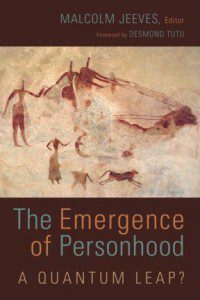
The final two chapters in part 1 of The Emergence of Personhood, A Quantum Leap? were written by Colin Renfrew (Personhood: Toward a Gradualist Approach) and Roy F. Baumeister (Emergence of Personhood: Lessons from Self and Identity). Renfrew’s chapter is interesting, but doesn’t add much that is new for our consideration. In contrast, Baumeister’s chapter introduces a number of new ideas. Like Byrne and Tattersall (see previous posts The Dividing Line and It’s in Art), Baumeister sees the development of language – the ability to communicate – as central, but he adds an important twist. The ability communicate enables the development of culture. Culture isn’t local or isolated in time. It is learned and taught. We stand in community with those around us and on the shoulders of those who came before.
Roy Baumeister is a Francis Eppes Eminent Scholar, Social Psychology at Florida State University. Much of his research has focused on self, identity, and culture. This helps to define the essence of personhood.
What sets humans apart is the relatively novel and distinctive way that humans deal with those perennial problems [surviving and reproducing]. Culture, defined as a novel form of social life based on accumulating shared information (knowledge), systems of cooperation that use division of labor, and systems of economic trade, is the human species’ strategy for solving the problems of survival and reproduction (Baumeister 2005). Human selfhood and identity, and indeed human personhood per se, can be understood as adaptations (or side effects of adaptations) that make culture possible. (p. 68)
Culture requires many of the attributes discussed in relationship to human distinctiveness. It requires the ability to form and use tools. It requires a brain capable of thought. It requires the ability and motivation to communicate those ideas to others. Language is of unquestioned importance here. Although other animals can be taught to use rudimentary language (apes and sign language for example) they do not “eat it up” the way a deaf child does. Humans are ‘designed’ for communication. (This design could be a natural result of evolution and Baumeister makes no other suggestion in this chapter.) In relationship with others humans will ‘invent’ language if not taught language.
Nature includes nurture. Baumeister suggests that the question of nature vs. nurture is ill posed. Culture is the natural strategy inherent in the human species for survival. The human ‘self’ does not really exist except in the context of community and culture. To understand the distinctiveness of human culture over other species consider this “humans have managed to triple their average life expectancy by dint of their research, health care, and public behavior (e.g., etiquette). Culture has pushed humankind ahead of other species.” (p. 71-72) Baumeister brings up cooking as an example of the significance of culture. Cooking requires significant cooperation and transmission of information. No animal is born knowing how to cook. “The reason is that cooking requires the accumulation of information from multiple sources, and animals do not share information like that.” (p. 72)
Human identity comes from culture and community. “The human self is not present at birth or even programmed to emerge in development. Rather it comes into being in interaction with the social environment. Each baby is born as a full-fledged animal, but only becomes a person by acquiring an identity from society.” (p. 75) Wow! There is much we could dig into here – with significant implications (good and bad) for ethics and morality as well as Christian faith. But this will have to be the topic of some future post. Here I would like to move on to another of Baumeister’s ideas.
Meaning is real. Baumeister argues that there is one universe of ideas and, rather than create meaning, languages develop to communicate that universal meaning. If this was not largely true translation would be impossible. But translation is possible, at the level of both concrete referents and abstract ideas. Human distinctiveness comes from the ability to use this universal meaning. Baumeister summarizes his argument and I am quoting his text, but re-writing it in an outline form (p. 78)
The central assumption is as follows.
- The distinctively human traits are adaptations for culture
- The evolved purpose and function of the human brain are to facilitate participation in the cultural group.
- In other words, the human brain evolved to pick up and tap into the information and systems that its group has. It has not evolved so much to contain ideas but to acquire them from its social environment.
- Meaning is inherent in that common universe of ideas that forms the basis for all languages. Essentially by working together in groups, humans have been able to learn how to use meaning for their benefit.
A few more key quotes:
Basing action on meaning entails rising above purely physical causality and thus achieves a kind of freedom from purely physical causality. (p. 79)
The gist is that human personhood is a blend of biology and meaning. Moreover, meaning is not, in the final analysis, a physical fact. … Human beings are physical animals who reached a level of sophistication that enabled them to use the universe of concepts to inform and improve their interactions. (p. 79)
Physical entities evolved to the point at which they could represent and alter behavior based on nonphysical, immaterial realities, such as ideas, values, laws, norms, and the like. The emergence of the human person was intricately intertwined with the emergence of the biological capacity to direct behavior based on these nonphysical, immaterial realities (including, at the extreme, religious beliefs in supernatural deities and immaterial souls). (p. 80)
Probably meanings are are best used not even by single brains but rather by brains that share assumptions and understandings with other brains, communicated by physical bodies. (p. 80)
Where does this get us? I have no idea what religious views, if any, Roy Baumeister holds. This essay makes no real indication, except that he accepts the conclusions of evolutionary biology. As Christians, I think there are a number of important implications. One is the idea that human personhood only exists in community and relationship, although I suggest that this personhood comes from relationship with God and others rather than from human culture alone. Many of the arguments in our church concerning human origins and Original Sin do not seem to be grounded in the reality of the way that God created humans for relationship with himself and with others. This also puts the great commandment in an appropriate light – love the Lord your God and love your neighbor as yourself. We are called to let love define our relationships and personhood.
As has been argued by others, the image of God requires some intrinsic abilities, but it is first and foremost a relationship and a role, not a list of capabilities.
The church is essential to human flourishing as Christians. We cannot be lone ranger Christians.
Many interesting ideas for thought.
What is the dividing line that separates humankind from other animals?
What do you think of Baumeister’s suggestion that it is the ability to use and communicate universal meanings?
If you wish to contact me directly you may do so at rjs4mail[at]att.net
If interested you can subscribe to a full text feed of my posts at Musings on Science and Theology.
Previous Post

March 2, 2017
Book of the Month: Salvation by Allegiance Alone
Next Post
March 3, 2017 How Not to Break Up with your Church...
Browse Our Archives
Select a Category Acts of the Apostles Adam Advent Anabaptism Angels Anglican Apologetics Atonement Baptism BCP Prayers Bible Biblical Studies Birds Blogging Bloglossary Bonhoeffer Books Calvinism Christianity Church Church History Coffee Colossians Commentary Recs Conversion Creation Creeds Culture Death Ecclesiastes Economics Education Embracing Grace Emergent Emerging Movement Eschatology Essays Ethics Eucharist Evangelicalism Family Fasting Fathers Fellowship of Differents Footsteps Tour Fun and Whimsical Gospel Grace Happiness Heaven Hell Holy Spirit Irenaeus James Jesus Jesus Creed Job Justification Kingdom of God Law Lectures Lent Liberalism Love and Marriage Mabanteneni Manhood Mary Miracles Missio Alliance MissioLife Missional Missional Jesus Movies and Film New Perspective Northern Seminary OneLife Origins Project Orthodox Parables Pastor's Spouse Pastoring and Leading Pastoring and Preaching Patristics Paul Paul-John Tour Pharisees Pietism Political Theology Prayer and Formation Preaching Problems for Faith Psalm 119 Psalms Public Issues Purgatory Religions Resurrection Revelation Romans Rule of JCreed Science and Faith Sermon on the Mount Sports Ten Commandments Theology Third Way Top Ten Lists Translations Uncategorized Universalism University Ministry Way Out Weekly Meanderings Wisdom Women and Ministry Work Worship Writing & Blogging Youth Ministry
Select a Month July 2021 January 2020 December 2019 November 2019 October 2019 September 2019 August 2019 July 2019 June 2019 May 2019 April 2019 March 2019 February 2019 January 2019 December 2018 November 2018 October 2018 September 2018 August 2018 July 2018 June 2018 May 2018 April 2018 March 2018 February 2018 January 2018 December 2017 November 2017 October 2017 September 2017 August 2017 July 2017 June 2017 May 2017 April 2017 March 2017 February 2017 January 2017 December 2016 November 2016 October 2016 September 2016 August 2016 July 2016 June 2016 May 2016 April 2016 March 2016 February 2016 January 2016 December 2015 November 2015 October 2015 September 2015 August 2015 July 2015 June 2015 May 2015 April 2015 March 2015 February 2015 January 2015 December 2014 November 2014 October 2014 September 2014 August 2014 July 2014 June 2014 May 2014 April 2014 March 2014 February 2014 January 2014 December 2013 November 2013 October 2013 September 2013 August 2013 July 2013 June 2013 May 2013 April 2013 March 2013 February 2013 January 2013 December 2012 November 2012 October 2012 September 2012 August 2012 July 2012 June 2012 May 2012 April 2012 March 2012 February 2012 January 2012 December 2011 November 2011 October 2011 September 2011 August 2011 July 2011 June 2011 May 2011 April 2011 March 2011 February 2011 January 2011 December 2010 November 2010 October 2010 September 2010 August 2010 July 2010 June 2010 May 2010 April 2010 March 2010 February 2010 January 2010 December 2009 November 2009 October 2009 September 2009 August 2009 July 2009 June 2009 May 2009 April 2009 March 2009 February 2009 January 2009 December 2008 November 2008 October 2008 September 2008 August 2008 July 2008 June 2008 May 2008 April 2008 March 2008 February 2008 January 2008 December 2007 November 2007 October 2007 September 2007 August 2007 July 2007 June 2007 May 2007 April 2007 March 2007 February 2007 January 2007 December 2006 November 2006 October 2006 September 2006 August 2006 July 2006 June 2006 May 2006 April 2006 March 2006 February 2006 January 2006 December 2005 November 2005 October 2005 September 2005 August 2005 July 2005 June 2005 May 2005 April 2005 0000
Follow Us!
TAKE THE
Religious Wisdom Quiz
What does "Beersheba" mean?
Select your answer to see how you score.
House of the King Blessed Field Well of the Oath Valley of Water
Related posts from Jesus Creed


The Gospel of With Us and Through Us

Northern Seminary Announces: Nijay Gupta Joins Faculty

The Gundrys and Me: Ruth Tucker
TRENDING AT PATHEOS Evangelical

When you hear the word riches, what comes to mind? For most...

Don’t Miss the Parents: A Creative Christmas Meditation
As we enter the Advent Season, I see many people trying to...

Making Stones Into Bread: Choosing the “Right” Work
I was on my online arts ministry Zoom meeting with the International...

Ukraine’s exhausted Christians face fifth winter of war
By Julian Lukins The full-scale war in Ukraine is taking “a serious...

Russell Brand's Conviction is not anti-Christian Persecution
How do we shed the reputation that the Church is OK with...

Have you ever caught yourself saying, “I’ll do it tomorrow,” or “Now...
view all Evangelical blogs
Ad-Free & Subscriber Log-In Subscription Support
- About Us
- 2026 Calendar
- Videos
- Podcasts
- Library of World Religions
- Faith In Media Tracker
- Advertise With Us
- Write for Us
- Privacy Policy
- Terms of Service
- Do Not Sell My Data
- Contact Us
- Radiant Digital
- Manage Newsletter Subscriptions
- Unsubscribe From Notifications
- Sitemap
Copyright 2008-2026, Patheos, part of the Radiant Digital network of media brands. All rights reserved.
Subscription Support Ad-Free & Subscriber Log-In
Follow Patheos