
BuddhistCatholicContemplativeEvangelicalGeneral ChristianHinduJewishLatter-day SaintMuslimNew VisionsProgressive Christian
Beliefs
- Buddhist
- Catholic
- Contemplative
- Evangelical
- General Christian
- Hindu
- Jewish
- Latter-day Saint
- More Voices
- Muslim
- New Visions
- Pagan
- Progressive Christian
Topics
- Religion News
- Food and Religion
- Sports and Religion
- Religious Art
- Religious Music and Entertainment
- Religious Events
- History and Religion
- Style and Religion
- Politics and Religion
- Women in Religion
- Recreation Outdoors and Religion
- Business Finance and Religion
- Careers Workplace and Religion
- Education and Religion
- Family Parenting and Religion
- Health Fitness and Religion
- Home and Religion
- Relationships and Religion
- Technology and Religion
- Travel and Religion
Columnists
- Buddhist Columnists
- Business Finance and Religion Columnists
- Careers Workplace and Religion Columnists
- Catholic Columnists
- Contemplative Columnists
- Education and Religion Columnists
- Evangelists Columnists
- Family Parenting and Religion Columnists
- General Christian Columnists
- Health Fitness and Religion Columnists
- Hindu Columnists
- History and Religion Columnists
- Home and Religion Columnists
- Jewish Columnists
- More Voices Columnists
- Latter Day Columnists
- Muslim Columnists
- New Visions Columnists
- Nonreligious Columnists
- Pagan Columnists
- Politics and Religion Columnists
- Progressive Columnists
- Recreation Outdoors and Religion Columnists
- Relationships and Religion Columnists
- Religion News Columnists
- Religious Art Columnists
- Religious Events Columnists
- Religious Music and Entertainment Columnists
- Sports and Religion Columnists
- Style and Religion Columnists
- Technology and Religion Columnists
- Travel and Religion Columnists
- Women in Religion Columnists
Resource Library
- 2026 Calendar
- Library of World Religions
- The 100 Most Holy Places on Earth
- Patheos Answers
- Podcasts
- Videos
- Faith Leaders Database
- Anglican Episcopalian
- Bahai
- Baptist
- Buddhism
- Christianity
- Confucianism
- Eastern Orthodoxy
- Hinduism
- Holiness and Pentecostal
- ISKCON
- Islam
- Judaism
- Lutheran
- Methodist
- The Church of Jesus Christ of Latter-day Saints
- New Age
- Paganism
- Presbytarian and Reformed
- Protestantism
- Religion Behind the Scenes
- Roman Catholic
- Scientology
- Shia Islam
- Sikhism
- Sufism
- Sunni Islam
- Taoism
- Zen
- See all religions
Research Tools
 Ad-Free & Subscriber Log-In Subscription Support
Ad-Free & Subscriber Log-In Subscription Support
Follow Patheos 

- Trending:
- Forgiveness
- |
- Marriage
- |
- Consciousness
- |
- Death Penalty
- |
- Election
- |
- Halloween
 Jesus Creed
- Home
- Evangelical
- A Matter of Interpretation (RJS)
A Matter of Interpretation (RJS)
Last updated on: February 18, 2017 at 7:29 am by RJS
A Matter of Interpretation (RJS) 2017-02-18T07:29:28-06:00 RJS
Patheos Explore the world's faith through different perspectives on religion and spirituality! Patheos has the views of the prevalent religions and spiritualities of the world.
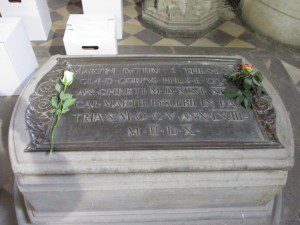 In his recent book Science and Christianity: An Introduction to the Issues, Jim Stump has a nice discussion of the role of interpretation in our approach to the Bible. Sola Scriptura is a foundation stone of the Reformation. Luther insisted on this in his dispute with the Catholic Church. If the church is corrupt and self-serving, as Luther and the other reformers believed (and there is certainly evidence to back up the claim at least in part) there has to be some other reliable foundation for understanding Christian faith. This foundation is found in the Bible. Stump focuses on the major problem with this approach: “But then this doctrine which began as a unifying cry against the institution very quickly became ground for endless divisions. Luther’s reading of Scripture was questioned by Zwingli and Calvin; theirs was questioned by the Anabaptists. And so on.” (p. 57) The interpretation of Scripture is not always obvious. In this post I will consider a few of the points brought up in the book.
First, the data are sparse. The data in science or theology, “almost always underdetermines the theories that explain it.” In science theories are put to the test whenever new data rolls in. Of course, this doesn’t prevent enthusiasts from trying to squeeze the data into a favored mold … at least until the difference is overwhelming. The same can be true in theology as well. Jim has a nice example of four data points that can be fit to a circle, a diamond, or any of an infinite number of other shapes. I’ll adapt his illustration – but modify it a little.
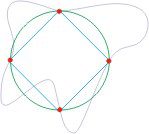
If two new data points are added there is a decision to make – one that depends on the way in which we interpret the data.
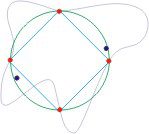
The blue points above could be viewed as supporting the circle interpretation. But other interpretations are possible as well. If we consider the points as “absolutes” we would draw a new shape, perhaps a slightly distorted circle, to pass through the red and blue points. Alternatively we might assign an error estimate to the blue points – or give them an interpretive shape.
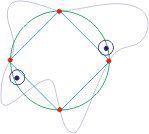
In this situation the circle theorists may claim victory – but the diamond theorist will be satisfied that a diamond is still a good interpretation.
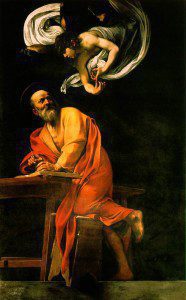 Inspiration. In a similar manner, we as Christian often take the statements in the Bible as data and fit them to theories that make sense of the data. Of course, in this method there is also another theory at work – a theory concerning the nature of the Bible and the mechanism of inspiration. Jim outlines two broad theories of inspiration acknowledging that there are many possible variations.
First: “the Bible , down to the details of its words, consists of and is identical with God’s very own words written inerrantly in human language. The dictation method is one way this might have happened; or perhaps God inaudibly “dictated” in the sense that the human author was not aware of the fact that God was using him, but God nonetheless causes each word to be written exactly as God desired.” (p. 64)
Or alternatively, “there was a special act of revelation to which the writings bear witness. For the Gospels, that revelation was the person of Jesus Christ who became human and dwelt among some people in 1st century Palestine. … We might say that God guided (i.e. inspired) their thoughts, but it was human beings who wrote the words.” (p. 64)
In light of our theory of inspiration we then turn to Scripture. Jim takes the Easter morning narratives as an example (I quote his summary on p. 65).
- Matthew: Mary Magdalen and the other Mary went to the tomb; when they got there, an angel appeared and rolled back the stone and sat on it. They left the tomb and met Jesus, who told them to tell his brothers to go to Galilee, where they would see him.
- Mark: Mary Magdalene, Mary the mother of James, and Salome went to the tomb; the stone had already been rolled away by the time they got there. They went into the tomb and there saw an angel, who told them to tell the disciples to go to Galilee, where they would see Jesus.
- Luke: Mary Magdalene, Joanna, Mary the mother of James, and the other women went to the tomb; the stone was already rolled away and they entered the tomb. There two men stood beside them; they went and told the disciples and Peter ran to the tomb to inspect it.
- John: Mary Magdalene went to the tomb alone and found that the stone had been removed; she went back to tell Peter and John, who ran to the tomb. After they left, Mary saw two angels in the tomb, and Jesus appeared to her. Then Mary went and told the disciples.
What do these examples teach us about the nature of inspiration? They all bear faithful witness to the resurrection, but it is hard to reconcile them with a dictation model of inspiration. Of course, we could draw an elaborate shape through the dots to reconcile the details. Perhaps Mary went to the tomb several times and each Gospel relates a part of the story. It seems a little farfetched, however, to suggest that God dictated a different scenario to each author. What are the important dots here and how should we connect them? What theory of inspiration and or the nature of Scripture best accounts for the data?
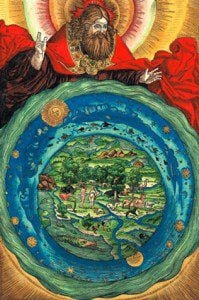 Science and the Bible. Our theory of the nature of Scripture and the mode of inspiration will play a significant role in our view of the interaction of science and Christian faith. Whether we like it or not science has shaped our interpretation of Scripture.
Here is the point most relevant for the Bible’s interaction with science. Instead of attempting to mine Scripture for scientific insights, we ought to allow for an ongoing conversation between what we learn about the created order and what we find in Scripture. Some Christians get nervous when we talk of allowing science to influence our interpretation of Scripture, but there is no denying that it has done so. The obvious allusions in the Bible to the movement of the sun were once interpreted literally, but no longer are, because of science. (p. 66)
There are at least a few different ways we can allow science to influence our reading of Scripture. The knowledge we gain from the study of God’s creation can help us identify culture bound language in Scripture and correct the error of taking it as an absolute. Another way would be to acknowledge that the Bible is to be interpreted anew by each succeeding generation. Jim quotes N.T. Wright who says:
The Bible seems designed to challenge and provoke each new generation to do its own fresh business, to struggle and wrestle with the text … Each generation must do its own fresh historically grounded reading, because each generation needs to grow up, not simply to look up the right answers and remain in an infantile condition. (Surprised by Scripture, p. 29-30)
Wright, of course, does not think that all interpretations are equally good – but simply that we must all dig in and think through the text.
What is your view of the nature of Scripture and the method of inspiration?
How does this influence your interpretation of Scripture?
Can a conversation between Scripture and experience (including science) help us to find fresh meanings of Scripture in light of what we know about the world?
If you wish to contact me directly you may do so at rjs4mail[at]att.net
If interested you can subscribe to a full text feed of my posts at Musings on Science and Theology.
Previous Post

February 16, 2017
Adult Baptism and Instruction (Michelle Van Loon)
Next Post
February 16, 2017 Sacred Space, Sacred Tour of Israel
Browse Our Archives
Select a Category Acts of the Apostles Adam Advent Anabaptism Angels Anglican Apologetics Atonement Baptism BCP Prayers Bible Biblical Studies Birds Blogging Bloglossary Bonhoeffer Books Calvinism Christianity Church Church History Coffee Colossians Commentary Recs Conversion Creation Creeds Culture Death Ecclesiastes Economics Education Embracing Grace Emergent Emerging Movement Eschatology Essays Ethics Eucharist Evangelicalism Family Fasting Fathers Fellowship of Differents Footsteps Tour Fun and Whimsical Gospel Grace Happiness Heaven Hell Holy Spirit Irenaeus James Jesus Jesus Creed Job Justification Kingdom of God Law Lectures Lent Liberalism Love and Marriage Mabanteneni Manhood Mary Miracles Missio Alliance MissioLife Missional Missional Jesus Movies and Film New Perspective Northern Seminary OneLife Origins Project Orthodox Parables Pastor's Spouse Pastoring and Leading Pastoring and Preaching Patristics Paul Paul-John Tour Pharisees Pietism Political Theology Prayer and Formation Preaching Problems for Faith Psalm 119 Psalms Public Issues Purgatory Religions Resurrection Revelation Romans Rule of JCreed Science and Faith Sermon on the Mount Sports Ten Commandments Theology Third Way Top Ten Lists Translations Uncategorized Universalism University Ministry Way Out Weekly Meanderings Wisdom Women and Ministry Work Worship Writing & Blogging Youth Ministry
Select a Month July 2021 January 2020 December 2019 November 2019 October 2019 September 2019 August 2019 July 2019 June 2019 May 2019 April 2019 March 2019 February 2019 January 2019 December 2018 November 2018 October 2018 September 2018 August 2018 July 2018 June 2018 May 2018 April 2018 March 2018 February 2018 January 2018 December 2017 November 2017 October 2017 September 2017 August 2017 July 2017 June 2017 May 2017 April 2017 March 2017 February 2017 January 2017 December 2016 November 2016 October 2016 September 2016 August 2016 July 2016 June 2016 May 2016 April 2016 March 2016 February 2016 January 2016 December 2015 November 2015 October 2015 September 2015 August 2015 July 2015 June 2015 May 2015 April 2015 March 2015 February 2015 January 2015 December 2014 November 2014 October 2014 September 2014 August 2014 July 2014 June 2014 May 2014 April 2014 March 2014 February 2014 January 2014 December 2013 November 2013 October 2013 September 2013 August 2013 July 2013 June 2013 May 2013 April 2013 March 2013 February 2013 January 2013 December 2012 November 2012 October 2012 September 2012 August 2012 July 2012 June 2012 May 2012 April 2012 March 2012 February 2012 January 2012 December 2011 November 2011 October 2011 September 2011 August 2011 July 2011 June 2011 May 2011 April 2011 March 2011 February 2011 January 2011 December 2010 November 2010 October 2010 September 2010 August 2010 July 2010 June 2010 May 2010 April 2010 March 2010 February 2010 January 2010 December 2009 November 2009 October 2009 September 2009 August 2009 July 2009 June 2009 May 2009 April 2009 March 2009 February 2009 January 2009 December 2008 November 2008 October 2008 September 2008 August 2008 July 2008 June 2008 May 2008 April 2008 March 2008 February 2008 January 2008 December 2007 November 2007 October 2007 September 2007 August 2007 July 2007 June 2007 May 2007 April 2007 March 2007 February 2007 January 2007 December 2006 November 2006 October 2006 September 2006 August 2006 July 2006 June 2006 May 2006 April 2006 March 2006 February 2006 January 2006 December 2005 November 2005 October 2005 September 2005 August 2005 July 2005 June 2005 May 2005 April 2005 0000
Follow Us!
TAKE THE
Religious Wisdom Quiz
What is the name of the tree whose fruit Adam and Eve were forbidden to eat?
Select your answer to see how you score.
Tree of the Knowledge of Good and Evil Fig Tree Tree of Life Olive Tree
Related posts from Jesus Creed


The Gospel of With Us and Through Us

Northern Seminary Announces: Nijay Gupta Joins Faculty

The Gundrys and Me: Ruth Tucker
TRENDING AT PATHEOS Evangelical

The REST of Your Life: A Creative Wrestles...
This week I had a conversation with a good friend from church....

How the author of the world's best hymn...
I've been working with John Newton for a while now. This makes...

Long before this Lectio Divina, Psalm 130 - the song - started...

What About the Trees? Another Living Parable
After I finished writing the last article about falling leaves as a...

Why Classical Education Is a Conversation, Not a...
Come and Read: Joy in Classical Education When I was a little...

Cornell University has received a great deal of negative publicity and intense...
view all Evangelical blogs
Ad-Free & Subscriber Log-In Subscription Support
- About Us
- 2026 Calendar
- Videos
- Podcasts
- Library of World Religions
- Faith In Media Tracker
- Advertise With Us
- Write for Us
- Privacy Policy
- Terms of Service
- Do Not Sell My Data
- Contact Us
- Radiant Digital
- Manage Newsletter Subscriptions
- Unsubscribe From Notifications
- Sitemap
Copyright 2008-2026, Patheos. All rights reserved.
Subscription Support Ad-Free & Subscriber Log-In
Follow Patheos