
BuddhistCatholicContemplativeEvangelicalGeneral ChristianHinduJewishLatter-day SaintMuslimNew VisionsProgressive Christian
Beliefs
- Buddhist
- Catholic
- Contemplative
- Evangelical
- General Christian
- Hindu
- Jewish
- Latter-day Saint
- More Voices
- Muslim
- New Visions
- Pagan
- Progressive Christian
Topics
- Religion News
- Food and Religion
- Sports and Religion
- Religious Art
- Religious Music and Entertainment
- Religious Events
- History and Religion
- Style and Religion
- Politics and Religion
- Women in Religion
- Recreation Outdoors and Religion
- Business Finance and Religion
- Careers Workplace and Religion
- Education and Religion
- Family Parenting and Religion
- Health Fitness and Religion
- Home and Religion
- Relationships and Religion
- Technology and Religion
- Travel and Religion
Columnists
- Buddhist Columnists
- Business Finance and Religion Columnists
- Careers Workplace and Religion Columnists
- Catholic Columnists
- Contemplative Columnists
- Education and Religion Columnists
- Evangelists Columnists
- Family Parenting and Religion Columnists
- General Christian Columnists
- Health Fitness and Religion Columnists
- Hindu Columnists
- History and Religion Columnists
- Home and Religion Columnists
- Jewish Columnists
- More Voices Columnists
- Latter Day Columnists
- Muslim Columnists
- New Visions Columnists
- Nonreligious Columnists
- Pagan Columnists
- Politics and Religion Columnists
- Progressive Columnists
- Recreation Outdoors and Religion Columnists
- Relationships and Religion Columnists
- Religion News Columnists
- Religious Art Columnists
- Religious Events Columnists
- Religious Music and Entertainment Columnists
- Sports and Religion Columnists
- Style and Religion Columnists
- Technology and Religion Columnists
- Travel and Religion Columnists
- Women in Religion Columnists
Resource Library
- 2026 Calendar
- Library of World Religions
- The 100 Most Holy Places on Earth
- Patheos Answers
- Podcasts
- Videos
- Faith Leaders Database
- Anglican Episcopalian
- Bahai
- Baptist
- Buddhism
- Christianity
- Confucianism
- Eastern Orthodoxy
- Hinduism
- Holiness and Pentecostal
- ISKCON
- Islam
- Judaism
- Lutheran
- Methodist
- The Church of Jesus Christ of Latter-day Saints
- New Age
- Paganism
- Presbytarian and Reformed
- Protestantism
- Religion Behind the Scenes
- Roman Catholic
- Scientology
- Shia Islam
- Sikhism
- Sufism
- Sunni Islam
- Taoism
- Zen
- See all religions
Research Tools
 Ad-Free & Subscriber Log-In Subscription Support
Ad-Free & Subscriber Log-In Subscription Support
Follow Patheos 

- Trending:
- Forgiveness
- |
- Marriage
- |
- Consciousness
- |
- Death Penalty
- |
- Election
- |
- Halloween
 Jesus Creed
- Home
- Evangelical
- Women and People of Color in Academia
Women and People of Color in Academia
Last updated on: January 2, 2017 at 12:23 am by Scot McKnight
Women and People of Color in Academia 2016-12-31T10:19:18-06:00 Scot McKnight
Patheos Explore the world's faith through different perspectives on religion and spirituality! Patheos has the views of the prevalent religions and spiritualities of the world.
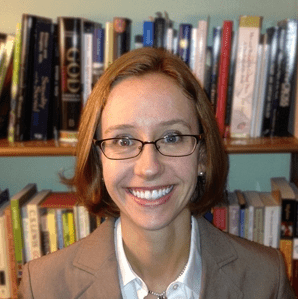
By Emily Louise Zimbrick-Rogers
The recent election has prompted significant reflection for many evangelicals, including notable contributions from Christianity Today managing editor Katelyn Beaty[1], Fuller president Mark Labberton and Fuller president emeritus Richard Mouw[2], and Northeastern assistant professor of New Testament Esau McCaulley[3], who writes about being black, evangelical, and an Anglican priest.
I appreciate these insights on the future of evangelicalism, especially those coming from evangelicals of color. Yet it’s time for some additional reflection on one important microcosm of evangelicalism—the Evangelical Theological Society (ETS), which shapes and reflects the state of the majority of evangelical institutions of higher education.[4] A few days after the election, the ETS met for its annual meeting.
Every year, female academics and academics of color write blogs or tweet about their experiences as minorities at ETS. This year we had an excellent contribution from Eric Redmond, assistant professor of Bible at Moody Bible Institute and pastor[5], about his experience as an African-American theologian and the differences he saw between the minority presence at ETS versus Society of Biblical Literature and American Academy of Religion (SBL/AAR, the non-evangelical academic societies that meet after ETS). I found myself nodding my head in agreement with much of his blog on the state of racial affairs at ETS.
On Nov. 18, 2016, Professor Redmond tweeted, “I must choose AAR/SBL over ETS to see many people of color present research in Biblical Studies & Theology.”
To which, Ben Dockery, associate vice president for enrollment development at Trinity International University and a graduate of Southern Baptist Theological Seminary, tweeted in reply*,* “why do you think it breaks down this way? (What are the key variables?)”.
Professor Redmond noted the lack of ethnic and racial diversity in ETS and how that translates to everyday practice in evangelical colleges and seminaries. I wondered about the overlapping experience for women at ETS[6], especially women of color. On Nov. 28, 2016, Melanie Cogdill, an Asian-American woman who attended ETS for her editorial work, tweeted:
“An important issue. I was at #ETS2016 & noted how few women (non-wives) & minorities were there.” She added, “….lack of black/brown scholars there. As a woman & a minority, I felt it in every seminar I attended.”
Professor Redmond’s four insights can also be applied to the absence women at ETS, so I thought I’d bring his insights about being a racial minority (in bold) into dialogue with women ETS members’ insights.
Before I do so, I would like to make it clear that I am in no way attempting to compare two unique experiences and conclude that they are exactly the same. I also do not in any way intend to minimize the experiences of academics of color in institutions/organizations such as ETS. However, I think Professor Redmond’s lens can help us analyze the problematic absence of women in ETS. (It should also be noted that women of color sit at the intersection of these two dialogues).
1. There is a need for theology to be located socially in application.
Dr. Katie McCoy, assistant professor of theology in women’s studies in the College at Southwestern Baptist Theological Seminary and editor of Biblicalwoman.com, teaches at a school where women are not allowed to teach male students in Bible or theology. However, Dr. McCoy sees a need for women to be active in ETS and scholarship. She said,
“We always need women to be thinking through not only women’s issues, but we [also] need women to be voices in the echo chamber so to speak of current issues and theological questions.… We have the intersection of Scripture and daily life in everything that we do.”
2. ETS needs to be a safer place for discussions of race, class, and gender.
A professor, Karen, identifies as a person of color, but was not comfortable identifying her ethnicity because of how easy it would then be to identify her:
“You realize there are so many barriers there to see you as a peer or colleague or conversation partner.… I can only conclude that men are so unaccustomed to women colleagues and probably because I’m a woman of color as well… a lot of men are very, very unaware and inadvertent beliefs come out and get expressed… The presumption of many ETS members is that you don’t even belong in theology, much less as a professor of theology.”
3. Evangelicals need to demonstrate even greater care about underrepresentation in their academic institutions with sustained, long-term, intentional actions.
Many of the schools represented at ETS have zero women tenure-track faculty members in their departments of biblical studies and theology. Some of these schools are explicit that they will not hire women to teach men (such as the Southern Baptist Convention schools), but others do not have any doctrinal statement to prevent it.
However, as one male professor at one of these schools said, “If I tried to hire a woman for a tenure position, you would not get the faculty vote.… The typical perspective is the professor of Bible/theology is an authoritative elder type position for many of the schools.”
A woman participant in my study of women at the ETS[7] who has a doctorate in biblical students spent eight months being interviewed at a historically complementarian seminary before they explained that complementarianism (specifically male-eldership in the church) was a requirement, even though it does not appear in the school’s statement of faith or theological distinctive.
When she admitted to being “barely egalitarian” (her description), the school declined to offer her the job. She wrote in an email about the situation, “Ironically, we all agree this issue is, to use their language, a ‘third tier’ belief and not a hill to die on—and yet, if this becomes the reason not to hire me, we all died on it.”
It’s time for institutions to get honest about why they don’t have women and people of color faculty. Professor Redmond commented that he’s heard there are not enough “qualified” candidates of color. In my study, a male ETS leader said that “a lot of evangelical schools have had a similar issue in recruiting female faculty, finding qualified women who can sign our doctrinal statement… same has been true for minorities. We’ve had difficulty on both of those.”
This idea has been debunked by many researchers.[8]
4. Evangelical seminaries and Bible colleges must increase invitations to ethnic minorities to speak in their chapels, and to lecture as visiting professors.[9]
Anthea McCall, an Anglican minister, the dean of students and lecturer at Ridley College in Australia, said she is one of two women in teaching capacities at her seminary. Being on staff and preaching in chapel has led her to reflect on that fact that “I’m probably the only woman some of the students will ever have seen being in that leadership role or teaching role.”
Another woman professor at an evangelical seminary said that she’s had male students tell her they were strongly against women teaching the New Testament until they took her class. Sandra Glahn, associate professor of media arts and worship at Dallas Theological Seminary had a male student who told her, “It’s the first time in my life that I’ve been in a small group discussion with a woman. I was blown away by their insights.”
As Professor Redmond explained, there are concrete steps that evangelical institutions can make if there are people (and yes, that would be mainly white men for the institutions we’re talking about!) of conviction and character willing to work for justice in their own midst.
One example that I’ve seen over the course of my research is Dr. Dan Wallace, professor at Dallas Theological Seminary and ETS past-president. Dan and I do not agree on women’s roles in the church, but we developed an excellent working relationship and he’s applied what he learned from hearing the experiences of women in my research to his own work in ETS and at DTS.
In fact, working with some other individuals, Dan achieved all four of Professor Redmond’s recommendations regarding women. His 2016 presidential address paid attention to women’s scribal contributions to New Testament manuscript studies, and he invited the first woman plenary speaker since 1986, Myrto Theocharous, professor of Hebrew and Old Testament at Greek Bible College. He’s mentored women students at DTS and connected them for doctoral work, publishing, and research opportunities, and he (with Mike Thigpen) sponsored the first women’s coffee hour for women to meet and connect at ETS 2015.
More important, for long-term changes, I’ve seen Dan seek out women’s insights, both at his own institution and at other institutions for his own work of encouraging multiple viewpoints at ETS. As he concluded in his presidential address (forthcoming in JETS), “This society, with its high view of Scripture, was never intended to give a voice only to those who are in the majority.… I pray that we can get past our insecurities and fears of other viewpoints and ennoble our brothers and sisters who may disagree with us.”
I’d like to end with an insight from a twenty-something Asian-Canadian woman, who came to ETS as a student scholarship recipient. She said being a female and a racial minority both at her seminary and at ETS can be demoralizing as she seeks to be respectful of her white male professors, yet experiences being disrespected “every minute of every day.” She said racial diversity “is not my problem, but all our problem. If the school [and evangelical academy] does not deal with this well, it will look bad on Christianity.… We are in this together.”
Notes
[1] Katelyn Beaty, “I was an evangelical magazine editor, but now I can’t defend my evangelical community,” Washington Post, November 14, 2016. https://www.washingtonpost.com/news/acts-of-faith/wp/2016/11/14/i-was-an-evangelical-magazine-editor-but-now-i-cant-defend-my-evangelical-community/?utm_term=.1fec7b3bc294.
[2] Mark Labberton and Richard Mouw, “Post-Election Evangelical: A Statement From Mark Labberton And Richard Mouw,” Fuller Theological Seminary, 14 November 2016 http://fuller.edu/communication/post-election-evangelical–a-statement-from-mark-labberton-and-richard-mouw/.
[3] Esau McCaulley, “Longer Still (Post Election Reflections of a Black Man Amongst the Evangelicals,” Thicket of the Jordan: Exploring New Testament Scholarship, Anglicanism and the Black Experience blog, 9 November 2016, https://esaudmccaulley.wordpress.com/2016/11/09/longer-still-post-election-reflections-of-a-black-man-amongst-the-evangelicals/.
[4] Due to ETS’ focus on inerrancy, some institutions such as Fuller are not present in ETS.
[5] Eric Redmond, “Reply to Ben Dockery on Choosing the Minorities’ Presence in SBL/AAR Over ETS,” A Man from Issachar blog, 27 November 2016, https://ericredmond.wordpress.com/2016/11/27/reply-to-ben-dockery-on-choosing-the-minorities-presence-in-sblaar-over-ets/.
[6] I conducted this research for Christians for Biblical Equality and the major findings were published Emily Zimbrick-Rogers, “‘A Question Mark over my Head: Experiences of Women ETS Members at the 2014 ETS Annual Meeting,” A Question Mark Over My Head: Special Edition Journal (2015). It can be accessed here: https://issuu.com/mutualitymag/docs/ets2015-web or here: http://www.cbeinternational.org/resources/article/other/question-mark-over-my-head.
[7] Zimbrick-Rogers, “‘A Question Mark over my Head: Experiences of Women ETS Members at the 2014 ETS Annual Meeting,” www.cbeinternational.org/resources/article/other/question-mark-over-my-head.
[8] Viviane Callier, “‘There Aren’t Qualified Minority Candidates’ is a Myth,” Scientific American, 22 November 2016, https://blogs.scientificamerican.com/voices/there-aren-t-qualified-minority-candidates-is-a-myth/.
[9] The four bolded sentences come from Redmond’s blog.
Previous Post

January 1, 2017
New Year's Day Holy Name Prayer
Next Post
January 2, 2017 Designing Women’s Ministry
Browse Our Archives
Select a Category Acts of the Apostles Adam Advent Anabaptism Angels Anglican Apologetics Atonement Baptism BCP Prayers Bible Biblical Studies Birds Blogging Bloglossary Bonhoeffer Books Calvinism Christianity Church Church History Coffee Colossians Commentary Recs Conversion Creation Creeds Culture Death Ecclesiastes Economics Education Embracing Grace Emergent Emerging Movement Eschatology Essays Ethics Eucharist Evangelicalism Family Fasting Fathers Fellowship of Differents Footsteps Tour Fun and Whimsical Gospel Grace Happiness Heaven Hell Holy Spirit Irenaeus James Jesus Jesus Creed Job Justification Kingdom of God Law Lectures Lent Liberalism Love and Marriage Mabanteneni Manhood Mary Miracles Missio Alliance MissioLife Missional Missional Jesus Movies and Film New Perspective Northern Seminary OneLife Origins Project Orthodox Parables Pastor's Spouse Pastoring and Leading Pastoring and Preaching Patristics Paul Paul-John Tour Pharisees Pietism Political Theology Prayer and Formation Preaching Problems for Faith Psalm 119 Psalms Public Issues Purgatory Religions Resurrection Revelation Romans Rule of JCreed Science and Faith Sermon on the Mount Sports Ten Commandments Theology Third Way Top Ten Lists Translations Uncategorized Universalism University Ministry Way Out Weekly Meanderings Wisdom Women and Ministry Work Worship Writing & Blogging Youth Ministry
Select a Month July 2021 January 2020 December 2019 November 2019 October 2019 September 2019 August 2019 July 2019 June 2019 May 2019 April 2019 March 2019 February 2019 January 2019 December 2018 November 2018 October 2018 September 2018 August 2018 July 2018 June 2018 May 2018 April 2018 March 2018 February 2018 January 2018 December 2017 November 2017 October 2017 September 2017 August 2017 July 2017 June 2017 May 2017 April 2017 March 2017 February 2017 January 2017 December 2016 November 2016 October 2016 September 2016 August 2016 July 2016 June 2016 May 2016 April 2016 March 2016 February 2016 January 2016 December 2015 November 2015 October 2015 September 2015 August 2015 July 2015 June 2015 May 2015 April 2015 March 2015 February 2015 January 2015 December 2014 November 2014 October 2014 September 2014 August 2014 July 2014 June 2014 May 2014 April 2014 March 2014 February 2014 January 2014 December 2013 November 2013 October 2013 September 2013 August 2013 July 2013 June 2013 May 2013 April 2013 March 2013 February 2013 January 2013 December 2012 November 2012 October 2012 September 2012 August 2012 July 2012 June 2012 May 2012 April 2012 March 2012 February 2012 January 2012 December 2011 November 2011 October 2011 September 2011 August 2011 July 2011 June 2011 May 2011 April 2011 March 2011 February 2011 January 2011 December 2010 November 2010 October 2010 September 2010 August 2010 July 2010 June 2010 May 2010 April 2010 March 2010 February 2010 January 2010 December 2009 November 2009 October 2009 September 2009 August 2009 July 2009 June 2009 May 2009 April 2009 March 2009 February 2009 January 2009 December 2008 November 2008 October 2008 September 2008 August 2008 July 2008 June 2008 May 2008 April 2008 March 2008 February 2008 January 2008 December 2007 November 2007 October 2007 September 2007 August 2007 July 2007 June 2007 May 2007 April 2007 March 2007 February 2007 January 2007 December 2006 November 2006 October 2006 September 2006 August 2006 July 2006 June 2006 May 2006 April 2006 March 2006 February 2006 January 2006 December 2005 November 2005 October 2005 September 2005 August 2005 July 2005 June 2005 May 2005 April 2005 0000
Follow Us!
TAKE THE
Religious Wisdom Quiz
What is the name of the first book in the New Testament?
Select your answer to see how you score.
Mark Luke John Matthew
Related posts from Jesus Creed

Do Egalitarians Take the Bible Seriously?


The Biblical Scholar from the Throw-out Box
TRENDING AT PATHEOS Evangelical

How the author of the world's best hymn...
I've been working with John Newton for a while now. This makes...

Long before this Lectio Divina, Psalm 130 - the song - started...

What About the Trees? Another Living Parable
After I finished writing the last article about falling leaves as a...

Why Classical Education Is a Conversation, Not a...
Come and Read: Joy in Classical Education When I was a little...

Falling Leaves: A Living Parable on Letting Go
I’ve spent the vast majority of my life in the southeast corner...

Cornell University has received a great deal of negative publicity and intense...
view all Evangelical blogs
Ad-Free & Subscriber Log-In Subscription Support
- About Us
- 2026 Calendar
- Videos
- Podcasts
- Library of World Religions
- Faith In Media Tracker
- Advertise With Us
- Write for Us
- Privacy Policy
- Terms of Service
- Do Not Sell My Data
- Contact Us
- Radiant Digital
- Manage Newsletter Subscriptions
- Unsubscribe From Notifications
- Sitemap
Copyright 2008-2026, Patheos. All rights reserved.
Subscription Support Ad-Free & Subscriber Log-In
Follow Patheos