
BuddhistCatholicContemplativeEvangelicalGeneral ChristianHinduJewishLatter-day SaintMuslimNew VisionsProgressive Christian
Beliefs
- Buddhist
- Catholic
- Contemplative
- Evangelical
- General Christian
- Hindu
- Jewish
- Latter-day Saint
- More Voices
- Muslim
- New Visions
- Pagan
- Progressive Christian
Topics
- Religion News
- Food and Religion
- Sports and Religion
- Religious Art
- Religious Music and Entertainment
- Religious Events
- History and Religion
- Style and Religion
- Politics and Religion
- Women in Religion
- Recreation Outdoors and Religion
- Business Finance and Religion
- Careers Workplace and Religion
- Education and Religion
- Family Parenting and Religion
- Health Fitness and Religion
- Home and Religion
- Relationships and Religion
- Technology and Religion
- Travel and Religion
Columnists
- Buddhist Columnists
- Business Finance and Religion Columnists
- Careers Workplace and Religion Columnists
- Catholic Columnists
- Contemplative Columnists
- Education and Religion Columnists
- Evangelists Columnists
- Family Parenting and Religion Columnists
- General Christian Columnists
- Health Fitness and Religion Columnists
- Hindu Columnists
- History and Religion Columnists
- Home and Religion Columnists
- Jewish Columnists
- More Voices Columnists
- Latter Day Columnists
- Muslim Columnists
- New Visions Columnists
- Nonreligious Columnists
- Pagan Columnists
- Politics and Religion Columnists
- Progressive Columnists
- Recreation Outdoors and Religion Columnists
- Relationships and Religion Columnists
- Religion News Columnists
- Religious Art Columnists
- Religious Events Columnists
- Religious Music and Entertainment Columnists
- Sports and Religion Columnists
- Style and Religion Columnists
- Technology and Religion Columnists
- Travel and Religion Columnists
- Women in Religion Columnists
Resource Library
- 2026 Calendar
- Library of World Religions
- The 100 Most Holy Places on Earth
- Patheos Answers
- Podcasts
- Videos
- Faith Leaders Database
- Anglican Episcopalian
- Bahai
- Baptist
- Buddhism
- Christianity
- Confucianism
- Eastern Orthodoxy
- Hinduism
- Holiness and Pentecostal
- ISKCON
- Islam
- Judaism
- Lutheran
- Methodist
- The Church of Jesus Christ of Latter-day Saints
- New Age
- Paganism
- Presbytarian and Reformed
- Protestantism
- Religion Behind the Scenes
- Roman Catholic
- Scientology
- Shia Islam
- Sikhism
- Sufism
- Sunni Islam
- Taoism
- Zen
- See all religions
Research Tools
 Ad-Free & Subscriber Log-In Subscription Support
Follow Patheos 

- Trending:
- Advent
- |
- Forgiveness
- |
- Thanksgiving
- |
- Election
- |
- Seasonal Holidays
- |
- Marriage
 Jesus Creed
- Home
- Evangelical
- Interview with Beverly Gaventa
Interview with Beverly Gaventa
Last updated on: December 12, 2016 at 7:23 am by Scot McKnight
Interview with Beverly Gaventa 2016-12-12T07:23:49-06:00 Scot McKnight
Patheos Explore the world's faith through different perspectives on religion and spirituality! Patheos has the views of the prevalent religions and spiritualities of the world.
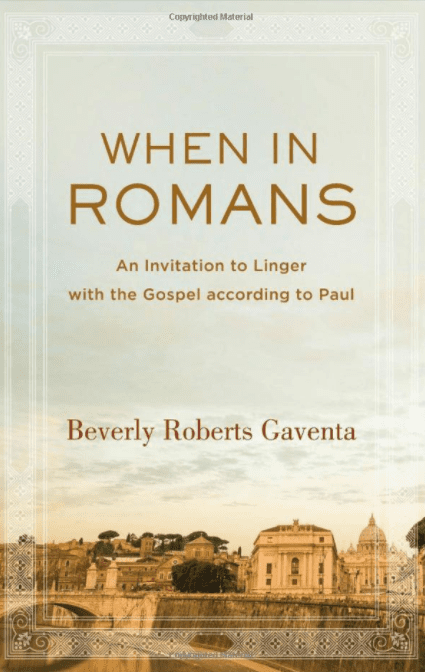 Beverly Gaventa has become an increasingly, patient and influential voice in Pauline studies. My favorite book of hers so far on Paul is Our Mother Saint Paul. A student and colleague of the architects of the apocalyptic scholars — like J. Louis Martyn and J. Christiaan Beker — Gaventa has been working on Romans most of her career and we are just beginning to get a glimpse of her forthcoming Romans commentary in her new book When in Romans.
Here are some questions for her and her answers:
What is the significance of Phoebe (16:1-2) and her relationship to the letter?
I content that Phoebe is the earliest interpreter of Romans. She is the one who delivers the letter, as seems obvious. I think she is also the best candidate for the letter’s presenter (i.e., reader) in the Roman congregations. She is the one who would interpret it, either as she reads or in conversation after someone else read. It’s a bit hard to imagine that Paul dispatched this letter with her without having a long conversation about what he wanted to achieve, but finally she is the one who will answer questions, expand, defend or qualify.
You often ask your students to describe the letter to someone who has never read it. One common reply is it is about “sin, salvation, and sanctification.” Your concern with this reply is its “breeziness.” What do you mean by that?
Of course, Romans is about all those things, but it is about a great deal more. I characterize that trilogy as “breezy” because it often comes off the tongue too easily, without a lot of thought about what those terms mean, how they are at work in this letter, how this letter is like and unlike other texts in Scripture.
You say that “salvation” is a much more complex idea in Romans than we have imagined. In particular you say it is more “cosmic”. What is this “cosmic” dimension and how should it affect our reading of the letter? How does this view differ with the typical understanding of salvation as the opportunity for an individual to be eternally saved?
“Cosmic” doesn’t exclude reference to the individual’s relationship to God. I wouldn’t characterize that as an “opportunity,” since Paul talks about the individual relationship as one of “calling,” rather than “offer.” I think Paul does have a strong sense of God’s action in Jesus in the lives of individuals. But he also has a sense of the corporate—the social relationships within, across, and beyond believing communities.
“Cosmic” does not deny either of those dimensions to Paul’s thought. It includes them but takes into account also both the redemption of the whole of creation and the cosmic nature of the “problem” at hand. Romans 5-8 makes it clear that the human problem is not just belief or unbelief but human captivity to powers that are larger than human life, powers from which God’s action in Jesus is liberative (redemptive, salvific).
Paul makes little or no reference to repentance or forgiveness in Romans. Why is that important to Paul’s argument?
Precisely because the human problem, as Paul sees it, is larger than simply repenting and being forgiven, he casts the gospel in terms of redemption and salvation. In Romans 5 and 6, he speaks of Sin and Death ruling over humankind, even of humans as slaves to Sin. Slaves have to be set free; they cannot simply repent.
In your discussion of Paul’s ethics you state that our readings have been too restricted. You propose a better starting point for this discussion is to think about worship. Would you expand on that?
Here I take my starting point from Romans 1:18-32, noticing that the originating problem is the withholding of glory from God—worship! Because humans did not worship God rightly, they were “handed over,” resulting in the various behavior Paul castigates there. So, worship is at the heart of things. Importantly, worship is also featured in 12:1, the opening of the “ethical” section of the letter. There Paul uses liturgical language (the offering of the self as a right act of worship) to introduce his comments on various questions we call ethics. The two are so intertwined that we cannot take them apart, although our assumption is that they are separable.
Previous Post

December 11, 2016
Coptic Christians in Cairo
Next Post
December 12, 2016 Homosexuality: What the Bible Says
Browse Our Archives
Select a Category Acts of the Apostles Adam Advent Anabaptism Angels Anglican Apologetics Atonement Baptism BCP Prayers Bible Biblical Studies Birds Blogging Bloglossary Bonhoeffer Books Calvinism Christianity Church Church History Coffee Colossians Commentary Recs Conversion Creation Creeds Culture Death Ecclesiastes Economics Education Embracing Grace Emergent Emerging Movement Eschatology Essays Ethics Eucharist Evangelicalism Family Fasting Fathers Fellowship of Differents Footsteps Tour Fun and Whimsical Gospel Grace Happiness Heaven Hell Holy Spirit Irenaeus James Jesus Jesus Creed Job Justification Kingdom of God Law Lectures Lent Liberalism Love and Marriage Mabanteneni Manhood Mary Miracles Missio Alliance MissioLife Missional Missional Jesus Movies and Film New Perspective Northern Seminary OneLife Origins Project Orthodox Parables Pastor's Spouse Pastoring and Leading Pastoring and Preaching Patristics Paul Paul-John Tour Pharisees Pietism Political Theology Prayer and Formation Preaching Problems for Faith Psalm 119 Psalms Public Issues Purgatory Religions Resurrection Revelation Romans Rule of JCreed Science and Faith Sermon on the Mount Sports Ten Commandments Theology Third Way Top Ten Lists Translations Uncategorized Universalism University Ministry Way Out Weekly Meanderings Wisdom Women and Ministry Work Worship Writing & Blogging Youth Ministry
Select a Month July 2021 January 2020 December 2019 November 2019 October 2019 September 2019 August 2019 July 2019 June 2019 May 2019 April 2019 March 2019 February 2019 January 2019 December 2018 November 2018 October 2018 September 2018 August 2018 July 2018 June 2018 May 2018 April 2018 March 2018 February 2018 January 2018 December 2017 November 2017 October 2017 September 2017 August 2017 July 2017 June 2017 May 2017 April 2017 March 2017 February 2017 January 2017 December 2016 November 2016 October 2016 September 2016 August 2016 July 2016 June 2016 May 2016 April 2016 March 2016 February 2016 January 2016 December 2015 November 2015 October 2015 September 2015 August 2015 July 2015 June 2015 May 2015 April 2015 March 2015 February 2015 January 2015 December 2014 November 2014 October 2014 September 2014 August 2014 July 2014 June 2014 May 2014 April 2014 March 2014 February 2014 January 2014 December 2013 November 2013 October 2013 September 2013 August 2013 July 2013 June 2013 May 2013 April 2013 March 2013 February 2013 January 2013 December 2012 November 2012 October 2012 September 2012 August 2012 July 2012 June 2012 May 2012 April 2012 March 2012 February 2012 January 2012 December 2011 November 2011 October 2011 September 2011 August 2011 July 2011 June 2011 May 2011 April 2011 March 2011 February 2011 January 2011 December 2010 November 2010 October 2010 September 2010 August 2010 July 2010 June 2010 May 2010 April 2010 March 2010 February 2010 January 2010 December 2009 November 2009 October 2009 September 2009 August 2009 July 2009 June 2009 May 2009 April 2009 March 2009 February 2009 January 2009 December 2008 November 2008 October 2008 September 2008 August 2008 July 2008 June 2008 May 2008 April 2008 March 2008 February 2008 January 2008 December 2007 November 2007 October 2007 September 2007 August 2007 July 2007 June 2007 May 2007 April 2007 March 2007 February 2007 January 2007 December 2006 November 2006 October 2006 September 2006 August 2006 July 2006 June 2006 May 2006 April 2006 March 2006 February 2006 January 2006 December 2005 November 2005 October 2005 September 2005 August 2005 July 2005 June 2005 May 2005 April 2005 0000
Follow Us!
TAKE THE
Religious Wisdom Quiz
What does "Zion" mean in Hebrew?
Select your answer to see how you score.
Fortress Promised Land Holy Place City of God
Related posts from Jesus Creed

The Gospel of With Us and Through Us

Northern Seminary Announces: Nijay Gupta Joins Faculty

The Gundrys and Me: Ruth Tucker
TRENDING AT PATHEOS Evangelical

Making Stones Into Bread: Choosing the “Right” Work
I was on my online arts ministry Zoom meeting with the International...

Ukraine’s exhausted Christians face fifth winter of war
By Julian Lukins The full-scale war in Ukraine is taking “a serious...

Russell Brand's Conviction is not anti-Christian Persecution
How do we shed the reputation that the Church is OK with...

Have you ever caught yourself saying, “I’ll do it tomorrow,” or “Now...

Write Your Story: A Great Way to Find...
A few month’s back, my son was scrolling around Facebook and saw...

Throughout history, people have pursued pleasure, possessions, relationships, and success in an...
view all Evangelical blogs
Ad-Free & Subscriber Log-In Subscription Support
- About Us
- 2026 Calendar
- Videos
- Podcasts
- Library of World Religions
- Faith In Media Tracker
- Advertise With Us
- Write for Us
- Privacy Policy
- Terms of Service
- Do Not Sell My Data
- Contact Us
- Radiant Digital
- Manage Newsletter Subscriptions
- Unsubscribe From Notifications
- Sitemap
Copyright 2008-2026, Patheos. All rights reserved.
Subscription Support Ad-Free & Subscriber Log-In
Follow Patheos