
BuddhistCatholicContemplativeEvangelicalGeneral ChristianHinduJewishLatter-day SaintMuslimNew VisionsProgressive Christian
Beliefs
- Buddhist
- Catholic
- Contemplative
- Evangelical
- General Christian
- Hindu
- Jewish
- Latter-day Saint
- More Voices
- Muslim
- New Visions
- Pagan
- Progressive Christian
Topics
- Religion News
- Food and Religion
- Sports and Religion
- Religious Art
- Religious Music and Entertainment
- Religious Events
- History and Religion
- Style and Religion
- Politics and Religion
- Women in Religion
- Recreation Outdoors and Religion
- Business Finance and Religion
- Careers Workplace and Religion
- Education and Religion
- Family Parenting and Religion
- Health Fitness and Religion
- Home and Religion
- Relationships and Religion
- Technology and Religion
- Travel and Religion
Columnists
- Buddhist Columnists
- Business Finance and Religion Columnists
- Careers Workplace and Religion Columnists
- Catholic Columnists
- Contemplative Columnists
- Education and Religion Columnists
- Evangelists Columnists
- Family Parenting and Religion Columnists
- General Christian Columnists
- Health Fitness and Religion Columnists
- Hindu Columnists
- History and Religion Columnists
- Home and Religion Columnists
- Jewish Columnists
- More Voices Columnists
- Latter Day Columnists
- Muslim Columnists
- New Visions Columnists
- Nonreligious Columnists
- Pagan Columnists
- Politics and Religion Columnists
- Progressive Columnists
- Recreation Outdoors and Religion Columnists
- Relationships and Religion Columnists
- Religion News Columnists
- Religious Art Columnists
- Religious Events Columnists
- Religious Music and Entertainment Columnists
- Sports and Religion Columnists
- Style and Religion Columnists
- Technology and Religion Columnists
- Travel and Religion Columnists
- Women in Religion Columnists
Resource Library
- 2026 Calendar
- Library of World Religions
- The 100 Most Holy Places on Earth
- Patheos Answers
- Podcasts
- Videos
- Faith Leaders Database
- Anglican Episcopalian
- Bahai
- Baptist
- Buddhism
- Christianity
- Confucianism
- Eastern Orthodoxy
- Hinduism
- Holiness and Pentecostal
- ISKCON
- Islam
- Judaism
- Lutheran
- Methodist
- The Church of Jesus Christ of Latter-day Saints
- New Age
- Paganism
- Presbytarian and Reformed
- Protestantism
- Religion Behind the Scenes
- Roman Catholic
- Scientology
- Shia Islam
- Sikhism
- Sufism
- Sunni Islam
- Taoism
- Zen
- See all religions
Research Tools
 Ad-Free & Subscriber Log-In Subscription Support
Follow Patheos 

- Trending:
- Advent
- |
- Forgiveness
- |
- Thanksgiving
- |
- Election
- |
- Seasonal Holidays
- |
- Marriage
 Jesus Creed
- Home
- Evangelical
- An Identity Found in Christ (RJS)
An Identity Found in Christ (RJS)
Last updated on: December 8, 2016 at 5:59 am by RJS
An Identity Found in Christ (RJS) 2016-11-27T15:34:25-06:00 RJS
Patheos Explore the world's faith through different perspectives on religion and spirituality! Patheos has the views of the prevalent religions and spiritualities of the world.
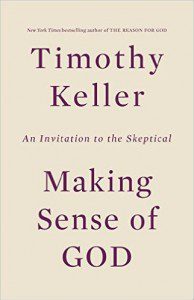 The traditional and modern sources of identity – found by looking outward to society, cultural roles, and affirmation or inward, following one’s desires and finding affirmation there, are unsatisfactory … inherently insecure. The traditional model can be suffocating, while the modern model is crushing. In contrast Tim Keller (Making Sense of God: An Invitation to the Skeptical) argues that we should look upward. An identity found in Christ is not suffocated by traditional chains or crushed by the fads of modernity. He quotes Paul (1 Cor. 4:3-4) “I care very little if I am judged by you or by any human court; indeed, I do not even judge myself. My conscience is clear, but that does not make me innocent. It is the Lord who judges me.” An identity found in Christ is free from the demands and whims of the world. This is an identity that is not achieved by belonging to the correct family or through performing well, but is received from God through Christ. We are loved.
And now in Christ it is literally true that the person we adore most in the universe adores us. In the eyes of God, in the opinion of the only one in the universe whose opinion ultimately counts, we are more valuable than all the jewels that lie beneath the earth. (p. 137)
An identity found in Christ provides a new motivation for life. “You serve him not in order to coerce him to love you but because he already does.” (p. 137) If we follow Christ, there is the expectation (even the command) that we obey his commandments. (e.g. Mt. 7) However, God is not a petty dictator, ready to condemn his serfs for minor offenses of omission or commission; rather he is a loving father shaping his children. This doesn’t abolish the activities of the world (family, career, public service …), but “they are, as it were, demoted to being just good things.” (p. 138) Our self-worth rests in being created in the image of God and adoption to sonship (whether male or female) through Jesus Christ.
When we stop building our identity on career, or our race, or our family, or any other created thing and rest in God, the fears and drives that enslave us recede, and we experience a new freedom and security.
Walking with God, who always sees us and loves us, brings a new integrity of self. We cannot and do not simply blend into each new setting, saying the things we need to say to get the most benefit out of the situation. We are not merely a set of dramatic roles, changing every time we play to a new set of spectators, because God is our primary audience every moment. (p. 141)
I will take this further than Keller (who is soft complementarian in outlook) … when we stop building our identity on our gender as male or female (a created thing), but on Christ, it brings freedom. I, for example, am a woman … but I am not a culturally ordained set of acceptable roles. I am a child of God, called to serve only him with my heart and abilities. There are many equally satisfactory ways this can play out. Identity is not found in career or family, it is not found in being a provider and protector. It is found in Christ alone. To quote Paul’s letter to the Galatians:
So in Christ Jesus you are all children of God through faith, for all of you who were baptized into Christ have clothed yourselves with Christ. There is neither Jew nor Gentile, neither slave nor free, nor is there male and female, for you are all one in Christ Jesus. If you belong to Christ, then you are Abraham’s seed, and heirs according to the promise. (3:26-29)
This (as Keller points out) doesn’t obliterate all distinctions into some bland mush of humanity, but it does free us from the roles that establish identity and acceptance in anything other than Christ. It is also significant that our identity is not found in dichotomies that place some people on the outside and others on the inside. “We overseparate from the Other when we fail to recognize what we have in common. We refuse to admit that we are to a great degree like them. But we overbind to the Other when we refuse to grant them their difference, when we insist that they really are, or should be, just like us.” (p. 145)
Christianity has permeated the far reaches of the globe – and one feature of this is that (despite the best efforts of some missionaries) Christianity doesn’t demand cultural assimilation. Keller points out that Christianity truly is a global religion. Summarizing data from a Pew Report and a few other sources: about 26% of Christians (Catholic, Protestant, and Orthodox) live in Europe, 25% in South and Central America, 12% in North America, 22% in Africa, and 15% in Asia (the fastest growing region). They won’t always be our type or do things our way … but that shouldn’t really trouble us.
Worldly measures of success don’t define Christian identity, where the humble will be exalted, the last first, and the poor or outcast given the place of honor. Keller concludes:
If I build my identity on what Jesus Christ did for me and the fact that I have an everlasting name in him by grace, I can’t, on the one hand feel superior to anybody, nor do I have to fear anybody else. I don’t have to compare myself to them at all. My identity is based on somebody who was excluded for me, who was cast out for me, who loved his enemies, and that is going to turn me into someone who embraces the Different.
Christians, of course, so often fail to realize and live out of the resources they have. But the world needs millions of people who have the capacity to do what the Gospel compels and empowers them to do. (p. 151)
The crying shame is that Christians, including Christian leaders, do so often fail to live out a life and identity founded in Christ. Self-worth is found in worldly success in business, government, academia, or the church. Self-worth can be evaluated by salary, business acumen and promotion, professional recognition and awards (a particular temptation in my field) or leading a large church. None of these focus on an identity in Christ – even in the church the emphasis is on comparison with others, not on faithfulness.
The crying shame is that Christians too often build an identity around excluding the other – however that is defined. It can be ethnic, racial, national, doctrinal, political, or any of a number of other factors.
The crying shame is that Christians too often build identity on the basis of XX and XY chromosomes rather than on Christ. We are complementary in this (and other) ways – but this doesn’t define Christian identity, roles, or calling. The problem I have with the complementarian (i.e. male headship) movement in evangelicalism is that the gospel and Christian identity are confused with (and used to bolster) male headship. The problem I have with “radical feminism” in the church is that it too confuses the gospel with other factors. (As in our culture “mankind” can no longer be usefully generalized to mean all humanity, so too “feminism” cannot be usefully generalized to mean generic egalitarianism. Too many will hear a different intent behind the word.) Although we are called to defend the poor and oppressed, we are not called to demand rights or respect. We are called to follow and obey to the best of our abilities, even in the presence of opposition or hardship.
To what extent is our identity found in Christ?
What does this mean?
If you wish to contact me directly you may do so at rjs4mail[at]att.net
If interested you can subscribe to a full text feed of my posts at Musings on Science and Theology.
Previous Post

December 8, 2016
Does Women's Work Really Matter? (Leslie Leyland Fields)
Next Post
December 9, 2016 The Bible's (Six?) Principles of Economy
Browse Our Archives
Select a Category Acts of the Apostles Adam Advent Anabaptism Angels Anglican Apologetics Atonement Baptism BCP Prayers Bible Biblical Studies Birds Blogging Bloglossary Bonhoeffer Books Calvinism Christianity Church Church History Coffee Colossians Commentary Recs Conversion Creation Creeds Culture Death Ecclesiastes Economics Education Embracing Grace Emergent Emerging Movement Eschatology Essays Ethics Eucharist Evangelicalism Family Fasting Fathers Fellowship of Differents Footsteps Tour Fun and Whimsical Gospel Grace Happiness Heaven Hell Holy Spirit Irenaeus James Jesus Jesus Creed Job Justification Kingdom of God Law Lectures Lent Liberalism Love and Marriage Mabanteneni Manhood Mary Miracles Missio Alliance MissioLife Missional Missional Jesus Movies and Film New Perspective Northern Seminary OneLife Origins Project Orthodox Parables Pastor's Spouse Pastoring and Leading Pastoring and Preaching Patristics Paul Paul-John Tour Pharisees Pietism Political Theology Prayer and Formation Preaching Problems for Faith Psalm 119 Psalms Public Issues Purgatory Religions Resurrection Revelation Romans Rule of JCreed Science and Faith Sermon on the Mount Sports Ten Commandments Theology Third Way Top Ten Lists Translations Uncategorized Universalism University Ministry Way Out Weekly Meanderings Wisdom Women and Ministry Work Worship Writing & Blogging Youth Ministry
Select a Month July 2021 January 2020 December 2019 November 2019 October 2019 September 2019 August 2019 July 2019 June 2019 May 2019 April 2019 March 2019 February 2019 January 2019 December 2018 November 2018 October 2018 September 2018 August 2018 July 2018 June 2018 May 2018 April 2018 March 2018 February 2018 January 2018 December 2017 November 2017 October 2017 September 2017 August 2017 July 2017 June 2017 May 2017 April 2017 March 2017 February 2017 January 2017 December 2016 November 2016 October 2016 September 2016 August 2016 July 2016 June 2016 May 2016 April 2016 March 2016 February 2016 January 2016 December 2015 November 2015 October 2015 September 2015 August 2015 July 2015 June 2015 May 2015 April 2015 March 2015 February 2015 January 2015 December 2014 November 2014 October 2014 September 2014 August 2014 July 2014 June 2014 May 2014 April 2014 March 2014 February 2014 January 2014 December 2013 November 2013 October 2013 September 2013 August 2013 July 2013 June 2013 May 2013 April 2013 March 2013 February 2013 January 2013 December 2012 November 2012 October 2012 September 2012 August 2012 July 2012 June 2012 May 2012 April 2012 March 2012 February 2012 January 2012 December 2011 November 2011 October 2011 September 2011 August 2011 July 2011 June 2011 May 2011 April 2011 March 2011 February 2011 January 2011 December 2010 November 2010 October 2010 September 2010 August 2010 July 2010 June 2010 May 2010 April 2010 March 2010 February 2010 January 2010 December 2009 November 2009 October 2009 September 2009 August 2009 July 2009 June 2009 May 2009 April 2009 March 2009 February 2009 January 2009 December 2008 November 2008 October 2008 September 2008 August 2008 July 2008 June 2008 May 2008 April 2008 March 2008 February 2008 January 2008 December 2007 November 2007 October 2007 September 2007 August 2007 July 2007 June 2007 May 2007 April 2007 March 2007 February 2007 January 2007 December 2006 November 2006 October 2006 September 2006 August 2006 July 2006 June 2006 May 2006 April 2006 March 2006 February 2006 January 2006 December 2005 November 2005 October 2005 September 2005 August 2005 July 2005 June 2005 May 2005 April 2005 0000
Follow Us!
TAKE THE
Religious Wisdom Quiz
What was Bezalel's profession?
Select your answer to see how you score.
Craftsman Farmer Priest Soldier
Related posts from Jesus Creed


The Gospel of With Us and Through Us

Northern Seminary Announces: Nijay Gupta Joins Faculty

The Gundrys and Me: Ruth Tucker
TRENDING AT PATHEOS Evangelical

When you hear the word riches, what comes to mind? For most...

Don’t Miss the Parents: A Creative Christmas Meditation
As we enter the Advent Season, I see many people trying to...

Making Stones Into Bread: Choosing the “Right” Work
I was on my online arts ministry Zoom meeting with the International...

Ukraine’s exhausted Christians face fifth winter of war
By Julian Lukins The full-scale war in Ukraine is taking “a serious...

Russell Brand's Conviction is not anti-Christian Persecution
How do we shed the reputation that the Church is OK with...

Have you ever caught yourself saying, “I’ll do it tomorrow,” or “Now...
view all Evangelical blogs
Ad-Free & Subscriber Log-In Subscription Support
- About Us
- 2026 Calendar
- Videos
- Podcasts
- Library of World Religions
- Faith In Media Tracker
- Advertise With Us
- Write for Us
- Privacy Policy
- Terms of Service
- Do Not Sell My Data
- Contact Us
- Radiant Digital
- Manage Newsletter Subscriptions
- Unsubscribe From Notifications
- Sitemap
Copyright 2008-2026, Patheos, part of the Radiant Digital network of media brands. All rights reserved.
Subscription Support Ad-Free & Subscriber Log-In
Follow Patheos