
BuddhistCatholicContemplativeEvangelicalGeneral ChristianHinduJewishLatter-day SaintMuslimNew VisionsProgressive Christian
Beliefs
- Buddhist
- Catholic
- Contemplative
- Evangelical
- General Christian
- Hindu
- Jewish
- Latter-day Saint
- More Voices
- Muslim
- New Visions
- Pagan
- Progressive Christian
Topics
- Religion News
- Food and Religion
- Sports and Religion
- Religious Art
- Religious Music and Entertainment
- Religious Events
- History and Religion
- Style and Religion
- Politics and Religion
- Women in Religion
- Recreation Outdoors and Religion
- Business Finance and Religion
- Careers Workplace and Religion
- Education and Religion
- Family Parenting and Religion
- Health Fitness and Religion
- Home and Religion
- Relationships and Religion
- Technology and Religion
- Travel and Religion
Columnists
- Buddhist Columnists
- Business Finance and Religion Columnists
- Careers Workplace and Religion Columnists
- Catholic Columnists
- Contemplative Columnists
- Education and Religion Columnists
- Evangelists Columnists
- Family Parenting and Religion Columnists
- General Christian Columnists
- Health Fitness and Religion Columnists
- Hindu Columnists
- History and Religion Columnists
- Home and Religion Columnists
- Jewish Columnists
- More Voices Columnists
- Latter Day Columnists
- Muslim Columnists
- New Visions Columnists
- Nonreligious Columnists
- Pagan Columnists
- Politics and Religion Columnists
- Progressive Columnists
- Recreation Outdoors and Religion Columnists
- Relationships and Religion Columnists
- Religion News Columnists
- Religious Art Columnists
- Religious Events Columnists
- Religious Music and Entertainment Columnists
- Sports and Religion Columnists
- Style and Religion Columnists
- Technology and Religion Columnists
- Travel and Religion Columnists
- Women in Religion Columnists
Resource Library
- 2026 Calendar
- Library of World Religions
- The 100 Most Holy Places on Earth
- Patheos Answers
- Podcasts
- Videos
- Faith Leaders Database
- Anglican Episcopalian
- Bahai
- Baptist
- Buddhism
- Christianity
- Confucianism
- Eastern Orthodoxy
- Hinduism
- Holiness and Pentecostal
- ISKCON
- Islam
- Judaism
- Lutheran
- Methodist
- The Church of Jesus Christ of Latter-day Saints
- New Age
- Paganism
- Presbytarian and Reformed
- Protestantism
- Religion Behind the Scenes
- Roman Catholic
- Scientology
- Shia Islam
- Sikhism
- Sufism
- Sunni Islam
- Taoism
- Zen
- See all religions
Research Tools
 Ad-Free & Subscriber Log-In Subscription Support
Follow Patheos 

- Trending:
- Advent
- |
- Forgiveness
- |
- Thanksgiving
- |
- Election
- |
- Seasonal Holidays
- |
- Marriage
 Jesus Creed
- Home
- Evangelical
- Finding Our Identity (RJS)
Finding Our Identity (RJS)
Last updated on: December 6, 2016 at 6:53 am by RJS
Finding Our Identity (RJS) 2016-12-06T06:53:51-06:00 RJS
Patheos Explore the world's faith through different perspectives on religion and spirituality! Patheos has the views of the prevalent religions and spiritualities of the world.
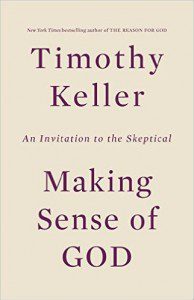 The next section of Tim Keller’s new book Making Sense of God: An Invitation to the Skeptical looks at identity – the ways in which we define who and what we are. Chapter six focuses on identity in our secular Western culture, while chapter seven digs into Christian definitions of identity. Today we will look at the first, and in the next post, we will discuss what Keller sees as the Christian source of identity.
Identity – sense of self and sense of worth – can be defined in a number of different ways. “Identity formation is a process that every culture pushes on its members so powerfully and pervasively that it is invisible to us.“(p. 118) In most traditional cultures “the self was defined by both internal desires and external social roles and ties.” (p. 119) In contrast, modern Western society tends to define identity and worth by internal measures of success in one realm or another. Personal survival is valued over self-sacrifice, personal success and happiness are paramount.
There is much that is good in the modern view of identity. Individuals are not locked into the status quo. One’s identity and lot is not locked into poverty and servitude for the greater good – as one’s ordained role. “[A] rigid, exploitative social stratification stemmed from the traditional understanding of identity. You were your rung in the socially stratified culture; you related to the world not as an individual but through your family and class. Your mission in life was to “know your place” and fulfill your assigned role. There was no way out; there was no mobility at all.” (p. 122)
I enjoy reading Jane Austin, where this theme is obvious – although she picks at it and sometimes ridicules the rigidity, it clearly formed a framework for society in late eighteenth and early nineteenth century England. The freedom to pursue a variety of career paths and life styles, live in a range of places, interact with a diversity of people is a clear advantage of our twenty first century culture.
The modern ideal is incoherent. Keller contends, however, that the contemporary approach to identity as something strictly (or ideally) from within is incoherent. Identity is not simply desire fulfillment, nor can it come without social connections. “We need someone from outside to say we are of great worth, …Only if we are approved and loved by someone whom we esteem can we achieve any self-esteem. To use biblical terms, we need someone to bless us because we can’t bless ourselves. We are irreducibly social and relational beings.” (p. 125) A few minutes thought will reveal the importance of affirmation and society. The opinions of peers, family, and superiors matter. Both the helicopter parent who micromanages their children’s lives and the hands-off parent who never gives guidance or affirmation (whatever you want, honey) are a problem.
In fact, society always plays a role in identity formation – shaping what is or is not acceptable. Try a thought experiment posed by Keller (p. 126). Suppose a man experiences two strong impulses and feelings. “One is aggression. When people show him any disrespect his natural response is to respond violently, either to harm or to kill.” The other is same sex attraction. In our contemporary secular culture, the first is a problem to be dealt with while the second is deemed acceptable. There are other cultural contexts, however, where the acceptability response is reversed. The first is an acceptable way for a warrior (for example) to behave, while the second is suppressed as unacceptable.
Try a less controversial example. As a woman who grew up in the sixties and seventies, with influences from the forties and fifties (movies, radio, books, family, TV) , it was often portrayed as unacceptable to to be smarter or more successful than the boys. We had an important role to play, and it was important to stay within the bounds of that role. Suppose a woman feels two strong impulses and feelings, one for achievement and recognition, the other for acceptance and a family. The subliminal message was quite clear – one had to be suppressed to obtain the other. Dozens of sitcoms, dramas, and movies taught it was better to forgo achievement for domestic tranquility (and a husband). I remember an Aunt I still respect who, when I expressed interest in being an archaeologist, responded that she had ambitions when young also, and I would outgrow it. Today our culture’s message is more conflicted, leaning toward forgoing domestic tranquility (if necessary) to be true to one’s self.
Commenting on his example, but equally true of many other situations we could pose. Keller answers the question why an individual makes the identity defining choices they do:
It is because in each case their society is telling them what to believe. We must get our beliefs from somewhere, and most ore picked up unconsciously from our culture or our community – whether ethnic or academic or professional or familial. Every community has “a set of understandings and evaluations [about life] that it has worked out over time.” This set of beliefs is “an inherent dimension of all human action” and it is usually invisible to us. (pp. 127-128)
Keller quotes Robert Bellah et al. (Habits of the Heart) above, and in the section’s conclusion:
Our identity, then, is not something we can bestow on ourselves. We cannot discover or create an identity in isolation, merely through some kind of internal monologue. … We find ourselves in and through others. “We never get to the bottom of ourselves on our own. We discover who we are face to face and side by side with others in work, love, and learning.” In the end the contemporary identity – simply expressing your inner feelings, with a valuation bestowed on yourself independently – is impossible. (p. 128)
Crushing and fracturing. In addition to being incoherent, Keller suggests that the modern ideal for identity is also crushing and fracturing. Identity and self-worth becomes rooted in something that can be lost – power, money, health, achievement, virility, attractiveness, and such. Even the love of another can be lost – through death, abandonment, or abuse. This is a crushing burden. It is fracturing because much that is, or should be good, becomes reduced to instrumental and utilitarian. Social ties and institutions are eroded. There is less obligation to others or to the whole.
The next post on Thursday will turn to Keller’s vision for Christian identity (too often diverted and distorted in the church, following culture rather than Christ).
To what extent is our sense of identity and worth constrained by culture?
How does this shape the choices we make?
If you wish to contact me directly you may do so at rjs4mail[at]att.net
If interested you can subscribe to a full text feed of my posts at Musings on Science and Theology.
Previous Post

December 6, 2016
Homosexuality: Affirming vs. Traditional
Next Post
December 6, 2016 Christ and Creation!
Browse Our Archives
Select a Category Acts of the Apostles Adam Advent Anabaptism Angels Anglican Apologetics Atonement Baptism BCP Prayers Bible Biblical Studies Birds Blogging Bloglossary Bonhoeffer Books Calvinism Christianity Church Church History Coffee Colossians Commentary Recs Conversion Creation Creeds Culture Death Ecclesiastes Economics Education Embracing Grace Emergent Emerging Movement Eschatology Essays Ethics Eucharist Evangelicalism Family Fasting Fathers Fellowship of Differents Footsteps Tour Fun and Whimsical Gospel Grace Happiness Heaven Hell Holy Spirit Irenaeus James Jesus Jesus Creed Job Justification Kingdom of God Law Lectures Lent Liberalism Love and Marriage Mabanteneni Manhood Mary Miracles Missio Alliance MissioLife Missional Missional Jesus Movies and Film New Perspective Northern Seminary OneLife Origins Project Orthodox Parables Pastor's Spouse Pastoring and Leading Pastoring and Preaching Patristics Paul Paul-John Tour Pharisees Pietism Political Theology Prayer and Formation Preaching Problems for Faith Psalm 119 Psalms Public Issues Purgatory Religions Resurrection Revelation Romans Rule of JCreed Science and Faith Sermon on the Mount Sports Ten Commandments Theology Third Way Top Ten Lists Translations Uncategorized Universalism University Ministry Way Out Weekly Meanderings Wisdom Women and Ministry Work Worship Writing & Blogging Youth Ministry
Select a Month July 2021 January 2020 December 2019 November 2019 October 2019 September 2019 August 2019 July 2019 June 2019 May 2019 April 2019 March 2019 February 2019 January 2019 December 2018 November 2018 October 2018 September 2018 August 2018 July 2018 June 2018 May 2018 April 2018 March 2018 February 2018 January 2018 December 2017 November 2017 October 2017 September 2017 August 2017 July 2017 June 2017 May 2017 April 2017 March 2017 February 2017 January 2017 December 2016 November 2016 October 2016 September 2016 August 2016 July 2016 June 2016 May 2016 April 2016 March 2016 February 2016 January 2016 December 2015 November 2015 October 2015 September 2015 August 2015 July 2015 June 2015 May 2015 April 2015 March 2015 February 2015 January 2015 December 2014 November 2014 October 2014 September 2014 August 2014 July 2014 June 2014 May 2014 April 2014 March 2014 February 2014 January 2014 December 2013 November 2013 October 2013 September 2013 August 2013 July 2013 June 2013 May 2013 April 2013 March 2013 February 2013 January 2013 December 2012 November 2012 October 2012 September 2012 August 2012 July 2012 June 2012 May 2012 April 2012 March 2012 February 2012 January 2012 December 2011 November 2011 October 2011 September 2011 August 2011 July 2011 June 2011 May 2011 April 2011 March 2011 February 2011 January 2011 December 2010 November 2010 October 2010 September 2010 August 2010 July 2010 June 2010 May 2010 April 2010 March 2010 February 2010 January 2010 December 2009 November 2009 October 2009 September 2009 August 2009 July 2009 June 2009 May 2009 April 2009 March 2009 February 2009 January 2009 December 2008 November 2008 October 2008 September 2008 August 2008 July 2008 June 2008 May 2008 April 2008 March 2008 February 2008 January 2008 December 2007 November 2007 October 2007 September 2007 August 2007 July 2007 June 2007 May 2007 April 2007 March 2007 February 2007 January 2007 December 2006 November 2006 October 2006 September 2006 August 2006 July 2006 June 2006 May 2006 April 2006 March 2006 February 2006 January 2006 December 2005 November 2005 October 2005 September 2005 August 2005 July 2005 June 2005 May 2005 April 2005 0000
Follow Us!
TAKE THE
Religious Wisdom Quiz
Which Christian group follows the Five Points of Calvinism?
Select your answer to see how you score.
Baptists Pentecostals Methodists Reformed
Related posts from Jesus Creed


The Gospel of With Us and Through Us

Northern Seminary Announces: Nijay Gupta Joins Faculty

The Gundrys and Me: Ruth Tucker
TRENDING AT PATHEOS Evangelical

When you hear the word riches, what comes to mind? For most...

Don’t Miss the Parents: A Creative Christmas Meditation
As we enter the Advent Season, I see many people trying to...

Making Stones Into Bread: Choosing the “Right” Work
I was on my online arts ministry Zoom meeting with the International...

Ukraine’s exhausted Christians face fifth winter of war
By Julian Lukins The full-scale war in Ukraine is taking “a serious...

Russell Brand's Conviction is not anti-Christian Persecution
How do we shed the reputation that the Church is OK with...

Have you ever caught yourself saying, “I’ll do it tomorrow,” or “Now...
view all Evangelical blogs
Ad-Free & Subscriber Log-In Subscription Support
- About Us
- 2026 Calendar
- Videos
- Podcasts
- Library of World Religions
- Faith In Media Tracker
- Advertise With Us
- Write for Us
- Privacy Policy
- Terms of Service
- Do Not Sell My Data
- Contact Us
- Radiant Digital
- Manage Newsletter Subscriptions
- Unsubscribe From Notifications
- Sitemap
Copyright 2008-2026, Patheos, part of the Radiant Digital network of media brands. All rights reserved.
Subscription Support Ad-Free & Subscriber Log-In
Follow Patheos