
BuddhistCatholicContemplativeEvangelicalGeneral ChristianHinduJewishLatter-day SaintMuslimNew VisionsProgressive Christian
Beliefs
- Buddhist
- Catholic
- Contemplative
- Evangelical
- General Christian
- Hindu
- Jewish
- Latter-day Saint
- More Voices
- Muslim
- New Visions
- Pagan
- Progressive Christian
Topics
- Religion News
- Food and Religion
- Sports and Religion
- Religious Art
- Religious Music and Entertainment
- Religious Events
- History and Religion
- Style and Religion
- Politics and Religion
- Women in Religion
- Recreation Outdoors and Religion
- Business Finance and Religion
- Careers Workplace and Religion
- Education and Religion
- Family Parenting and Religion
- Health Fitness and Religion
- Home and Religion
- Relationships and Religion
- Technology and Religion
- Travel and Religion
Columnists
- Buddhist Columnists
- Business Finance and Religion Columnists
- Careers Workplace and Religion Columnists
- Catholic Columnists
- Contemplative Columnists
- Education and Religion Columnists
- Evangelists Columnists
- Family Parenting and Religion Columnists
- General Christian Columnists
- Health Fitness and Religion Columnists
- Hindu Columnists
- History and Religion Columnists
- Home and Religion Columnists
- Jewish Columnists
- More Voices Columnists
- Latter Day Columnists
- Muslim Columnists
- New Visions Columnists
- Nonreligious Columnists
- Pagan Columnists
- Politics and Religion Columnists
- Progressive Columnists
- Recreation Outdoors and Religion Columnists
- Relationships and Religion Columnists
- Religion News Columnists
- Religious Art Columnists
- Religious Events Columnists
- Religious Music and Entertainment Columnists
- Sports and Religion Columnists
- Style and Religion Columnists
- Technology and Religion Columnists
- Travel and Religion Columnists
- Women in Religion Columnists
Resource Library
- 2026 Calendar
- Library of World Religions
- The 100 Most Holy Places on Earth
- Patheos Answers
- Podcasts
- Videos
- Faith Leaders Database
- Anglican Episcopalian
- Bahai
- Baptist
- Buddhism
- Christianity
- Confucianism
- Eastern Orthodoxy
- Hinduism
- Holiness and Pentecostal
- ISKCON
- Islam
- Judaism
- Lutheran
- Methodist
- The Church of Jesus Christ of Latter-day Saints
- New Age
- Paganism
- Presbytarian and Reformed
- Protestantism
- Religion Behind the Scenes
- Roman Catholic
- Scientology
- Shia Islam
- Sikhism
- Sufism
- Sunni Islam
- Taoism
- Zen
- See all religions
Research Tools
 Ad-Free & Subscriber Log-In Subscription Support
Ad-Free & Subscriber Log-In Subscription Support
Follow Patheos 

- Trending:
- Forgiveness
- |
- Marriage
- |
- Consciousness
- |
- Death Penalty
- |
- Election
- |
- Halloween
 Jesus Creed
- Home
- Evangelical
- Passovering Your Atonement Theory
Passovering Your Atonement Theory
Last updated on: November 11, 2016 at 12:07 am by Scot McKnight
Passovering Your Atonement Theory 2016-11-10T06:22:25-06:00 Scot McKnight
Patheos Explore the world's faith through different perspectives on religion and spirituality! Patheos has the views of the prevalent religions and spiritualities of the world.
 It is a fact that most atonement theories operate on the basis of (lightly understood and sometimes seriously distorted) Yom Kippur, the Day of Atonement.
It is also a fact that Jesus and Paul connect the cross to Passover.
It is also a fact that very few atonement theories give any attention to Passover. Passover combines liberation from oppressors with defeat of their powers. Those themes, too, are often ignored in theological studies of atonement.
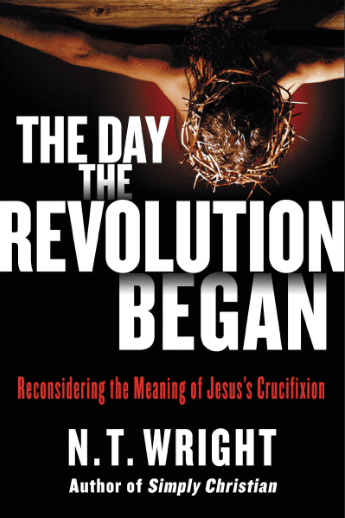
In NT Wright’s new book, The Day the Revolution Began, Passover is given full play — maybe too much play at times — but the emphasis in Wright’s book compensates for the almost total absence of Passover in many atonement theories. In chp 11 of the book Wright focuses on Corinthians, Philippians and Colossians, showing the multi-valency of cross but specifically seeking to illuminate each by locating each in the larger biblical narrative, an example of which will be our last quotation in the post below.
What do we lose when we omit the Passover theme? What can we gain by relocating the cross in a Passover narrative? What kind of culture does a Passover-cross establish in our churches? Think with me on this, thanks.
I begin by citing three texts in 1 Corinthians that demonstrate the centrality of Passover (NRSV): 1 Cor 5:7-8; 6:19-20; 11:26.
1Cor. 5:7 Clean out the old yeast so that you may be a new batch, as you really are unleavened. For our paschal lamb, Christ, has been sacrificed. 8 Therefore, let us celebrate the festival, not with the old yeast, the yeast of malice and evil, but with the unleavened bread of sincerity and truth.
1Cor. 6:19 Or do you not know that your body is a temple of the Holy Spirit within you, which you have from God, and that you are not your own? 20 For you were bought with a price; therefore glorify God in your body.
1Cor. 11:26 For as often as you eat this bread and drink the cup, you proclaim the Lord’s death until he comes.
These are Passover resonances, and the final text is from the Passover event at the heart of the Last Supper. Hence, in this letter Passover shapes how Paul wants folks to think of the cross.
2 Corinthians focuses on the cross as an expression of God’s loving intention, not a capricious god’s anger against an innocent victim.
The point throughout is that the crucifixion of the Messiah is not just an event in the past that changed the world once and for all, though it certainly is that. It is not just the “mechanism’ of salvation, though if we must use that language we can do so without inaccuracy. The Messiah’s crucifixion was not a strange, one-off deal through which God played a trick on sin and death, after which normal operations were resumed, power went back to being what it always was, and the normal human lifestyles of honor and shame, boasting and prestige, social climbing and pretension could be picked up again where they had left off. Precisely because the Messiah’s crucifixion unveiled the very nature of God himself at work in generous self-giving love to overthrow all power structures by dealing with the sin that had given them their power, that same divine nature would now be at work through the ministry of the gospel not only through what was said, but through the character and the circumstances of the people who were saying it (251).
He turns to 2 Corinthians 5:14–6:2, which I cite, and then add only one comment by Wright:
2Cor. 5:14 For the love of Christ urges us on, because we are convinced that one has died for all; therefore all have died. 15 And he died for all, so that those who live might live no longer for themselves, but for him who died and was raised for them.
2Cor. 5:16 From now on, therefore, we regard no one from a human point of view; even though we once knew Christ from a human point of view, we know him no longer in that way. 17 So if anyone is in Christ, there is a new creation: everything old has passed away; see, everything has become new! 18 All this is from God, who reconciled us to himself through Christ, and has given us the ministry of reconciliation; 19 that is, in Christ God was reconciling the world to himself, not counting their trespasses against them, and entrusting the message of reconciliation to us. 20 So we are ambassadors for Christ, since God is making his appeal through us; we entreat you on behalf of Christ, be reconciled to God. 21 For our sake he made him to be sin who knew no sin, so that in him we might become the righteousness of God.
2Cor. 6:1 As we work together with him, we urge you also not to accept the grace of God in vain. 2 For he says,
“At an acceptable time I have listened to you,
and on a day of salvation I have helped you.”
See, now is the acceptable time; see, now is the day of salvation!
[Now Wright:] His point is that the cross has liberated people from sin, so that they can be God-reflecting, image-bearing, working models of divine covenant faithfulness in action (253).
For Philippians he turns naturally to the poem of 2:6-11 to make these observations:
First, the poem is clearly telling the story of Jesus with the cross at its center (255).
Second, the cross here is the means of victory over all the powers of the world (255).
Third, the poem in its present context is setting out the pattern of life that is both the foundation and the model for the way Jesus’s followers ought to behave in relation to one another (256).
For Colossians he looks to Colossians 2:13-15, and I quote the text in italics with Wright’s commentary following:
Col. 2:13 And when you were dead in trespasses and the uncircumcision of your flesh, God made you alive together with him, when he forgave us all our trespasses, 14 erasing the record that stood against us with its legal demands. He set this aside, nailing it to the cross. 15 He disarmed the rulers and authorities and made a public example of them, triumphing over them in it.
What follows now is one of the biggest windows onto Wright’s understanding of the cross in a narrative shaped theology.
So how does “forgiveness” result in “victory over the powers”? Here we go back to our earlier analysis of sin and idolatry. The idols—and that includes human rulers when they are idolized, whether formally (as in the Roman Empire) or informally—gain their power because humans give it to them. Humans are designed to worship God and exercise responsibility in his world. But when humans worship idols instead, so that their imagebearing humanness corrupts itself into sin, missing the mark of the human vocation, they hand over their power to those same idols. The idols then use this power to tyrannize and ultimately to destroy their devotees and the wider world. But when sins are forgiven, the idols lose their power (260).
Previous Post

November 10, 2016
Why Were the Pollsters Wrong?
Next Post
November 11, 2016 The Day the Revolution Began
Browse Our Archives
Select a Category Acts of the Apostles Adam Advent Anabaptism Angels Anglican Apologetics Atonement Baptism BCP Prayers Bible Biblical Studies Birds Blogging Bloglossary Bonhoeffer Books Calvinism Christianity Church Church History Coffee Colossians Commentary Recs Conversion Creation Creeds Culture Death Ecclesiastes Economics Education Embracing Grace Emergent Emerging Movement Eschatology Essays Ethics Eucharist Evangelicalism Family Fasting Fathers Fellowship of Differents Footsteps Tour Fun and Whimsical Gospel Grace Happiness Heaven Hell Holy Spirit Irenaeus James Jesus Jesus Creed Job Justification Kingdom of God Law Lectures Lent Liberalism Love and Marriage Mabanteneni Manhood Mary Miracles Missio Alliance MissioLife Missional Missional Jesus Movies and Film New Perspective Northern Seminary OneLife Origins Project Orthodox Parables Pastor's Spouse Pastoring and Leading Pastoring and Preaching Patristics Paul Paul-John Tour Pharisees Pietism Political Theology Prayer and Formation Preaching Problems for Faith Psalm 119 Psalms Public Issues Purgatory Religions Resurrection Revelation Romans Rule of JCreed Science and Faith Sermon on the Mount Sports Ten Commandments Theology Third Way Top Ten Lists Translations Uncategorized Universalism University Ministry Way Out Weekly Meanderings Wisdom Women and Ministry Work Worship Writing & Blogging Youth Ministry
Select a Month July 2021 January 2020 December 2019 November 2019 October 2019 September 2019 August 2019 July 2019 June 2019 May 2019 April 2019 March 2019 February 2019 January 2019 December 2018 November 2018 October 2018 September 2018 August 2018 July 2018 June 2018 May 2018 April 2018 March 2018 February 2018 January 2018 December 2017 November 2017 October 2017 September 2017 August 2017 July 2017 June 2017 May 2017 April 2017 March 2017 February 2017 January 2017 December 2016 November 2016 October 2016 September 2016 August 2016 July 2016 June 2016 May 2016 April 2016 March 2016 February 2016 January 2016 December 2015 November 2015 October 2015 September 2015 August 2015 July 2015 June 2015 May 2015 April 2015 March 2015 February 2015 January 2015 December 2014 November 2014 October 2014 September 2014 August 2014 July 2014 June 2014 May 2014 April 2014 March 2014 February 2014 January 2014 December 2013 November 2013 October 2013 September 2013 August 2013 July 2013 June 2013 May 2013 April 2013 March 2013 February 2013 January 2013 December 2012 November 2012 October 2012 September 2012 August 2012 July 2012 June 2012 May 2012 April 2012 March 2012 February 2012 January 2012 December 2011 November 2011 October 2011 September 2011 August 2011 July 2011 June 2011 May 2011 April 2011 March 2011 February 2011 January 2011 December 2010 November 2010 October 2010 September 2010 August 2010 July 2010 June 2010 May 2010 April 2010 March 2010 February 2010 January 2010 December 2009 November 2009 October 2009 September 2009 August 2009 July 2009 June 2009 May 2009 April 2009 March 2009 February 2009 January 2009 December 2008 November 2008 October 2008 September 2008 August 2008 July 2008 June 2008 May 2008 April 2008 March 2008 February 2008 January 2008 December 2007 November 2007 October 2007 September 2007 August 2007 July 2007 June 2007 May 2007 April 2007 March 2007 February 2007 January 2007 December 2006 November 2006 October 2006 September 2006 August 2006 July 2006 June 2006 May 2006 April 2006 March 2006 February 2006 January 2006 December 2005 November 2005 October 2005 September 2005 August 2005 July 2005 June 2005 May 2005 April 2005 0000
Follow Us!
TAKE THE
Religious Wisdom Quiz
Which prophet anointed both Saul and David as kings of Israel?
Select your answer to see how you score.
Gad Eli Nathan Samuel
Related posts from Jesus Creed

New Birth Transcending Atonement Theories
The Biggest Problem For Atonement Theories?
"God In Labor" in Christian Theology
TRENDING AT PATHEOS Evangelical

How the author of the world's best hymn...
I've been working with John Newton for a while now. This makes...

Long before this Lectio Divina, Psalm 130 - the song - started...

What About the Trees? Another Living Parable
After I finished writing the last article about falling leaves as a...

Why Classical Education Is a Conversation, Not a...
Come and Read: Joy in Classical Education When I was a little...

Falling Leaves: A Living Parable on Letting Go
I’ve spent the vast majority of my life in the southeast corner...

Cornell University has received a great deal of negative publicity and intense...
view all Evangelical blogs
Ad-Free & Subscriber Log-In Subscription Support
- About Us
- 2026 Calendar
- Videos
- Podcasts
- Library of World Religions
- Faith In Media Tracker
- Advertise With Us
- Write for Us
- Privacy Policy
- Terms of Service
- Do Not Sell My Data
- Contact Us
- Radiant Digital
- Manage Newsletter Subscriptions
- Unsubscribe From Notifications
- Sitemap
Copyright 2008-2026, Patheos. All rights reserved.
Subscription Support Ad-Free & Subscriber Log-In
Follow Patheos