
BuddhistCatholicContemplativeEvangelicalGeneral ChristianHinduJewishLatter-day SaintMuslimNew VisionsProgressive Christian
Beliefs
- Buddhist
- Catholic
- Contemplative
- Evangelical
- General Christian
- Hindu
- Jewish
- Latter-day Saint
- More Voices
- Muslim
- New Visions
- Pagan
- Progressive Christian
Topics
- Religion News
- Food and Religion
- Sports and Religion
- Religious Art
- Religious Music and Entertainment
- Religious Events
- History and Religion
- Style and Religion
- Politics and Religion
- Women in Religion
- Recreation Outdoors and Religion
- Business Finance and Religion
- Careers Workplace and Religion
- Education and Religion
- Family Parenting and Religion
- Health Fitness and Religion
- Home and Religion
- Relationships and Religion
- Technology and Religion
- Travel and Religion
Columnists
- Buddhist Columnists
- Business Finance and Religion Columnists
- Careers Workplace and Religion Columnists
- Catholic Columnists
- Contemplative Columnists
- Education and Religion Columnists
- Evangelists Columnists
- Family Parenting and Religion Columnists
- General Christian Columnists
- Health Fitness and Religion Columnists
- Hindu Columnists
- History and Religion Columnists
- Home and Religion Columnists
- Jewish Columnists
- More Voices Columnists
- Latter Day Columnists
- Muslim Columnists
- New Visions Columnists
- Nonreligious Columnists
- Pagan Columnists
- Politics and Religion Columnists
- Progressive Columnists
- Recreation Outdoors and Religion Columnists
- Relationships and Religion Columnists
- Religion News Columnists
- Religious Art Columnists
- Religious Events Columnists
- Religious Music and Entertainment Columnists
- Sports and Religion Columnists
- Style and Religion Columnists
- Technology and Religion Columnists
- Travel and Religion Columnists
- Women in Religion Columnists
Resource Library
- 2026 Calendar
- Library of World Religions
- The 100 Most Holy Places on Earth
- Patheos Answers
- Podcasts
- Videos
- Faith Leaders Database
- Anglican Episcopalian
- Bahai
- Baptist
- Buddhism
- Christianity
- Confucianism
- Eastern Orthodoxy
- Hinduism
- Holiness and Pentecostal
- ISKCON
- Islam
- Judaism
- Lutheran
- Methodist
- The Church of Jesus Christ of Latter-day Saints
- New Age
- Paganism
- Presbytarian and Reformed
- Protestantism
- Religion Behind the Scenes
- Roman Catholic
- Scientology
- Shia Islam
- Sikhism
- Sufism
- Sunni Islam
- Taoism
- Zen
- See all religions
Research Tools
 Ad-Free & Subscriber Log-In Subscription Support
Follow Patheos 

- Trending:
- Advent
- |
- Forgiveness
- |
- Thanksgiving
- |
- Election
- |
- Seasonal Holidays
- |
- Marriage
 Jesus Creed
- Home
- Evangelical
- Is Meaning a meaningless Pursuit? (RJS)
Is Meaning a meaningless Pursuit? (RJS)
Last updated on: October 25, 2016 at 6:33 am by RJS
Is Meaning a meaningless Pursuit? (RJS) 2016-10-25T06:33:20-05:00 RJS
Patheos Explore the world's faith through different perspectives on religion and spirituality! Patheos has the views of the prevalent religions and spiritualities of the world.
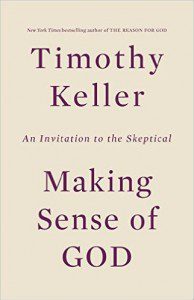 For many people in the 21st century the search for some transcendent meaning is futile, a mere chasing after rainbows. The meaning of life is simply what you make of it – relationships, pleasure, achievement, accomplishment (which can include sacrificial service) – in the limited time available. Certainly this has been the response of many commenters when I’ve delved into the questions of purpose and meaning in the past. In ch. 3 of his new book Making Sense of God Tim Keller argues that, ultimately, this isn’t enough. He admits that such “subjective, created meanings do serve human life well,” (p. 74) but these can weaken under adversity or on close examination.
But what are we actually asking when inquiring about the meaning of life? In common usage the term “to mean” has two overlapping senses. The first sense has to do with purpose. … The second sense has to do with significance. …
So to have meaning in life is to have both an overall purpose for living and the assurance that you are making a difference by serving some good beyond yourself. (p. 58)
The psychological need for meaning or purpose is intrinsic to humanity. It isn’t enough to simply exist – we need to do. But perhaps the subjective created meanings are enough. Keller notes that moving from modernity to post-modernity it is claimed that the loss of Meaning is liberating. After all, if there is no transcendent Meaning, then we are free to create our own meaning.
In the modern era we mourned the loss of the Meaning of life, but in the postmodern era, an age of freedom, we say good riddance to the very idea. (p. 61)
The very idea of submission to some transcendent Meaning of life is submission to a life of bondage … to that transcendent Meaning.
Created meaning vs. discovered meaning. Keller suggests that while a secular life is not meaningless, there is something missing.
If you decide that the meaning of your life is to be a good parent, or to serve a crucial political cause, or to tutor underprivileged youth, or to enjoy and promote great literature – then you have, by definition, a meaning in life. Plenty of secular people live like this without being tortured and gloomy in the manner of Camus. It is quite possible to find great purpose in the ordinary tasks of life, apart from knowing answers to the Big Questions About Existence. (p. 65)
These meanings are created or assigned meanings. In contrast “Traditional belief in God was the basis for discovered, objective meaning – meaning that is there apart from your inner feelings or interpretations.” (p. 65)
 Keller argues that discovered meanings are more rational (and more satisfying) than created meanings. Ultimately created meanings are temporary. It simply doesn’t really “matter whether you are a genocidal maniac or an altruist; it won’t matter whether you fight hunger in Africa or are incredibly cruel and greedy and starving the poor.” (p. 66) We all die eventually, it is likely that mankind as a species will die out naturally, and virtually guaranteed that our solar system will eventually vanish one way or another. (Solar image from NASA)
Some say the world will end in fire,
Some say in ice.
From what I’ve tasted of desire
I hold with those who favor fire.
But if it had to perish twice,
I think I know enough of hate
To say that for destruction ice
Is also great
And would suffice.
Robert Frost, 1920
It isn’t necessary to think about this – but when it comes up “it is time to ‘go down stairs and play solitaire.‘” (quoting Oliver Wendell Holmes p. 67)
Discovered meaning, on the other hand, transcends the temporary nature of human existence on this world. Because of this they are more rational (what is rational about brushing doubts and questions away and playing solitaire?)
Discovered meaning is more communal – the we matters as much or more than the me.
Created meanings cannot be the basis for a program of social justice. Martin Luther King Jr., for example, did not tell white Christians in the South that they should support civil rights because everyone should be free to live as he or she sees fit. In his “I have a dream” speech he quotes Amos 5:24, calling for justice to roll down on the nation. (p. 71)
Discovered meaning is more durable. It stands up under adversity – whether the adversity comes because of one’s views, because one is a convenient victim, or merely in the way. Created meaning doesn’t stand up to pain and suffering very well. Viktor Frankl’s Man’s Search for Meaning provides some insight here. Hitler’s death camps were horrific – how would created meaning survive?
Frankl discovered that the only way for the prisoners’ humanity to survive was to relocate the main meaning of their lives to some transcendent reference point, something beyond this life and even this world. (p. 73)
Now, none of this means that Christians have discovered the true meaning – only that discovered meaning is superior (more rational, communal, and durable) to created meaning. Clearly we want to discover true meaning. Keller gives some arguments in favor of Christianity – but this isn’t the main focus of the chapter or the book.
Is there a difference between created and discovered meaning?
Is the Meaning of life an important question – or simply one we’ve outgrown and better off without?
Where would you agree or disagree with Keller?
If you wish to contact me directly you may do so at rjs4mail[at]att.net
If interested you can subscribe to a full text feed of my posts at Musings on Science and Theology.
Previous Post

October 25, 2016
Kingdom-Shaped Leadership
Next Post
October 25, 2016 Kyle Schwarber on the World Series Roster!
Browse Our Archives
Select a Category Acts of the Apostles Adam Advent Anabaptism Angels Anglican Apologetics Atonement Baptism BCP Prayers Bible Biblical Studies Birds Blogging Bloglossary Bonhoeffer Books Calvinism Christianity Church Church History Coffee Colossians Commentary Recs Conversion Creation Creeds Culture Death Ecclesiastes Economics Education Embracing Grace Emergent Emerging Movement Eschatology Essays Ethics Eucharist Evangelicalism Family Fasting Fathers Fellowship of Differents Footsteps Tour Fun and Whimsical Gospel Grace Happiness Heaven Hell Holy Spirit Irenaeus James Jesus Jesus Creed Job Justification Kingdom of God Law Lectures Lent Liberalism Love and Marriage Mabanteneni Manhood Mary Miracles Missio Alliance MissioLife Missional Missional Jesus Movies and Film New Perspective Northern Seminary OneLife Origins Project Orthodox Parables Pastor's Spouse Pastoring and Leading Pastoring and Preaching Patristics Paul Paul-John Tour Pharisees Pietism Political Theology Prayer and Formation Preaching Problems for Faith Psalm 119 Psalms Public Issues Purgatory Religions Resurrection Revelation Romans Rule of JCreed Science and Faith Sermon on the Mount Sports Ten Commandments Theology Third Way Top Ten Lists Translations Uncategorized Universalism University Ministry Way Out Weekly Meanderings Wisdom Women and Ministry Work Worship Writing & Blogging Youth Ministry
Select a Month July 2021 January 2020 December 2019 November 2019 October 2019 September 2019 August 2019 July 2019 June 2019 May 2019 April 2019 March 2019 February 2019 January 2019 December 2018 November 2018 October 2018 September 2018 August 2018 July 2018 June 2018 May 2018 April 2018 March 2018 February 2018 January 2018 December 2017 November 2017 October 2017 September 2017 August 2017 July 2017 June 2017 May 2017 April 2017 March 2017 February 2017 January 2017 December 2016 November 2016 October 2016 September 2016 August 2016 July 2016 June 2016 May 2016 April 2016 March 2016 February 2016 January 2016 December 2015 November 2015 October 2015 September 2015 August 2015 July 2015 June 2015 May 2015 April 2015 March 2015 February 2015 January 2015 December 2014 November 2014 October 2014 September 2014 August 2014 July 2014 June 2014 May 2014 April 2014 March 2014 February 2014 January 2014 December 2013 November 2013 October 2013 September 2013 August 2013 July 2013 June 2013 May 2013 April 2013 March 2013 February 2013 January 2013 December 2012 November 2012 October 2012 September 2012 August 2012 July 2012 June 2012 May 2012 April 2012 March 2012 February 2012 January 2012 December 2011 November 2011 October 2011 September 2011 August 2011 July 2011 June 2011 May 2011 April 2011 March 2011 February 2011 January 2011 December 2010 November 2010 October 2010 September 2010 August 2010 July 2010 June 2010 May 2010 April 2010 March 2010 February 2010 January 2010 December 2009 November 2009 October 2009 September 2009 August 2009 July 2009 June 2009 May 2009 April 2009 March 2009 February 2009 January 2009 December 2008 November 2008 October 2008 September 2008 August 2008 July 2008 June 2008 May 2008 April 2008 March 2008 February 2008 January 2008 December 2007 November 2007 October 2007 September 2007 August 2007 July 2007 June 2007 May 2007 April 2007 March 2007 February 2007 January 2007 December 2006 November 2006 October 2006 September 2006 August 2006 July 2006 June 2006 May 2006 April 2006 March 2006 February 2006 January 2006 December 2005 November 2005 October 2005 September 2005 August 2005 July 2005 June 2005 May 2005 April 2005 0000
Follow Us!
TAKE THE
Religious Wisdom Quiz
What does "Shalom" mean in Hebrew?
Select your answer to see how you score.
Joy Peace Love Blessing
Related posts from Jesus Creed


The Gospel of With Us and Through Us

Northern Seminary Announces: Nijay Gupta Joins Faculty

The Gundrys and Me: Ruth Tucker
TRENDING AT PATHEOS Evangelical

When you hear the word riches, what comes to mind? For most...

Don’t Miss the Parents: A Creative Christmas Meditation
As we enter the Advent Season, I see many people trying to...

Making Stones Into Bread: Choosing the “Right” Work
I was on my online arts ministry Zoom meeting with the International...

Ukraine’s exhausted Christians face fifth winter of war
By Julian Lukins The full-scale war in Ukraine is taking “a serious...

Russell Brand's Conviction is not anti-Christian Persecution
How do we shed the reputation that the Church is OK with...

Have you ever caught yourself saying, “I’ll do it tomorrow,” or “Now...
view all Evangelical blogs
Ad-Free & Subscriber Log-In Subscription Support
- About Us
- 2026 Calendar
- Videos
- Podcasts
- Library of World Religions
- Faith In Media Tracker
- Advertise With Us
- Write for Us
- Privacy Policy
- Terms of Service
- Do Not Sell My Data
- Contact Us
- Radiant Digital
- Manage Newsletter Subscriptions
- Unsubscribe From Notifications
- Sitemap
Copyright 2008-2026, Patheos, part of the Radiant Digital network of media brands. All rights reserved.
Subscription Support Ad-Free & Subscriber Log-In
Follow Patheos