
BuddhistCatholicContemplativeEvangelicalGeneral ChristianHinduJewishLatter-day SaintMuslimNew VisionsProgressive Christian
Beliefs
- Buddhist
- Catholic
- Contemplative
- Evangelical
- General Christian
- Hindu
- Jewish
- Latter-day Saint
- More Voices
- Muslim
- New Visions
- Pagan
- Progressive Christian
Topics
- Religion News
- Food and Religion
- Sports and Religion
- Religious Art
- Religious Music and Entertainment
- Religious Events
- History and Religion
- Style and Religion
- Politics and Religion
- Women in Religion
- Recreation Outdoors and Religion
- Business Finance and Religion
- Careers Workplace and Religion
- Education and Religion
- Family Parenting and Religion
- Health Fitness and Religion
- Home and Religion
- Relationships and Religion
- Technology and Religion
- Travel and Religion
Columnists
- Buddhist Columnists
- Business Finance and Religion Columnists
- Careers Workplace and Religion Columnists
- Catholic Columnists
- Contemplative Columnists
- Education and Religion Columnists
- Evangelists Columnists
- Family Parenting and Religion Columnists
- General Christian Columnists
- Health Fitness and Religion Columnists
- Hindu Columnists
- History and Religion Columnists
- Home and Religion Columnists
- Jewish Columnists
- More Voices Columnists
- Latter Day Columnists
- Muslim Columnists
- New Visions Columnists
- Nonreligious Columnists
- Pagan Columnists
- Politics and Religion Columnists
- Progressive Columnists
- Recreation Outdoors and Religion Columnists
- Relationships and Religion Columnists
- Religion News Columnists
- Religious Art Columnists
- Religious Events Columnists
- Religious Music and Entertainment Columnists
- Sports and Religion Columnists
- Style and Religion Columnists
- Technology and Religion Columnists
- Travel and Religion Columnists
- Women in Religion Columnists
Resource Library
- 2026 Calendar
- Library of World Religions
- The 100 Most Holy Places on Earth
- Patheos Answers
- Podcasts
- Videos
- Faith Leaders Database
- Anglican Episcopalian
- Bahai
- Baptist
- Buddhism
- Christianity
- Confucianism
- Eastern Orthodoxy
- Hinduism
- Holiness and Pentecostal
- ISKCON
- Islam
- Judaism
- Lutheran
- Methodist
- The Church of Jesus Christ of Latter-day Saints
- New Age
- Paganism
- Presbytarian and Reformed
- Protestantism
- Religion Behind the Scenes
- Roman Catholic
- Scientology
- Shia Islam
- Sikhism
- Sufism
- Sunni Islam
- Taoism
- Zen
- See all religions
Research Tools
 Ad-Free & Subscriber Log-In Subscription Support
Follow Patheos 

- Trending:
- Advent
- |
- Forgiveness
- |
- Thanksgiving
- |
- Election
- |
- Seasonal Holidays
- |
- Marriage
 Jesus Creed
- Home
- Evangelical
- Science for the Good of the Church (RJS)
Science for the Good of the Church (RJS)
Last updated on: October 11, 2016 at 6:05 am by RJS
Science for the Good of the Church (RJS) 2016-10-09T19:38:38-05:00 RJS
Patheos Explore the world's faith through different perspectives on religion and spirituality! Patheos has the views of the prevalent religions and spiritualities of the world.
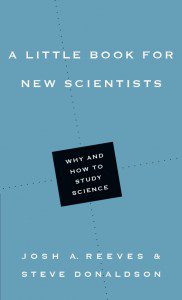 The final section of A Little Book for New Scientists: Why and How to Study Science by Josh Reeves and Steve Donaldson looks at the interplay between science and Christian faith – particularly science and Scripture, the impression that most scientists are atheists, and the calling to be scientists for the good of the church. There is much good advice in this section. I will highlight only a few points, skipping altogether the chapter on the claim that most scientists are atheists. (Read the book – it is well worth the price and time.)
On Science and Scripture. There are many issues here and few that can be adequately addressed in a short guide for new scientists. Reeves and Donaldson instead focus on four principles that should guide our approach to Scripture as we wrestle with the text and consider the implications of science.
Principle 1: Having the Holy Spirit as our teacher does not make us infallible.
But faithful Christian interpreters must also remember: an uncompromising commitment to the inspiration and authority of Scripture does not mean we should have an uncompromising commitment to our own interpretations of Scripture. Because we are sinners with imperfect knowledge and motives, we must always be open to the possibility that we have interpreted a verse or passage incorrectly. (p. 94)
Intellectual humility any one? This is a critical point. We must be immersed in Scripture, open to the leading of the Spirit, and attentive to the insight gained by Christian scholars as the seek to understand the ancient language and culture of the original text.
Principle 2: We must read the Bible in community.
We should have little hope of interpreting the Bible well without the assistance of others, just as there is little hope of becoming a scientist on one’s own. The best way to think about our relationship to Scripture is in terms of discipleship, where one’s ability to read the Bible is slowly transformed under the guidance of others, just as Jesus gathered around him a community of followers in order to lead them to a fuller understanding of the truth. … As one seeks to puzzle out ways of reconciling science and Scripture, it is of the utmost importance to find quality teachers, those who combine intellectual rigor with the virtues that come with a life of Christian faith. (p. 98)
No person is an island capable of all knowledge, wisdom and insight. We all thrive and grow much better in healthy Christian community.
Principle 3: Not just a literal interpretation.
 It is not possible to be faithful to the message of Scripture with a “literal only” approach. What we see as the “literal” meaning is often shaped by our own assumptions and expectations rather than by the intent of the original authors. It is quite possible that what we believe we read out of the text is really only a reflection of the assumptions we bring to the text.
The recognition that interpretation is always an interplay between the text and our assumption should drive us to interpret the Bible with humility and charity and motivate us to consider other positions with openness. Failure to read the Bible with humility might not only lead one to make interpretative errors, but it can also undercut the witness of the larger church. … The ability to read the Scripture for ourselves is undoubtedly a good thing, but the quarrelsomeness and factions that come with Bible reading have been a negative witness of the church. (pp. 99-100)
The multitude of denominations and the rather spirited and nasty disagreements that can result give us a bad name in the wider world.
Principle 4: To know what the Bible means for us today, we should first understand what it meant to its original audience.
The reason modern readers have to understand the context of a biblical passage is that God’s revelation is accommodated to the understanding of those who first heard it. The principle of accommodation says that God communicated revelation in terms that the audience of the day will understand. (p. 102)
This is not a new idea and Reeves and Donaldson point out that Augustine, Thomas Aquinas, and John Calvin all affirmed this approach. God was as concerned with the understanding and formation of the original audience as he is with our understanding and formation. Among other things, this means that we should not expect to find modern science in the ancient text. Some principles, such as a beginning to human time, may be present – but this isn’t a hidden reference to the big bang.
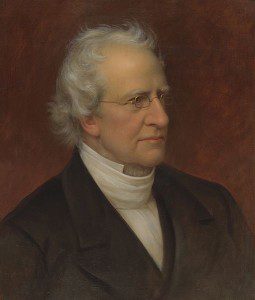 Reeves and Donaldson quote Charles Hodge (a staunch defender of the inspiration of Scripture) from his Systematic Theology Vol. 1. A PDF file is available is available online at this link and likely elsewhere as well. I quote a little more extensively than included by Reeves and Donaldson on p. 103 of their book:
This of course does not imply that the sacred writers were infallible except for the special purpose for which they were employed. They were not imbued with plenary knowledge. As to all matters of science, philosophy, and history, they stood on the same level with their contemporaries. They were infallible only as teachers, and when acting as the spokesmen of God. Their inspiration no more made them astronomers than it made them agriculturists. Isaiah was infallible in his predictions, although he shared with his countrymen the views then prevalent as to the mechanism of the universe. (p. 165)
Later:
We must distinguish between what the sacred writers themselves thought or believed, and what they teach. They may have believed that the sun moves round the earth, but they do not so teach. … There is also a distinction to be made between the Bible and our interpretation. The latter may come into competition with settled facts; and then it must yield. Science has in many things taught the Church how to understand the Scriptures. The Bible was for ages understood and explained according to the Ptolemaic system of the universe; it is now explained without doing the least violence to its language, according to the Copernican system. Christians have commonly believed that the earth has existed only a few thousands of years. If geologists finally prove that it has existed for myriads of ages, it will be found that the first chapter of Genesis is in full accord with the facts, and that the last results of science are embodied on the first page of the Bible. It may cost the Church a severe struggle to give up one interpretation and adopt another, as it did in the seventeenth century, but no real evil need be apprehended. (p. 171)
Part of understanding the meaning for the original audience we must seek to understand the message that the writers intended to teach. For example, they may have assumed the earth stood on pillars with a vault above, but they did not teach that the earth stood on pillars with a vault above. They taught that God created all with his word and humans in his image.This stood against the surrounding culture with visions of the sun, moon and stars as deities, earth created out of divine violence, and humans designed to labor so that the gods wouldn’t have to work. The writers were given superior spiritual knowledge not superior scientific knowledge. Frankly, for us as Christians spiritual knowledge is far more important than scientific knowledge.
Are there any principles you would revise or add?
 Science for the good of the church. This leads us nicely to the last chapter of the book. The church needs faithful scientists for the good of the church. Tunnel vision, ignoring the scientific endeavor will render the church irrelevant in an increasingly educated society. It isn’t that science is all that important for our message, but that we need to be able to speak into our communities. Modern science shapes the worldview of our culture in many ways. “The more informed and conversant Christians become in areas that are touched by both scientific and theological reflection, the more they can contribute from these particular vantage points to the overall ministry objectives of the church.” (p. 123)
Among other things …
Christian scientists and scholars can help to educate ministers and congregations from their expertise and Christian perspective. Ill-formed opinions do not serve us well.
Cultivating a richer, deeper engagement between science and Christian thinking can help church members better understand the importance of integrating these areas, both with respect to their own spiritual development and to how they are perceived by those outside the church. (p. 124)
Christian scientists and scholars can “knock down barricades and build bridges with such marginalized people who think science has somehow eliminated the need for God.” (p. 125) This is important for the mission to reach all people for God.
Faithful Christian scientists as part of the Christian community will help us wrestle with the questions of interpretation of Scripture that are raised by modern science. The non-scientist tends to be willing to write off as unproven challenging scientific concepts that are, in fact, quite well supported. The engagement of Christians from a broad range of disciplines with a variety of expertise will help to keep us on a productive track.
 In his letter to the Romans Paul writes:
For by the grace given me I say to every one of you: Do not think of yourself more highly than you ought, but rather think of yourself with sober judgment, in accordance with the faith God has distributed to each of you. For just as each of us has one body with many members, and these members do not all have the same function, so in Christ we, though many, form one body, and each member belongs to all the others. We have different gifts, according to the grace given to each of us. If your gift is prophesying, then prophesy in accordance with your faith; if it is serving, then serve; if it is teaching, then teach; if it is to encourage, then give encouragement; if it is giving, then give generously; if it is to lead, do it diligently; if it is to show mercy, do it cheerfully. (12:3-8)
In our world today, expertise in science, social science, biblical studies and many other disciplines may well be a gift given for the good of the church.
Let us be faithful Christians and productive members of the body, using our gifts for the good of the church.
I’ve only skimmed the highlights. This book should provide a helpful resource and an excellent starting point for important conversations in our church. I recommend it as part of the repertoire for most Christian teachers, pastors, and leaders. It is an excellent book to have on hand for those contemplating a career in some field of science.
Is the study of science a gift for the church?
How should this gift be used?
If you wish to contact me directly you may do so at rjs4mail[at]att.net
If interested you can subscribe to a full text feed of my posts at Musings on Science and Theology.
Previous Post

October 11, 2016
Wisdom for the Preacher
Next Post
October 12, 2016 Word by Word: Creating and Destroying the World
Browse Our Archives
Select a Category Acts of the Apostles Adam Advent Anabaptism Angels Anglican Apologetics Atonement Baptism BCP Prayers Bible Biblical Studies Birds Blogging Bloglossary Bonhoeffer Books Calvinism Christianity Church Church History Coffee Colossians Commentary Recs Conversion Creation Creeds Culture Death Ecclesiastes Economics Education Embracing Grace Emergent Emerging Movement Eschatology Essays Ethics Eucharist Evangelicalism Family Fasting Fathers Fellowship of Differents Footsteps Tour Fun and Whimsical Gospel Grace Happiness Heaven Hell Holy Spirit Irenaeus James Jesus Jesus Creed Job Justification Kingdom of God Law Lectures Lent Liberalism Love and Marriage Mabanteneni Manhood Mary Miracles Missio Alliance MissioLife Missional Missional Jesus Movies and Film New Perspective Northern Seminary OneLife Origins Project Orthodox Parables Pastor's Spouse Pastoring and Leading Pastoring and Preaching Patristics Paul Paul-John Tour Pharisees Pietism Political Theology Prayer and Formation Preaching Problems for Faith Psalm 119 Psalms Public Issues Purgatory Religions Resurrection Revelation Romans Rule of JCreed Science and Faith Sermon on the Mount Sports Ten Commandments Theology Third Way Top Ten Lists Translations Uncategorized Universalism University Ministry Way Out Weekly Meanderings Wisdom Women and Ministry Work Worship Writing & Blogging Youth Ministry
Select a Month July 2021 January 2020 December 2019 November 2019 October 2019 September 2019 August 2019 July 2019 June 2019 May 2019 April 2019 March 2019 February 2019 January 2019 December 2018 November 2018 October 2018 September 2018 August 2018 July 2018 June 2018 May 2018 April 2018 March 2018 February 2018 January 2018 December 2017 November 2017 October 2017 September 2017 August 2017 July 2017 June 2017 May 2017 April 2017 March 2017 February 2017 January 2017 December 2016 November 2016 October 2016 September 2016 August 2016 July 2016 June 2016 May 2016 April 2016 March 2016 February 2016 January 2016 December 2015 November 2015 October 2015 September 2015 August 2015 July 2015 June 2015 May 2015 April 2015 March 2015 February 2015 January 2015 December 2014 November 2014 October 2014 September 2014 August 2014 July 2014 June 2014 May 2014 April 2014 March 2014 February 2014 January 2014 December 2013 November 2013 October 2013 September 2013 August 2013 July 2013 June 2013 May 2013 April 2013 March 2013 February 2013 January 2013 December 2012 November 2012 October 2012 September 2012 August 2012 July 2012 June 2012 May 2012 April 2012 March 2012 February 2012 January 2012 December 2011 November 2011 October 2011 September 2011 August 2011 July 2011 June 2011 May 2011 April 2011 March 2011 February 2011 January 2011 December 2010 November 2010 October 2010 September 2010 August 2010 July 2010 June 2010 May 2010 April 2010 March 2010 February 2010 January 2010 December 2009 November 2009 October 2009 September 2009 August 2009 July 2009 June 2009 May 2009 April 2009 March 2009 February 2009 January 2009 December 2008 November 2008 October 2008 September 2008 August 2008 July 2008 June 2008 May 2008 April 2008 March 2008 February 2008 January 2008 December 2007 November 2007 October 2007 September 2007 August 2007 July 2007 June 2007 May 2007 April 2007 March 2007 February 2007 January 2007 December 2006 November 2006 October 2006 September 2006 August 2006 July 2006 June 2006 May 2006 April 2006 March 2006 February 2006 January 2006 December 2005 November 2005 October 2005 September 2005 August 2005 July 2005 June 2005 May 2005 April 2005 0000
Follow Us!
TAKE THE
Religious Wisdom Quiz
What does "Shalom" mean in Hebrew?
Select your answer to see how you score.
Joy Peace Love Blessing
Related posts from Jesus Creed


The Gospel of With Us and Through Us

Northern Seminary Announces: Nijay Gupta Joins Faculty

The Gundrys and Me: Ruth Tucker
TRENDING AT PATHEOS Evangelical

When you hear the word riches, what comes to mind? For most...

Don’t Miss the Parents: A Creative Christmas Meditation
As we enter the Advent Season, I see many people trying to...

Making Stones Into Bread: Choosing the “Right” Work
I was on my online arts ministry Zoom meeting with the International...

Ukraine’s exhausted Christians face fifth winter of war
By Julian Lukins The full-scale war in Ukraine is taking “a serious...

Russell Brand's Conviction is not anti-Christian Persecution
How do we shed the reputation that the Church is OK with...

Have you ever caught yourself saying, “I’ll do it tomorrow,” or “Now...
view all Evangelical blogs
Ad-Free & Subscriber Log-In Subscription Support
- About Us
- 2026 Calendar
- Videos
- Podcasts
- Library of World Religions
- Faith In Media Tracker
- Advertise With Us
- Write for Us
- Privacy Policy
- Terms of Service
- Do Not Sell My Data
- Contact Us
- Radiant Digital
- Manage Newsletter Subscriptions
- Unsubscribe From Notifications
- Sitemap
Copyright 2008-2026, Patheos, part of the Radiant Digital network of media brands. All rights reserved.
Subscription Support Ad-Free & Subscriber Log-In
Follow Patheos