
BuddhistCatholicContemplativeEvangelicalGeneral ChristianHinduJewishLatter-day SaintMuslimNew VisionsProgressive Christian
Beliefs
- Buddhist
- Catholic
- Contemplative
- Evangelical
- General Christian
- Hindu
- Jewish
- Latter-day Saint
- More Voices
- Muslim
- New Visions
- Pagan
- Progressive Christian
Topics
- Religion News
- Food and Religion
- Sports and Religion
- Religious Art
- Religious Music and Entertainment
- Religious Events
- History and Religion
- Style and Religion
- Politics and Religion
- Women in Religion
- Recreation Outdoors and Religion
- Business Finance and Religion
- Careers Workplace and Religion
- Education and Religion
- Family Parenting and Religion
- Health Fitness and Religion
- Home and Religion
- Relationships and Religion
- Technology and Religion
- Travel and Religion
Columnists
- Buddhist Columnists
- Business Finance and Religion Columnists
- Careers Workplace and Religion Columnists
- Catholic Columnists
- Contemplative Columnists
- Education and Religion Columnists
- Evangelists Columnists
- Family Parenting and Religion Columnists
- General Christian Columnists
- Health Fitness and Religion Columnists
- Hindu Columnists
- History and Religion Columnists
- Home and Religion Columnists
- Jewish Columnists
- More Voices Columnists
- Latter Day Columnists
- Muslim Columnists
- New Visions Columnists
- Nonreligious Columnists
- Pagan Columnists
- Politics and Religion Columnists
- Progressive Columnists
- Recreation Outdoors and Religion Columnists
- Relationships and Religion Columnists
- Religion News Columnists
- Religious Art Columnists
- Religious Events Columnists
- Religious Music and Entertainment Columnists
- Sports and Religion Columnists
- Style and Religion Columnists
- Technology and Religion Columnists
- Travel and Religion Columnists
- Women in Religion Columnists
Resource Library
- 2026 Calendar
- Library of World Religions
- The 100 Most Holy Places on Earth
- Patheos Answers
- Podcasts
- Videos
- Faith Leaders Database
- Anglican Episcopalian
- Bahai
- Baptist
- Buddhism
- Christianity
- Confucianism
- Eastern Orthodoxy
- Hinduism
- Holiness and Pentecostal
- ISKCON
- Islam
- Judaism
- Lutheran
- Methodist
- The Church of Jesus Christ of Latter-day Saints
- New Age
- Paganism
- Presbytarian and Reformed
- Protestantism
- Religion Behind the Scenes
- Roman Catholic
- Scientology
- Shia Islam
- Sikhism
- Sufism
- Sunni Islam
- Taoism
- Zen
- See all religions
Research Tools
 Ad-Free & Subscriber Log-In Subscription Support
Follow Patheos 

- Trending:
- Advent
- |
- Forgiveness
- |
- Thanksgiving
- |
- Election
- |
- Seasonal Holidays
- |
- Marriage
 Jesus Creed
- Home
- Evangelical
- Moving From Debate to Dialogue (RJS)
Moving From Debate to Dialogue (RJS)
Last updated on: September 1, 2016 at 6:39 am by RJS
Moving From Debate to Dialogue (RJS) 2016-09-01T06:39:32-05:00 RJS
Patheos Explore the world's faith through different perspectives on religion and spirituality! Patheos has the views of the prevalent religions and spiritualities of the world.
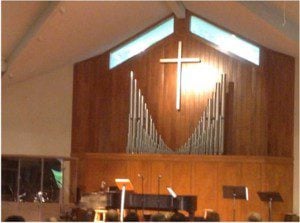 I am preparing to lead a discussion on science and Christian faith this fall as part of a group life offering. As our church is located next door to a major research university, this is a topic of significance in our community and in our church. It is possible to play ostrich and bury our heads in the sand, but this will not help when it comes to having an impact for the gospel in our community. The apparent conflict between science and Christian faith gives many an excuse to avoid any deeper consideration of the claims of Christianity. This is not the only issue – but it is a major issue.
In preparation for this discussion I have been reading material from the Public Conversations Project (PCP). Some of the material doesn’t apply directly to our situation, but most of the general advice remains valid. The most significant is the emphasis on dialogue rather than debate. In a debate the goal is to win, often at all costs. In a dialogue the goal is understanding. It is hard to move forward on any complex and controversial topic when the focus is on the debate rather than understanding. Consider some of the following comparisons, adopted and modified from a PCP table.
Debate Dialogue Participants tend to propound a carefully crafted position. Participants may or may not be committed to a position. Atmosphere is threatening. Attacks are expected and permitted. Atmosphere is one of safety. There is an agreement to respect one another even in disagreement on the issues. Participants speak to represent a group. Participants speak as individuals from their own experience. Participants speak to the already committed. Participants speak to each other. Difference within a “side” are denied or minimized. A broader continuum of personal positions are expressed. Participants express unswerving commitment Both deeply held beliefs and uncertainties are expressed. Participants listen to refute. Participants listen to understand and gain insight. Participants aim to win. Participants desire to learn and grow.
Debates are contests with winners and losers. They can be entertaining, but they don’t generally advance they tend to harden the lines. We can also consider other contrasts complementary to the (dialogue vs. debate) such as (teach vs. preach) or (engage vs. deliver). While debate is almost always destructive (even when it is entertaining) the other pairs have pros and cons.
Teaching, Preaching and Delivery. You can argue with my definitions but I would make these distinctions: Teaching aims at education and discipleship while the primary focus of preaching is persuasion and inspiration. There is a valuable place for preaching in the church. Inspirational preaching can bring people to a position of decision in a manner that more “mundane” teaching cannot. We need good preaching. But we also need teaching designed to grow disciples. Preaching cannot shape mature disciples of Christ in the way that good teaching can and does. Teaching allows for give and take as well as in-depth discussion and dialogue.
A slightly different distinction is found in the classroom. Delivery is focused on lecture and on the presentation of information, engagement is focused on bringing people to understanding. Lecture, like preaching, is a valuable tool. A lecture can be a powerful way to present information and deliver content. I am not one to undervalue a good lecture. But we, as educators, are learning that an opportunity for active engagement is of equal or greater importance. The education that sticks tends to come from active engagement. I am currently teaching a class that I’ve “flipped.” The student watch lecture segments introducing concepts between class sessions. In class my time is devoted to working through problems with the students. One advantage is that in this format the students can see how I work as a scientist and I gain insight into the concepts that trouble the students. In a traditional lecture class I deliver information and the students figure out how to work through the material on their own, albeit through carefully designed assignments.
Teaching and engagement can go hand-in-hand with productive dialogue. While the PCP doesn’t aim to teach, the principles remain helpful. An openness to dialogue does not mean that we accept every position as equally plausible or equally true. It is certainly possible to engage in dialogue from a position of conviction or expertise. All that is really required is a commitment to basic principles of conversation. Some of the guidelines suggested by the PCP include the following, with my comments added.
- We will speak for ourselves with no pressure to represent or explain an entire group.
For example, I can’t speak for all professors or all Christian scientists. No one can be expected to speak for all students, musicians, pastors, teachers, mothers, etc. In a dialogue it is important to converse as individuals. Let the social scientists try to make generalizations based on data – and then realize that they are only generalizations within a distribution.
- We will refrain from making grand pronouncements.
All professors are not atheists intent on converting our youth to secularism and all Christians are not ignorant yokels. Evolution is not synonymous with atheism. It doesn’t forward a productive dialogue to throw in such generalizations.
- We will refrain from characterizing the views of others in a critical spirit.
This is a big one. It is possible to disagree strongly and to explain why an idea doesn’t seem reasonable to you without a critical spirit. We need to practice patience and gentleness in dialogue.
The apostle Paul should be heeded in all the conversations.
If I speak in the tongues of mortals and of angels, but do not have love, I am a noisy gong or a clanging cymbal. And if I have prophetic powers, and understand all mysteries and all knowledge, and if I have all faith, so as to remove mountains, but do not have love, I am nothing. … Love is patient; love is kind; love is not envious or boastful or arrogant or rude. It does not insist on its own way; it is not irritable or resentful. (1 Cor 1-2, 4-5)
- We will listen with resilience.
If someone shares an opinion that hurts you, just “hang in” and listen. This is a lesson I have learned and tried to practice when it comes to discussions of biblical manhood and womanhood and the role of women in church and society.
- We will share “airtime” and refrain from interrupting others.
The only time it is appropriate to interrupt is if someone cannot be heard or to indicate that some previously agreed upon time limit has been reached.
- We will maintain the confidentiality of the conversation. In particular we will not attach names or other identifying information to particular comments unless we have the permission to do so. If asked to keep something confidential we will honor the request.
This is a big one. There can be no open dialogue when there is fear of being outed. Most hard questions are at least somewhat controversial. Safety is essential and this requires a level of confidentiality. One can’t always guarantee confidentiality in an open class or meeting setting – but it should be made clear that this is the expectation. In intentional dialogue groups it should be agreed on from the outset.
- We will avoid making negative attributions about the beliefs, values, and motives of others.
Another big one. For example, I find it frustrating when others suggest that I only accept evolution as God’s method of creation because I am caving to peer pressure; or as a pragmatic strategy for professional advancement. It is equally frustrating to be told that the only reason I remain a Christian is because I am not strong enough to break free from the bonds of my upbringing. I am sure that pastors find it equally frustrating to be accused of taking a position only to avoid ticking off the big donors. Making such accusations and negative attributions will squelch productive dialogue.
This leads to a few questions I would like to throw out for discussion.
Are there any additional agreements that you find facilitate a productive dialogue?
If you’ve led or participated in a discussion on a controversial issue – what worked or didn’t work?
Any advice to help prepare a useful class on science and Christian faith?
If you wish to contact me directly you may do so at rjs4mail[at]att.net
If interested you can subscribe to a full text feed of my posts at Musings on Science and Theology.
Previous Post

September 1, 2016
A Question for Complementarians from Ruth Tucker
Next Post
September 2, 2016 Why is the Church So Ineffective?
Browse Our Archives
Select a Category Acts of the Apostles Adam Advent Anabaptism Angels Anglican Apologetics Atonement Baptism BCP Prayers Bible Biblical Studies Birds Blogging Bloglossary Bonhoeffer Books Calvinism Christianity Church Church History Coffee Colossians Commentary Recs Conversion Creation Creeds Culture Death Ecclesiastes Economics Education Embracing Grace Emergent Emerging Movement Eschatology Essays Ethics Eucharist Evangelicalism Family Fasting Fathers Fellowship of Differents Footsteps Tour Fun and Whimsical Gospel Grace Happiness Heaven Hell Holy Spirit Irenaeus James Jesus Jesus Creed Job Justification Kingdom of God Law Lectures Lent Liberalism Love and Marriage Mabanteneni Manhood Mary Miracles Missio Alliance MissioLife Missional Missional Jesus Movies and Film New Perspective Northern Seminary OneLife Origins Project Orthodox Parables Pastor's Spouse Pastoring and Leading Pastoring and Preaching Patristics Paul Paul-John Tour Pharisees Pietism Political Theology Prayer and Formation Preaching Problems for Faith Psalm 119 Psalms Public Issues Purgatory Religions Resurrection Revelation Romans Rule of JCreed Science and Faith Sermon on the Mount Sports Ten Commandments Theology Third Way Top Ten Lists Translations Uncategorized Universalism University Ministry Way Out Weekly Meanderings Wisdom Women and Ministry Work Worship Writing & Blogging Youth Ministry
Select a Month July 2021 January 2020 December 2019 November 2019 October 2019 September 2019 August 2019 July 2019 June 2019 May 2019 April 2019 March 2019 February 2019 January 2019 December 2018 November 2018 October 2018 September 2018 August 2018 July 2018 June 2018 May 2018 April 2018 March 2018 February 2018 January 2018 December 2017 November 2017 October 2017 September 2017 August 2017 July 2017 June 2017 May 2017 April 2017 March 2017 February 2017 January 2017 December 2016 November 2016 October 2016 September 2016 August 2016 July 2016 June 2016 May 2016 April 2016 March 2016 February 2016 January 2016 December 2015 November 2015 October 2015 September 2015 August 2015 July 2015 June 2015 May 2015 April 2015 March 2015 February 2015 January 2015 December 2014 November 2014 October 2014 September 2014 August 2014 July 2014 June 2014 May 2014 April 2014 March 2014 February 2014 January 2014 December 2013 November 2013 October 2013 September 2013 August 2013 July 2013 June 2013 May 2013 April 2013 March 2013 February 2013 January 2013 December 2012 November 2012 October 2012 September 2012 August 2012 July 2012 June 2012 May 2012 April 2012 March 2012 February 2012 January 2012 December 2011 November 2011 October 2011 September 2011 August 2011 July 2011 June 2011 May 2011 April 2011 March 2011 February 2011 January 2011 December 2010 November 2010 October 2010 September 2010 August 2010 July 2010 June 2010 May 2010 April 2010 March 2010 February 2010 January 2010 December 2009 November 2009 October 2009 September 2009 August 2009 July 2009 June 2009 May 2009 April 2009 March 2009 February 2009 January 2009 December 2008 November 2008 October 2008 September 2008 August 2008 July 2008 June 2008 May 2008 April 2008 March 2008 February 2008 January 2008 December 2007 November 2007 October 2007 September 2007 August 2007 July 2007 June 2007 May 2007 April 2007 March 2007 February 2007 January 2007 December 2006 November 2006 October 2006 September 2006 August 2006 July 2006 June 2006 May 2006 April 2006 March 2006 February 2006 January 2006 December 2005 November 2005 October 2005 September 2005 August 2005 July 2005 June 2005 May 2005 April 2005 0000
Follow Us!
TAKE THE
Religious Wisdom Quiz
What does "Beersheba" mean?
Select your answer to see how you score.
House of the King Blessed Field Well of the Oath Valley of Water
Related posts from Jesus Creed


The Gospel of With Us and Through Us

Northern Seminary Announces: Nijay Gupta Joins Faculty

The Gundrys and Me: Ruth Tucker
TRENDING AT PATHEOS Evangelical

When you hear the word riches, what comes to mind? For most...

Don’t Miss the Parents: A Creative Christmas Meditation
As we enter the Advent Season, I see many people trying to...

Making Stones Into Bread: Choosing the “Right” Work
I was on my online arts ministry Zoom meeting with the International...

Ukraine’s exhausted Christians face fifth winter of war
By Julian Lukins The full-scale war in Ukraine is taking “a serious...

Russell Brand's Conviction is not anti-Christian Persecution
How do we shed the reputation that the Church is OK with...

Have you ever caught yourself saying, “I’ll do it tomorrow,” or “Now...
view all Evangelical blogs
Ad-Free & Subscriber Log-In Subscription Support
- About Us
- 2026 Calendar
- Videos
- Podcasts
- Library of World Religions
- Faith In Media Tracker
- Advertise With Us
- Write for Us
- Privacy Policy
- Terms of Service
- Do Not Sell My Data
- Contact Us
- Radiant Digital
- Manage Newsletter Subscriptions
- Unsubscribe From Notifications
- Sitemap
Copyright 2008-2026, Patheos, part of the Radiant Digital network of media brands. All rights reserved.
Subscription Support Ad-Free & Subscriber Log-In
Follow Patheos