
BuddhistCatholicContemplativeEvangelicalGeneral ChristianHinduJewishLatter-day SaintMuslimNew VisionsProgressive Christian
Beliefs
- Buddhist
- Catholic
- Contemplative
- Evangelical
- General Christian
- Hindu
- Jewish
- Latter-day Saint
- More Voices
- Muslim
- New Visions
- Pagan
- Progressive Christian
Topics
- Religion News
- Food and Religion
- Sports and Religion
- Religious Art
- Religious Music and Entertainment
- Religious Events
- History and Religion
- Style and Religion
- Politics and Religion
- Women in Religion
- Recreation Outdoors and Religion
- Business Finance and Religion
- Careers Workplace and Religion
- Education and Religion
- Family Parenting and Religion
- Health Fitness and Religion
- Home and Religion
- Relationships and Religion
- Technology and Religion
- Travel and Religion
Columnists
- Buddhist Columnists
- Business Finance and Religion Columnists
- Careers Workplace and Religion Columnists
- Catholic Columnists
- Contemplative Columnists
- Education and Religion Columnists
- Evangelists Columnists
- Family Parenting and Religion Columnists
- General Christian Columnists
- Health Fitness and Religion Columnists
- Hindu Columnists
- History and Religion Columnists
- Home and Religion Columnists
- Jewish Columnists
- More Voices Columnists
- Latter Day Columnists
- Muslim Columnists
- New Visions Columnists
- Nonreligious Columnists
- Pagan Columnists
- Politics and Religion Columnists
- Progressive Columnists
- Recreation Outdoors and Religion Columnists
- Relationships and Religion Columnists
- Religion News Columnists
- Religious Art Columnists
- Religious Events Columnists
- Religious Music and Entertainment Columnists
- Sports and Religion Columnists
- Style and Religion Columnists
- Technology and Religion Columnists
- Travel and Religion Columnists
- Women in Religion Columnists
Resource Library
- 2026 Calendar
- Library of World Religions
- The 100 Most Holy Places on Earth
- Patheos Answers
- Podcasts
- Videos
- Faith Leaders Database
- Anglican Episcopalian
- Bahai
- Baptist
- Buddhism
- Christianity
- Confucianism
- Eastern Orthodoxy
- Hinduism
- Holiness and Pentecostal
- ISKCON
- Islam
- Judaism
- Lutheran
- Methodist
- The Church of Jesus Christ of Latter-day Saints
- New Age
- Paganism
- Presbytarian and Reformed
- Protestantism
- Religion Behind the Scenes
- Roman Catholic
- Scientology
- Shia Islam
- Sikhism
- Sufism
- Sunni Islam
- Taoism
- Zen
- See all religions
Research Tools
 Ad-Free & Subscriber Log-In Subscription Support
Follow Patheos 

- Trending:
- Advent
- |
- Forgiveness
- |
- Thanksgiving
- |
- Election
- |
- Seasonal Holidays
- |
- Marriage
 Jesus Creed
- Home
- Evangelical
- Christ as Redeemer From the Beginning (RJS)
Christ as Redeemer From the Beginning (RJS)
Last updated on: June 16, 2016 at 6:58 am by RJS
Christ as Redeemer From the Beginning (RJS) 2016-06-16T06:58:14-05:00 RJS
Patheos Explore the world's faith through different perspectives on religion and spirituality! Patheos has the views of the prevalent religions and spiritualities of the world.
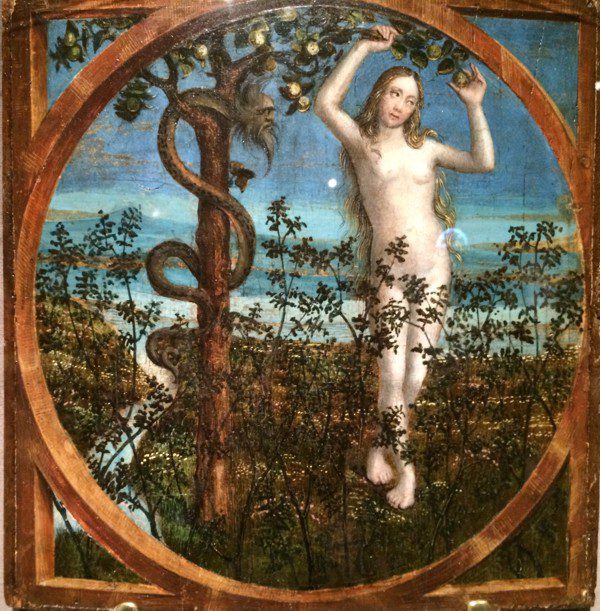 Adam and Eve did not introduce evil into God’s good creation. Christ as cosmic redeemer was part of God’s plan from the beginning.
Genesis 3 tells a story of disobedience and consequences for that disobedience, but we must not lose sight of the fact that the snake was in the garden. If the snake is identified with Satan, as later Christian tradition holds, there was a cosmic spiritual battle underway before humankind ever came on the scene. The Bible does not actually give us much insight into the origins of this conflict. Mark Whorton in Peril in Paradise follows the tradition that Satan rebelled before the world was created, quoting John 8:44 where Jesus remarks that the devil was a murderer from the beginning and 1 John 3:8 “The one who does what is sinful is of the devil, because the devil has been sinning from the beginning. The reason the Son of God appeared was to destroy the devil’s work.” According to Whorton “If the devil sinned from the beginning, then the fall of Satan occurred before the beginning and not some time after creation was declared very good.” (p. 48)
This gives us two reasons to discount the Perfect Paradise Paradigm.
First and foremost, God’s unchanging, eternal purpose and plan for creation was fixed before He created the physical realm. Second … Evil was present in the garden even before the forbidden fruit was eaten. Since it was Satan who first rebelled, Adam cannot be solely culpable for the introduction of all evil and suffering into God’s perfect creation. (p. 49)
Christ as both creator and redeemer intensifies the first reason. Paul, for example, portrays Christ as our redeemer from before creation.
For he chose us in him before the creation of the world to be holy and blameless in his sight. In love he predestined us for adoption to sonship through Jesus Christ, in accordance with his pleasure and will— to the praise of his glorious grace, which he has freely given us in the One he loves. Eph. 1:4-6
Whorton points out that “The Creator’s gaze was not fixed on Eden.” (p. 50) In fact Paul continues in his letter to the Ephesians to tell how God’s plan was “to be put into effect when the times reach their fulfillment—to bring unity to all things in heaven and on earth under Christ.” (Eph 1:10)
In the great Christological hymn in Colossians 1:15-20 Paul writes of Christ as both creator and redeemer.
For in him all things were created: things in heaven and on earth, visible and invisible, whether thrones or powers or rulers or authorities … For God was pleased … through him to reconcile to himself all things, whether things on earth or things in heaven, by making peace through his blood, shed on the cross.
And Christ as creator and redeemer is not limited to humankind or to this world. Whorton comments:
Note the cosmic scope of Christ’s mission. His work addresses human and spirit realms, as well as the past, present, and future. This pleases the Father for a reason – Christ accomplishes the Father’s eternal purpose by coming “to have first place in everything.” (p. 51)
More importantly these passages, along with the rest of the New Testament, and especially Revelation, point us toward a realization that “God never intended for man to spend eternity in His presence without the enabling intercessory work of Christ.” (p. 54)
In the Perfect Paradise Paradigm of young earth creationism God’s ideal intention was realized in Eden until Adam and Eve rebelled.
If Edenic conditions prevailed, then there would be no sin to separate the Holy One from His image-bearers. This implies that it was God’s highest preference for there to be no need of or place for a Redeemer. As a consequence, the Perfect Paradise Paradigm implies that the Father’s ultimate intent for Christ was solely as Creator and only in recourse as Redeemer. The redemptive work of Christ was “Plan B” if Edenic perfection was “Plan A.” (p. 53)
This simply doesn’t seem to be a consistent reading of Paul or of the rest of the New Testament. Christ is “the Lamb who was slain from the creation of the world.” (Rev. 13:8)
Whorton concludes this chapter:
The drama of creation was completely written before the stage was even set. Before the beginning of creation, God had an end in view. Creation’s story will end according to the Master’s plan at the final consummation when all enemies will be subjected under the feet of Christ, the kingdom will be handed over to the Father, and God will reign as all in all for eternity. When the drama of all time comes to an end and the closing credits roll, all of creation will see the glory of the Creator. (p. 63-64)
This is God’s perfect plan for his perfect purpose.
But what is the purpose of creation? Whorton emphasizes that “the Creator’s ultimate purpose for His creation is to bring Himself glory,” even calling this “a bedrock truth of the Christian faith.” (p. 65) In the next chapter of his book Whorton digs into this more deeply, but I am left unsure of exactly what this means. Ezekiel (a reference Whorton does not mention) talks quite a bit about the glory of the Lord. The glory of the Lord is, it seems, the presence of the Lord. At the end of the book Ezekiel sees the glory of God filling the temple once again. However we understand the glory of the Lord, it seems clear that the culmination of God’s plan involves all of creation seeing the glory of God.
However we understand the purpose of Creation (or allow it to remain a mystery) it is also clear that God can and does use pain and suffering to achieve the desired ends. The people of Israel were shaped through the Egyptian captivity and the Exodus.Why was Joseph sent to Egypt? Surely not to save Israel from famine. God could have prevented the famine from the very beginning! The image is God as a potter shaping the necessary vessels (Isaiah and Romans). God permitted the fall of Satan (or at least permitted the presence of evil in the garden). He permitted the fall of Adam. He used crucifixion as a tool in the redemption of the world. If Christ as redeemer is plan B, then crucifixion also is plan A. Whorton suggests that God does use these events to achieve his ultimate goals. “The eternal plan of God has always and unchangingly been to permit and use suffering for a time to accomplish His eternal goals. Suffering is an undeniable, although temporary, part of His “very good” creation through which he is bringing His plan to fruition.” (p. 79)
The age of the earth is unimportant. A key point here is that the Perfect Purpose Paradigm says nothing about the age of the earth. It could be young or old and still be part of God’s perfect plan to achieve his eternal and cosmic purpose. It really doesn’t make any difference if the earth is 4.5 billion years or 6000 years old. God is still God. His purposes are eternal and unchanged. We have to reach our conclusions concerning the age of the earth on other grounds.
 Does fidelity to Scripture as the Word of God require a young earth? … Not unless it also requires a flat earth, an earth-centered cosmos, storehouses of snow and hail, and a solid vault separating the earth from the waters above. The Bible uses a variety of genres and images to convey the intended message. The truth of the message doesn’t require a woodenly literal interpretation of these images.
We are free to follow the science and see the earth as a sphere-like object in space orbiting the sun accompanied by other planets also orbiting the sun. We are free to follow the science and see the earth as 4.5 billion years old and the age of the universe as 13.8 billion years.
What does it mean to claim Christ as both creator and redeemer from the creation of the world? Is this true?
Can God use suffering to accomplish his plan? Is this only an option after the Fall? If so why?
If God can’t use pain and suffering, doesn’t this imply that neither the fall of Satan nor the fall of Adam and Eve were part of plan A and we live in plan B?
If you wish to contact me directly you may do so at rjs4mail[at]att.net.
If interested you can subscribe to a full text feed of my posts at Musings on Science and Theology.
Previous Post

June 16, 2016
How Baseball is Superior to Hockey
Next Post
June 17, 2016 Instead of the Sinner's Prayer
Browse Our Archives
Select a Category Acts of the Apostles Adam Advent Anabaptism Angels Anglican Apologetics Atonement Baptism BCP Prayers Bible Biblical Studies Birds Blogging Bloglossary Bonhoeffer Books Calvinism Christianity Church Church History Coffee Colossians Commentary Recs Conversion Creation Creeds Culture Death Ecclesiastes Economics Education Embracing Grace Emergent Emerging Movement Eschatology Essays Ethics Eucharist Evangelicalism Family Fasting Fathers Fellowship of Differents Footsteps Tour Fun and Whimsical Gospel Grace Happiness Heaven Hell Holy Spirit Irenaeus James Jesus Jesus Creed Job Justification Kingdom of God Law Lectures Lent Liberalism Love and Marriage Mabanteneni Manhood Mary Miracles Missio Alliance MissioLife Missional Missional Jesus Movies and Film New Perspective Northern Seminary OneLife Origins Project Orthodox Parables Pastor's Spouse Pastoring and Leading Pastoring and Preaching Patristics Paul Paul-John Tour Pharisees Pietism Political Theology Prayer and Formation Preaching Problems for Faith Psalm 119 Psalms Public Issues Purgatory Religions Resurrection Revelation Romans Rule of JCreed Science and Faith Sermon on the Mount Sports Ten Commandments Theology Third Way Top Ten Lists Translations Uncategorized Universalism University Ministry Way Out Weekly Meanderings Wisdom Women and Ministry Work Worship Writing & Blogging Youth Ministry
Select a Month July 2021 January 2020 December 2019 November 2019 October 2019 September 2019 August 2019 July 2019 June 2019 May 2019 April 2019 March 2019 February 2019 January 2019 December 2018 November 2018 October 2018 September 2018 August 2018 July 2018 June 2018 May 2018 April 2018 March 2018 February 2018 January 2018 December 2017 November 2017 October 2017 September 2017 August 2017 July 2017 June 2017 May 2017 April 2017 March 2017 February 2017 January 2017 December 2016 November 2016 October 2016 September 2016 August 2016 July 2016 June 2016 May 2016 April 2016 March 2016 February 2016 January 2016 December 2015 November 2015 October 2015 September 2015 August 2015 July 2015 June 2015 May 2015 April 2015 March 2015 February 2015 January 2015 December 2014 November 2014 October 2014 September 2014 August 2014 July 2014 June 2014 May 2014 April 2014 March 2014 February 2014 January 2014 December 2013 November 2013 October 2013 September 2013 August 2013 July 2013 June 2013 May 2013 April 2013 March 2013 February 2013 January 2013 December 2012 November 2012 October 2012 September 2012 August 2012 July 2012 June 2012 May 2012 April 2012 March 2012 February 2012 January 2012 December 2011 November 2011 October 2011 September 2011 August 2011 July 2011 June 2011 May 2011 April 2011 March 2011 February 2011 January 2011 December 2010 November 2010 October 2010 September 2010 August 2010 July 2010 June 2010 May 2010 April 2010 March 2010 February 2010 January 2010 December 2009 November 2009 October 2009 September 2009 August 2009 July 2009 June 2009 May 2009 April 2009 March 2009 February 2009 January 2009 December 2008 November 2008 October 2008 September 2008 August 2008 July 2008 June 2008 May 2008 April 2008 March 2008 February 2008 January 2008 December 2007 November 2007 October 2007 September 2007 August 2007 July 2007 June 2007 May 2007 April 2007 March 2007 February 2007 January 2007 December 2006 November 2006 October 2006 September 2006 August 2006 July 2006 June 2006 May 2006 April 2006 March 2006 February 2006 January 2006 December 2005 November 2005 October 2005 September 2005 August 2005 July 2005 June 2005 May 2005 April 2005 0000
Follow Us!
TAKE THE
Religious Wisdom Quiz
In which letter does Paul say "love is patient, love is kind"?
Select your answer to see how you score.
2 Corinthians Ephesians 1 Corinthians Galatians
Related posts from Jesus Creed


The Gospel of With Us and Through Us

Northern Seminary Announces: Nijay Gupta Joins Faculty

The Gundrys and Me: Ruth Tucker
TRENDING AT PATHEOS Evangelical

Making Stones Into Bread: Choosing the “Right” Work
I was on my online arts ministry Zoom meeting with the International...

Ukraine’s exhausted Christians face fifth winter of war
By Julian Lukins The full-scale war in Ukraine is taking “a serious...

Russell Brand's Conviction is not anti-Christian Persecution
How do we shed the reputation that the Church is OK with...

Have you ever caught yourself saying, “I’ll do it tomorrow,” or “Now...

Write Your Story: A Great Way to Find...
A few month’s back, my son was scrolling around Facebook and saw...

Throughout history, people have pursued pleasure, possessions, relationships, and success in an...
view all Evangelical blogs
Ad-Free & Subscriber Log-In Subscription Support
- About Us
- 2026 Calendar
- Videos
- Podcasts
- Library of World Religions
- Faith In Media Tracker
- Advertise With Us
- Write for Us
- Privacy Policy
- Terms of Service
- Do Not Sell My Data
- Contact Us
- Radiant Digital
- Manage Newsletter Subscriptions
- Unsubscribe From Notifications
- Sitemap
Copyright 2008-2026, Patheos, part of the Radiant Digital network of media brands. All rights reserved.
Subscription Support Ad-Free & Subscriber Log-In
Follow Patheos