
BuddhistCatholicContemplativeEvangelicalGeneral ChristianHinduJewishLatter-day SaintMuslimNew VisionsProgressive Christian
Beliefs
- Buddhist
- Catholic
- Contemplative
- Evangelical
- General Christian
- Hindu
- Jewish
- Latter-day Saint
- More Voices
- Muslim
- New Visions
- Pagan
- Progressive Christian
Topics
- Religion News
- Food and Religion
- Sports and Religion
- Religious Art
- Religious Music and Entertainment
- Religious Events
- History and Religion
- Style and Religion
- Politics and Religion
- Women in Religion
- Recreation Outdoors and Religion
- Business Finance and Religion
- Careers Workplace and Religion
- Education and Religion
- Family Parenting and Religion
- Health Fitness and Religion
- Home and Religion
- Relationships and Religion
- Technology and Religion
- Travel and Religion
Columnists
- Buddhist Columnists
- Business Finance and Religion Columnists
- Careers Workplace and Religion Columnists
- Catholic Columnists
- Contemplative Columnists
- Education and Religion Columnists
- Evangelists Columnists
- Family Parenting and Religion Columnists
- General Christian Columnists
- Health Fitness and Religion Columnists
- Hindu Columnists
- History and Religion Columnists
- Home and Religion Columnists
- Jewish Columnists
- More Voices Columnists
- Latter Day Columnists
- Muslim Columnists
- New Visions Columnists
- Nonreligious Columnists
- Pagan Columnists
- Politics and Religion Columnists
- Progressive Columnists
- Recreation Outdoors and Religion Columnists
- Relationships and Religion Columnists
- Religion News Columnists
- Religious Art Columnists
- Religious Events Columnists
- Religious Music and Entertainment Columnists
- Sports and Religion Columnists
- Style and Religion Columnists
- Technology and Religion Columnists
- Travel and Religion Columnists
- Women in Religion Columnists
Resource Library
- 2026 Calendar
- Library of World Religions
- The 100 Most Holy Places on Earth
- Patheos Answers
- Podcasts
- Videos
- Faith Leaders Database
- Anglican Episcopalian
- Bahai
- Baptist
- Buddhism
- Christianity
- Confucianism
- Eastern Orthodoxy
- Hinduism
- Holiness and Pentecostal
- ISKCON
- Islam
- Judaism
- Lutheran
- Methodist
- The Church of Jesus Christ of Latter-day Saints
- New Age
- Paganism
- Presbytarian and Reformed
- Protestantism
- Religion Behind the Scenes
- Roman Catholic
- Scientology
- Shia Islam
- Sikhism
- Sufism
- Sunni Islam
- Taoism
- Zen
- See all religions
Research Tools
 Ad-Free & Subscriber Log-In Subscription Support
Follow Patheos 

- Trending:
- Advent
- |
- Forgiveness
- |
- Thanksgiving
- |
- Election
- |
- Seasonal Holidays
- |
- Marriage
 Jesus Creed
- Home
- Evangelical
- Oh, the Stories We Tell! (RJS)
Oh, the Stories We Tell! (RJS)
Last updated on: June 2, 2016 at 6:44 am by RJS
Oh, the Stories We Tell! (RJS) 2016-06-02T06:44:16-05:00 RJS
Patheos Explore the world's faith through different perspectives on religion and spirituality! Patheos has the views of the prevalent religions and spiritualities of the world.
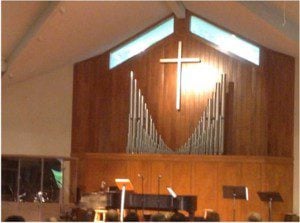 We all have some story, some paradigm, that structures and forms our understanding of life and purpose.
What is the story around which you shape your life?
I’ve been reading a book Peril in Paradise by Mark S. Whorton. In this book Dr. Whorton, a rocket scientist (Ph. D. in aerospace engineering, worked for NASA) and a Christian, puts forth a case for an old earth and digs into problems with a young earth scenario. He does not espouse an evolutionary creation, leaning instead toward a progressive creation model. According to the back of the book, he has been active in the formation of local chapters of Reasons to Believe founded by Hugh Ross.
In his introduction he defines a paradigm (a world story):
A paradigm is like a puzzle where all the pieces fit together to form a view of our world. The various aspects of life fit together to form a (hopefully) consistent picture. Like looking through rose-colored glasses, we see life filtered through our paradigms. But when we try to fit the pieces of daily life into our puzzle, sometimes things just do not seem to fit. (p. 22)
Science employs paradigms and so does theology. As scientific paradigms are continually tested against the data, so to should theological paradigms be tested against the data, most importantly the Scriptures. Even when the Scriptures are accepted as an inerrant revelation (and Whorton accepts this completely), theology remains an imperfect science.
It is very important to recognize the distinction between paradigms and truth. Paradigms are human constructs – models that attempt to integrate distinct points of fact (the “data” of revelation) into a consistent system from which we can make sense of our world. But as a human construct, a paradigm is fallible and incomplete, even when based on the infallible and complete truth of revelation. This subtle distinction is highly significant when it comes to analyzing our world views. Often what someone asserts as the clear reading of Scripture is actually an implication from a particular paradigm. So while the truth of God’s word is not in question, His word demands that we test our paradigms to see if they are consistent with His revealed truth. (pp. 23-24)
Whorton continues:
Each of us has a mental picture of what God is like built from what we learn in church, Bible study, and our environment (family, friends, popular culture, etc.). Expecting God to conduct Himself in a certain manner, we interpret life through the perspective of our paradigm. Many crises of faith come about when daily experience or the revelation of God does not fit our paradigm.
But when it comes to the rich doctrines of the Christian faith, we simply cannot ignore the pieces that do not fit our paradigm. A consistent Christian worldview requires us to integrate the doctrines of creation, redemption, and resurrection into a consistent theological system. Spiritual maturity comes as we refine that system to align it with God’s revealed truth. (p. 24)
 There are many paradigms we can consider here. Whorton’s book is particularly interested in the paradigms attached to the view of young earth creation that Eden and the original creation was a perfect paradise. We will dig into this later on, but today I would just like to consider the paradigms, the stories we tell. There are a number of these and I’ll give a few below.
- Perfect paradise. The paradigm of young earth creation with an original creation free from death and decay. Humans messed this up in the garden and God introduced death as a punishment. We are redeemed through Christ and will be restored to a perfect new creation as it was intended to be.
There are a number of biblical issues with this paradigm. For a start: The snake was in the garden. The tree of life was in the garden. The new heavens and new earth of Revelation eliminate features of the original creation such as the seas and the night.
There are many other paradigms at play as well in the church. Many of these are more significant than the paradigms surrounding our views of creation.
- Inerrancy. This starts with a definition of what it means for Scripture to be inspired and then reads the Bible through this lens.
- Male headship. In the God ordained order of things men are to be the leaders in the church, in the home, and often in society as well.
- Calvinism. Total depravity, unconditional election, limited atonement, irresistible grace, perseverance of the saints
- Arminianism. Total depravity, universal prevenient grace, conditional election, unlimited atonement, free will, resistible grace
- Catholicism and the centrality of the Church
- Social justice. The church is established to save the world.
- American exceptionalism (or insert any country here.)
- Left behind. Focus on the end times.
- Feminism. This goes beyond equality and complementary without hierarchy to assert superiority.
- Liberation theology. God will save the oppressed
- Racial or ethnic superiority. We are now God’s ordained leaders.
What paradigms would you add to this list?
These are the stories we tell to make sense of the world. They shape the way we view the gospel and the church. In fact, they can, and too often do, become the gospel. Complementarianism and the gospel are in inextricably intertwined. The same for Calvinism and for social justice in some circles of mainline churches. These stories can be mixed and matched depending on the church and the tradition.
 All of them are human constructs – and as such fallible. All of them can find support in Scripture (although some much more than others), all of them find strong counter examples and arguments as well (again some many more than others). I listed a few of the biblical issues with the perfect paradise paradigm. Inerrancy needs to be qualified to fit with the Scripture as we have it. Women in the bible don’t fit the model proposed by the male headship paradigm. Calvinists devalue the passages that show God responding to human action (Ezekiel is pretty amazing here). We could go on. As Wharton points out – “Often what someone asserts as the clear reading of Scripture is actually an implication from a particular paradigm.” In fact, it seems that some of the most strongly held views rely more on the particular paradigm than on Scripture itself.
I come from a tradition where inerrancy, Calvinism, and complementarianism can be strong, where young earth creationism is present, but not as strong an influence. There is no doubt but that the paradigm is the gospel for some. I expect that this is true in other circles over other topics as well. Scripture is primarily a source for proof texts rather than a story of the mission of God. Life is shaped around the paradigm more than the revealed mission of God.
This leads to a few questions worth some thought and discussion.
What story should we shape our life and church around?
How do we shape our paradigm, our worldview, around Scripture?
How do we develop the Spiritual maturity to align our views with God’s revealed truth?
When should we change?
We need to be immersed in Scripture, beginning to end, in prayer, and willing to hear.
If you wish to contact me directly you may do so at rjs4mail[at]att.net.
If interested you can subscribe to a full text feed of my posts at Musings on Science and Theology.
Previous Post

June 2, 2016
The Rapture and Other Things Christians Believe
Next Post
June 2, 2016 Burning the Black Suit (by Steve Cuss)
Browse Our Archives
Select a Category Acts of the Apostles Adam Advent Anabaptism Angels Anglican Apologetics Atonement Baptism BCP Prayers Bible Biblical Studies Birds Blogging Bloglossary Bonhoeffer Books Calvinism Christianity Church Church History Coffee Colossians Commentary Recs Conversion Creation Creeds Culture Death Ecclesiastes Economics Education Embracing Grace Emergent Emerging Movement Eschatology Essays Ethics Eucharist Evangelicalism Family Fasting Fathers Fellowship of Differents Footsteps Tour Fun and Whimsical Gospel Grace Happiness Heaven Hell Holy Spirit Irenaeus James Jesus Jesus Creed Job Justification Kingdom of God Law Lectures Lent Liberalism Love and Marriage Mabanteneni Manhood Mary Miracles Missio Alliance MissioLife Missional Missional Jesus Movies and Film New Perspective Northern Seminary OneLife Origins Project Orthodox Parables Pastor's Spouse Pastoring and Leading Pastoring and Preaching Patristics Paul Paul-John Tour Pharisees Pietism Political Theology Prayer and Formation Preaching Problems for Faith Psalm 119 Psalms Public Issues Purgatory Religions Resurrection Revelation Romans Rule of JCreed Science and Faith Sermon on the Mount Sports Ten Commandments Theology Third Way Top Ten Lists Translations Uncategorized Universalism University Ministry Way Out Weekly Meanderings Wisdom Women and Ministry Work Worship Writing & Blogging Youth Ministry
Select a Month July 2021 January 2020 December 2019 November 2019 October 2019 September 2019 August 2019 July 2019 June 2019 May 2019 April 2019 March 2019 February 2019 January 2019 December 2018 November 2018 October 2018 September 2018 August 2018 July 2018 June 2018 May 2018 April 2018 March 2018 February 2018 January 2018 December 2017 November 2017 October 2017 September 2017 August 2017 July 2017 June 2017 May 2017 April 2017 March 2017 February 2017 January 2017 December 2016 November 2016 October 2016 September 2016 August 2016 July 2016 June 2016 May 2016 April 2016 March 2016 February 2016 January 2016 December 2015 November 2015 October 2015 September 2015 August 2015 July 2015 June 2015 May 2015 April 2015 March 2015 February 2015 January 2015 December 2014 November 2014 October 2014 September 2014 August 2014 July 2014 June 2014 May 2014 April 2014 March 2014 February 2014 January 2014 December 2013 November 2013 October 2013 September 2013 August 2013 July 2013 June 2013 May 2013 April 2013 March 2013 February 2013 January 2013 December 2012 November 2012 October 2012 September 2012 August 2012 July 2012 June 2012 May 2012 April 2012 March 2012 February 2012 January 2012 December 2011 November 2011 October 2011 September 2011 August 2011 July 2011 June 2011 May 2011 April 2011 March 2011 February 2011 January 2011 December 2010 November 2010 October 2010 September 2010 August 2010 July 2010 June 2010 May 2010 April 2010 March 2010 February 2010 January 2010 December 2009 November 2009 October 2009 September 2009 August 2009 July 2009 June 2009 May 2009 April 2009 March 2009 February 2009 January 2009 December 2008 November 2008 October 2008 September 2008 August 2008 July 2008 June 2008 May 2008 April 2008 March 2008 February 2008 January 2008 December 2007 November 2007 October 2007 September 2007 August 2007 July 2007 June 2007 May 2007 April 2007 March 2007 February 2007 January 2007 December 2006 November 2006 October 2006 September 2006 August 2006 July 2006 June 2006 May 2006 April 2006 March 2006 February 2006 January 2006 December 2005 November 2005 October 2005 September 2005 August 2005 July 2005 June 2005 May 2005 April 2005 0000
Follow Us!
TAKE THE
Religious Wisdom Quiz
What does "Shalom" mean in Hebrew?
Select your answer to see how you score.
Joy Peace Love Blessing
Related posts from Jesus Creed


The Gospel of With Us and Through Us

Northern Seminary Announces: Nijay Gupta Joins Faculty

The Gundrys and Me: Ruth Tucker
TRENDING AT PATHEOS Evangelical

When you hear the word riches, what comes to mind? For most...

Don’t Miss the Parents: A Creative Christmas Meditation
As we enter the Advent Season, I see many people trying to...

Making Stones Into Bread: Choosing the “Right” Work
I was on my online arts ministry Zoom meeting with the International...

Ukraine’s exhausted Christians face fifth winter of war
By Julian Lukins The full-scale war in Ukraine is taking “a serious...

Russell Brand's Conviction is not anti-Christian Persecution
How do we shed the reputation that the Church is OK with...

Have you ever caught yourself saying, “I’ll do it tomorrow,” or “Now...
view all Evangelical blogs
Ad-Free & Subscriber Log-In Subscription Support
- About Us
- 2026 Calendar
- Videos
- Podcasts
- Library of World Religions
- Faith In Media Tracker
- Advertise With Us
- Write for Us
- Privacy Policy
- Terms of Service
- Do Not Sell My Data
- Contact Us
- Radiant Digital
- Manage Newsletter Subscriptions
- Unsubscribe From Notifications
- Sitemap
Copyright 2008-2026, Patheos, part of the Radiant Digital network of media brands. All rights reserved.
Subscription Support Ad-Free & Subscriber Log-In
Follow Patheos